




Walking with Pumas in Patagonia: the ultimate guide to a Puma Safari in Chile
Key Takeaways
- Torres del Paine is the gold standard for wild puma encounters, comparable to what the Sabi Sands is for leopards in Africa. The private concessions WWW Safaris accesses hold the highest puma densities in the region.
- April and October are the best months, offering ideal conditions for wildlife sightings, landscape photography, and exclusivity without peak-season crowds.
- On-foot encounters are possible, a rarity among big-cat destinations worldwide. Expert guides with African and South American field experience create encounters that feel intimate, safe, and deeply respectful of the animals.
- Your safari directly funds conservation. WWW Safaris is a conservation-led operator, not a tour company with conservation as an add-on. Every booking strengthens the protection of wild spaces.
- Book nine to twelve months ahead for the April and October shoulder seasons. Private concession access is genuinely limited, and demand from international wildlife travelers is consistent year-round.
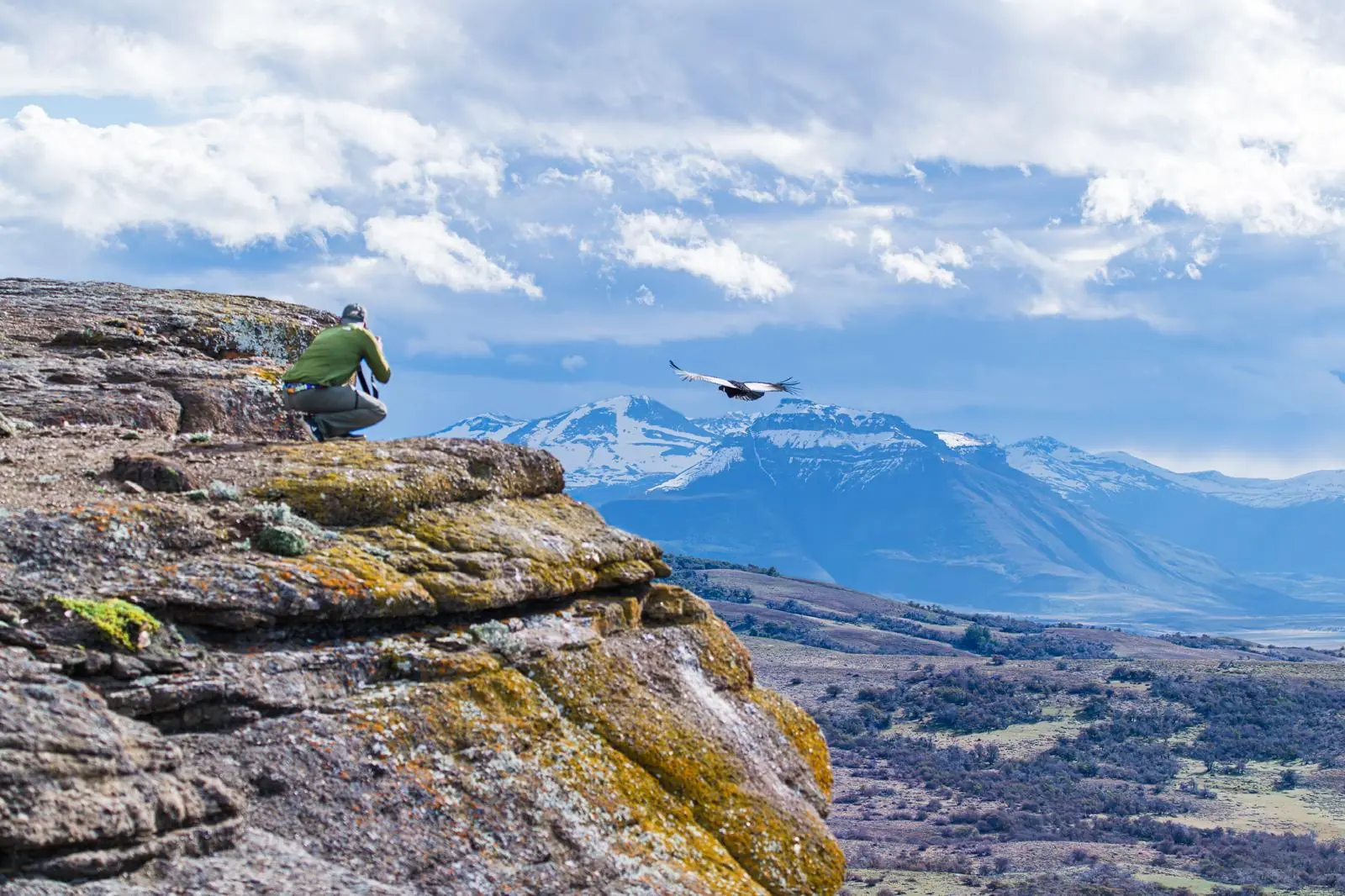
- Patagonia is a complete wilderness journey. Beyond the pumas, guests encounter Andean condors, guanacos, foxes, and some of the most cinematically dramatic mountain scenery on the planet, all framed by the iconic granite towers of the park.
Walking with Pumas in Patagonia
There is a moment, somewhere on the windswept plains of Torres del Paine, when a puma steps out of the rocks and looks at you.
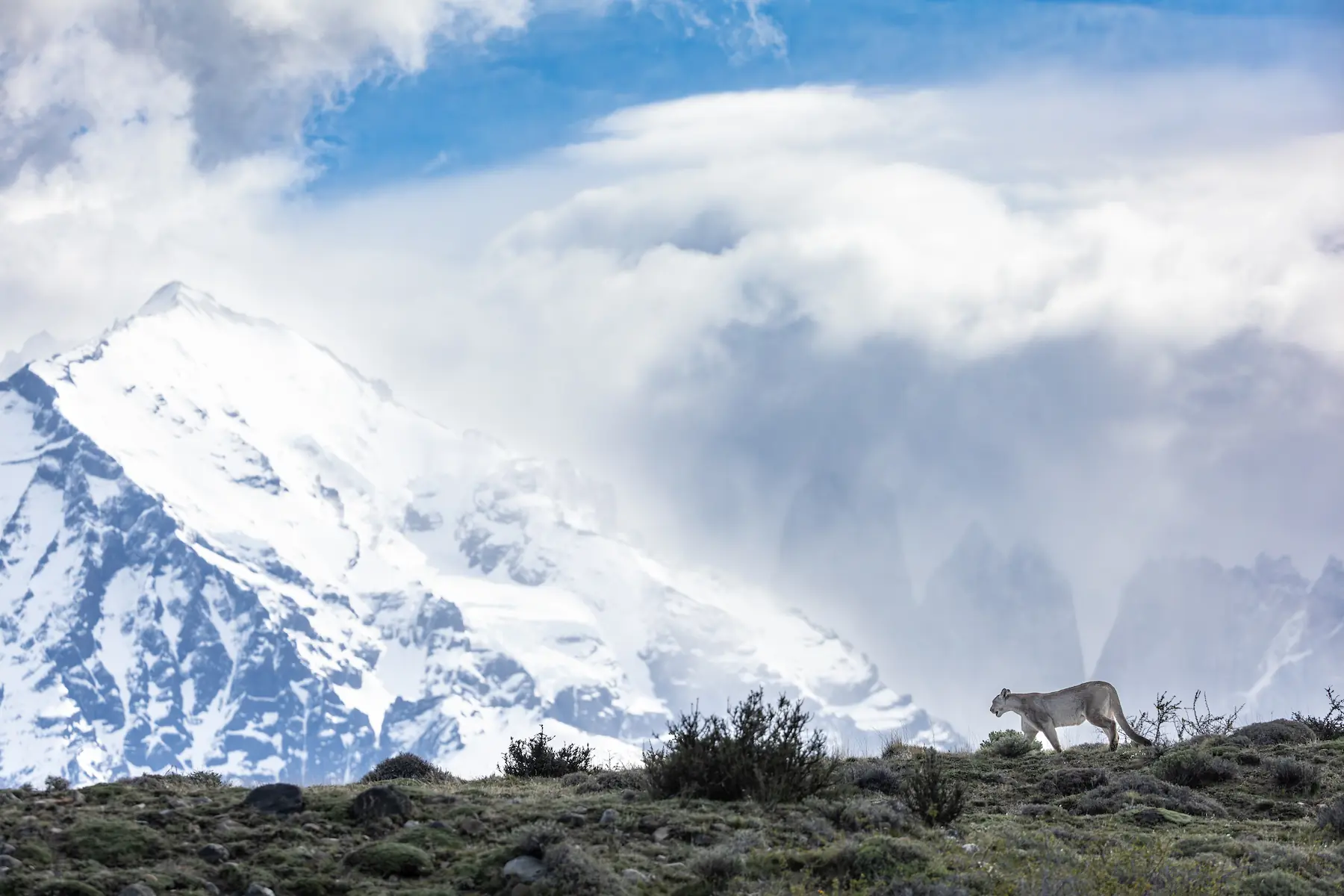
Not through the window of a vehicle. Not from a distant ridge. Directly at you, from thirty metres away, with the granite towers of Patagonia rising behind her and the sound of the wind moving through the grass.
It is the kind of moment you spend years trying to get to.
This guide is for the traveller who is serious about getting there, getting the shot and getting the feeling of standing face-to-face with a wild Puma.
We’ve put together our top tips & tricks from our experience with these Big Cats, as well as private guide Nick Kleer’s personal insights about his latest Puma safari in Patagonia. We’ve included information about the best time of year, the best places to go and the equipment you’ll need to optimize your puma safari in Chile.
When you are ready to head on this adventure of a lifetime, contact us. These experiences start from $6,500 per person sharing (2 people), and $5,400 per person sharing (group of 4), and include:
- 5 nights accommodation
- 4 full days puma tracking
- Breakfast, lunch and dinner
- Snacks, water, coffee and tea during excursions
- Ranch Fee
- Park Fee
- Guide
- Tracker
- Transfer to and from the airport
Click here to get an idea of what your Puma safari could look like for 2027. The example itinerary includes Hotel Las Torres, 5 days of tracking, as well as an overnight close to the airport at the beginning and end.
Why Patagonia Is the best place on earth to see Pumas in the wild
The Puma is also known as “mountain lion” and “cougar” in North America. It is the fourth largest cat in the world, after the tiger, the lion and the jaguar. It is also the most widely distributed mammal in the Americas. These powerful cats roam vast territories from Alaska to Patagonia, giving you a range of stunning destinations to explore. Top destinations for Puma tracking are Yellowstone National Park USA, Banff and Jasper National Parks in Canada and Torres del Paine National Park in Patagonia, Chile.
For most of their range, pumas are almost impossible to find. They are solitary, wide-ranging, and extraordinarily good at disappearing. The nickname "ghost cat" is not an exaggeration.
Torres del Paine National Park in Chilean Patagonia is the exception.
An estimated 50 to 200 pumas roam the park's 227,000 hectares, making this one of the highest densities of pumas anywhere in the world. The private concession of Estancia Laguna Amarga, bordering the Torres del Paine National Park holds the largest concentration of Pumas in the wild due to lack of poaching and an abundance of their favorite prey, the Guanaco (a camelid native to South America, closely related to the Llama).
More importantly, the pumas here have become slowly habituated to the presence of researchers and experienced guides, which means that on a well-guided puma safari, you are not just hoping to spot a cat on a distant slope. You are walking through their territory, observing them move, hunt, rest and interact, in one of the most dramatic landscapes on the planet.
All of these element have made Torres del Paine what the Sabi Sands is for leopards in Africa: the gold standard for seeing a famously elusive big cat in the wild.
What does a Puma Safari in Patagonia look like? A personal account
Wild Wonderful World Private Guide Nick Kleer LINK has guided big cat safaris in Africa and South America for over 15 years. His extensive experience includes tracking, working with, photographing, and documenting these majestic animals on foot, from a vehicle and even by boat. This expertise allows him to safely lead travellers in close encounters with Big Cats, making the experience of photographing and observing them truly unique and unforgettable.
Nick's account of a recent puma safari in Torres del Paine
Do I have enough layers? Thermal pants. Thermal socks. Hiking boots. Underlayers. Outer layers. Windbreaker. Beanie. Photographic gloves.
Most of my guiding life has been spent in heat and sun. Cold like this is a different story. I was flying into Punta Arenas fresh from three weeks with jaguars and giant anteaters in Brazil, heart racing the entire way. I had been trying to get to Torres del Paine for years.
Every morning on a puma safari begins before dawn.
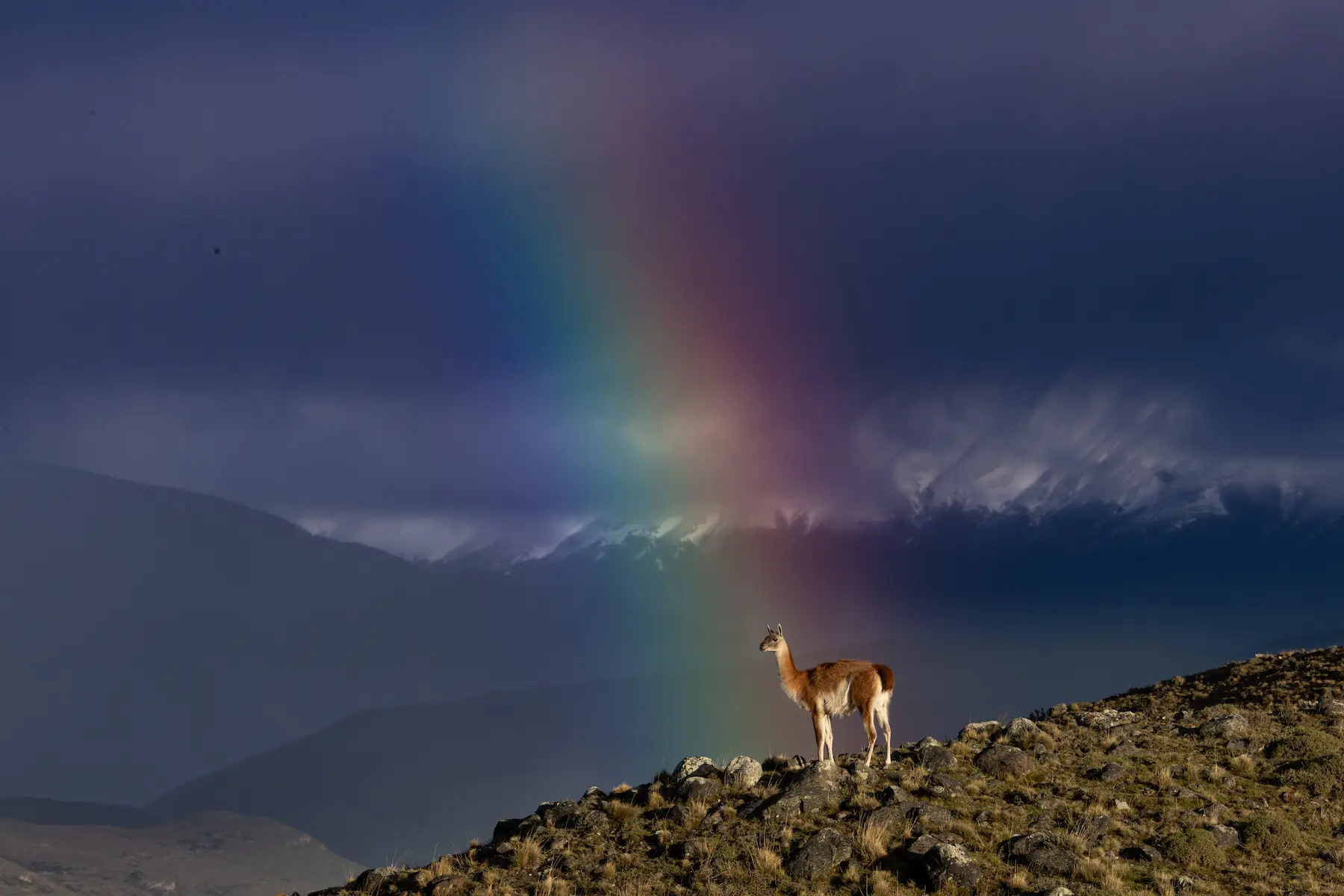
You drive out along roads that skirt lakes shifting between turquoise and steel grey depending on the light. From high points, guides scan the landscape with thermal scopes, searching for any sign of movement. Often the first clue is a guanaco. A tense posture. A changed direction of gaze. The guanaco knows before you do.
On our first morning we had been searching for around an hour and a half when the radio crackled. The second vehicle had spotted something on a distant ridge.
When we arrived, there were two. A male and a female, resting together.
Standing there in the cold, breathing that sharp Patagonian air, watching my first wild pumas through binoculars, was something I had been building toward for a long time. We stayed at the recommended distance of 100 metres, which is not a restriction but a mark of respect. The cats were completely undisturbed. They behaved as if we were not there.
That is the whole point.
Later that afternoon we found the female again. Her name is Ginger. We followed her male companion along a ridge until he slipped into the rocks. We walked past within metres of him without realising it. Eventually he stuck his head out from a crack and watched us quietly before settling down to sleep.
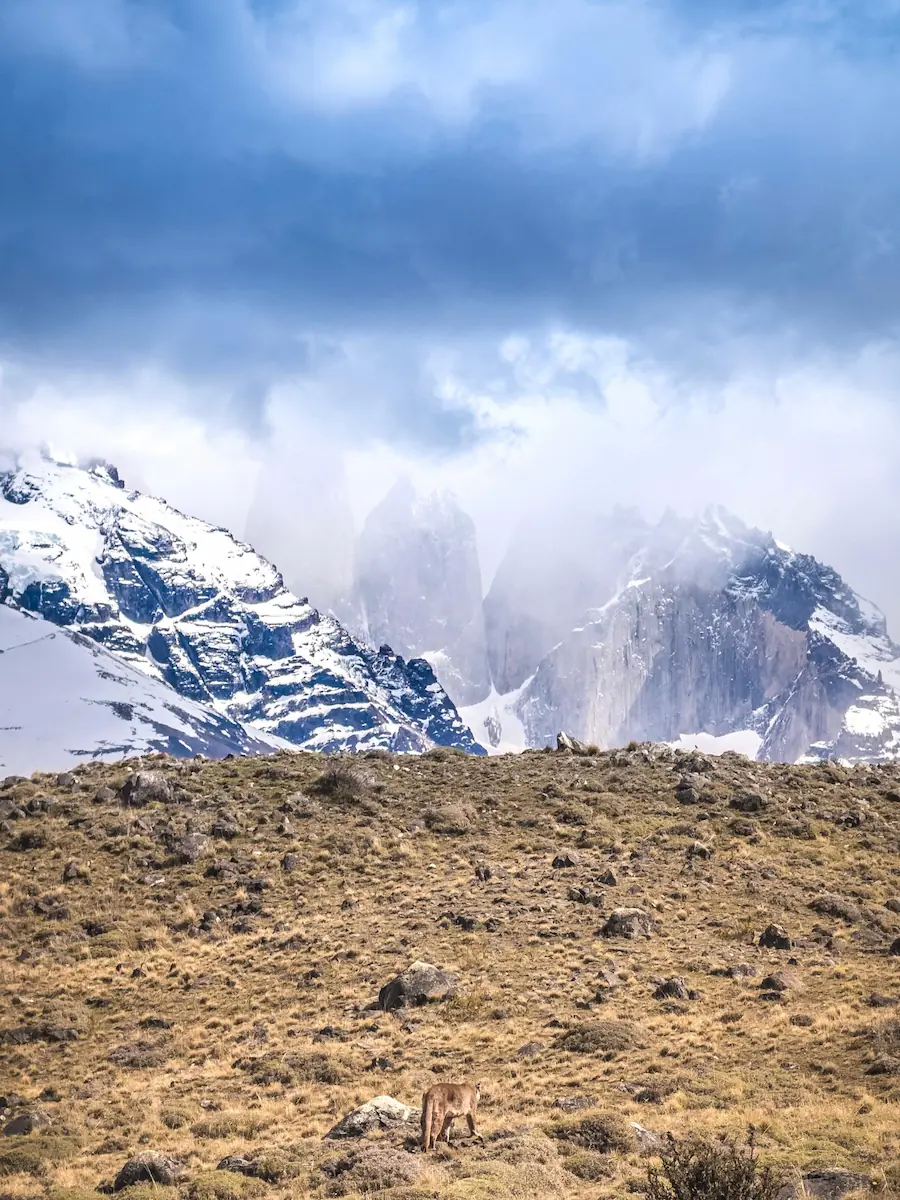
On our final morning, we spent four hours on foot with a famous female called Pataka. We followed her as she hunted, rested and moved through the valley. Then she walked into position: a puma crossing open ground, the three towers of Torres del Paine rising behind her.
It is a photograph I still cannot quite believe I captured.
What makes this place so special though is the respect.
The pumas come first. Always.
You give them space. You let them behave naturally. Sometimes they choose to walk closer than the recommended distance. When that happens you simply stay still and let them move past. Standing there with nothing but wind and the sound of their footsteps in the grass is something deeply beautiful.
The pumas and this park completely stole my heart. The weather plays a huge part in that somehow. The wind, the constantly shifting light, the challenge of working in those conditions. It makes everything feel more alive. And yet, as we drove out of the park that morning, I realised something quite interesting about the place. Torres del Paine doesn’t just impress you with one thing. It’s not only the pumas. It’s not only the mountains. It’s not only the weather or the scenery.
It’s the combination of everything together.
The full Patagonia experience: more than just Pumas
A puma safari to Chilean Patagonia is a complete wildlife and landscape journey. The pumas are the centrepiece, but what surrounds them is extraordinary. A Puma holiday to Chile offers so much more than Puma watching alone. Read Nick’s full experience of his recent trip here.
Torres del Paine doesn’t just impress you with one thing. It’s not only the pumas. It’s not only the mountains. It’s not only the weather or the scenery. It’s the combination of everything together.
The Pumas themselves: what you need to know
Pumas are the fourth largest cat in the world, after the tiger, lion and jaguar, and the most widely distributed mammal in the Americas. They range from Alaska to Patagonia.
The pumas of southern Patagonia tend to be larger than their North American counterparts. Males typically weigh between 50 and 82 kilograms, females between 36 and 59 kilograms. In Patagonia, some males exceed 100 kilograms, a reflection of the rich hunting conditions here.
They are most active in the two hours after sunrise and the two hours before dusk, which is when puma tracking is most rewarding.
Each puma in Torres del Paine holds a territory of between 25 and 120 square kilometres. Understanding those territories, and the daily rhythms of individual cats, is what separates a remarkable sighting from a lucky one. This is why the quality of your guide is everything.
To maximise your chances of spotting these cats, you’ll wake up before sunrise. Whilst you head out for a game drive in the park to photograph the sunrise and look for wildlife with your guide, specialised Puma trackers will be out in the field looking for them with binoculars and listening for Guanaco alarm calls. They will call your guide on the radio as soon as they find the cats, so that you can reach the place where they were spotted as quickly as possible. Once you reach the sighting, you will be able to spend as much time as you want observing the pumas.
Much like on our African safaris, our puma safari includes access to private concessions bordering the national park. Compared to the strict “roads only” policy in national parks, these exclusive private parks offer unique opportunities for off-road puma tracking (always done with care and consideration). Our puma tours with Nick Kleer focus on photography and flexibility in your daily schedule, so that you can spend the whole day near these stunning cats if you want to! Where possible, and without disturbing the wildlife, you will be able to get out of the vehicle, follow and photograph the pumas on foot.
The best time to visit for a Puma Safari in Patagonia
The shoulder seasons offer the best combination of conditions for puma watching.
- Autumn, March to May: and particularly mid-April, provides the most dramatic photography conditions: rich colour in the landscape, lower wind, and quieter parks. Wildlife is often seen closer to roads during these months.
- Spring, September to November: offers mild temperatures, excellent wildlife activity and longer days as summer approaches.
- Summer, November to February: brings the longest daylight hours, up to 17 hours, but also the strongest winds and the most visitor pressure in the national park.
- Winter, May to August, is for experienced adventurers only. Most lodges close, temperatures drop sharply and access becomes more difficult. Snowfall, however, can make puma tracking easier across open terrain.
For most travellers, especially those combining puma tracking with photography, April or October is the sweet spot.
Tips on how to have the best possible Puma Safari
1. Work with a specialist guide. The pumas of Torres del Paine hold territories of up to 120 square kilometres. Knowing where to start, how to read the landscape, and how to interpret the behaviour of guanacos is not something you can replicate with a standard park visit. An experienced guide does not just find cats. They make the entire experience richer, safer and more meaningful.
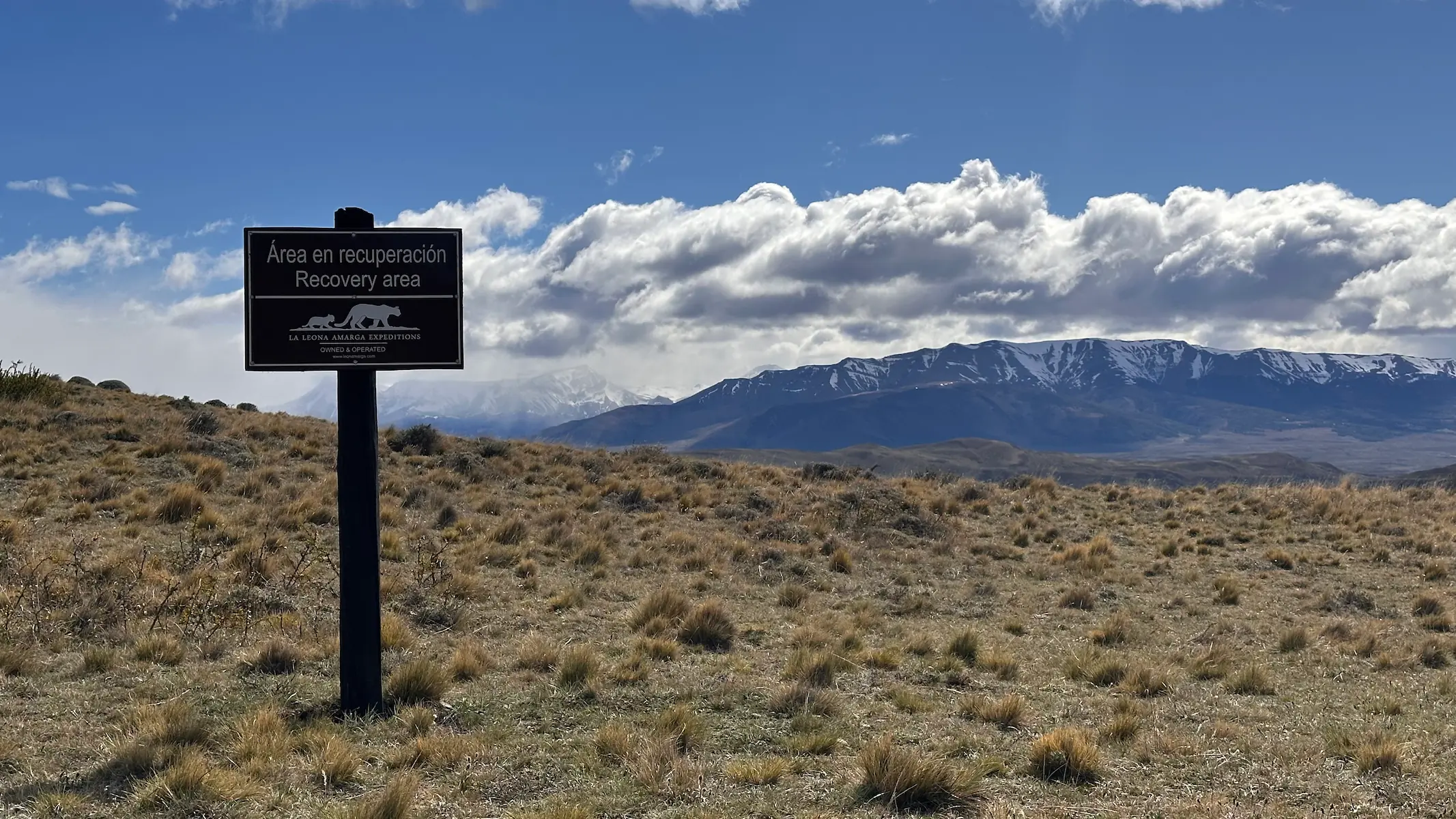
2. Access private concessions. Our puma safaris include access to Estancia Laguna Amarga, a private concession bordering the national park that holds the highest concentration of pumas in the region. Unlike national park roads, this access allows for off-road tracking and, where the cats permit it, the chance to observe them on foot.
3. Stay patient and stay quiet. Pumas are masters of camouflage. Their tawny coats disappear into the landscape in seconds. The travellers who have the best sightings are the ones who trust their guide, stay still and allow the encounter to unfold on the animal's terms.
4. Give them space. When only one puma is present, the recommended approach distance is 100 metres. When two cats are together, you stay at that distance entirely. This is not a limitation. It is what allows these cats to remain wild and fully themselves.
5. Pack for the conditions: Patagonian weather is serious. Here’s what to pack:
- Binoculars: a non-negotiable to spot pumas from a distance in the vast landscapes of Patagonia.
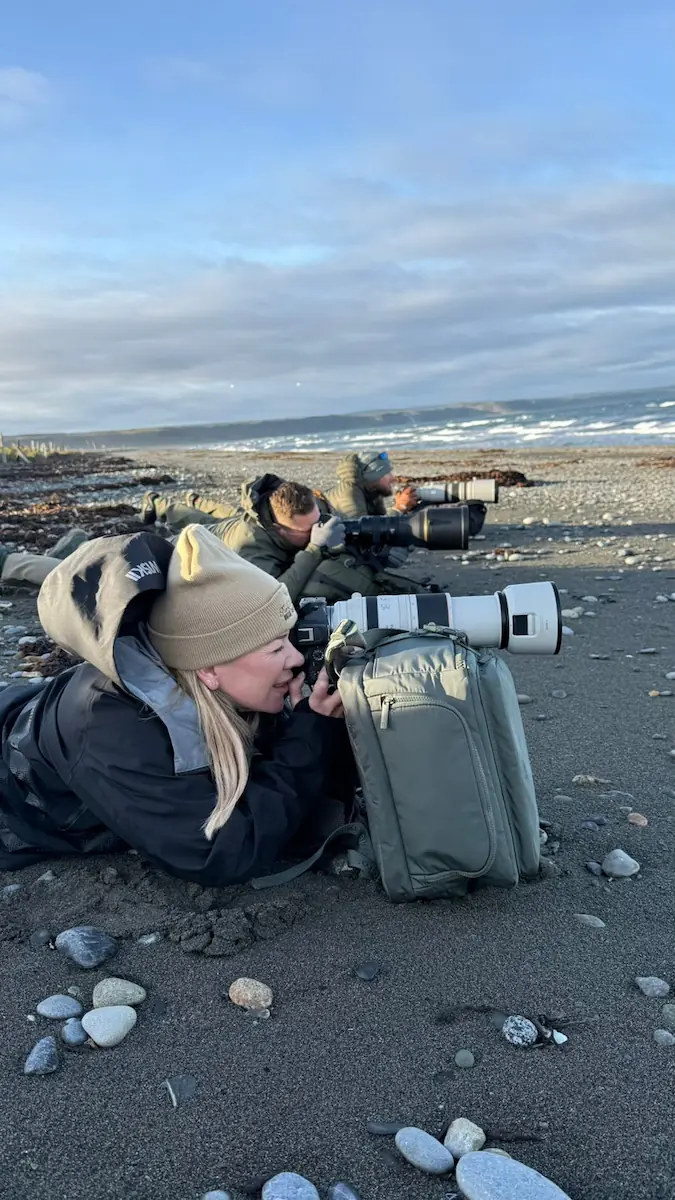
- Camera with zoom lens (400mm) & tripod: To give you the photographic reach you need without putting pressure on the animals. We can advise you on the most suited photography kit.
- Photographic gloves.
- Warm clothing: Thermal layers and a high-quality wind breaker are essential, as temperatures can vary greatly.
- Sunscreen and polarised sunglasses: A must for spending long days out in the open plains.
- Sturdy hiking boots: For navigating rugged terrain.
- Snacks and water: To stay energized and hydrated during long periods of observation. Your hotel will offer packs to take with you on day trips.
Responsible wildlife watching and why your safari matters
When you visit Patagonia on a quest to spot pumas in the wild, there are some rules and advice that you should follow to allow better protection of this fascinating animal. Respecting the natural habitat of pumas and other wildlife is important to ensure that these regions are maintained and remain accessible to other travellers in the future. Like for sustainable African safaris, the main pointers of responsible puma watching are:
- Maintain a safe distance: Our Puma safaris offer the unique experience of on-foot encounters and great photographic opportunities as we walk with them while they survey their territory. Throughout this experience, it is important to never approach or attempt to feed wild animals you will encounter and maintain a respectful distance to allow for the animals to display their natural behaviour.
- Follow guidelines: Adhere to the rules set by guides and park authorities.
- Leave no trace: Leave nothing behind but footprints.
- Tavel in low-season: Visiting the Pumas of Patagonia in the shoulder months (September, October, April or May), means that you are helping to avoid overcrowded national parks and excessive pressure on the wildlife in their habitat.
The pumas of Torres del Paine exist in the numbers they do because of protection. Chile's ban on puma hunting, active conservation organisations working with local farmers, and the careful, respectful approach of specialist guides have all contributed to making this population what it is today.
When you book a puma safari through Wild Wonderful World, your journey directly contributes to the conservation work that keeps these animals safe and wild. The access you gain as a traveller is not separate from that work. It is funded by it.
How to book your Puma Safari to Patagonia
A puma safari to Chilean Patagonia is one of the great wildlife journeys available anywhere in the world. It combines extraordinary big cat encounters with some of the most dramatic scenery on Earth, guided by someone who knows these animals and this landscape intimately.
We build every itinerary around your travel dates, photography goals and pace. Small groups only. Private options available. This journey includes four full days to watch and photograph pumas, wildlife and scenery.
Contact us to start planning your trip now!
When you are ready to head on this adventure of a lifetime, contact us. These experiences start from $6,500 per person sharing (2 people), and $5,400 per person sharing (group of 4), and include:
- 5 nights accommodation
- 4 full days puma tracking
- Breakfast, lunch and dinner
- Snacks, water, coffee and tea during excursions
- Ranch Fee
- Park Fee
- Guide
- Tracker
- Transfer to and from the airport
FAQ
Everything you need to know about a luxury puma safari in Patagonia
Is a puma safari in Patagonia worth it for luxury travelers?
Absolutely. Torres del Paine National Park in Chilean Patagonia offers one of the highest densities of wild pumas on earth, and the private concessions allow for on-foot encounters that simply are not available in most of the world's top wildlife destinations. For travelers who have done safaris in Africa and want a genuinely different big-cat experience in a dramatic, remote landscape, this is the logical next journey.
When is the best time of year to visit for a puma safari?
April (autumn) and October (spring) are the sweet spots for most luxury travelers. April delivers rich landscape colors, lower winds, and quieter parks. October brings excellent wildlife activity and longer days. Summer (November to February) has the most daylight but also the strongest winds and highest visitor numbers. Both shoulder months offer the best balance of wildlife sightings, photographic conditions, and exclusivity.
How close will I get to wild pumas?
On well-guided excursions through private concessions, encounters at 30 to 100 metres are common, and on-foot tracking is possible where the cats permit it. The recommended minimum distance is 100 metres when one puma is present, and this boundary is observed entirely when two cats are together. This is what keeps these animals wild and extraordinary to watch.
What makes this different from standard Patagonia tours?
Three things. First, access. These Puma safaris take place in Estancia Laguna Amarga, a private concession bordering the national park that holds the highest concentration of pumas in the region and allows off-road tracking. Second, expertise. Guests travel with private guides who have led big-cat safaris in both Africa and South America for over 15 years. Third, purpose. Every booking directly funds conservation work, meaning your presence in the wilderness actively contributes to its protection.
How much does it cost?
These experiences start from $6,500 per person sharing (2 people), and $5,400 per person sharing (group of 4), and include:
- 5 nights accommodation
- 4 full days puma tracking
- Breakfast, lunch and dinner
- Snacks, water, coffee and tea during excursions
- Ranch Fee
- Park Fee
- Guide
- Tracker
- Transfer to and from the airport
Contact us for a personalised quote.
How does a puma safari itinerary typically work day to day?
Days begin before sunrise. Specialized trackers head into the field with binoculars, listening for guanaco alarm calls that signal a nearby puma. Your guide drives routes skirting turquoise lakes, scanning ridgelines with thermal scopes. When the trackers radio in a sighting, you move quickly to the location. From there, the pace is patient, quiet, and unhurried. Some guests spend four or more hours on foot with a single puma, watching it hunt, rest, and move through the valley.
What level of fitness is required for a puma safari in Torres del Paine?
A moderate level of fitness is recommended. On-foot tracking across open terrain in variable Patagonian weather requires comfortable walking ability, good footwear, and the capacity to stand still for extended periods in cold and wind. There is no technical climbing or strenuous hiking involved. Most guests in good general health handle the conditions comfortably with the right clothing and preparation.
What photography equipment should I bring?
A telephoto lens of 400mm or longer is the standard recommendation for puma photography, paired with a sturdy tripod. Photographic gloves are essential. WWW Safaris can advise on the most suitable kit for your camera system ahead of your trip. The itinerary is structured around photography, and guides will actively work with you to maximize your time in position with the cats.
Is this a responsible, conservation-aligned safari?
Yes. The pumas of Torres del Paine exist in the numbers they do because of strict protection. We only work with ground handlers who operate strict approach guidelines. We channel 1% of every booking into direct conservation funding. Guests are informed about the history of puma protection in Chile, the role of private landowners in reducing poaching, and how responsible wildlife tourism sustains the population they are visiting.
How far in advance should I book a luxury puma safari?
For peak shoulder months of April and October, booking nine to twelve months in advance is strongly recommended, particularly for private or small-group itineraries. Availability on the private Estancia Laguna Amarga concession is limited by design, and demand from international wildlife photographers and luxury travelers is high. Planning well in advance also allows us to build a fully bespoke itinerary around your travel dates, photography goals, and preferred pace.
Written by Evelyn Poole, Christina van der Merwe and Nick Kleer
.webp)
.webp)






.webp)