




A safari to Chilean Patagonia: from Punta Arenas to Tierra del Fuego and Torres del Paine
Looking for tips and tricks?
Find our top tips & tricks for a Puma safari to Chile here. We’ve included information about the best time of year, the best places to go and the equipment you’ll need to optimize your puma safari in Chile.
When you are ready to head on this adventure of a lifetime, contact us. These experiences start from $6,500 per person sharing (2 people), and $5,400 per person sharing (group of 4), and include:
- 5 nights accommodation
- 4 full days puma tracking
- Breakfast, lunch and dinner
- Snacks, water, coffee and tea during excursions
- Ranch Fee
- Park Fee
- Guide
- Tracker
- Transfer to and from the airport
Click here to get an idea of what your Puma safari could look like for 2027. The example itinerary includes Hotel Las Torres, 5 days of tracking, as well as an overnight close to the airport at the beginning and end.
Read private guide Nick Kleer’s personal insights about his latest Puma safari in Patagonia below.
Nick's Patagonia Travel Blog:
Do I have enough layers? Thermal pants. Thermal socks. Hiking boots. Underlayers. Outer layers. Windbreaker. Beanie. Photographic gloves.
This was new territory for me.
Most of my life, the elements I’ve had to deal with have been heat and sun. Cold like this is a different story entirely. Packing for a trip to the bottom of the world to photograph pumas in Torres del Paine was something I had to think about carefully. I wanted to make sure I had everything I needed to stay warm and still be able to work comfortably with a camera.
I was flying in from Brazil after spending three incredible weeks working with jaguars and giant anteaters. From there the journey started with a flight from São Paulo to Santiago, Chile. After a layover in Santiago I continued south to Punta Arenas, right near the southern edge of South America.
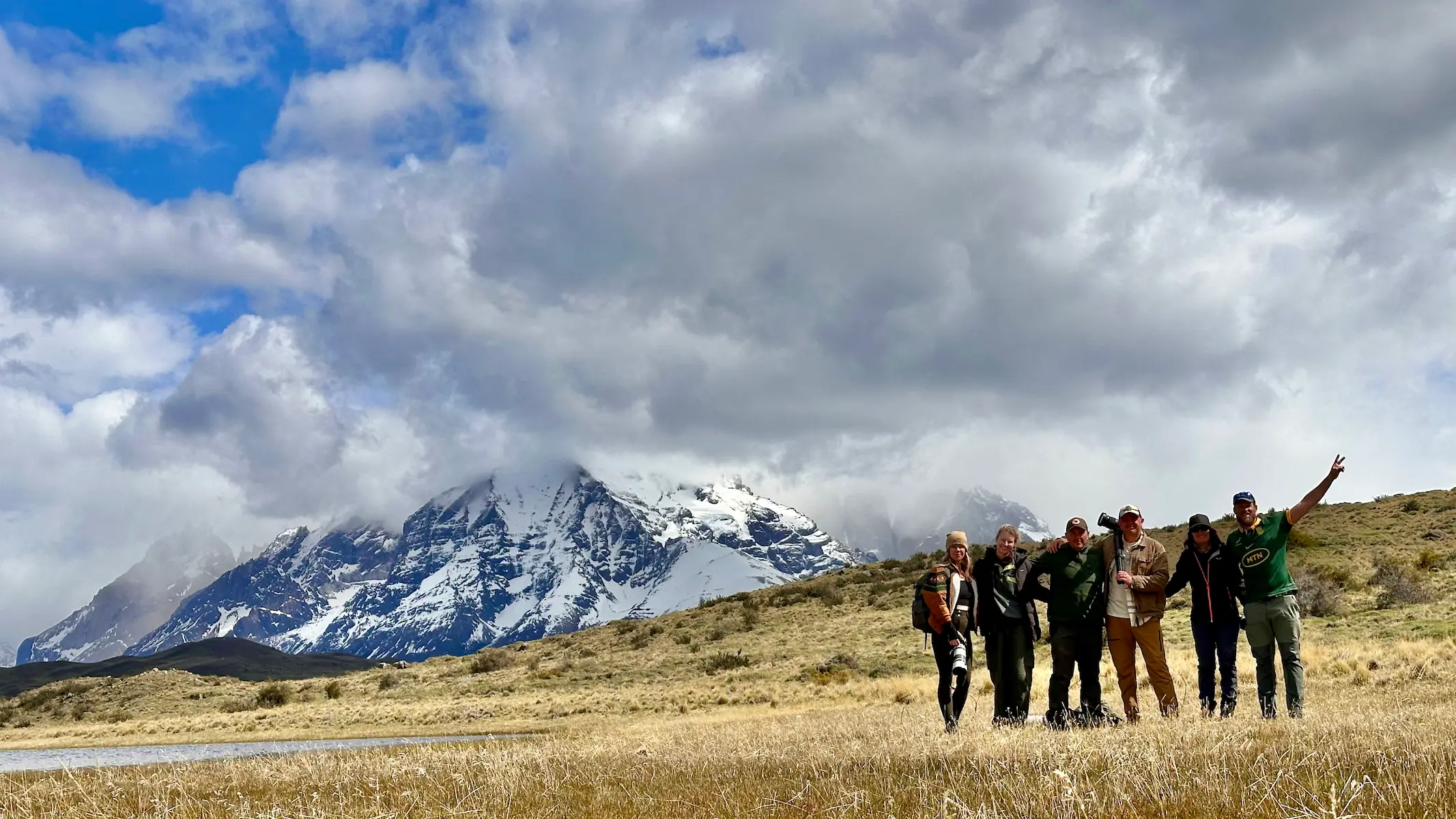
My heart was racing from excitement the whole way. I had been trying to get here for many years, and finally I was on my way with my guests to photograph pumas in one of the most dramatic landscapes on the planet.
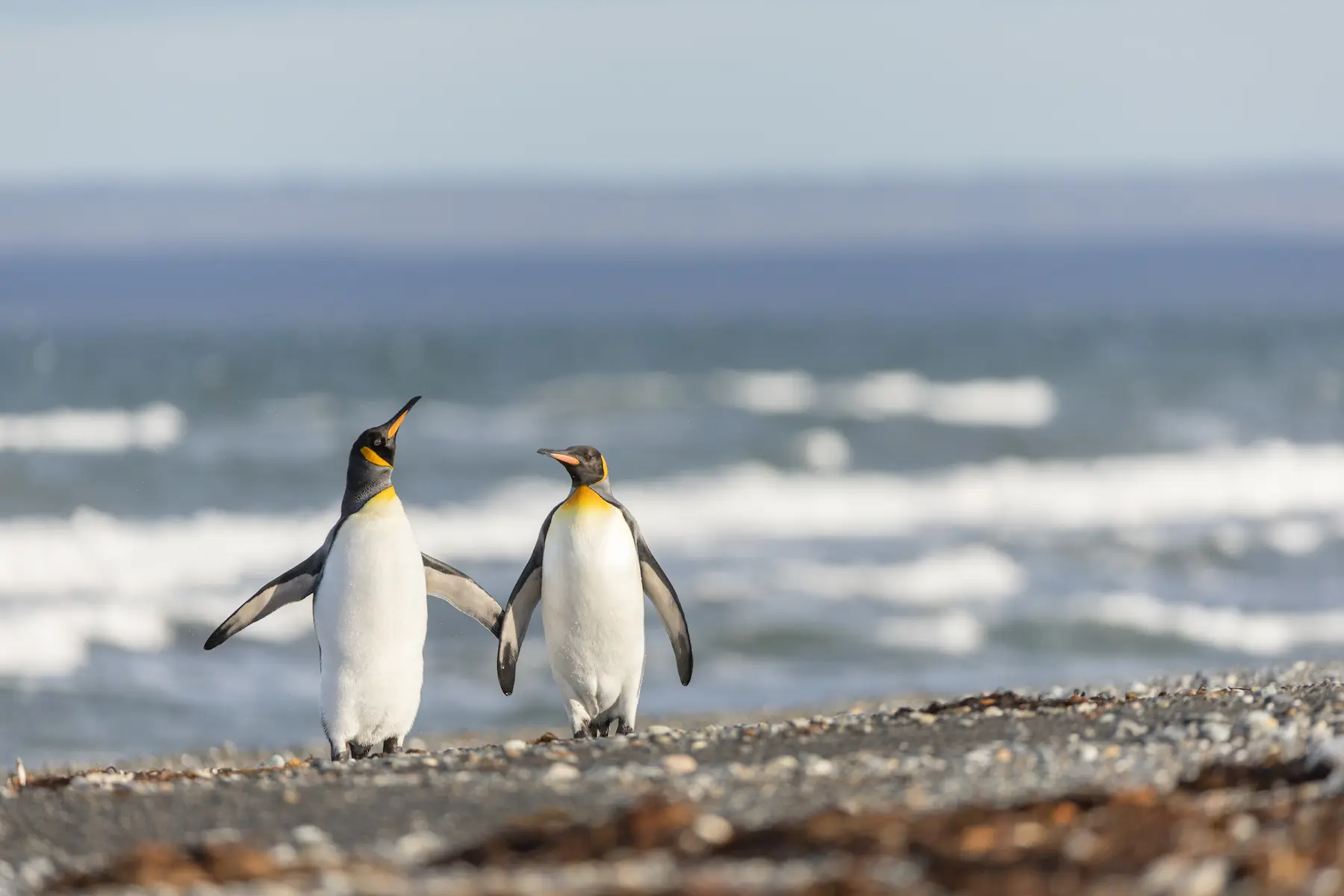
The plan from Punta Arenas was to head even further south first, down to Tierra del Fuego, to photograph a very special colony of king penguins.
These penguins are unique because they are the only king penguins in all of Chile, living on a small section of beach on Tierra del Fuego. Just getting there is part of the adventure. We left early in the morning from the hotel in a town that really makes you feel like you’re at the end of the world. It’s one of those places where you look around and realize there isn’t much beyond it except wind, ocean and empty land stretching into the distance.
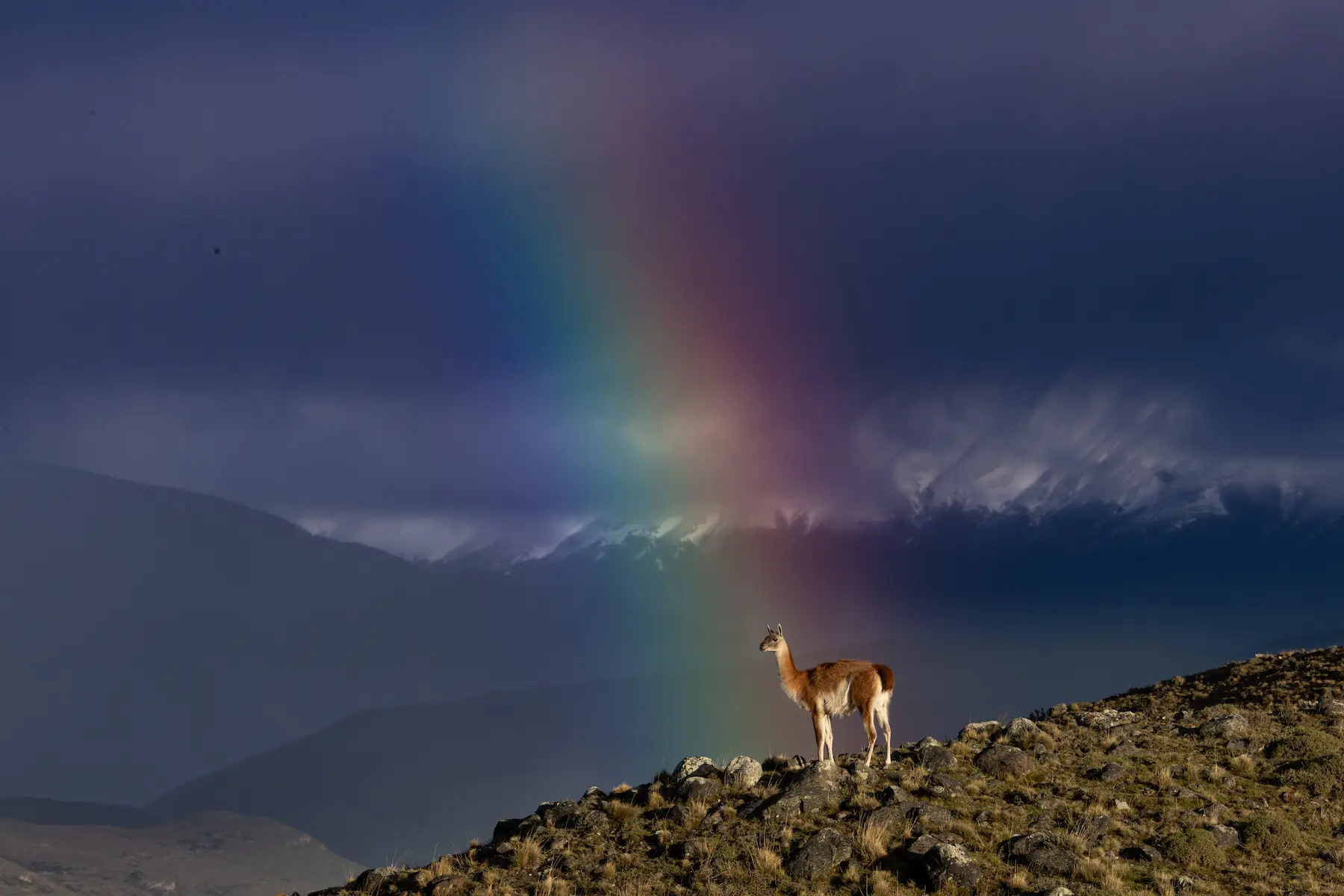
The drive itself was beautiful in that quiet, wild way Patagonia has. Endless open plains covered in tough golden grass, low shrubs clinging to the ground, and big skies stretching in every direction. Along the road we passed countless guanacos grazing in the open landscape, completely at home in a place that feels incredibly remote.
Eventually we reached the coast and walked down to the beach where the colony lives.
The morning was cold and a little windy. We kept a respectful distance of about 100 meters, which is the closest you’re allowed to approach them. Even from that distance it was incredible to watch them moving around the beach. A few of them made their way down to the water and slipped into the ocean for a swim.
Visitors can come and see the penguins here, and we were actually the first tourists allowed to walk on this particular beach at the research station. There is another viewing platform nearby, but we were able to go down onto the beach and observe them from there, which was really special.
We were able to do this through a small donation to the project. They are starting to explore the idea of bringing in a little bit of eco tourism to help fund the research and protection of the colony.
The nice thing is that because the area is so difficult to reach, and because the colony and the beach itself are quite small, it will never grow into something massive in the tourism world. But it can still provide helpful funding and support for the work being done there.
After spending time with the penguins and taking photographs, we made the long journey back toward Punta Arenas before continuing north.
We spent the vast majority of the day driving, and I love travelling like this because you really get to appreciate the size of a place. You see a lot along the way, and you watch the landscape slowly change as you move through it.
As we made our way toward Torres del Paine, we had another mission on our hands.
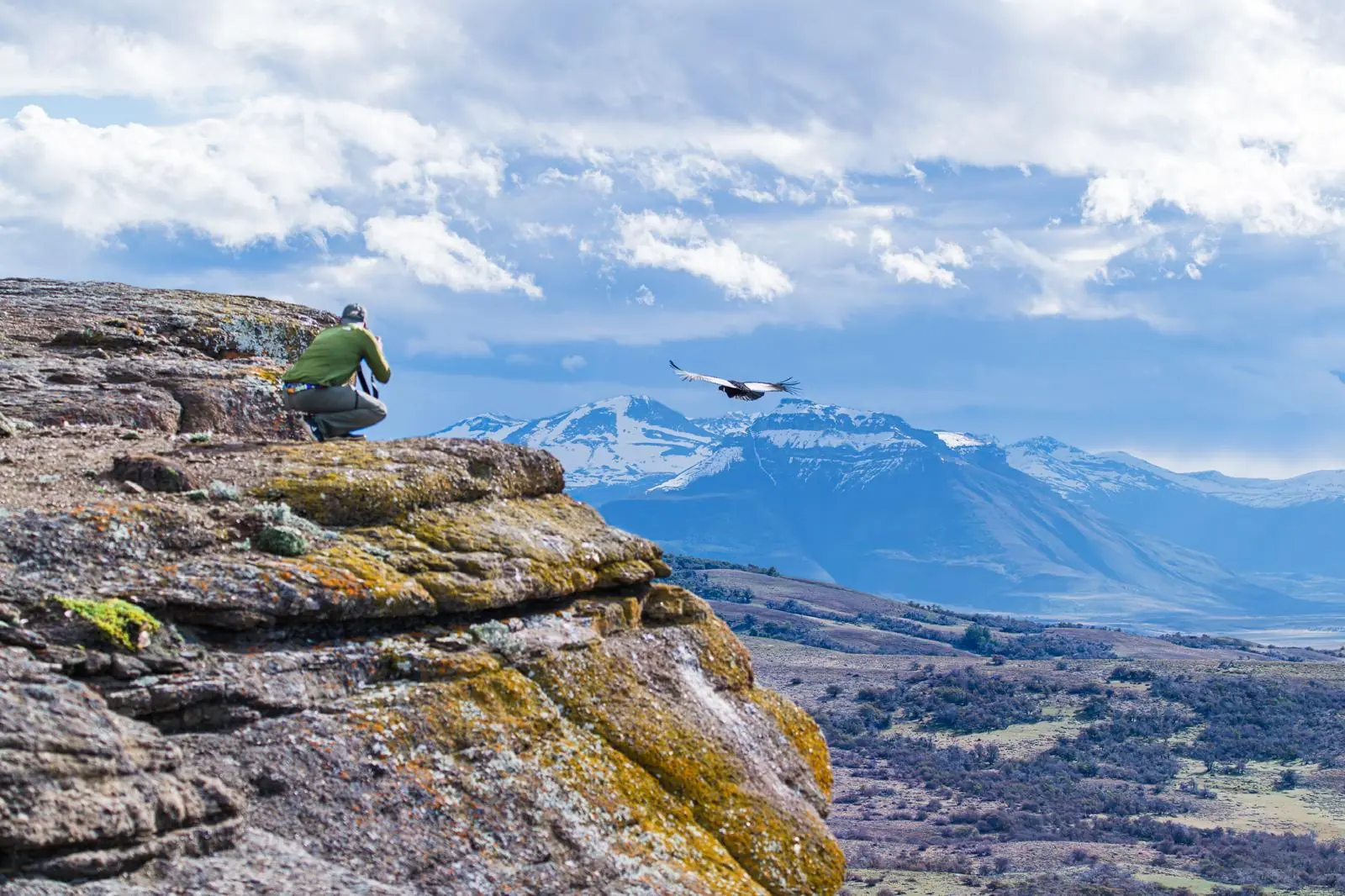
We entered what really felt like no man’s land along the border between Argentina and Chile to photograph Andean condors. From the road we drove about thirty or forty minutes up onto an escarpment and then walked for another half hour or so to the edge of a cliff.
This is where the famous Patagonian wind comes crashing into the cliffs, creating powerful updrafts that the condors use to glide effortlessly through the air.
And glide they did.
These birds are enormous. The Andean condor has one of the largest wingspans of any flying bird on Earth, reaching around three metres across, and they can weigh up to around 15 kilograms. When they fly past you at close range it is something you don’t forget.
They came in incredibly close, sometimes so close that you could hear the wind whistling through their feathers as they passed by.
The setting made it even more spectacular. Snowy mountains in the background. Open grasslands stretching for miles. Sheep and guanacos grazing across the plains. Massive farms scattered across the landscape, with very few people living out here.
It feels wild in a very real way.
The weather is extreme, but somehow it makes you feel alive. The air is so crisp that when you breathe in it almost burns your lungs, but it feels incredibly fresh at the same time.
Standing on that cliff with my guests, photographing these incredible birds as they soared past us, was a truly special experience.
Up close, the condor almost looks like a mixture between a vulture and a turkey. Not traditionally beautiful perhaps, but unbelievably impressive.
From there we continued our journey toward our final destination. After stopping at a small roadside shop for a coffee and picking up a knitted alpaca wool jersey for my daughter back home, we continued on toward Torres del Paine and our base for the next few nights, Hotel Las Torres.
As we approached Torres del Paine for the first time, my heart started racing again. At the same time the sun dropped below the horizon and we arrived at Hotel Las Torres in darkness.
Then through a small opening in the clouds we saw them for the first time. The famous three towers of Torres del Paine rising behind the hotel.
Even in the fading light it was an incredible sight.
The landscape around the park immediately grabs you. Enormous granite mountains rising sharply out of the plains, turquoise lakes and deep blue rivers cutting through the valleys, and clouds constantly moving across the peaks. The weather changes constantly. Sun, wind, snow, clouds, light breaking through again. The whole place feels alive.
Along the drive into the park we had already started seeing signs of pumas. Groups of guanacos feeding across the hillsides and valleys, the main prey for the cats.
We checked into our rooms, beautiful rooms with large windows looking toward the mountains. It was cold, windy and dark outside, so we dropped our bags, warmed up with showers and then met again for a well deserved drink and dinner.
The excitement around the table was obvious.
The plan from here was clear. The next six nights were all about pumas.
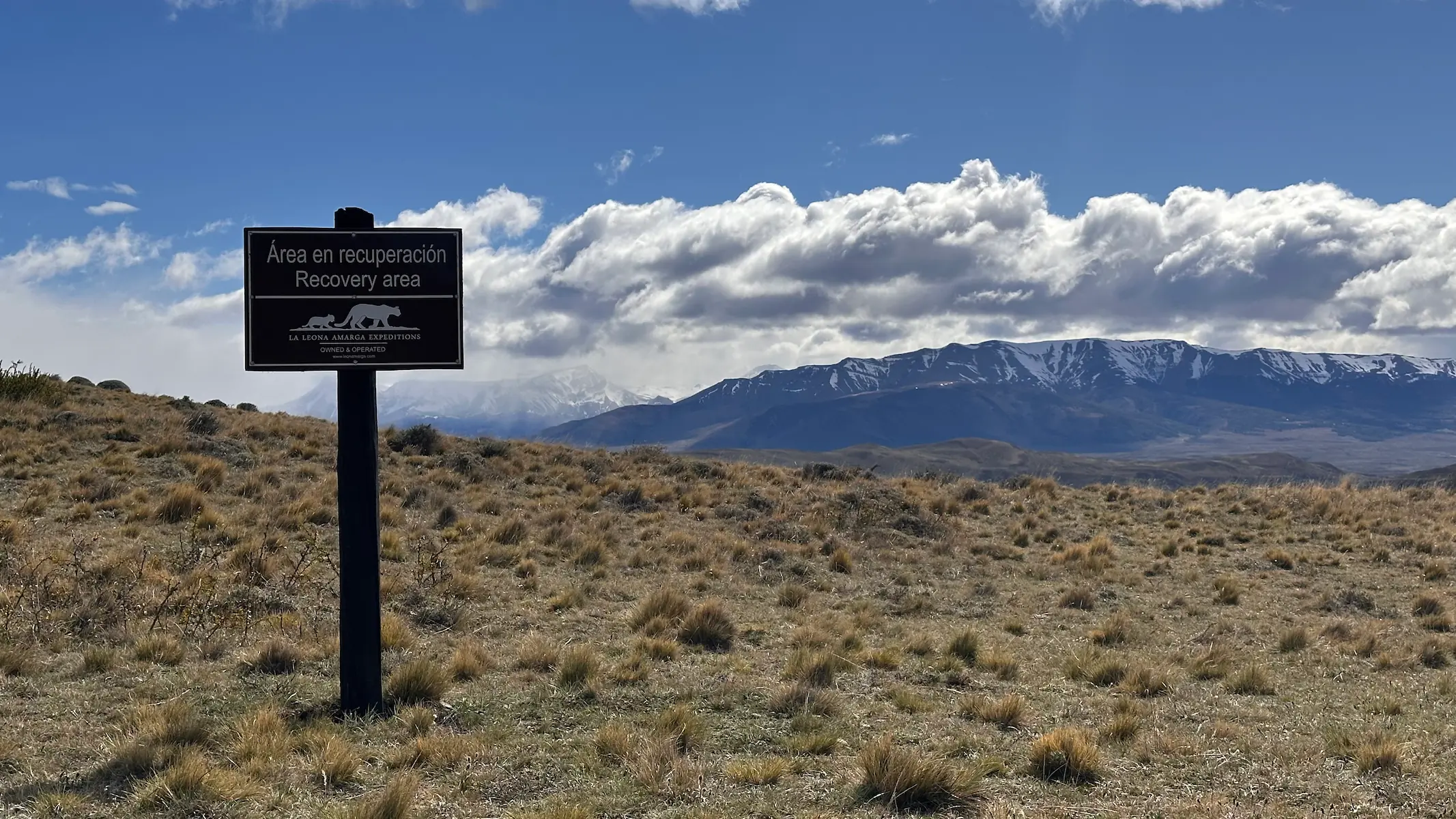
In Torres del Paine you always have a chance of seeing pumas. People hike through the park and sometimes get lucky. But the best way to do it is with experienced guides on a private estancia just outside the park called Estancia Amarga.
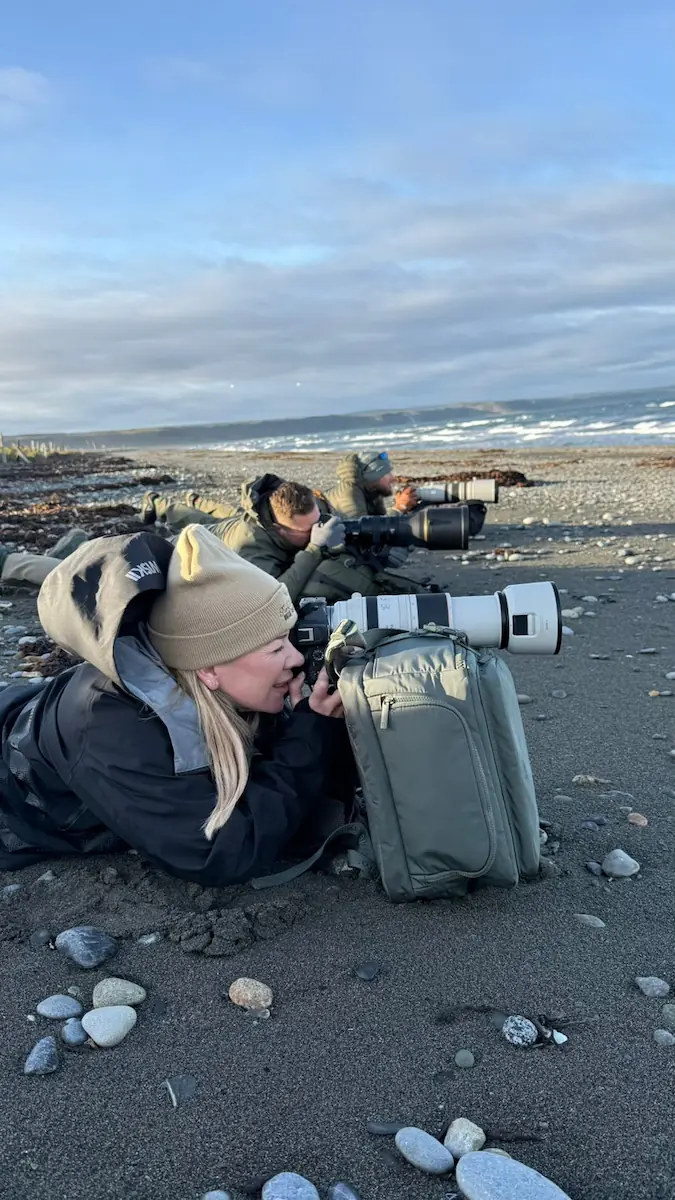
Only eight people at a time are allowed to approach a puma on foot.
Over many years the pumas here have slowly become habituated to researchers and guides walking in their environment. That allows for something very special. You can observe and photograph them while moving through the same landscape they do.
Every morning starts in the dark.
We drive out along windy roads past lakes that change colour constantly depending on the light. Some days they glow turquoise, other days deep blue or steel grey under heavy clouds. The mountains appear and disappear as the weather shifts.
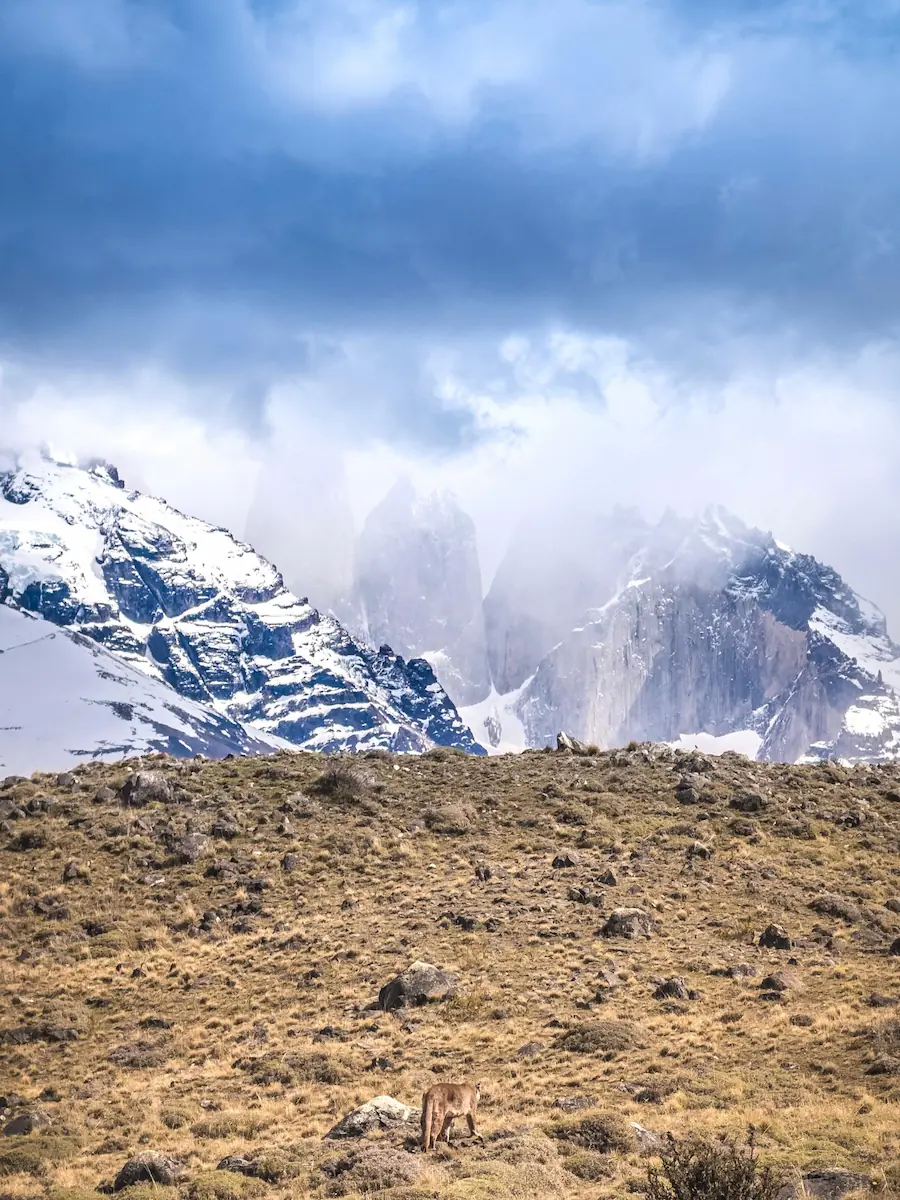
From high points we scan the landscape using thermal scopes, searching for any sign of movement.
Often the first thing you see is a guanaco. And that matters, because guanacos often reveal the presence of the puma.
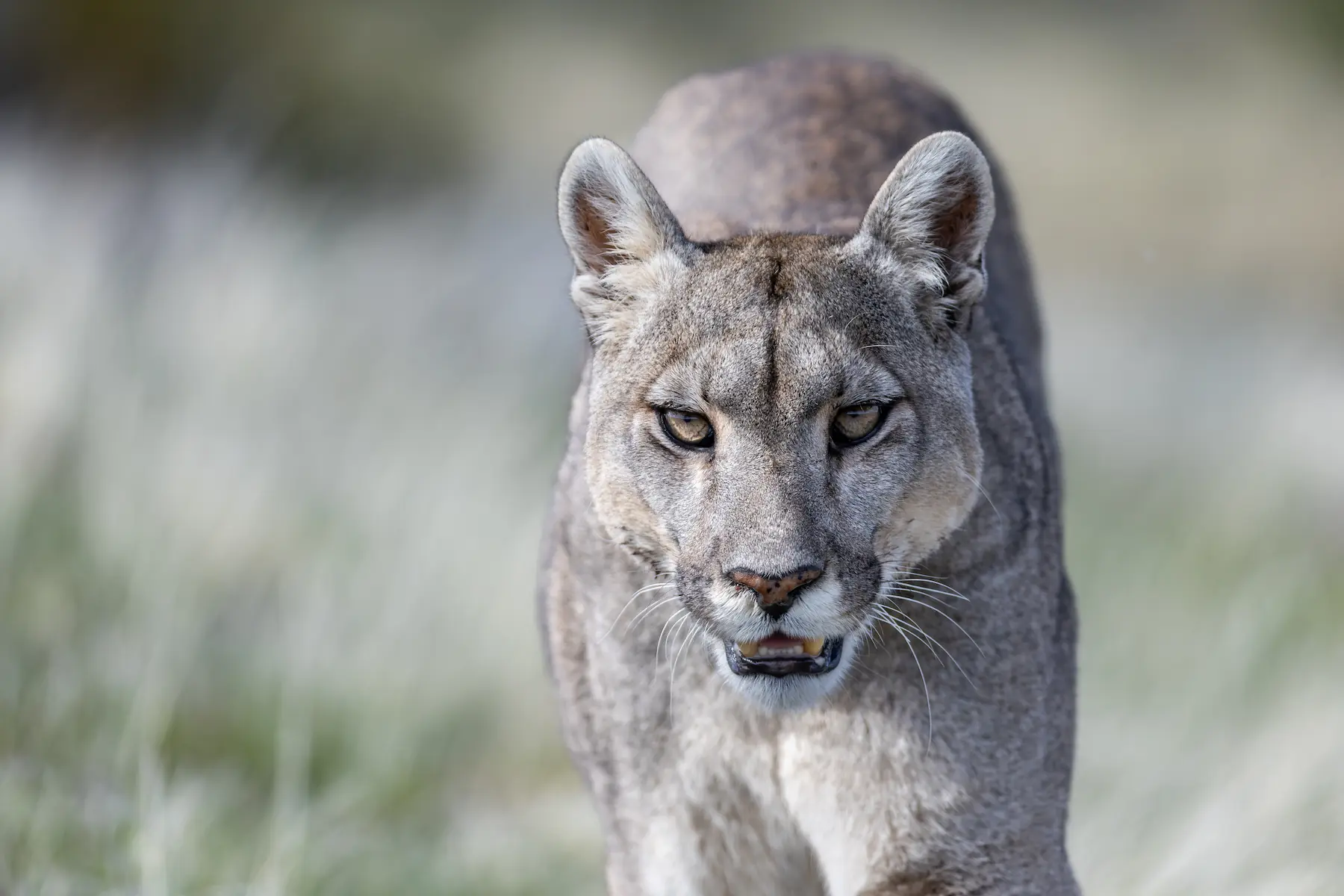
The puma is known locally as the ghost cat, and for very good reason.
On our first morning it was cold and windy. We had been searching for around an hour and a half when we got a call from the second vehicle in our group. Someone had spotted a puma on a distant ridge.
When we arrived we realised there were two.
A male and a female together.
Our first pumas.
The rule when there are two cats together is to stay at least one hundred metres away. It sounds far, and it is, but it ensures the cats remain completely undisturbed and continue behaving naturally.
Even at that distance the moment was overwhelming.
Seeing my first wild pumas, a mating pair resting on the ridge, was something I had dreamed about for years. Standing there breathing the cold air, watching them through binoculars and occasionally lifting the camera.
I tried to completely absorb the moment.
We stayed with them for about an hour before heading back to the hotel for lunch, celebrating our first sighting.
Later that afternoon we found the female again. Her name is Ginger. The male appeared later, calling along a ridge.
We followed him on foot as best we could until he slipped into the rocks and disappeared.
From where he had hidden we actually walked past within metres of him without realizing it.
Eventually he stuck his head out from a crack in the rocks and watched us quietly before settling down to sleep.
And that’s how the days unfold there.
Every morning begins with a blank canvas. Searching. Scanning. Guides sharing information. Slowly piecing together where the cats might be.
Some of our sightings were extraordinary.
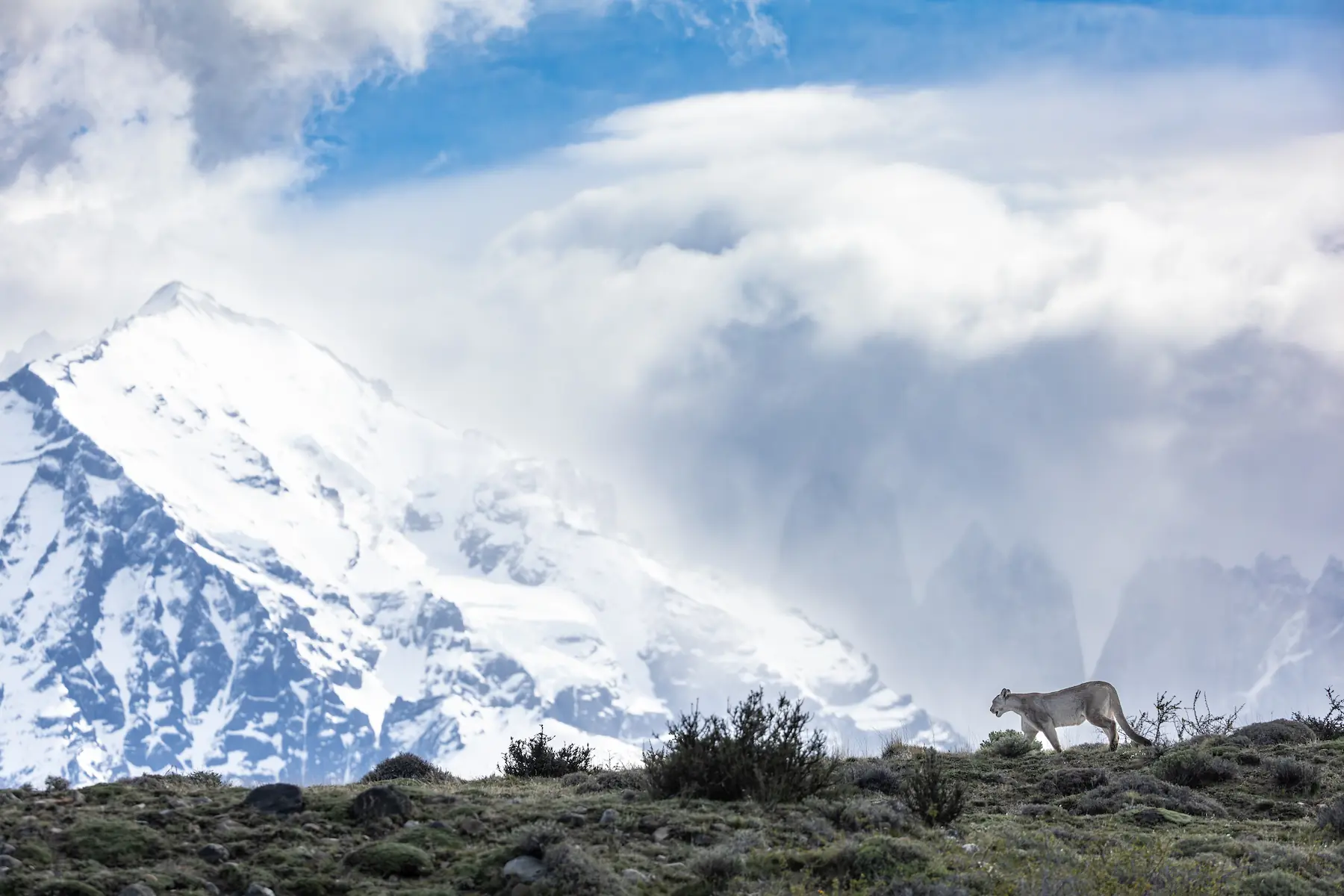
One photograph I had always wanted was a puma walking with the three towers of Torres del Paine in the background.
On our very last morning we spent four hours on foot with a famous female called Pataka. We followed her as she hunted, rested, stalked and moved through the landscape.
Then she walked into position.
A puma crossing the valley with the towers behind her.
It is a photograph I still can’t quite believe I captured.
What makes this place so special though is the respect.
The pumas come first. Always.
You give them space. You let them behave naturally. Sometimes they choose to walk closer than the recommended distance. When that happens you simply stay still and let them move past.
Standing there with nothing but wind and the sound of their footsteps in the grass is something deeply beautiful.
The pumas and this park completely stole my heart.
The weather plays a huge part in that somehow. The wind, the constantly shifting light, the challenge of working in those conditions. It makes everything feel more alive.
And yet, as we drove out of the park that morning, I realised something quite interesting about the place.
Torres del Paine doesn’t just impress you with one thing. It’s not only the pumas. It’s not only the mountains. It’s not only the weather or the scenery. It’s the combination of everything together.
The scale of the place is enormous. The mountains rise up out of the landscape in a way that almost doesn’t seem real. The towers themselves look like something carved out of the sky. Then below them are lakes that shift colour constantly. One moment deep blue, the next moment turquoise, then steel grey when the clouds roll in.
And the clouds are always moving.
The weather in Patagonia has a personality of its own. Wind sweeping across the valleys, sudden bursts of sunshine lighting up the peaks, clouds racing over the mountains, and sometimes snow blowing through even when the sun is shining somewhere else in the park.
At first the wind feels almost aggressive. It pulls at your jacket, pushes against you when you walk, and makes photography a real challenge. But after a few days you start to appreciate it. It becomes part of the atmosphere of the place. It keeps everything moving and changing.
Nothing stays the same for very long.
One moment the mountains are hidden behind thick cloud and the landscape feels dark and moody. Then suddenly the clouds part and sunlight pours through, lighting up the towers and the valleys beneath them.
Every drive through the park feels different.
Even on our final morning, as we left after our last encounter with Pataka, the landscape looked completely different again. The wind had softened slightly, the lakes were glowing under the morning light, and the mountains stood clear against the sky.
We took our time driving out.
There was no rush.
Guanacos grazing across the hillsides. Condors drifting high above the cliffs. Rivers cutting through the valleys with that unmistakable turquoise colour that Patagonia seems to produce so effortlessly.
It gave us time to reflect on the week we had just experienced.
Walking with pumas is something very special. Not seeing them from a vehicle, not spotting them briefly on a distant ridge, but actually sharing the landscape with them. Watching them move through their world on their terms.
It changes the way you think about these animals.
You realise just how perfectly adapted they are to this environment. How effortlessly they move across terrain that feels difficult even just to walk across. How quietly they appear and disappear into the landscape.
The nickname “ghost cat” suddenly makes complete sense.
For me personally, it was something I had hoped to experience for many years. Patagonia had been on my mind for a long time, and finally being there with my guests, sharing those moments together, made it even more meaningful.
Trips like this remind me why I love guiding wildlife experiences so much.
Yes, the photography is incredible. Yes, the landscapes are breathtaking. But the real magic is sharing those moments with people. Watching someone see their first wild puma. Watching their reaction when a condor passes overhead with a three metre wingspan.
Those are the moments that stay with you.
As we eventually left the park behind and continued the long drive back to Punta Arenas, I had a strong feeling that this wouldn’t be my last time here.
Some places stay with you long after you leave them.
Torres del Paine is one of those places.
And the pumas are the reason I will return.
How to book your Puma Safari to Patagonia
A puma safari to Chilean Patagonia is one of the great wildlife journeys available anywhere in the world. It combines extraordinary big cat encounters with some of the most dramatic scenery on Earth, guided by someone who knows these animals and this landscape intimately.
We build every itinerary around your travel dates, photography goals and pace. Small groups only. Private options available. This journey includes four full days to watch and photograph pumas, wildlife and scenery. These experiences start from $6,500 per person sharing (2 people), and $5,400 per person sharing (group of 4), and include:
- 5 nights accommodation
- 4 full days puma tracking
- Breakfast, lunch and dinner
- Snacks, water, coffee and tea during excursions
- Ranch Fee
- Park Fee
- Guide
- Tracker
- Transfer to and from the airport
Contact us to start planning your trip now!
Written by Nick Kleer
.webp)
.webp)





.webp)