
Volcanoes Safaris: ecotourism at its finest in Uganda and Rwanda
This blog series consists of 4 parts:
- Part 1 is about our first encounters with the Great Apes of East Africa during our two Chimpanzee treks in Kibale National Park and Kyambura Gorge
- Part 2 covers the differences and similarities between Gorilla trekking in Uganda and Rwanda
- Part 3 reflects on the difference between chimpanzee and gorilla trekking, as well as the wider conservation context of the protection of these great apes through tourism. A short bonus chapter details my review of our Golden Monkey trek in Mgahinga in Uganda.
- Part 4 contains my review of our entire itinerary with Volcanoes Safaris, including our many other conservation and community experiences. It details what it is like traveling with Volcanoes Safaris, meeting their team and our thoughts about the five lodges we stayed at.
A Uganda-Rwanda safari with Volcanoes Safaris
In October 2026, Nini and I traveled to Uganda and Rwanda with Volcanoes Safaris (Volcanoes). As a company with an inherent mission to conserve and protect wild spaces and wildlife ourselves, we were drawn to Volcanoes’ ecotourism ethics.
We were keen to explore how they enable conservation and community experiences throughout the lodge collection. In particular, we wanted to see how the close relationship between their lodge collection and their non-profit, Volcanoes Safaris Partnership Trust (VSPT), works in practice. $50 of each guest’s nightly rate at all Volcanoes Safaris lodges supports VSPT’s long-term, self-sustaining projects that enrich the livelihoods of local communities and promote the conservation of the great apes.
Volcanoes Safaris hosted our stay as part of a travel agent educational trip. The opinions mentioned in this overview are our own. We visited all five lodges, four in Uganda, spanning the southwestern edge of the country, and one in Rwanda. The locations of the individual lodges are ideal to explore the Great Lakes region of East Africa, as all are situated near the region’s most iconic national parks. The portfolio spans from Kibale Forest and Queen Elizabeth National Park in the north, down to the Bwindi and Mgahinga gorilla zones in southwestern Uganda, as well as the Virunga volcanoes region in northern Rwanda.
A primate safari in Uganda and Rwanda is nothing like the classic safari experience. No twice daily game drives in a fenced game reserve, where the only other living beings you encounter are lodge staff and wildlife. Instead, expect local communities living side by side - and sometimes amongst - the wildlife in National Parks. Your lodges’ access roads wind between family homes, farms and plantations - some on hills so steep you cannot imagine tilling the fields by hand. And yet, that is exactly what the people living here do, and have done, for decades. You can read more about how this plays out in practice, here.
From meeting the sales team in Entebbe at the start of our safari, to our last day at Virunga Lodge; our Volcanoes experience was consistently high-level, considered and tailored to our wants and needs. A version of luxury that didn’t feel over-the-top or out of touch with the landscape. Rather, a curated, authentic window into the culture and safari landscapes of Uganda and Rwanda.
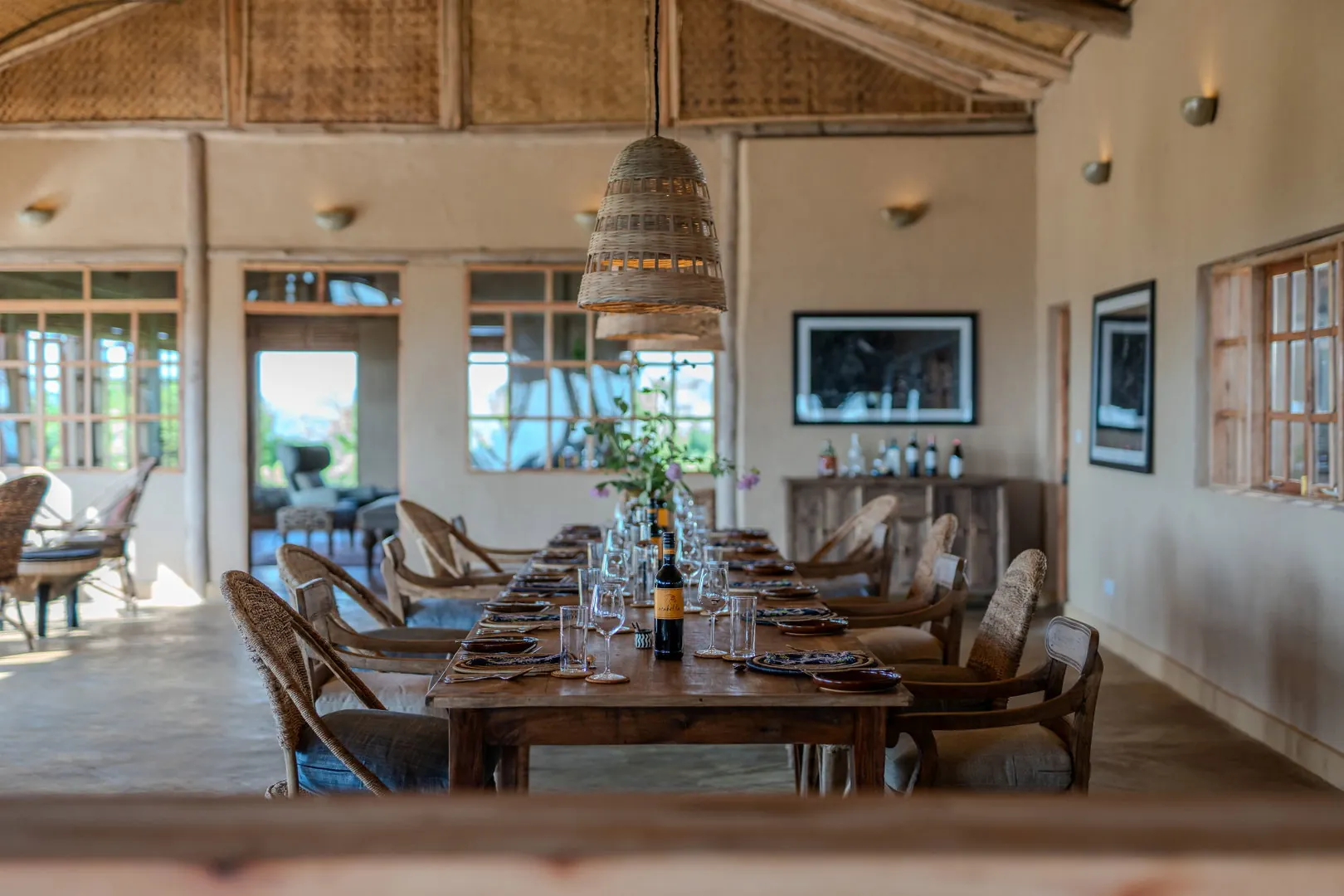
There is a very clear common aesthetic that ties all lodges together, with the main distinguishing features being the common areas. Service was top-notch throughout and we really enjoyed having the same driver and guide for our entire stay per country. The team did a great job communicating our preferences between lodges. Menus were consistent and the quality of the cuisine was elevated without being pretentious. Comforting, homey meals with attention to detail. Perfect for an activity-filled safari!
Below is our honest breakdown of each lodge we visited, their individual highlights, what type of traveller they are best suited for and how we would combine them into the ultimate East Africa primate safari.
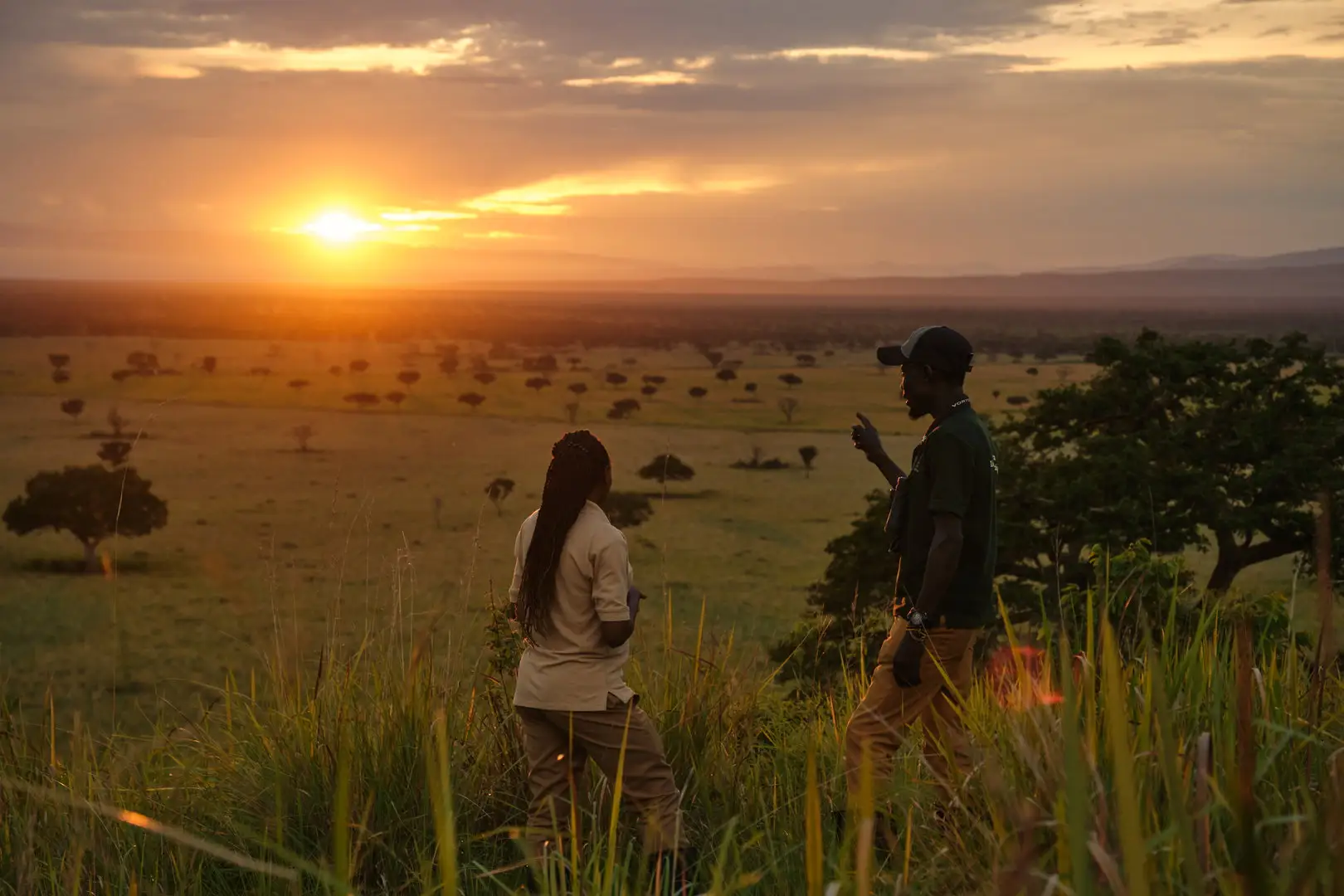
Pre-primate safari pit-stop: Entebbe, Lake Victoria, the Mabamba Swamps and Shoebill excursion
South to East Africa flight connections are known to be tricky, and on these particular dates our flights with Kenya Airways had us arriving a day before our agent trip with Volcanoes started. So we decided to make the most of it and book a boat into the Mabamba Swamps in hopes of seeing the rare Shoebill Stork.
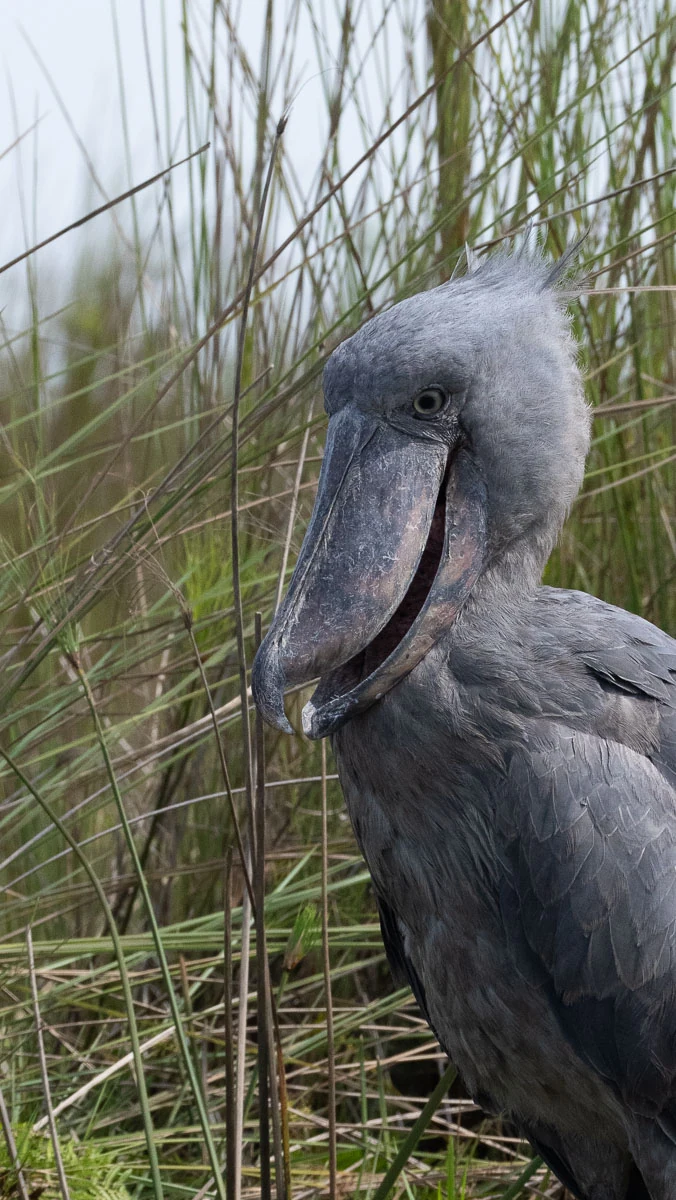
This large, prehistoric-looking bird with a massive bill - you guessed it - shaped like a shoe, is highly dependent on a specific habitat. They are non-migratory and rely on dense aquatic vegetation to hunt and nest. Threats like poaching, human disturbance and habitat encroachment have meant that the species is currently listed as vulnerable.
The Mabamba Swamp on the northern shores of Lake Victoria is one of the few isolated patches where you have the chance of seeing them in the wild. The wild population is estimated between 3,300 and 5,300 mature individuals, and the Mabamba Swamp is home to about 20 of them. The swamp is a recognized Ramsar Site and covers roughly 2,424 hectares of dense papyrus marshes, shallow channels, and lagoons.
We booked our excursion via Wild Frontiers from Entebbe. Entebbe itself is charming, a small, quiet town on the edge of Lake Victoria. Considering that it is a former colonial capital and serves as Uganda's primary international gateway, the small town feeling I got was even more surprising. Perhaps it is because traditional occupations like fishing and agriculture are still prevalent here.
As we got further on in our trip, it felt like the perfect representation of the Uganda we experienced: honest, a little rough around the edges, but naturally beautiful due to the abundant verdant vegetation, friendly people and tropical yet temperate climate.
To get to our Shoebill excursion starting point, we boarded a larger motorboat and crossed the short distance between Entebbe and the water-taxi-rank on the edge of the swamps. This boat ride on Lake Victoria is fast, but beautiful. Somehow, it evokes a nostalgia of being on this famous lake, surrounded by Pied Kingfishers and lush green foliage. As you launch from the dock, you pass by the ferries loading trucks, motorbike taxis and locals going about their daily life. Small wooden canoes fish on the shores, all of it feeling very picturesque.
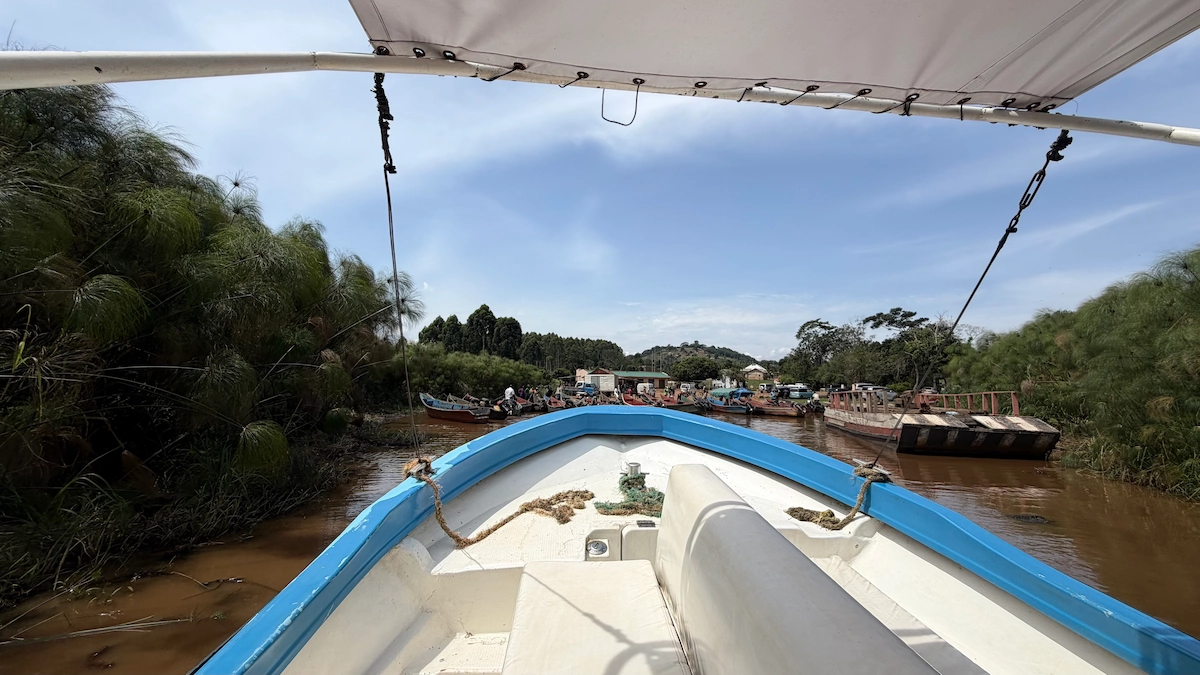
Once we reached the edge of the swamp, we hopped into a typical wooden, motorized canoe used by tourists and locals alike to get around Lake Victoria. Brian, our guide, informed us that the Shoebill we would be looking for, had a 3-month old chick on a nest. Considering that we were looking at a population density of one Shoebill every 120ha, this was a promising starting point! On our way from the water-taxi-rank, we encountered a myriad of other birds in between the papyrus reed and waterlily channels. Nini, as an enthusiastic birder, was delighted with the amount of birds we saw. I particularly enjoyed the many Malachite Kingfishers we encountered!
As we approached the nesting site, we crossed all our fingers and toes that the female would be there and we would hopefully get a glimpse of the chick too. And boy, did it pay off! Because of how our schedule worked out, we were doing this activity in the early afternoon. This meant that we had almost an hour to ourselves with these massive birds. We watched the female preen herself, threaten us with “sure death” should we even try to attempt to steal her chick, and enjoyed the comic sight of the chick trying to walk on its long, stilted legs and balance its massive head and bill. Shoebill chicks, as it turns out, are exceedingly clumsy and very entertaining to watch fumbling around the nest.
The harsh afternoon light made photographing this once-in-a-lifetime encounter a little tricky, but we were truly grateful for our timing as we left the nest site and boat after boat after boat after boat of people trickled past us. As we got back to the dock, we waited on the lawns under the shade of a tree for Steve, and headed back to our hotel: Hotel No5, situated in a quiet residential area in Entebbe town where we spent the night before departing on our primate safari with Volcanoes!
Kibale Lodge: Kibale Forest, Western Uganda | Rooms: 8 bandas (4 deluxe, 4 standard)
A curated introduction to tropical East Africa
Our Volcanoes driver Steve dropped us off at Entebbe airport for our 7am flight to Kasese. A short flight (1 hr) later and we met Francis and Petrus - our drivers and guides for our stay in Uganda - at the tiny airstrip in Kasese. We were a group of 8, hence we had to split up between two cars. Two landrovers, with the typical East African pop-up roofs, but well-appointed with ample space to put our paraphernalia, charging ports and Wi-Fi dongles.
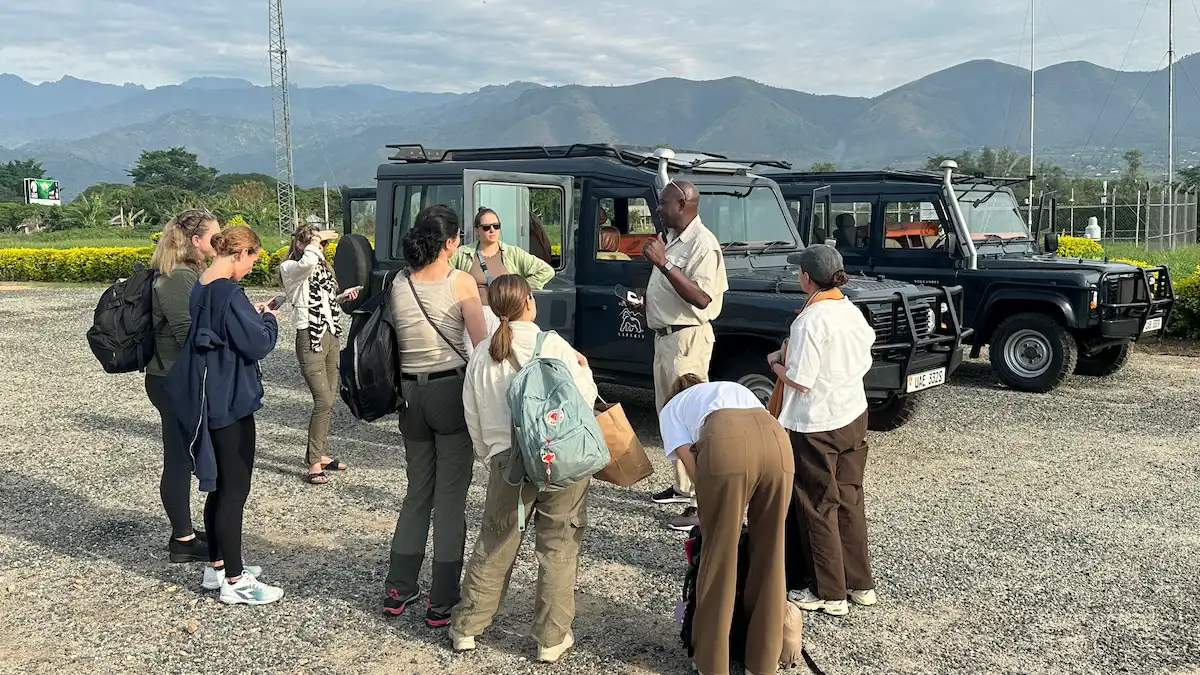
A short briefing and off we went on a 1.5hr drive to Kibale Lodge. We made a stop at the Rwenzori Founders Art Centre; our first foray into the community projects that Volcanoes offers during their Uganda safari tours.
The foundry offers sculptors the opportunity to have their work cast into bronze in well-equipped studios and with skilled craftsmen on hand at every stage of the process. The tour was very informative and the facilities and art on display were impressive. Beyond art, the foundry also works with the local community to preserve the fauna and flora of the Rwenzori Mountains. We thoroughly enjoyed the coffee too. Definitely worth it for art lovers!
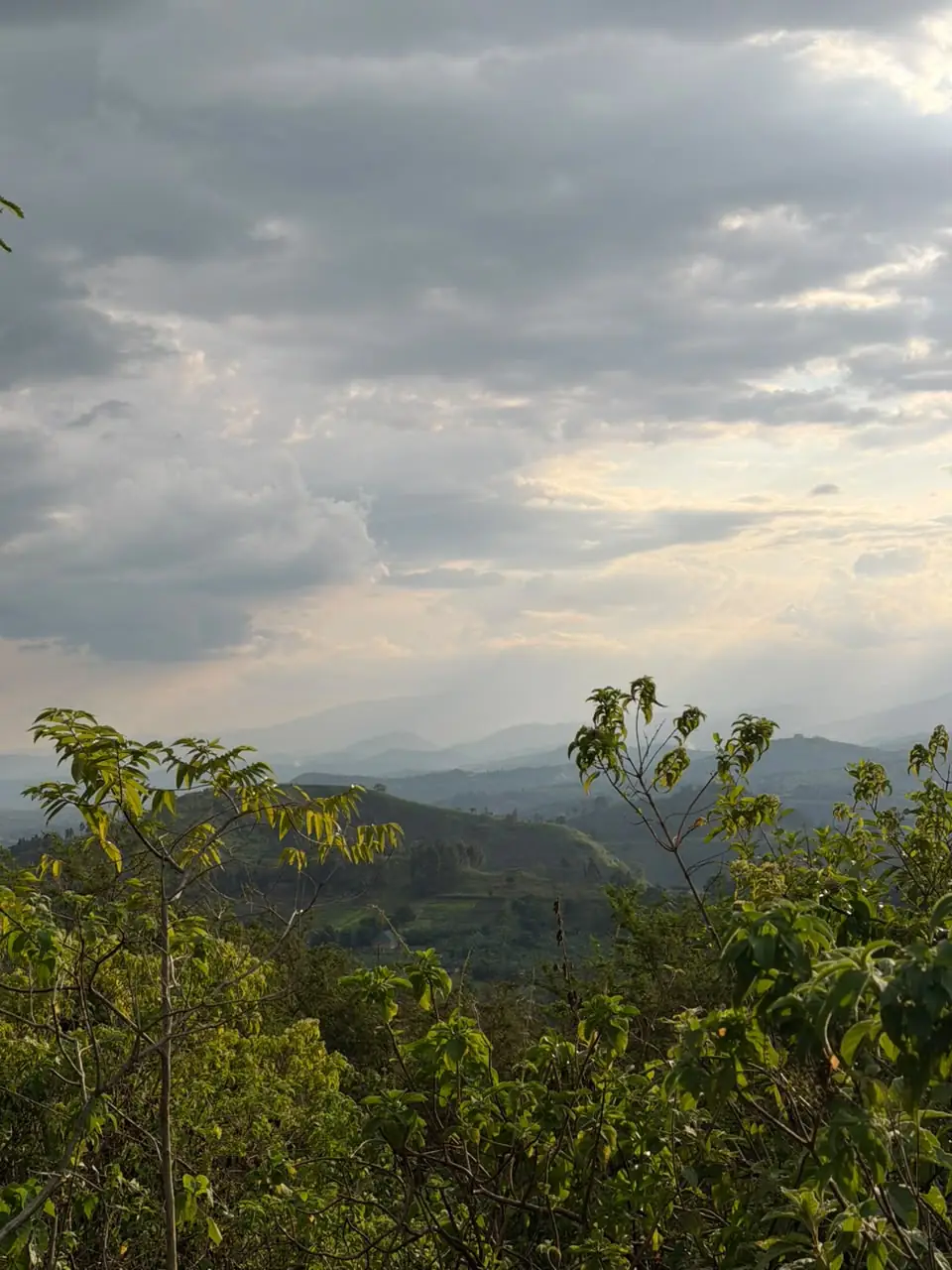
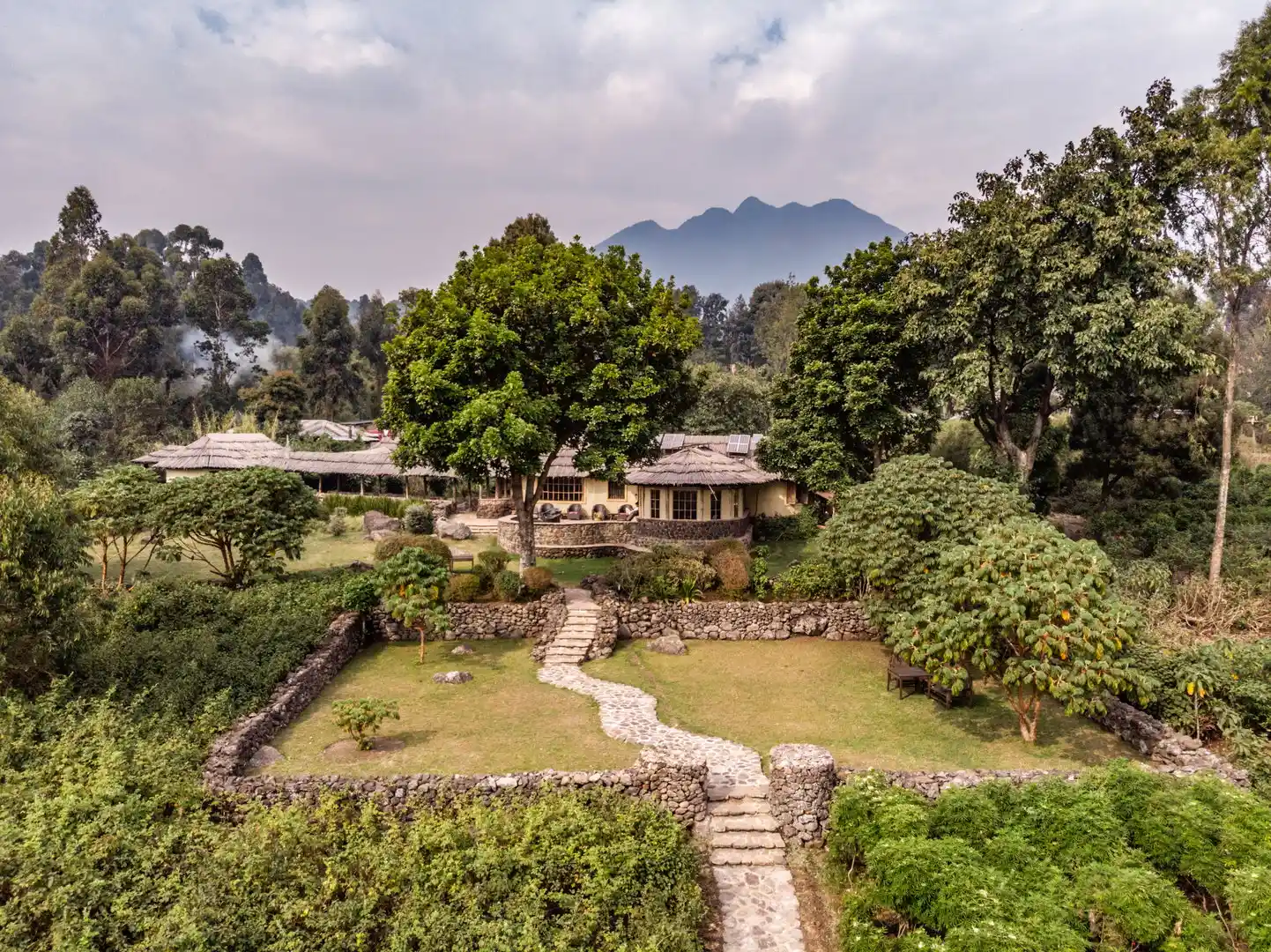
As with the majority of the Volcanoes lodges, Kibale is situated on a ridge and offers expansive views of the surrounding area. To the west, panoramic views of the snow-capped Rwenzori Mountains, to the south the Queen Elizabeth plains and Kazinga Channel, and crater lakes (such as Lake Lugembe) directly below.
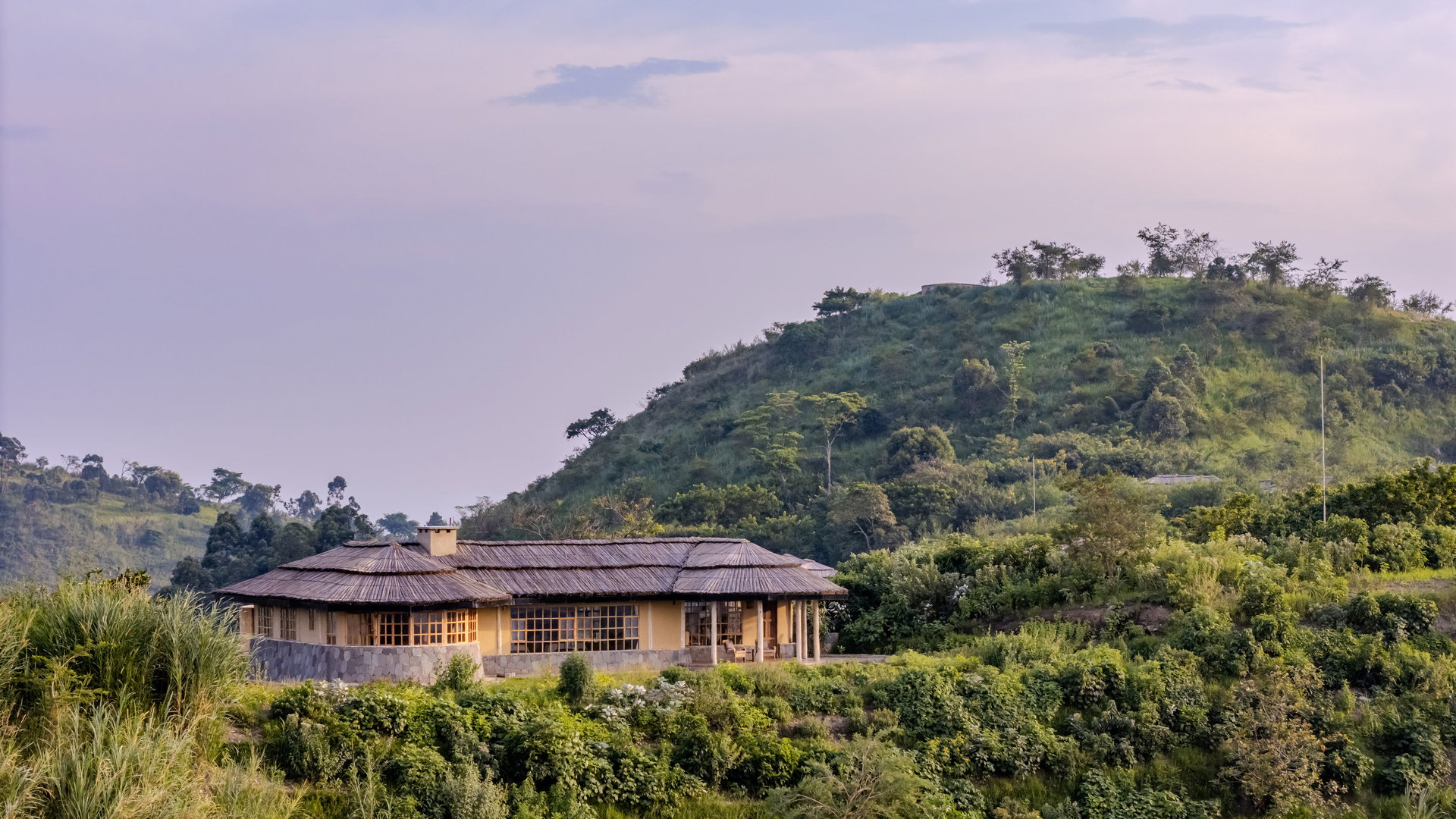
While it is the newest property in the Volcanoes collection, Kibale feels like it has been here for decades. The bollards lining the volcanic rock paths have moss growing all over them, and the gardens are already lush with over 250,000 indigenous seedlings planted. Rooms are extremely spacious and feel light and airy.
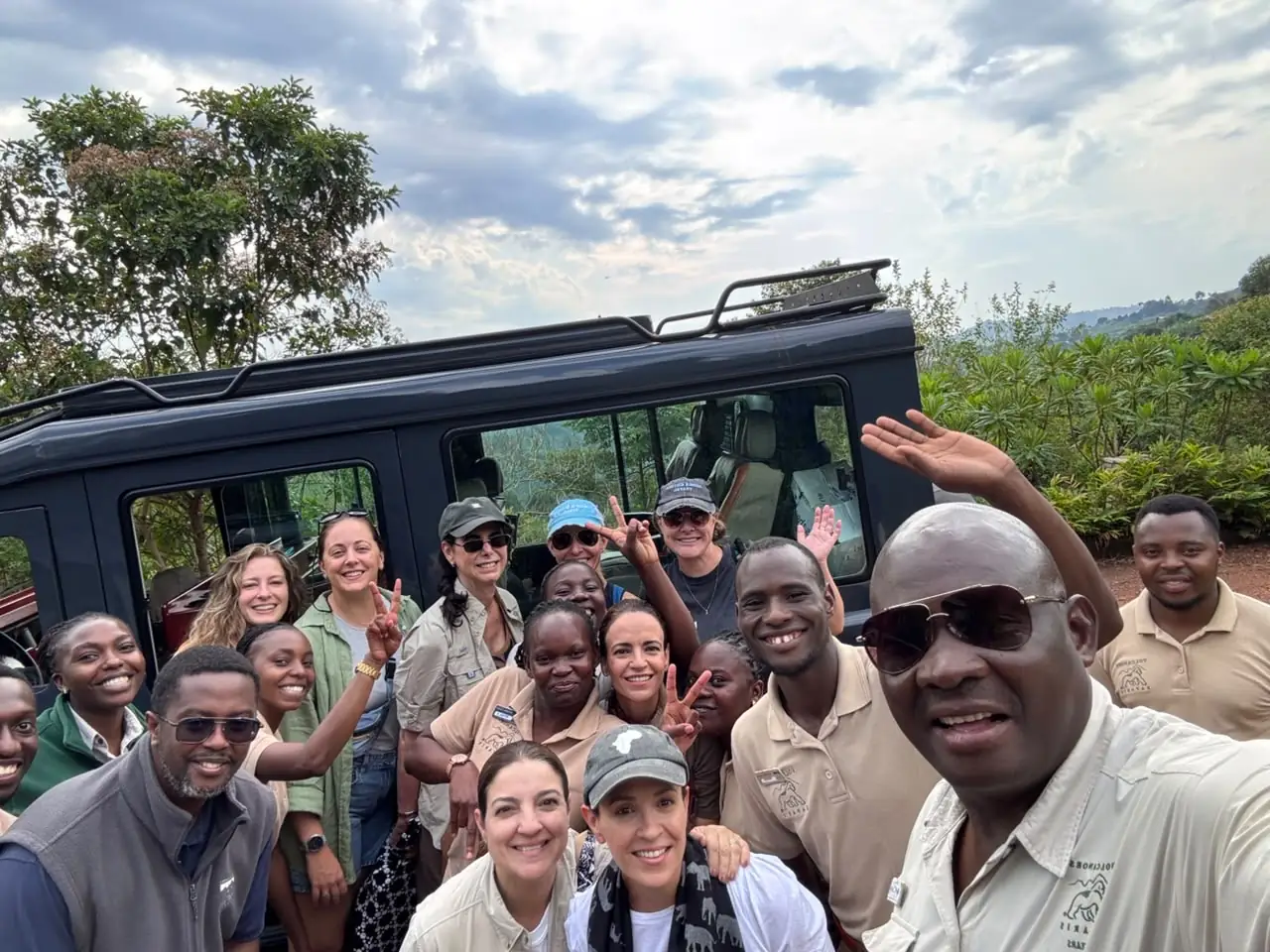
Tonny, the GM and the staff were attentive, yet respectful of privacy and you could feel their motivation to ensure we had the best time. We were a bit sad that we only stayed here for one night, and would have loved more time to enjoy the lodge. AFAR named Kibale Lodge one of the best new hotels in the world in 2025 and I can see why.
Massages throughout the Volcanoes collection are complimentary for lodge guests. The massage therapists at Kibale Spa stood out to our fellow travelers (Nini and I didn’t manage to book in time!)
A chimp-focussed day at Kibale Lodge and Kibale National Park
During dinner, we were joined by Maggie, who is a primatologist from the Kibale Chimpanzee Project. For us as conservationists, it was extremely interesting talking to her about the human-wildlife conflict resolution projects they run. I thoroughly enjoyed connecting with Maggie and swapping ideas with regards to conservation solutions. For some of our travel companions who were less familiar with some of the conservation challenges, meeting Maggie was informative and provided great background to our first chimpanzee trek.
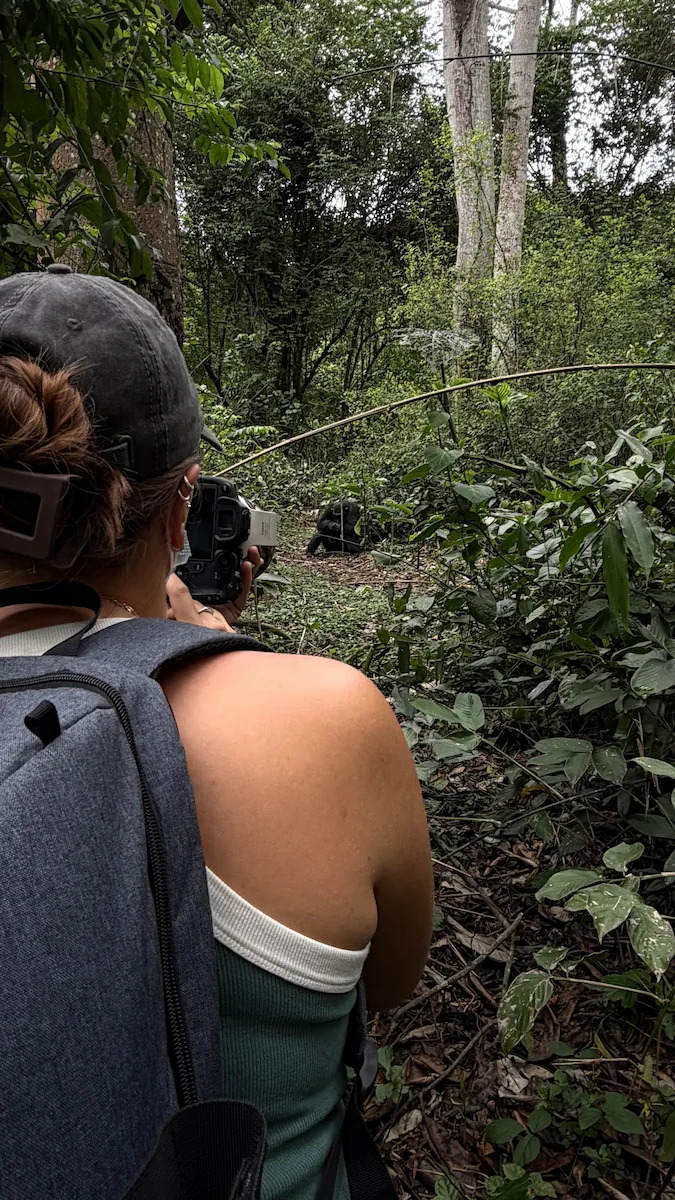
The next morning, the Kibale Lodge staff helped us put on our gaiters, as we prepared to head to Kibale National Park for our first chimp trek. Kibale HQ is about an hour’s drive from the lodge down a bumpy dirt road. On average, chimpanzee treks in Kibale NP are around 3 - 4 hours in total: approx. 1 - 1.5 hours each way to reach your allotted chimp party and 1 hour with the chimps. You can read all about our chimpanzee trek at Kibale Lodge here.
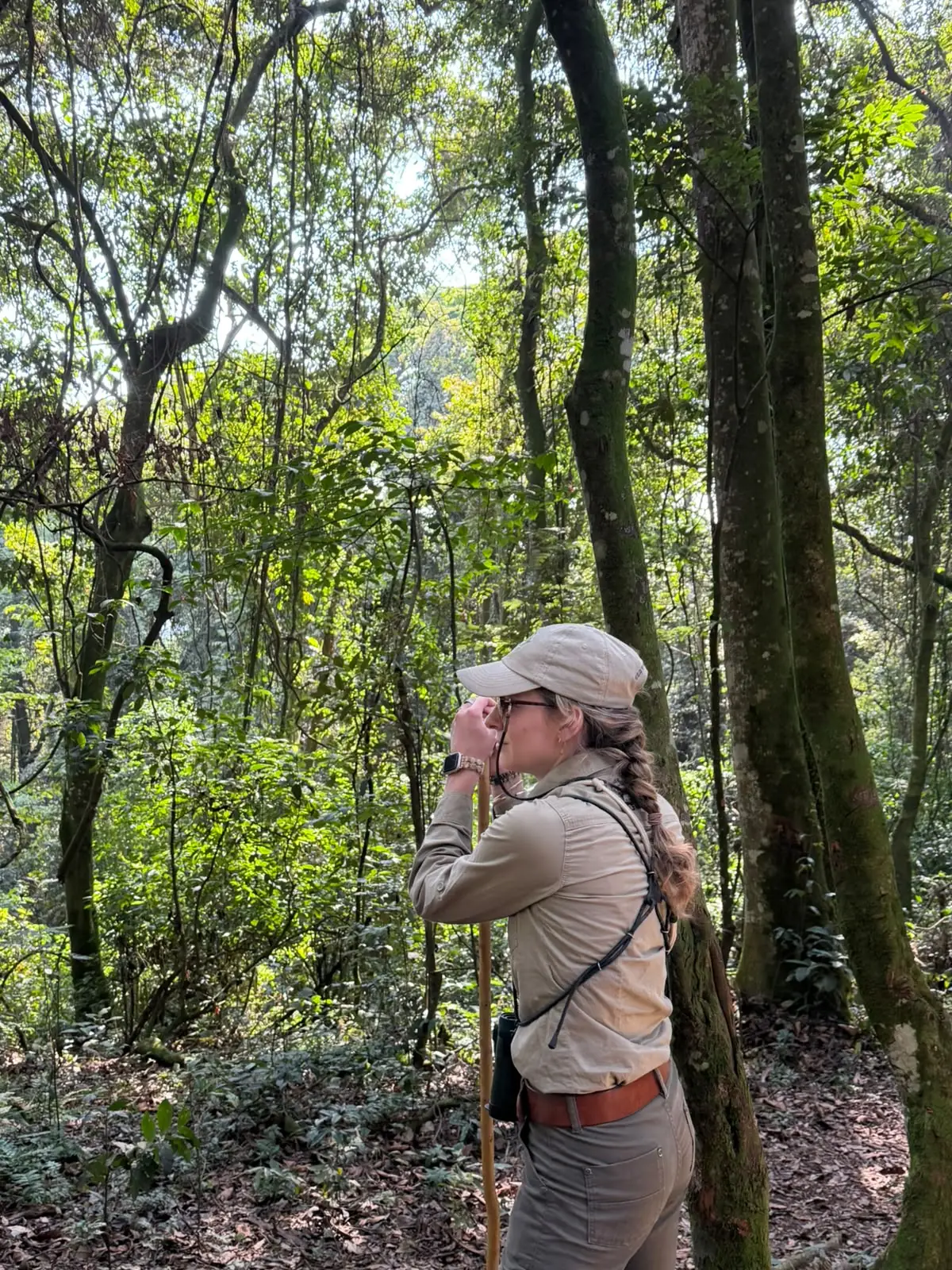
After our chimpanzee trek at Kibale, we made a quick pitstop at the community-run Bigodi Wetland Sanctuary. Home to 138 bird species, as well as black-and-white colobus monkeys, red colobus monkeys, red-tailed monkeys, blue monkeys, grey-cheeked mangabeys, and baboon, you can do a 4.5 km guided community-run boardwalk and swamp trail lasting about 3 hours.
We did a shortened version and our guide Robbie was young and enthusiastic. The walk is a great alternative to the physically more challenging chimpanzee trek and a great option for travelers who aren’t keen on uneven terrain. At the starting point you can buy coffee and crafts to support the Bigodi Women’s Collective.
Kyambura Gorge Lodge: Queen Elizabeth National Park, Western Uganda | Rooms: 8 bandas (4 deluxe, 4 standard)
The 360 experience: chimpanzees, community, and active conservation projects
Kyambura Gorge Lodge is located on the intersection between the Kyambura Gorge and the Kasenyi Plains of Queen Elizabeth National Park (QENP). The convergence of the two means that there is a wide array of activities available, from standard game drives in QENP, to research drives with the Kyambura Lion Monitoring Project, the Kyambura Women’s Coffee Cooperative experience, a boat cruise on the Kazinga Channel, guided nature and wetland birding walks in various habitats, tree seedling planting, visiting the Kyambura Discovery Centre & Roots and Shoots programme, and of course trekking the Lost Chimps of Kyambura. We would have needed to spend our entire 10 days here if we had wanted to participate in all of them.
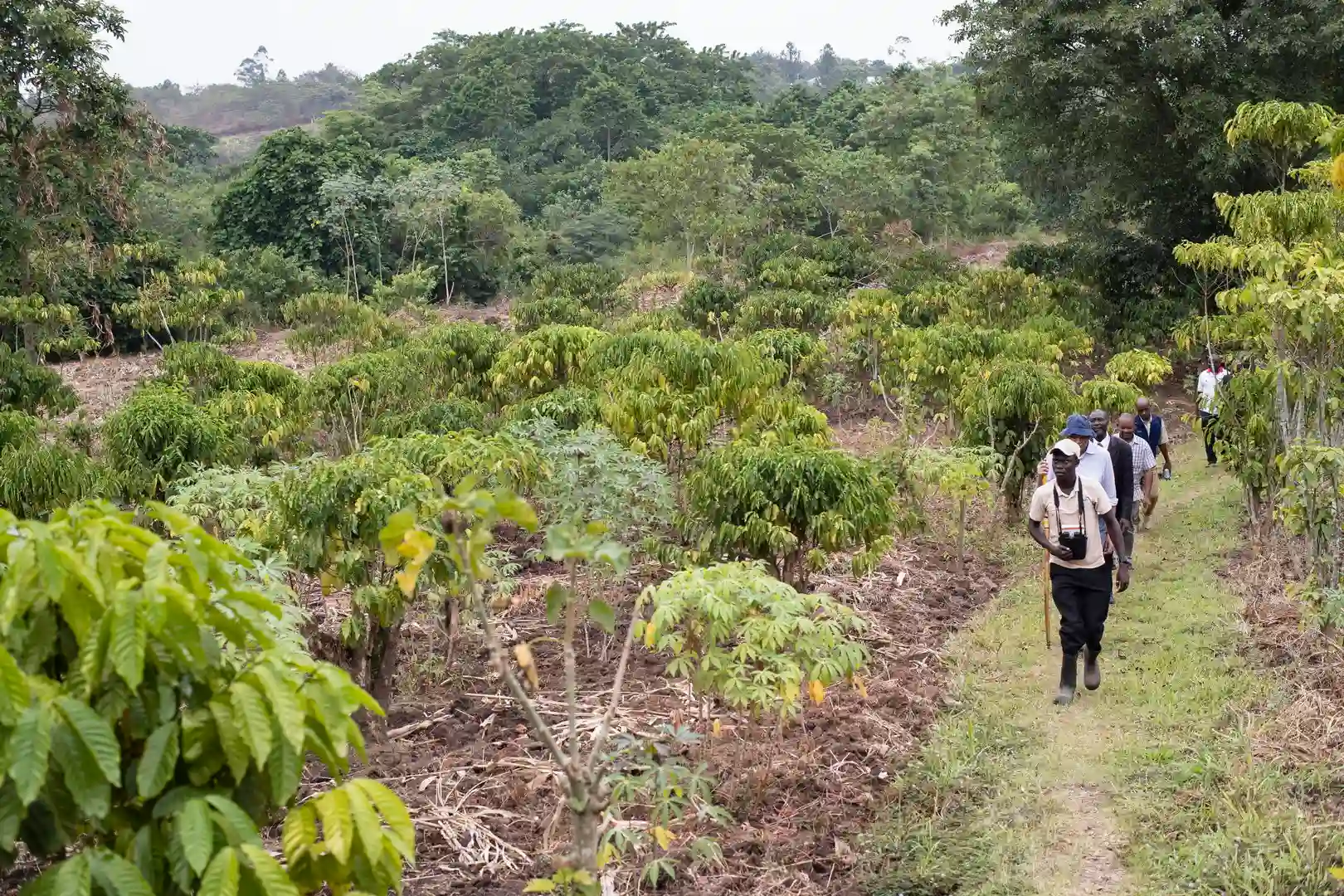
The lodge itself is split into two distinct zones. One overlooking the Kasenyi sector of QENP, and the other at the edge of the gorge itself. The rooms on the QENP side have expansive views, whereas the Gorge-side rooms look onto the community buffer zone on the other side of the Gorge.
Because of the proximity to the neighboring communities, there can be noise-disturbance from the nearby mosque on the one side, and houses on the other. This was the biggest drawback for us, and an important factor to note if you are looking for a more secluded experience.

Our boat cruise on the Kazinga Channel: wildlife (and people) everywhere!
We did two activities whilst staying here, the Kazinga Channel Cruise and of course the chimpanzee trek in the Kyambura Gorge. You can read about our chimp trek here.
An unexpected highlight was the boat cruise on the Kazinga Channel, a 32-kilometer long channel that links Lakes Edward and George. Formed by tectonic forces as the Albertine Rift pulled apart and reshaped the land, today the channel functions as a wildlife haven and source of human livelihoods at the same time.
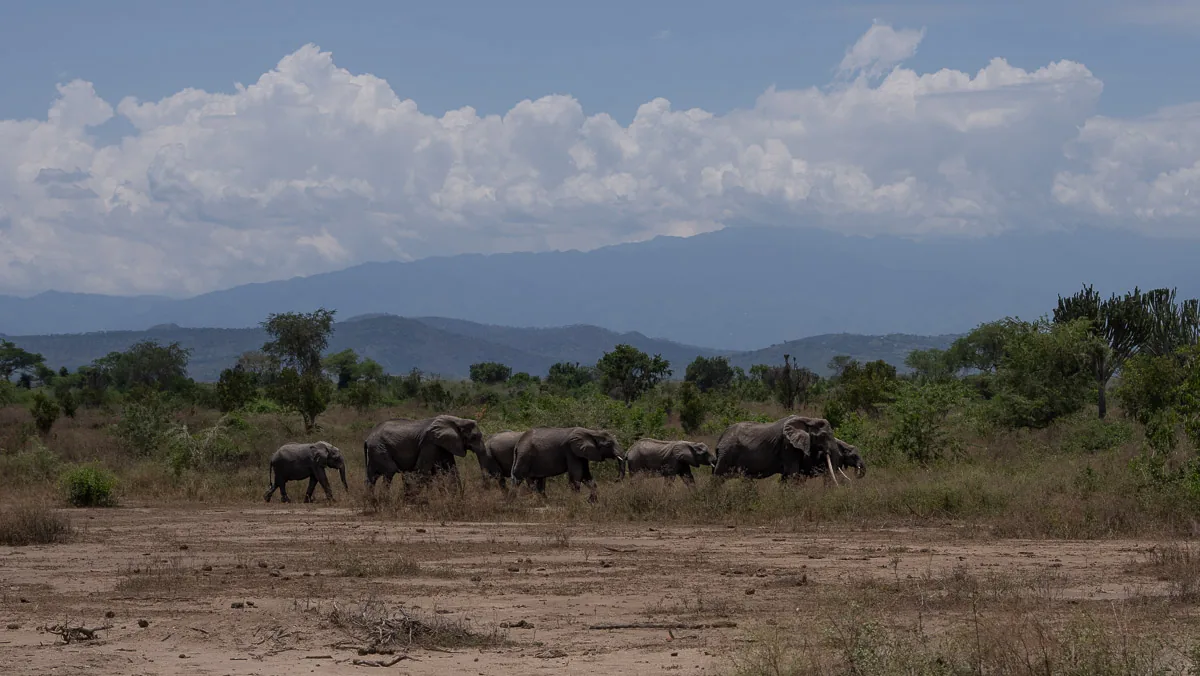
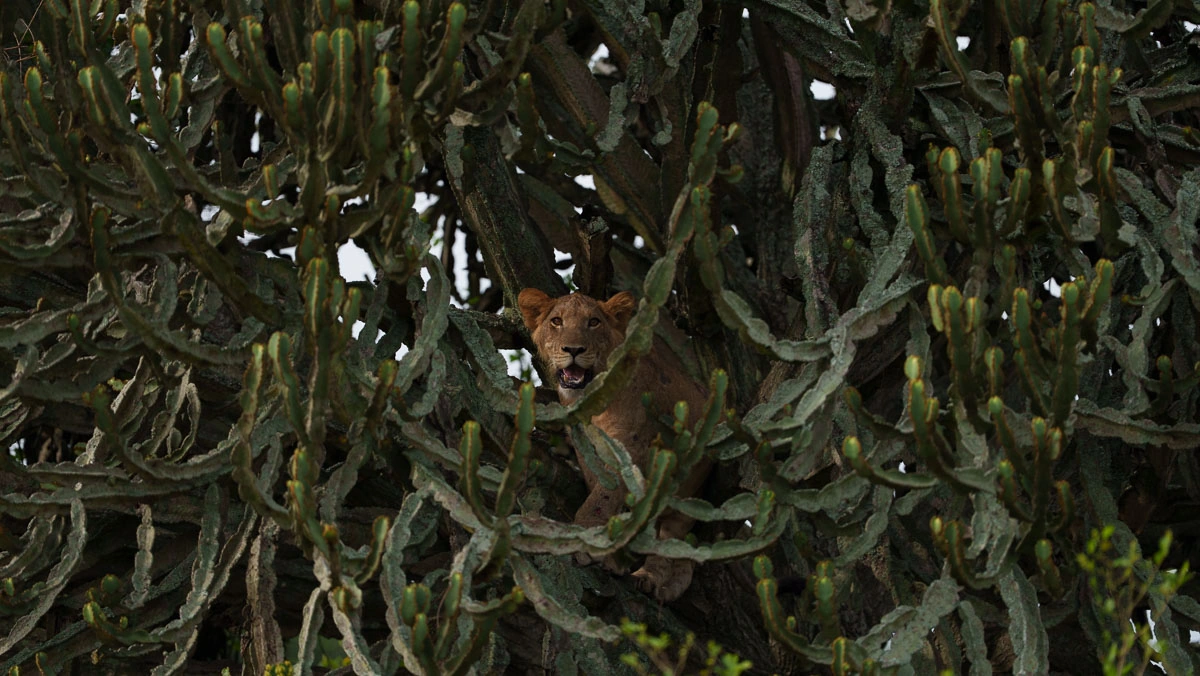
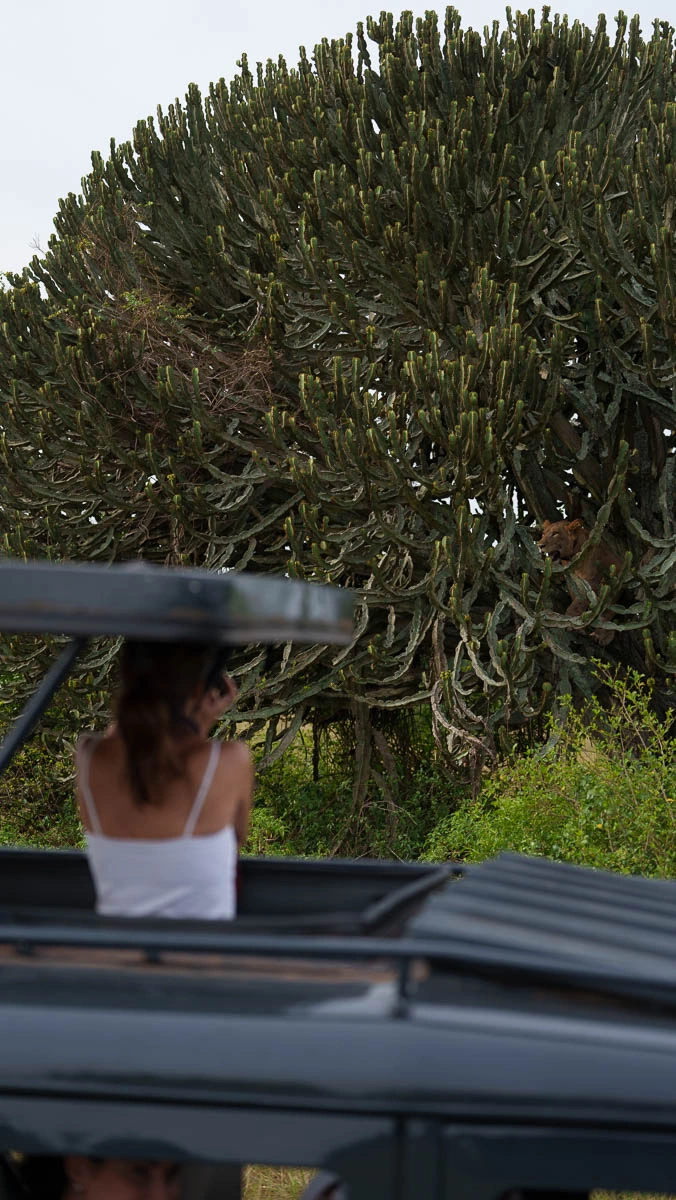
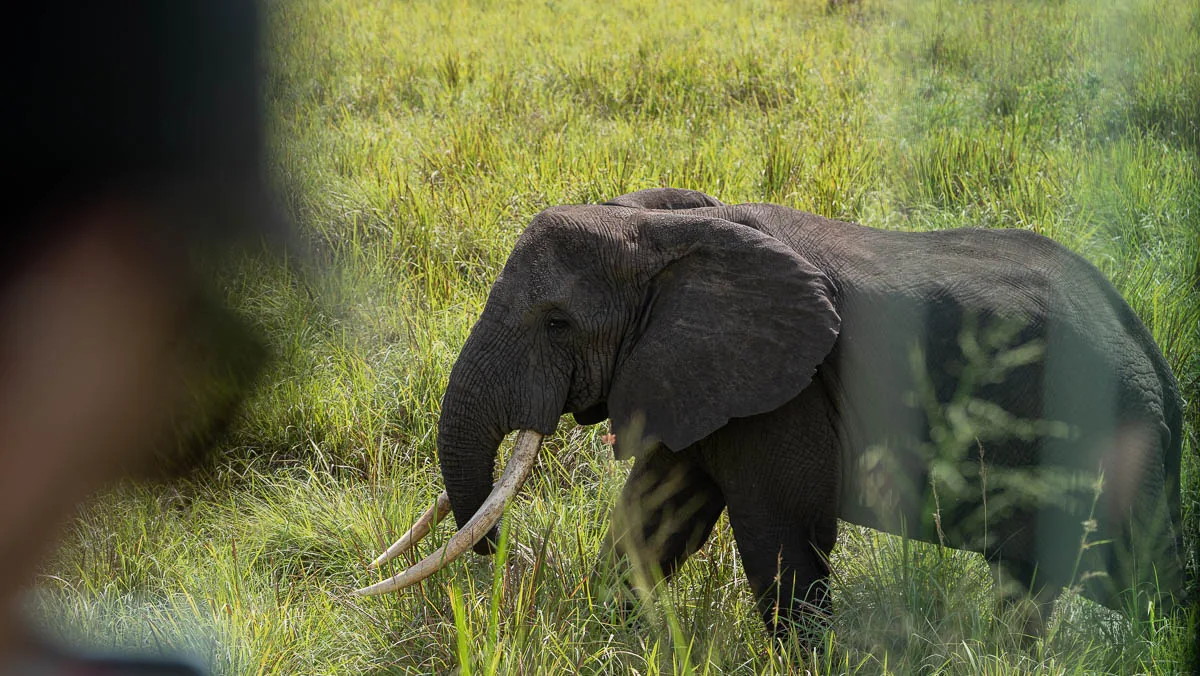
This activity will take up at least half a day. Boat trips down the channel depart from Mweya Safari Lodge and last 3-4 hours. And even though the transfer from Kyambura Lodge is about an hour long, you’re driving through QENP to reach the docks. On our way, we encountered large breeding herds of elephant and even two very lazy, snoozing lions. The light-coloured limestone soils and the massive sage-coloured candelabra trees - Euphorbia candelabrum - with the vibrant shimmering water of the channel make for a very soothing landscape. As you drive along, you get glimpses of the Channel and what’s to come.
Registration at Mweya Safari Lodge is very efficient, and for a last pitstop before embarking, the bathrooms are modern and clean. Volcanoes runs a private charter with wine, cold beer, cool drinks and various freshly made samosas and spring rolls on board. I must admit, I felt quite bougie as we were settling in on our small, canopied boat compared to the much larger, ferry-like public boats!
It was wonderful having Francis join us for the ride and our boat driver and guide Tembo offered a wealth of knowledge about the channel and the various wildlife inhabitants of its waters and shores. Having a private boat meant that we could linger wherever we wanted, and the whole experience very much felt like a leisurely Sunday afternoon spent on the water with friends.
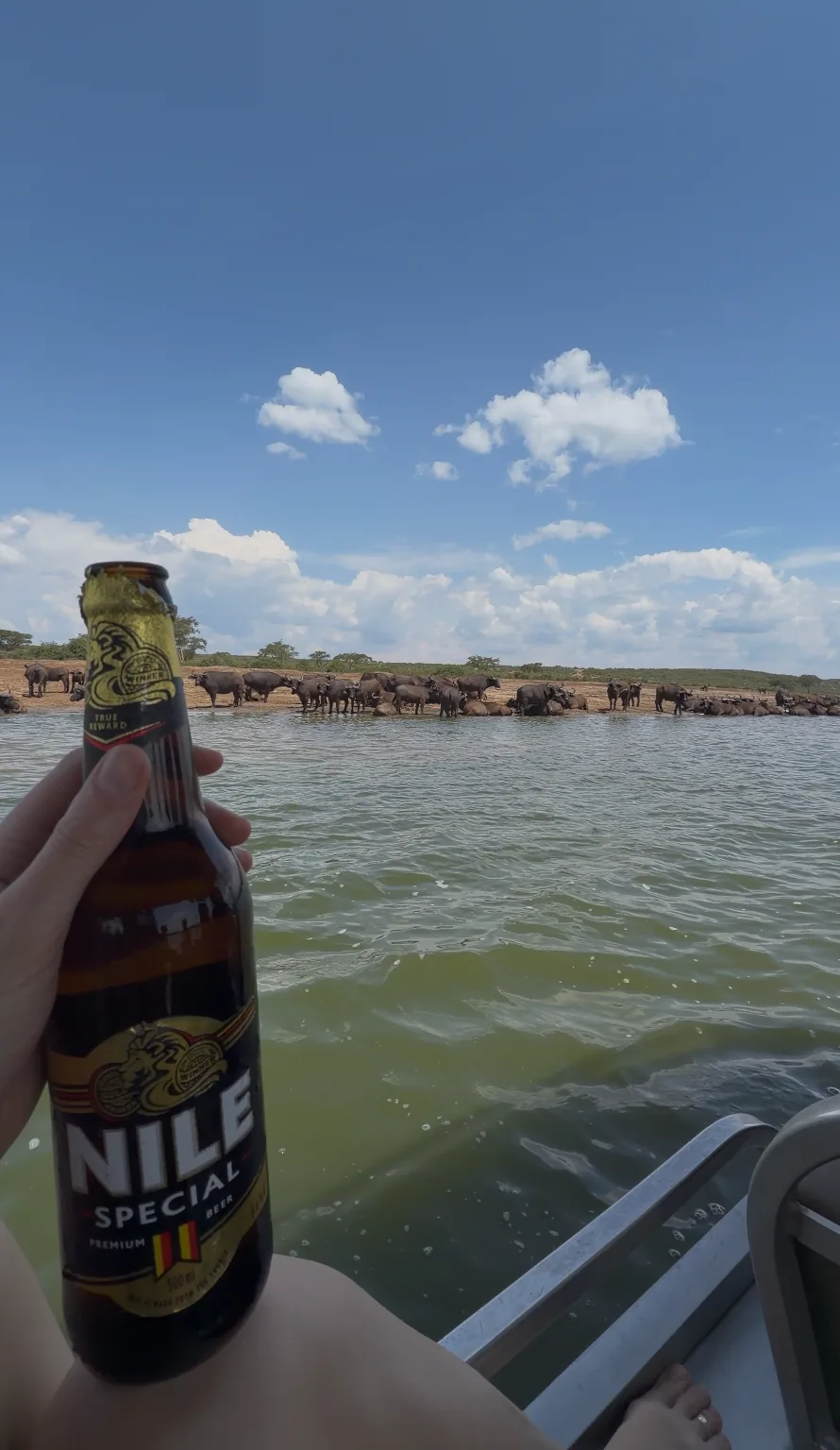
The hippo, buffalo and elephant density along the channel is remarkable - definitely the highest number of these large animals I’ve seen in one place (and we’ve seen some places). Same for the amount of Pied Kingfishers we saw! A myriad of water birds and reptiles - both large Nile crocodiles and smaller species like monitor lizards - also use the shores to nest, hunt and forage for food. We even spotted a Giant Forest Hog right at the very end of our cruise, a strange amalgamation of a wild boar and a warthog - and a nice surprise.
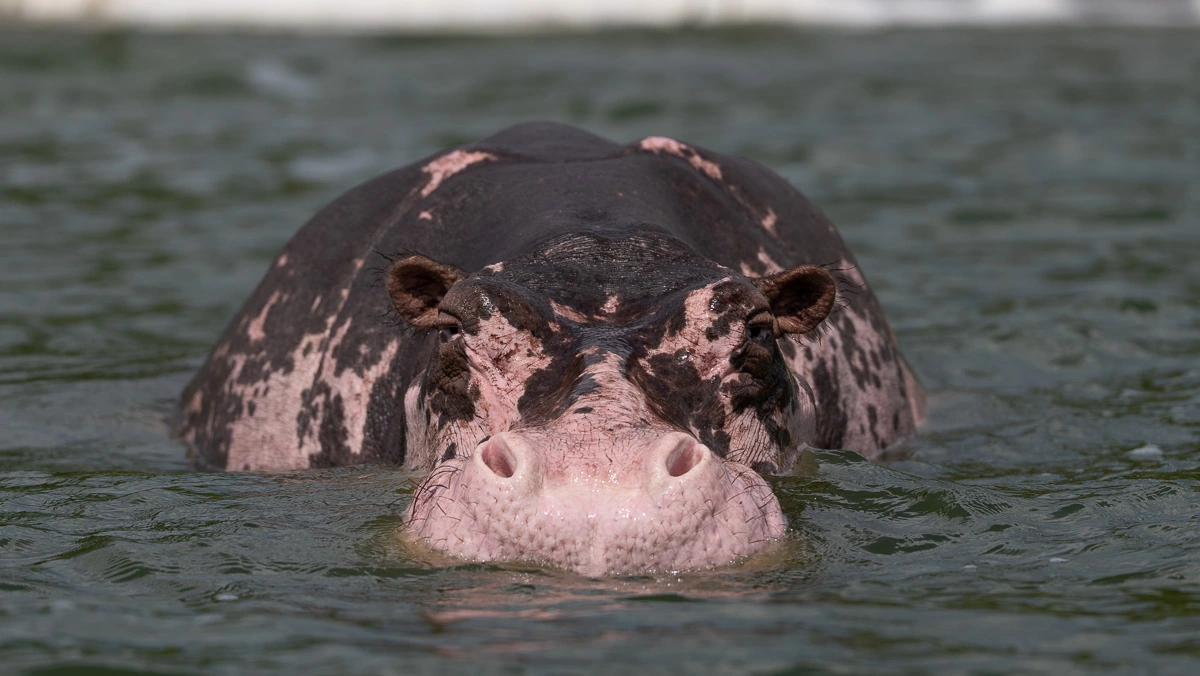
For that matter, it isn’t only wildlife that calls the Kazinga Channel home. The natural waterway connecting Lake Edward and Lake George also houses human settlements. 11 designated enclaves and fishing communities are home to 60,000 people who live and work here. Their livelihoods depend directly on local water bodies, primarily from fishing (in Lake George, Lake Edward, and the Kazinga Channel), the salt trade at Lake Katwe, keeping livestock (cattle, goats, sheep), and small-scale crop cultivation.
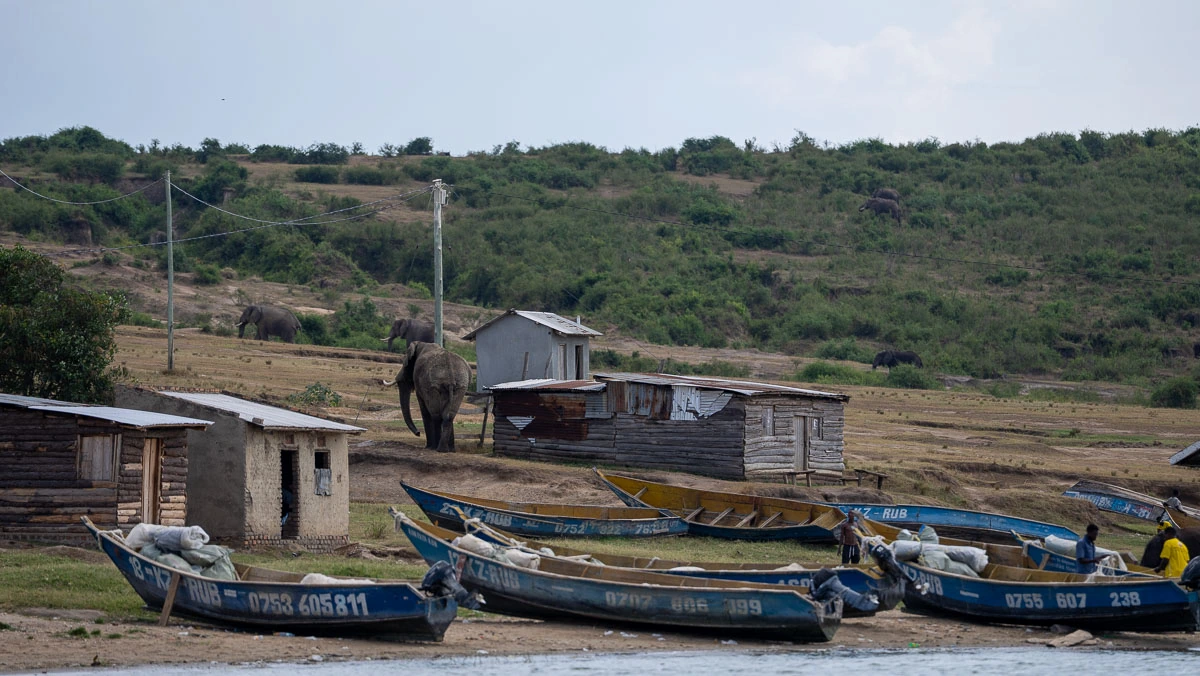
We passed one of these fishing villages during our cruise. The average safari goer isn’t used to seeing wildlife and locals in such close proximity, so it was an astonishing sight seeing buffalo standing between the boats, and watching a bachelor herd of bull elephants meandering up the village road, right past children, goats and motorbikes. We’d seen lots of litter and rubbish along the shoreline of the channel, which detracted from our idealised view of pristine wilderness.
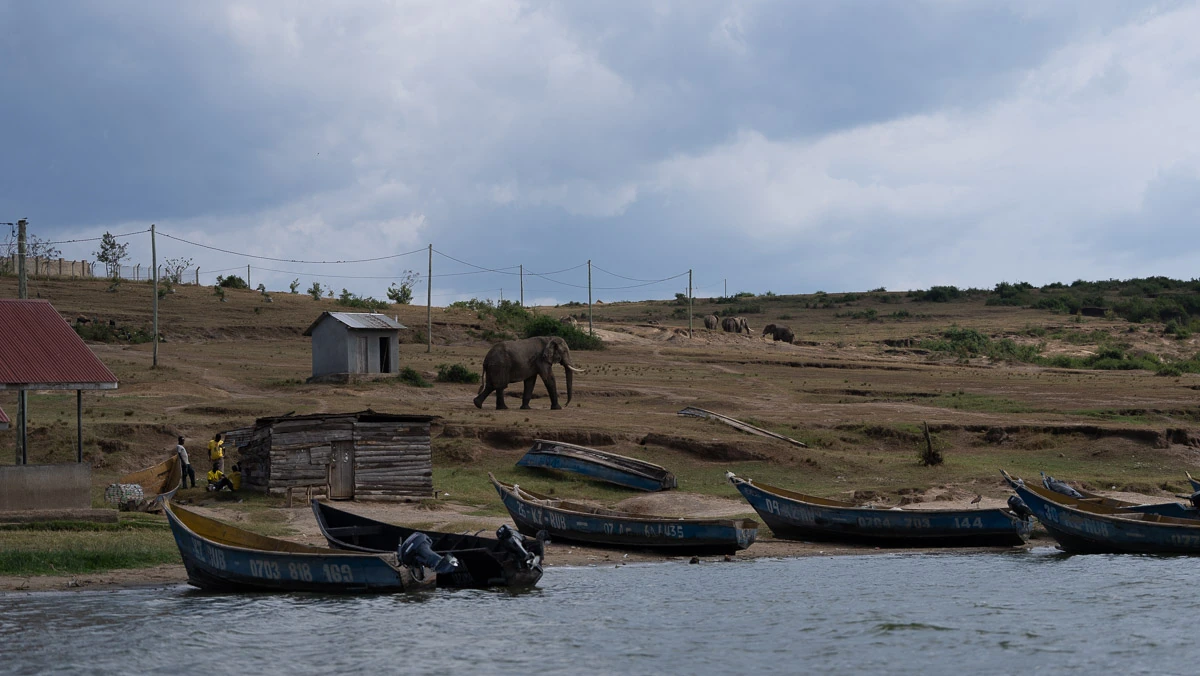
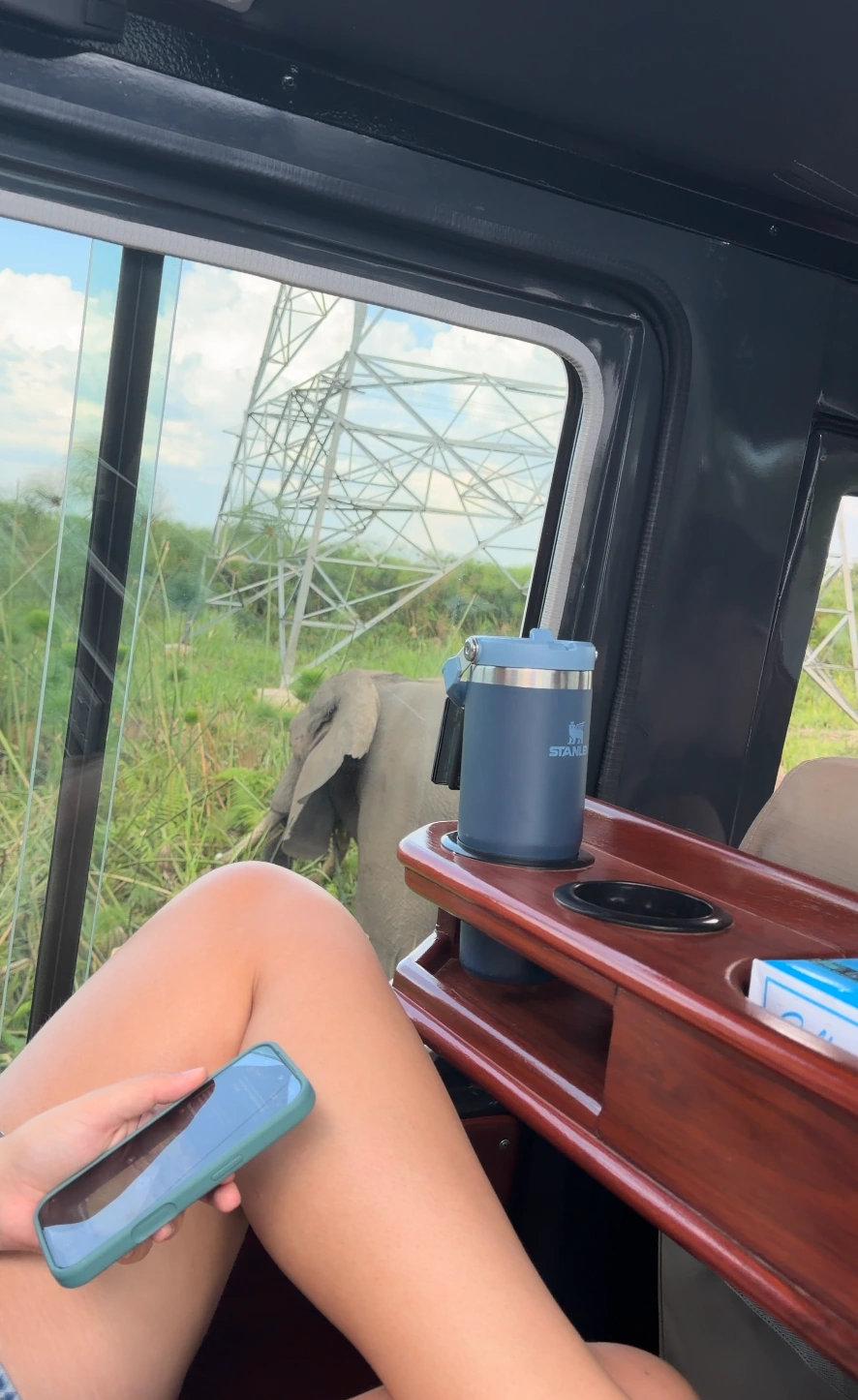
As a South African, it will always be a bit foreign to see communities living in the middle of protected areas. Driving through QENP, on tarred roads, passing fishing checkpoints with buffalo grazing 20m away and watching people walking on the road taking pictures of an elephant feeding on papyrus reeds underneath an electricity tower. It’s all part of daily life here. More context, as well as my perception of human-wildlife coexistence in the areas we visited, here.
An elevated game drive experience in Queen Elizabeth National Park: Predator Monitoring Drive
As part of their investment in conservation, VSPT launched the Kyambura Lion Monitoring Project in August 2023. The wildlife monitoring team collects data for African lions, leopards and spotted hyenas in Queen Elizabeth Conservation Area using a network of vehicles, and remote camera traps. The project aims to establish a science-based conservation program which supports the protection of Uganda’s carnivore populations and improves the livelihoods of local people living in and around the wildlife parks.
We participated in this project during our stay at Kyambura Gorge Lodge by joining a monitoring drive in QENP. The night before, a researcher from the project gave us context and information. He told us the story of how the project had managed to save young cubs who had been forced into the communities because of pressure from male lions. By relocating the males, they created safety for the lioness to bring the cubs back into the national park. He even showed us camera trap footage of one of their monitored leopards catching bats!
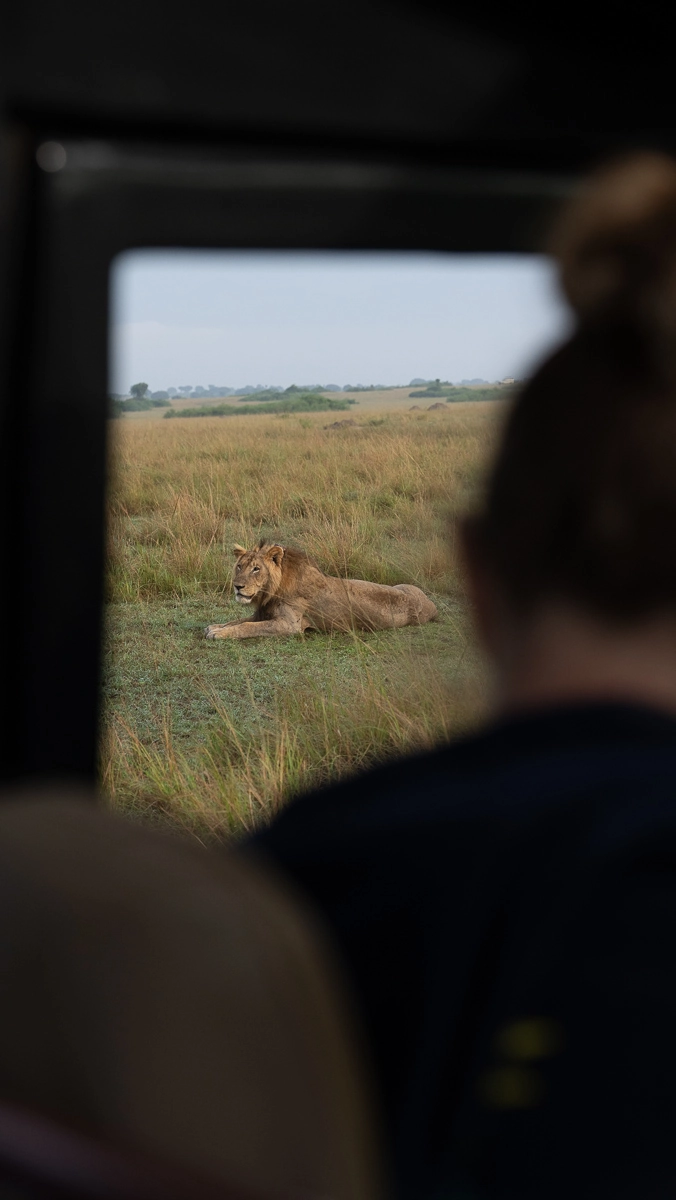
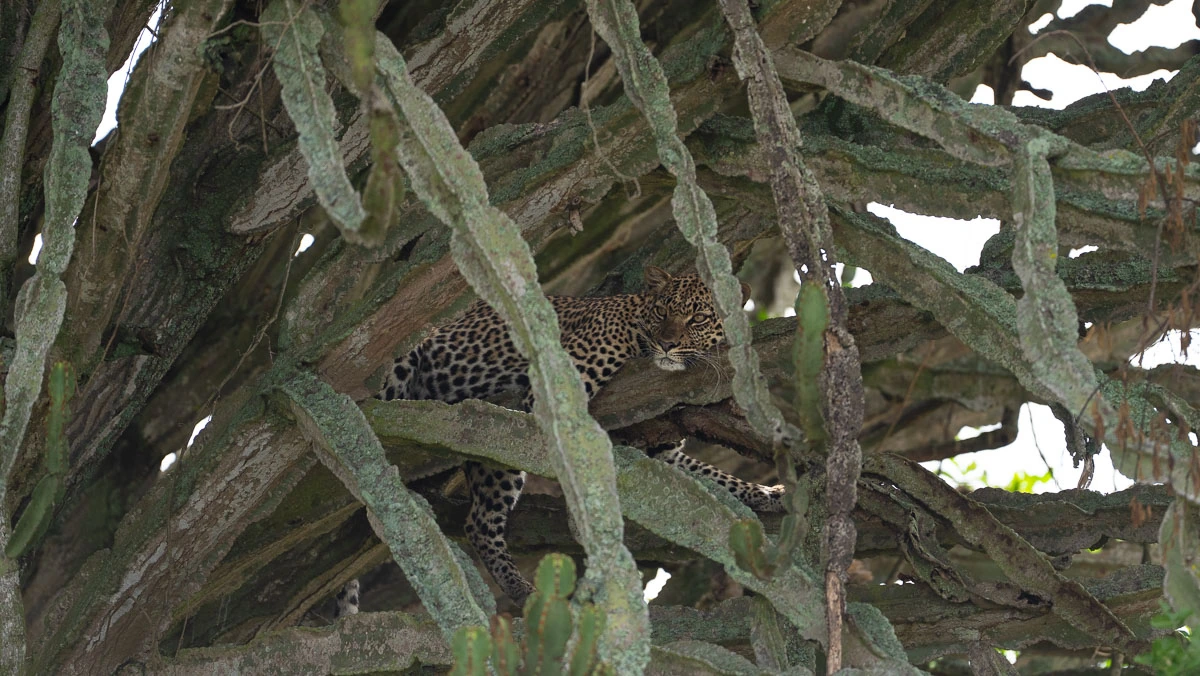
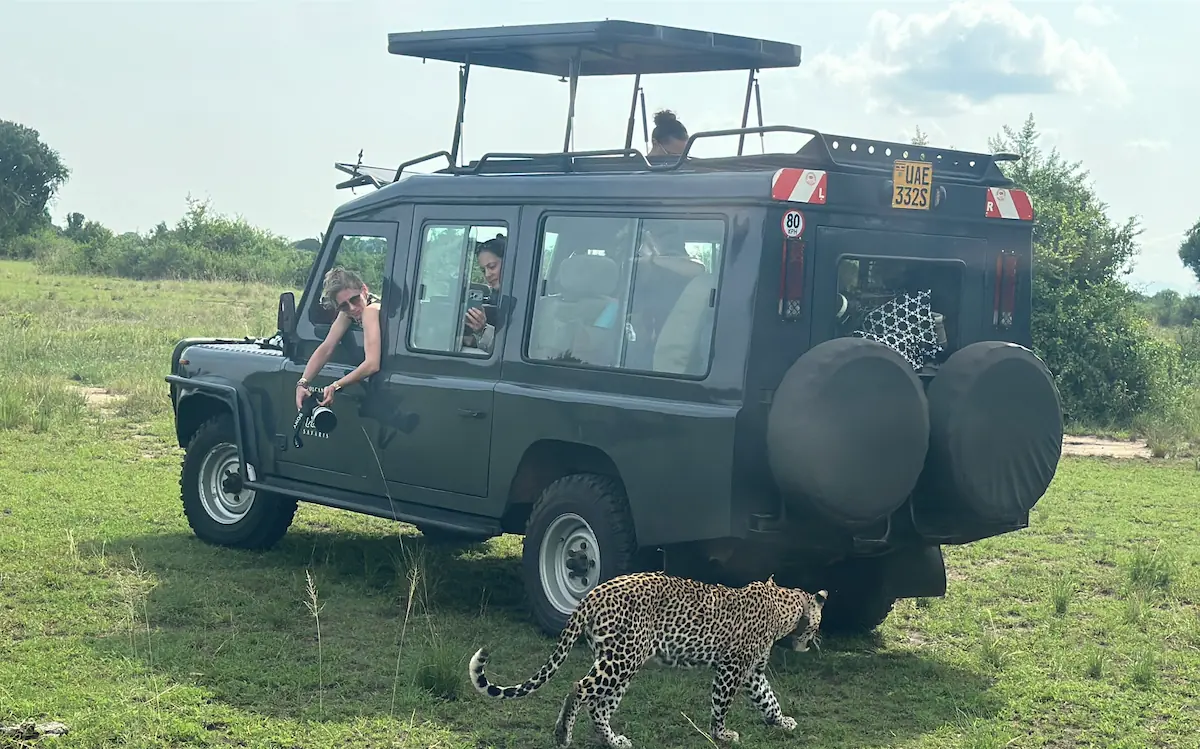
The monitoring drive the next day offered us the opportunity to off-road in QENP, and to see collared predators (mainly lions and leopards) up close. It is basically an enhanced, private safari experience because you are supporting conservation, having a private game drive in the park and 100% certainty of seeing cats in QENP completely to yourself. Yes the animals are collared, but the reason why adds to the purpose of your visit.
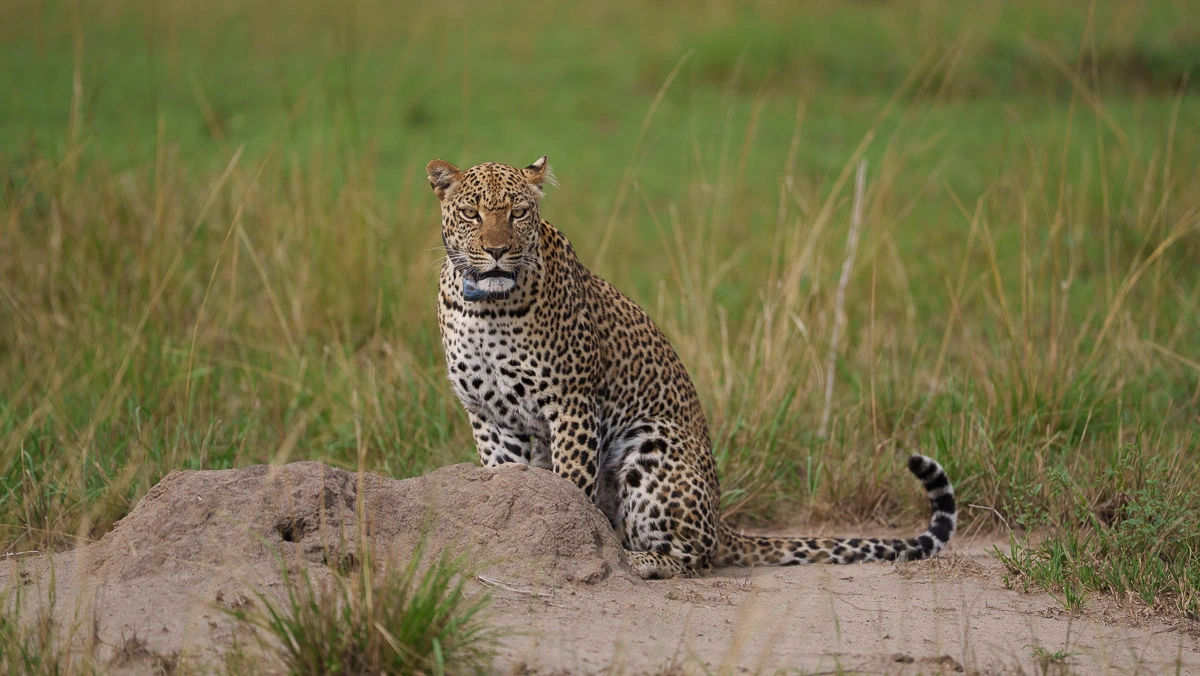
During our drive we saw two lionesses, a young male lion that had just split off from his pride on a waterbuck kill, and a very, very relaxed female leopard. We even spotted a young female that hadn’t been collared! We just happened to be in the right place at the right time while she was hopping between thickets hunting kob.
An honest comparison: Volcanoes Safaris Kibale vs Kyambura Gorge Lodge
At Kibale Lodge, expect long dirt road transfers to activities. But to me, this was far from a downside. The drives offer you a chance to enjoy beautiful views of the Rwenzori Mountains and the rural communities surrounding the lodge. Think large banana plantations, locally farmed fields and friendly locals. Don’t hesitate to wave back at the children greeting you with big smiles as you are driving past. The lodge is newer, the rooms expansive and the experience geared towards relaxation and nature immersion.
At Kyambura Gorge Lodge, the history and interconnectedness with the neighboring community is a large part of the lodge experience. It is the ideal lodge to stay at if you are looking for true immersion in the culture and history of the region.
The Kyambura Discovery Centre - a new interpretation centre - offers ample opportunity to learn about the Albertine Rift landscape, community and conservation activities, the Kyambura chimps and their ecosystem. The plethora of available activities in the surrounding area makes this lodge ideal for travelers who want to experience their destination as a whole: nature, community and conservation.
For both lodges, the (relative) proximity to QENP also makes them a great option for travelers that want to combine a classic game drive East Africa safari with a primate safari (chimps, colobus monkeys, olive baboons). We will always recommend Volcanoes Safaris in this region, because of the immersive integration with conservation projects on the ground.
We preferred the location of Kibale over Kyambura Gorge lodge, but the chimpanzee trekking at the Gorge was our favourite of the two. Choose Kibale Lodge if you are a first-time Uganda visitor wanting expansive views, and immersion in the lush greenery of the surrounding tropical jungle. When it comes to chimpanzee trekking, Kibale offers a near-100% certainty of viewing chimps but at the cost of being busy and more generic, whereas Kyambura offers a unique setting and bespoke-feeling experience.
Bwindi Lodge: Buhoma sector, Bwindi Impenetrable National Park, Southwestern Uganda | Rooms: 10 bandas (2 deluxe, 8 standard)
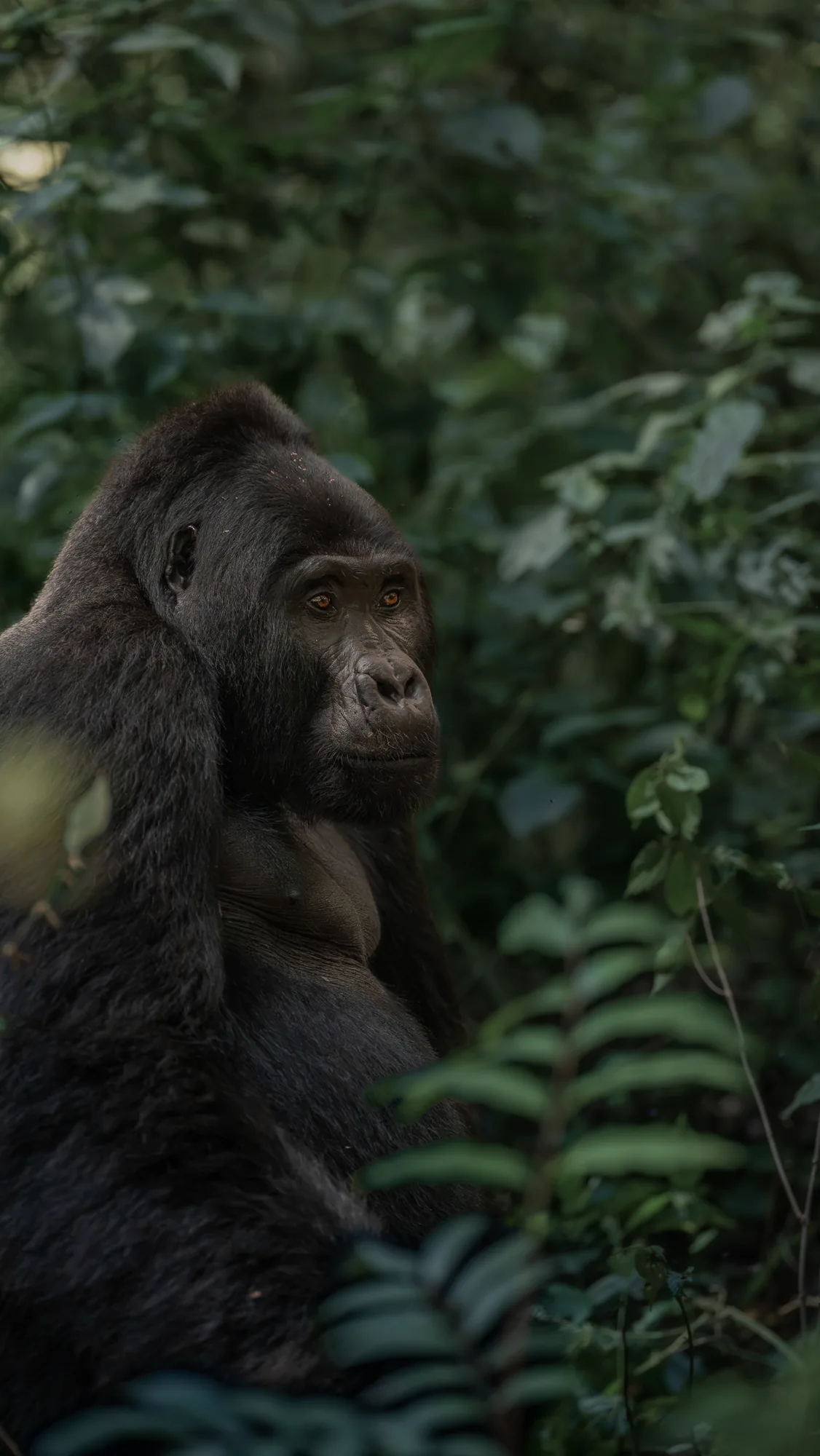
Time to say goodbye to the chimps, and off we went - further south, into the jungles of Central Africa. Our next destination, Bwindi Impenetrable Forest, promised physically intense treks, and encounters with an East African primate safari’s highlight: the mountain gorilla.
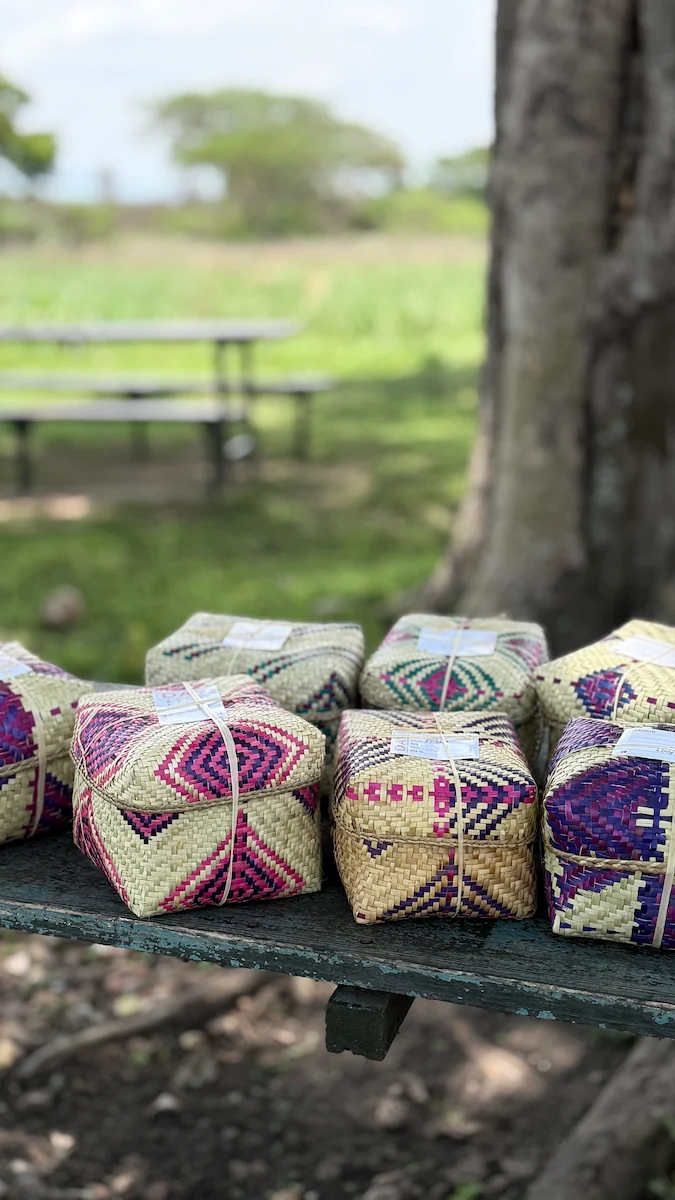
Our road transfer took us through QENP yet again, this time through the Isasha Sector. We had lovely sightings of general game, mainly Kob - Uganda’s national antelope - and waterbuck. We stopped for a lunch picnic just before exiting the park, thoughtfully packaged in individual woven baskets.
The arrival at Bwindi Lodge is impressive. Situated right up against the side of the forest-covered mountain, the canopy stretches out below and towers far above you. Bwindi is the only Volcanoes lodge that doesn’t have far-reaching views over the surrounding area. It certainly feels as if you are one with the forest. Yet, the access road and village are right on the other side of the lodge. To me - but perhaps because we had just spent 3 nights in lodges sat on top of ridges - it felt a little claustrophobic and squashed in between the village and the forest.
The lodge’s proximity to the forest also came with the resident Olive Baboons meandering the pathways. Pathways which, also good to note, were long and quite steep. The baboons are very comfortable with humans, and unfortunately for me - not very impressed by women. I had a “guard” stationed by my room - which was the furthest - for most of the day to chase them away. I did end up late for our dinner one day because a big male baboon decided to set up camp right in front of my door.
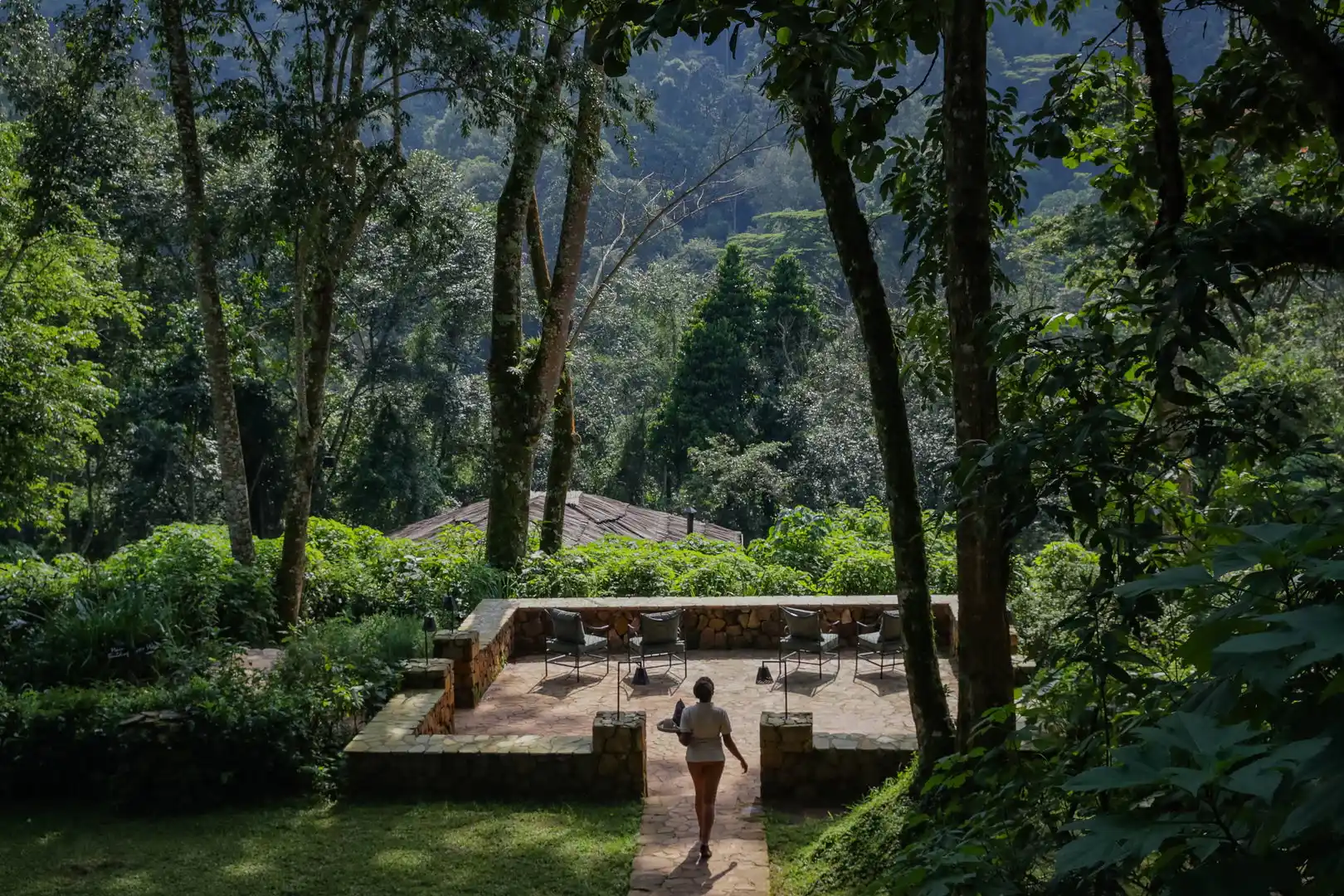
A benefit of the lodge’s location though, is that all activities are very close. Between the pangolin rescue centre, the Ride4AWoman community centre where you can custom order clothes in traditional colourful fabrics, the Bwindi Bar, the fire-side chat with Gorilla Doctors at the Bwindi Gorilla Conservation Center, VSPT Tea Tour, to the river and birding walk with lodge guide Allan, and even basket weaving classes right in the middle of the lodge - there is no shortage of interactive activities supporting the local economy.
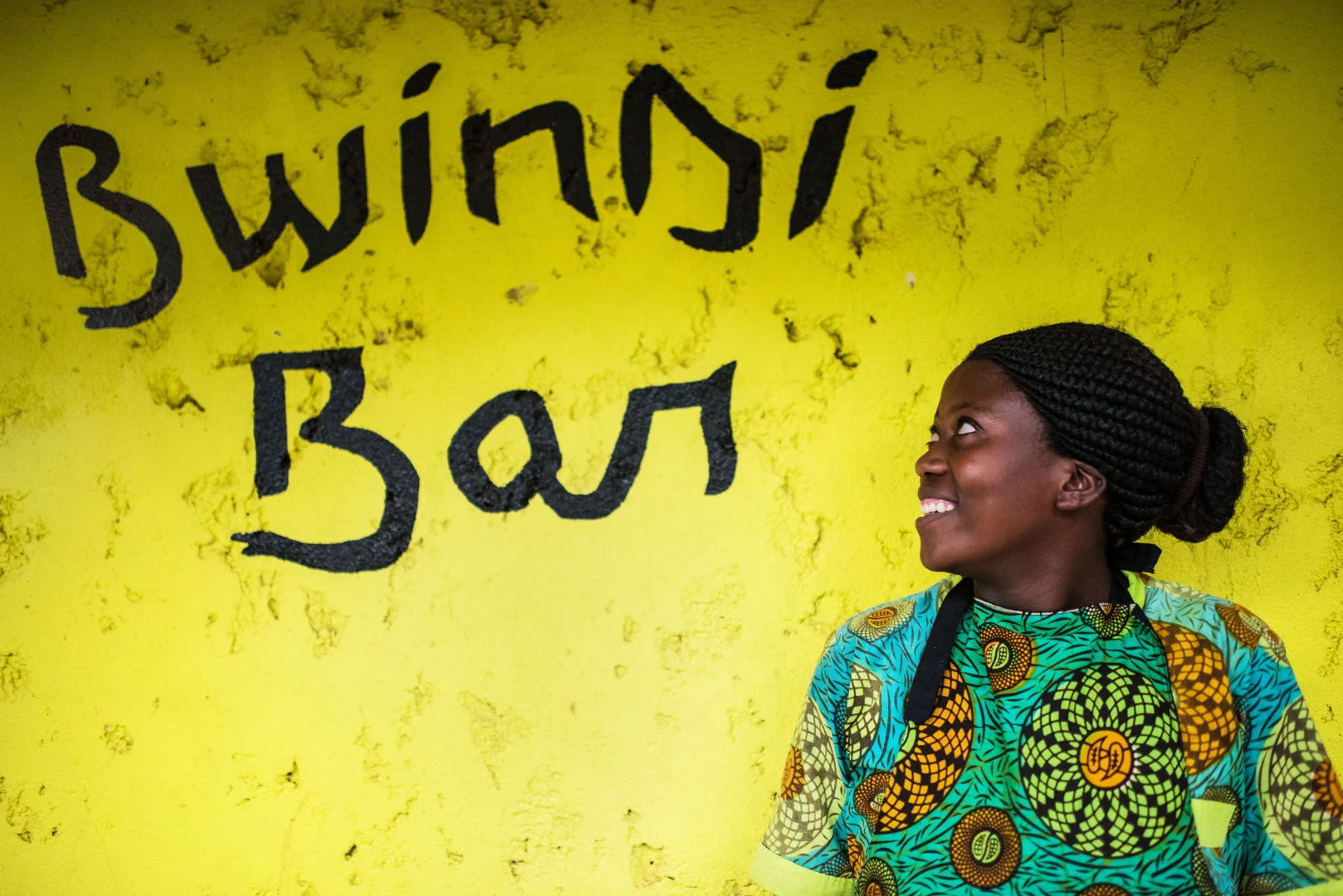
As a fervent DIY-er, I had to try the basket weaving class where Jacinta patiently taught me how to weave a coaster - which I got to keep! Whilst I was weaving, some of our travel companions visited the Bwindi Bar: a VSPT-operated hospitality training program where young people from the surrounding community learn the trade.
Afterwards, we had a pre-dinner fireside chat with Dr. Fred from Gorilla Doctors. They are a veterinary organization that provides health monitoring and emergency care for mountain gorillas. Fred was a master storyteller, and his stories of how they interact and care for the gorillas were captivating. A little tangent-y at times perhaps, but all the more charming for it. We left with a healthy dose - no pun intended - of respect for the work they do day-in and day-out to protect these gorillas amongst so many human influences.
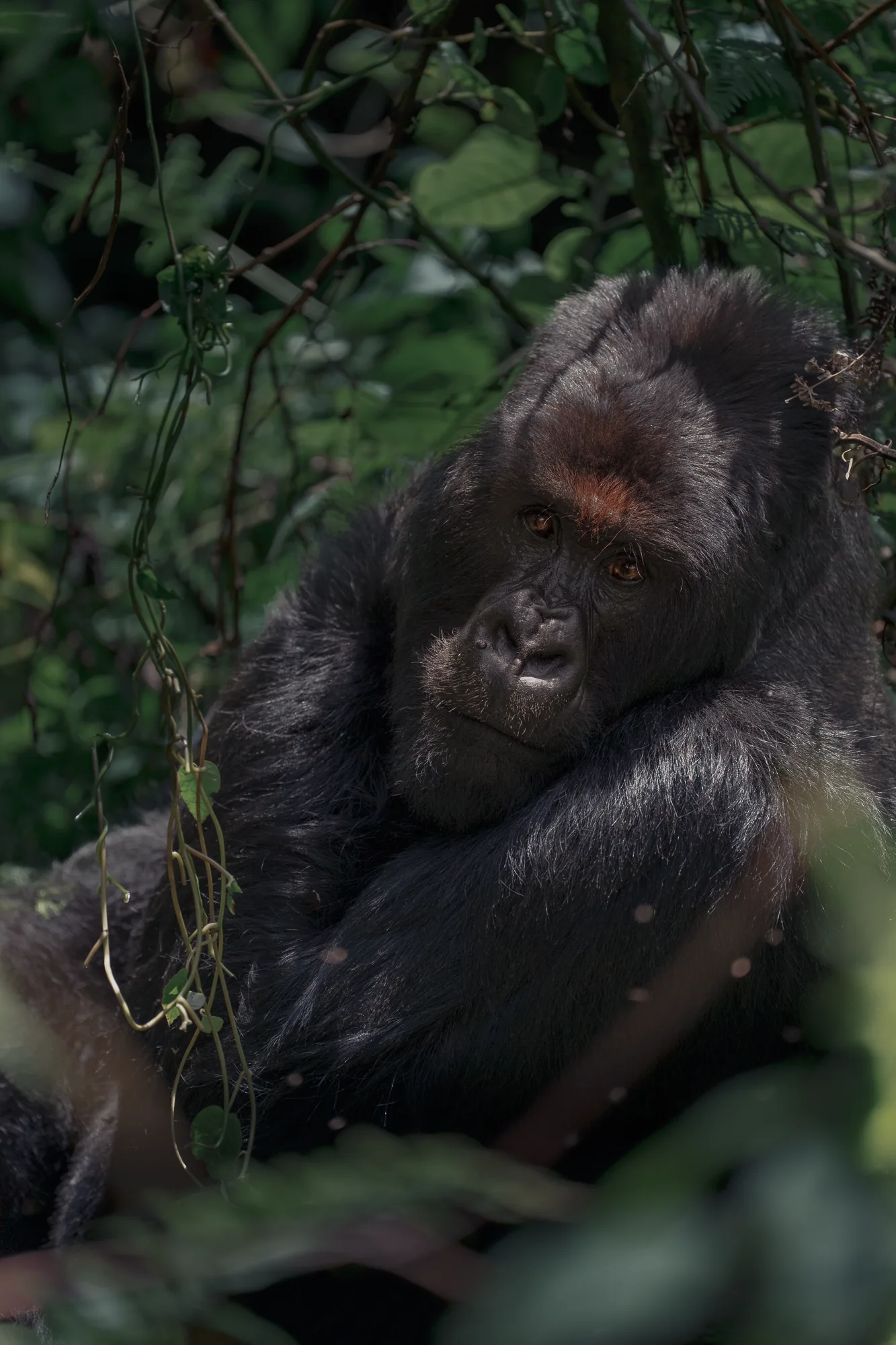
The next morning it was finally time to go on our gorilla trek. As at all Volcanoes lodges, the staff assists with putting on the gaiters provided by the lodge, and we got a packed lunch - in case the trek turned out to be a long one! Only three minutes drive and we were at the Buhoma park gate, ready for our gorilla trek. Read about our gorilla trek at Bwindi, here.
Mount Gahinga Lodge: Mgahinga Gorilla National Park, Southwestern Uganda | Rooms: 8 bandas (2 deluxe, 6 standard)
By now, we are well and truly into the remote portion of our 10-day safari with Volcanoes. We are heading into the far southwestern corner of Uganda, where the Virunga volcanoes tower along the borders with Rwanda and the DRC.
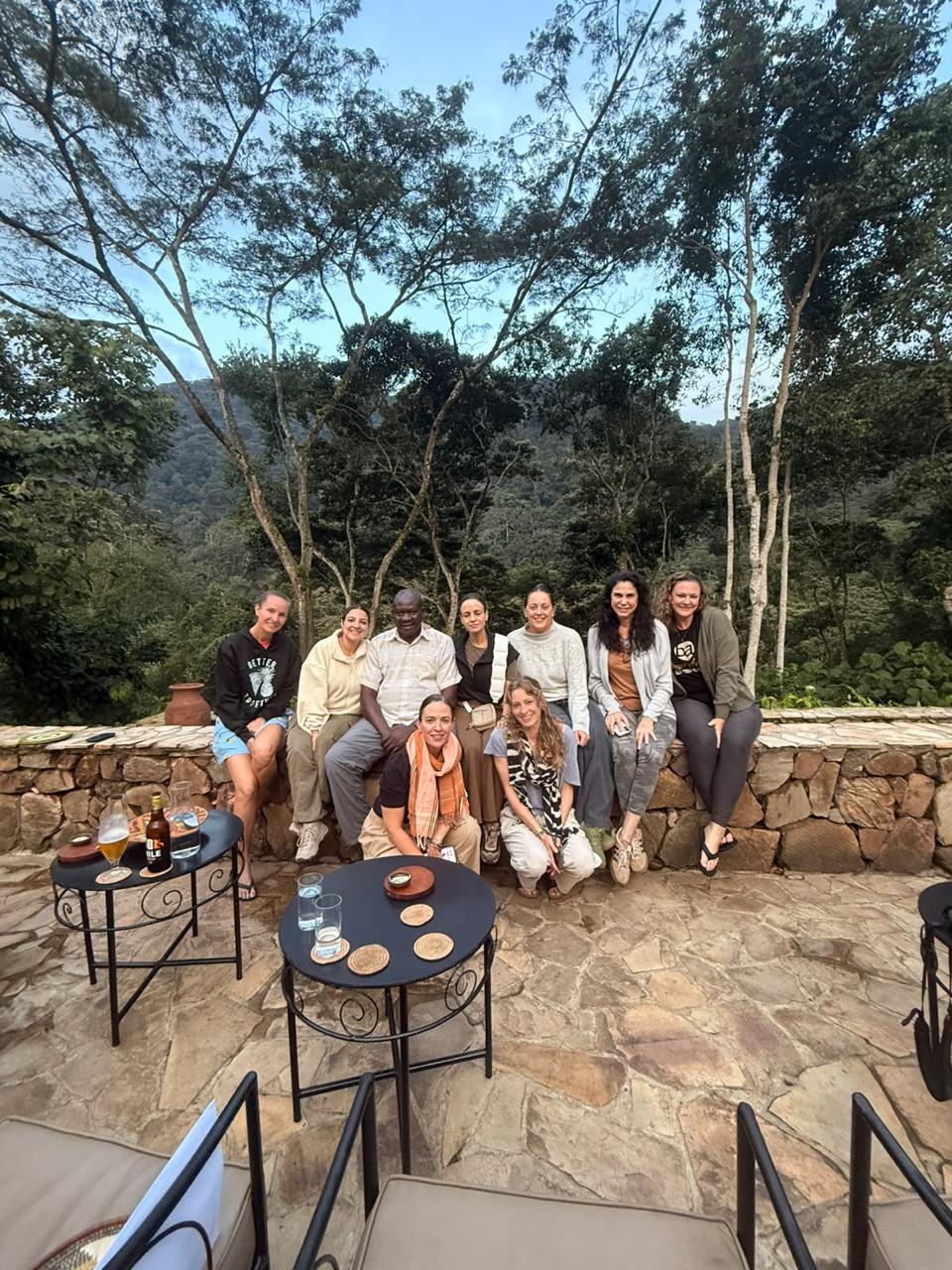
We left Bwindi lodge for our morning flight from Kihihi to Kisoro. Here, we said goodbye to Francis and Petrus. The former, we’re pretty sure, must have been quite relieved after having been our timekeeper and herding our chatty, all-women group between lodges and activities. It really was a bit like herding cats trying to get us everywhere on time, but Francis was an absolute star; gracious, and with a great sense of humour! Petrus drove the other car, so we didn’t get to spend much time with him. He made sure we all had loads of team photos and videos, which made for great memories.
Our flight from Kihihi didn’t even take us 15 minutes in the air, but the landscape below was incredibly beautiful. Flying over Bwindi, after having been in the thick of it, was a great way to gain perspective. We caught a glimpse of the crater lakes before landing at Kisoro airstrip. Here we met Fred and Duncan, who would be our “Francis & Petrus” for the Rwandan portion of our safari.
As short and smooth as our flight had been, as long and rough would our road transfer prove to be… The 1.5h drive to Mount Gahinga Lodge was super bumpy, a dirt road filled with potholes and littered with loose volcanic rock. The landscape became drier, and the villages we passed had noticeably less infrastructure than those further north.
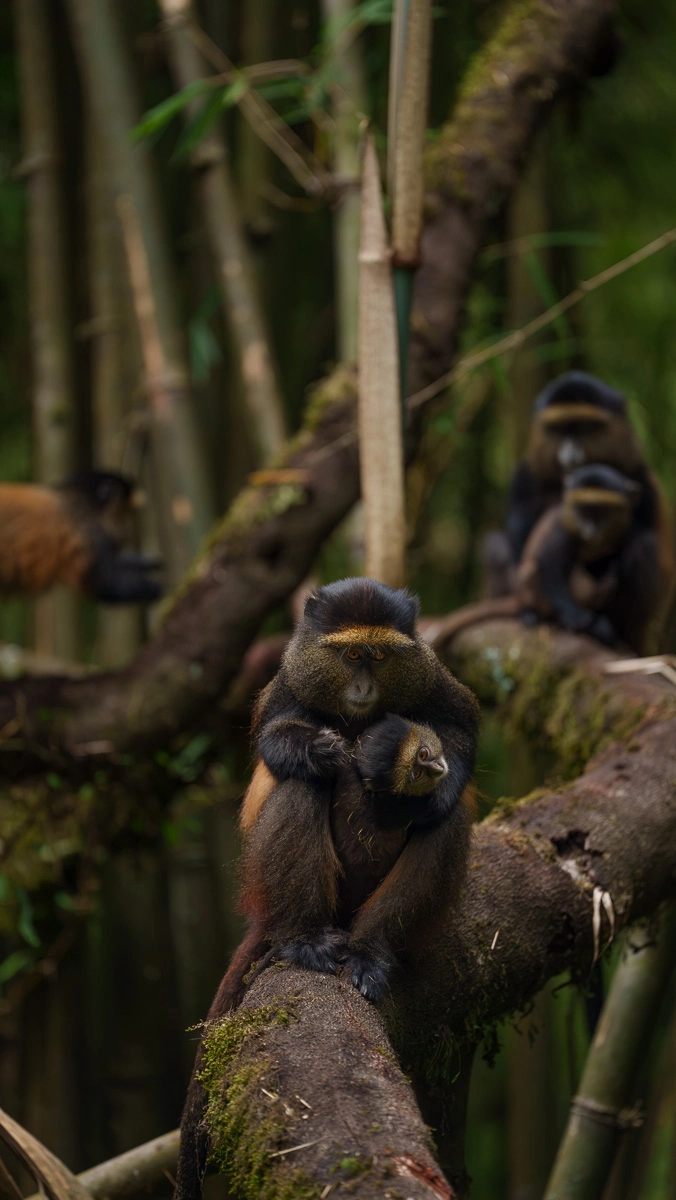
We by-passed the lodge and drove 100m further to the Mgahinga National Park Visitor Centre, where we would be starting our Golden Monkey trek. Here, we met the Mount Gahinga Lodge team, who had brought our lunch, rain jackets and gaiters. Safe to say, we were completely oblivious to the amount of effort it would require to reach these tiny primates! Read more details of our Golden Monkey trek here.
After our trek, we headed back to the lodge. I, for one, needed a serious nap - the golden monkey trek through Mgahinga NP had taken it out of me. At dinner, we met a lovely couple from the United States. They’d just had a fireside chat with the Gorilla Doctors who work with the singular gorilla family that lives here in Mgahinga National Park, and they were raving about it. While we would be heading out to Rwanda the next morning, they still had their first gorilla trek to look forward to!
The next morning, before we headed to the Rwandan border, we walked to the nearby Batwa Village. Here, the VSPT has done impressive work to rehome over 100 adults and children who were displaced from their forest homes when the Mgahinga part of the Virunga volcanoes in Uganda was turned into a national park in 1991 to provide protection to the wildlife from poaching and habitat encroachment.
The tour itself, though, left me with mixed feelings. The houses are well-built and our guide pointed out several buildings and facilities - funded by previous visitors - that significantly improve the standard of living here. Yet trash littered the village and other than tourist visits, there didn’t seem to be much other economic opportunity in this remote region. It is clear how much VSPT’s investment has achieved, including the new Batwa vocational centre.
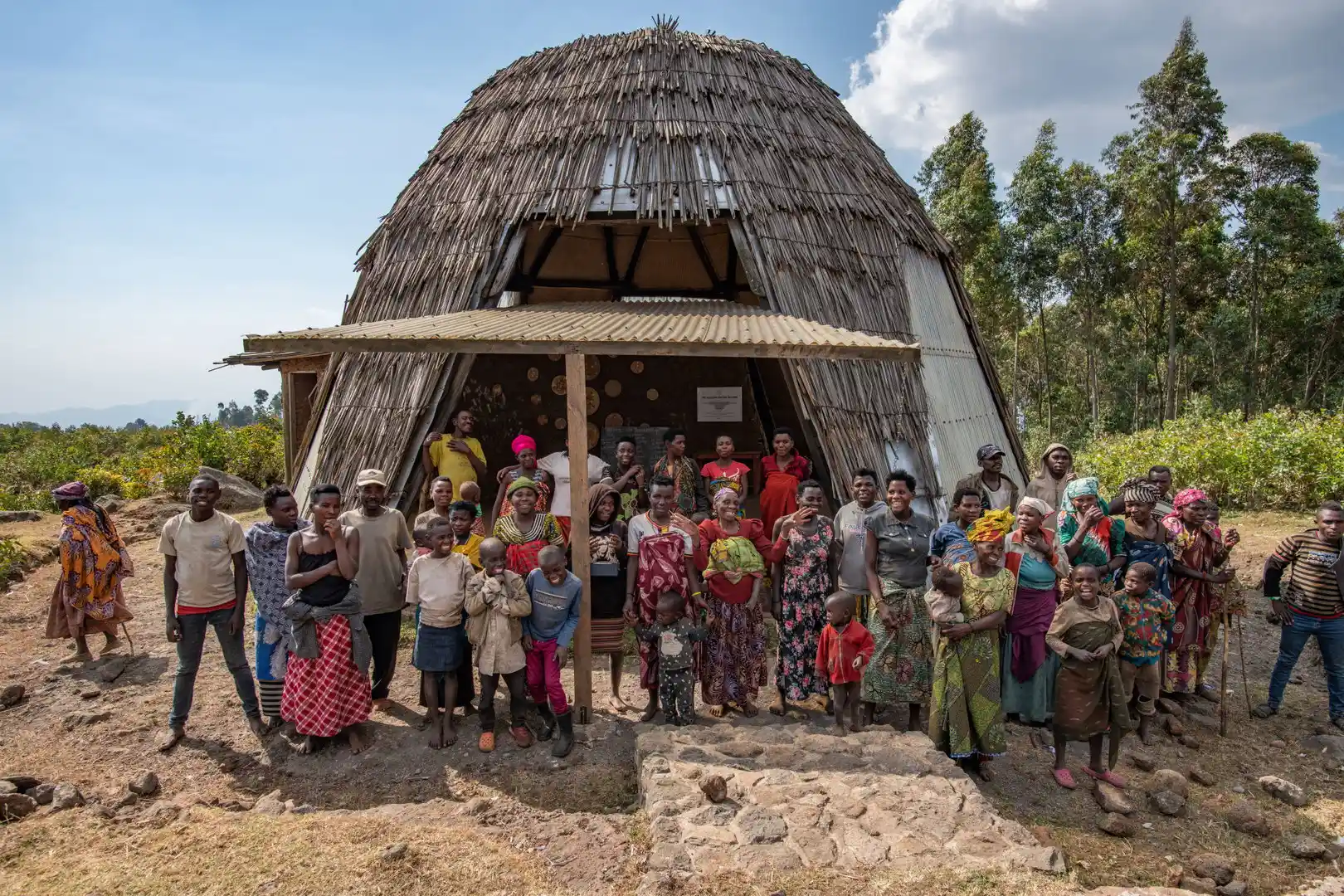
The rough shape of the access road and limited infrastructure in the surrounding villages showed the challenges this region faces. On our way out, a supply truck got stuck in a hole as we were approaching. Luckily we could bypass via the local church yard, but it was exemplary of the bad road conditions. The area is remote, and the surrounding community highly dependent on tourism income and goodwill. I could see the value that tourism is adding here, but with Mount Gahinga Lodge being the only luxury eco-lodge in the area, it is a lot of responsibility to carry.
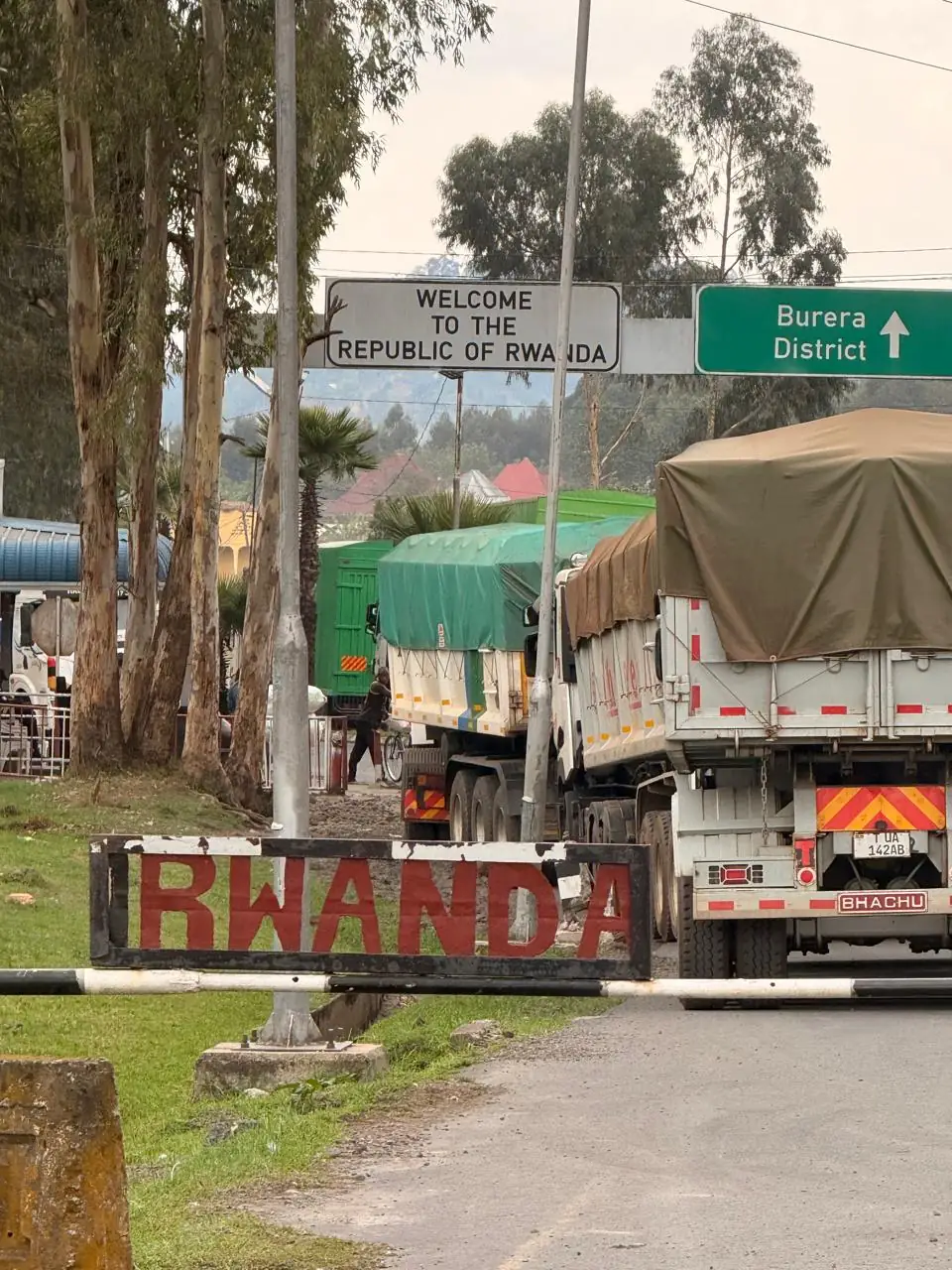
After the Batwa Village Walk, it was time for us to leave Uganda and head across the border to our final destination of the trip. After the rough volcanic rock road, there is a long, red dirt road that is extremely dusty! Make sure to keep a scarf or buff nearby and put all tech away. Our border crossing at Cyanika went relatively smoothly. This corner, where Uganda, Rwanda and the DRC meet, is a busy crossroads of languages, trade and people moving between three countries. To an outsider it can look chaotic, yet everyone seemed to know exactly where to go, without a host of signs or queue poles in sight. We were glad to have Fred and Duncan to guide us through the various health, luggage and passport checks.
Virunga Lodge: Kinigi, Volcanoes National Park, Northwestern Rwanda | Rooms: 12 bandas (4 deluxe, 6 standard, 2 guide rooms)
And then, we were in Rwanda. Even if you hadn’t crossed a borderpost or seen the “Welcome to Rwanda” signs - you’d have known you were in a different country. Just across the border and less than 60km from Bwindi as the crow flies, the whole experience felt completely different from the outset. Not only do you now drive on the right-hand side of the road, bicycles join the fray of hooting cars, boda-bodas (local motorcycle taxis) and the many, many people walking on the side of the - pristine and litter-free - tarred roads. Rwanda banned plastic bags in 2008, and on the last Saturday of each month, communities across the country take part in Umuganda, a national day of community work that includes clean-ups.
Eucalyptus trees line the roadside and gone are the rural farming villages along the red dirt roads of southwestern Uganda. While many Rwandans living here still tend to their family plots, and you do see those along the road, this part of the country and its main town of Musanze feel much more urbanized. And boy oh boy, did Rwanda live up to its nickname “the land of a thousand hills”! Thank goodness for tarred roads.
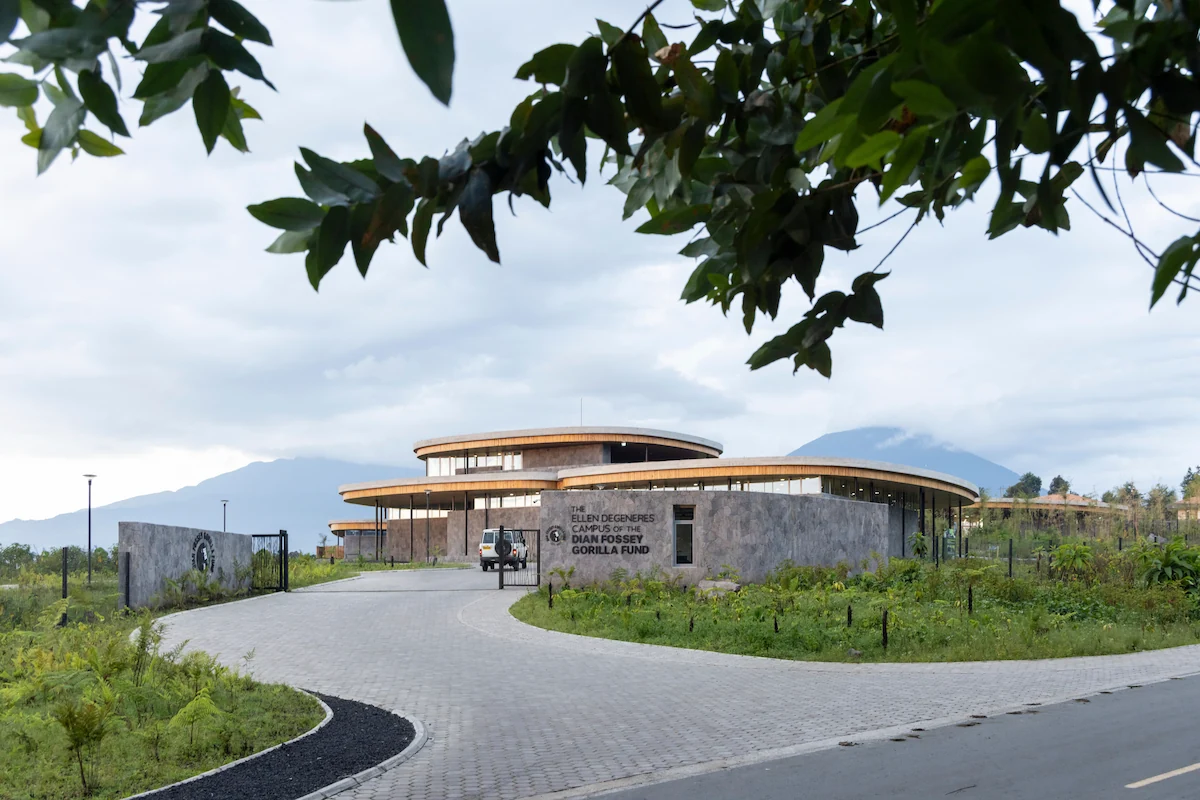
To avoid too much back and forth, we first headed into Kinigi. Here, we would be visiting the Ellen DeGeneres Campus of the Dian Fossey Gorilla Fund in Kinigi. The campus features purpose-built facilities for education, community activities, visitors from around the world, scientific research and for facilitating conservation in the region.
It combines history and artefacts from Dian Fossey’s time, including a replica of her cabin in Karisoke, as well as information about famous gorillas from then and now. For gorilla trekkers, the centre offers amazing context to the history of the region in an impressively elevated setting. For those who might not be able to do a gorilla trek for whatever reason, there is a 3D gorilla experience, and a wealth of knowledge on gorilla conservation.
Just across the road, you will find the Kinigi Women’s Centre. Dedicated to women from low-income backgrounds including those who faced school dropouts or early pregnancy, the centre offers women a chance to make a living through traditional arts and crafts such as paintings, basket weaving, beading, woodcarving and dance. It is a great place to buy souvenirs that support the local economy.
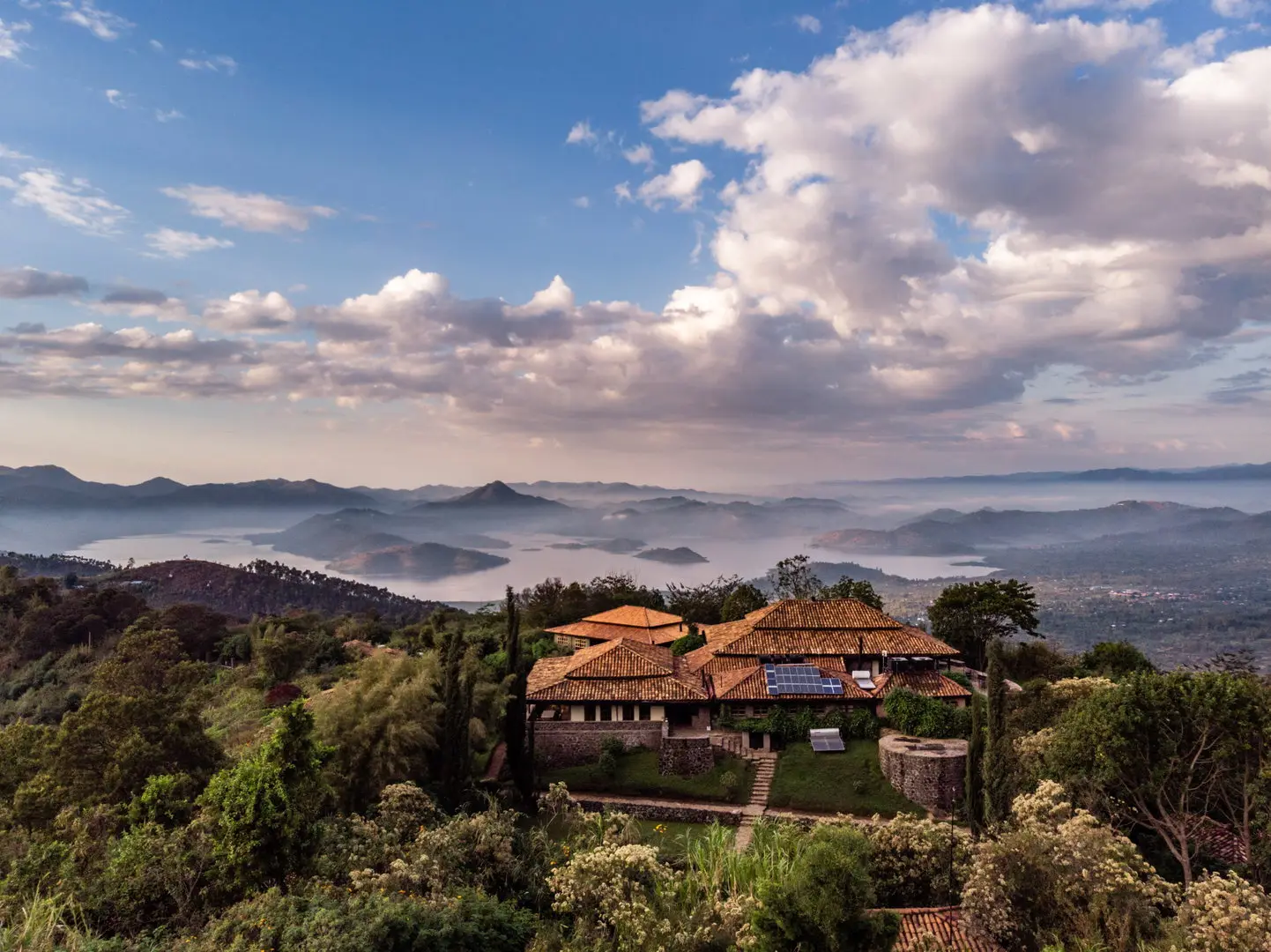
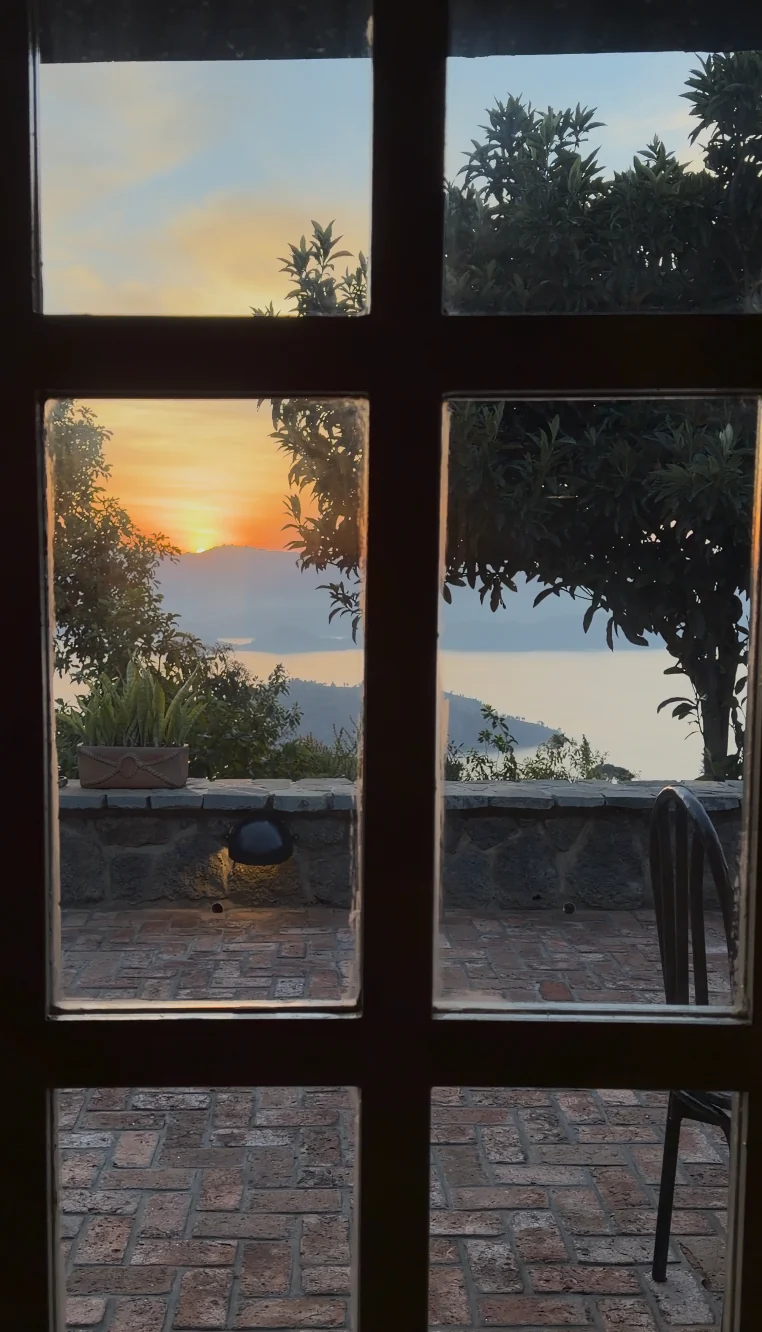
After our visit, we headed back through the hustle and bustle of Musanze, and turned off the tar road to start the climb up to Virunga Lodge. High up on the ridge between twin lakes Bulera and Ruhondo, Virunga was the first eco-luxury lodge in this area built by an international lodge collection after the 1994 war - at a time when few operators were willing to invest in Rwanda. Compared to other luxury lodges in the region like Singita, One&Only and soon AndBeyond, it’s quite a drive away from the Kinigi Gorilla Trekking HQ - but I didn’t mind. The views of the Musanze Valley, the lakes and the Virunga volcano range were stunning, and the lodge itself felt cozy and welcoming.
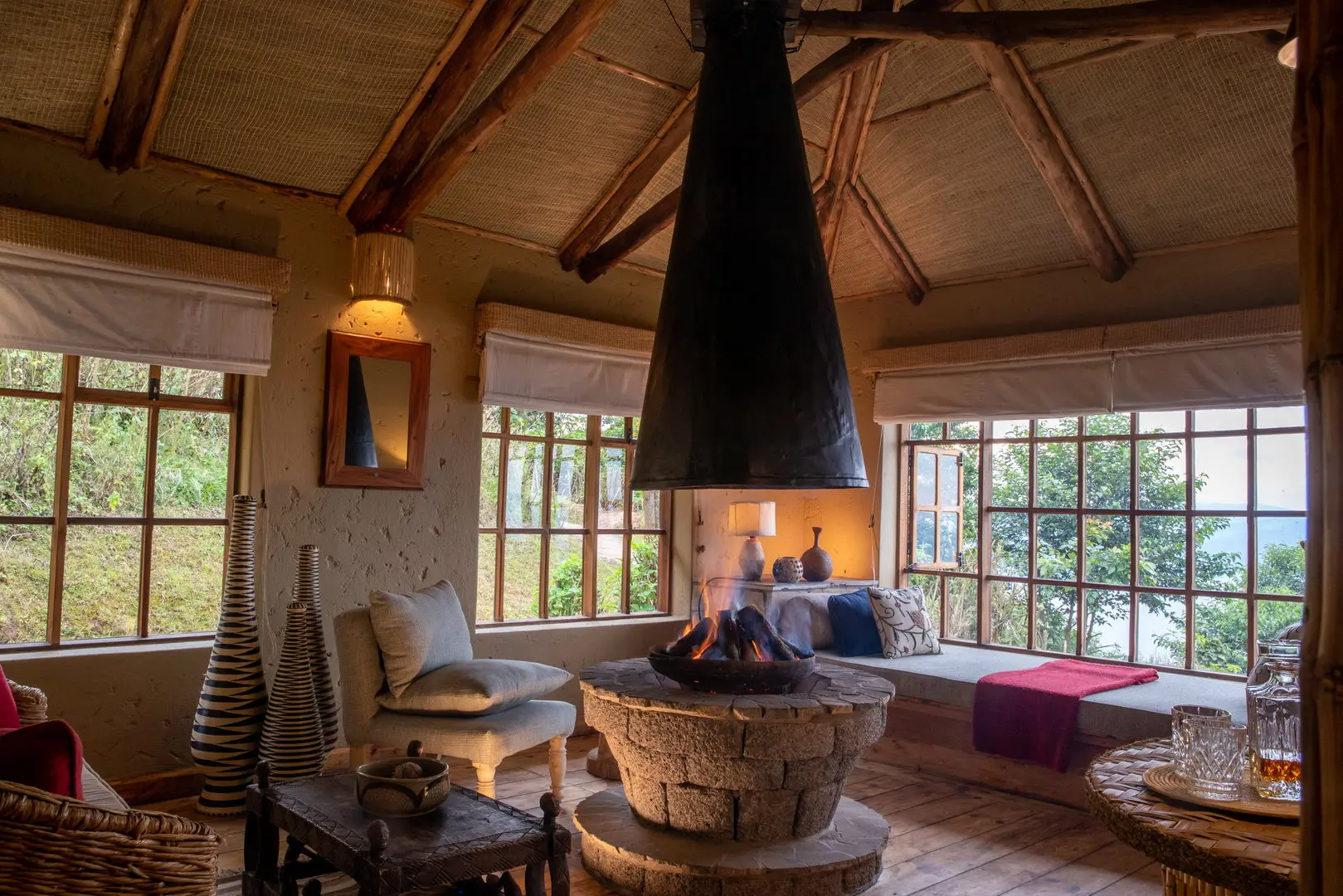
We only stayed here for one night before our second gorilla trek, but the sunrise that morning over the lake was magical. Even though it was an early wake-up - which is tricky for this night owl - because of the longer drive to Kinigi gorilla trekking HQ, it was very much worth it. Read more about our gorilla trek in Rwanda here.
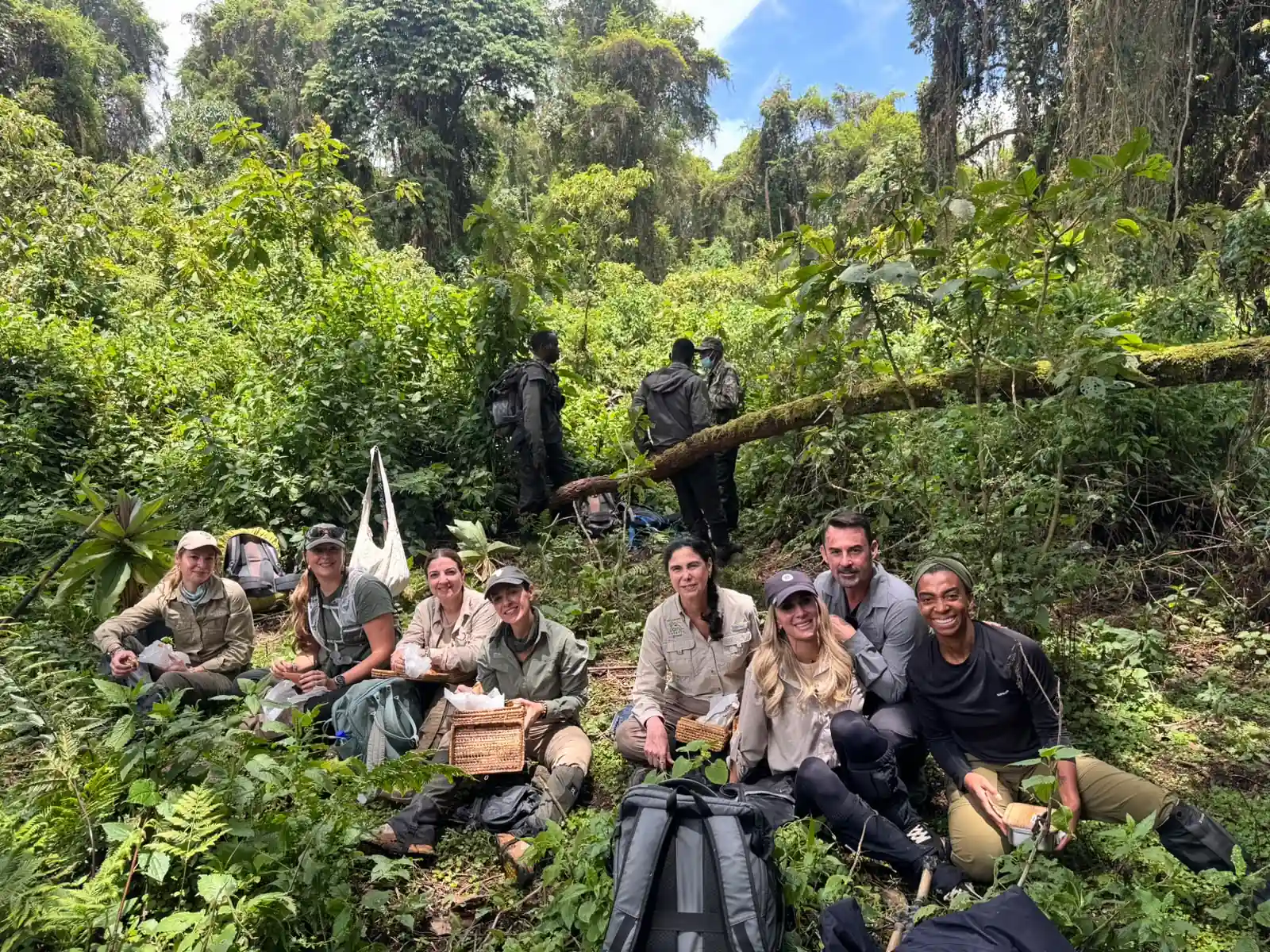
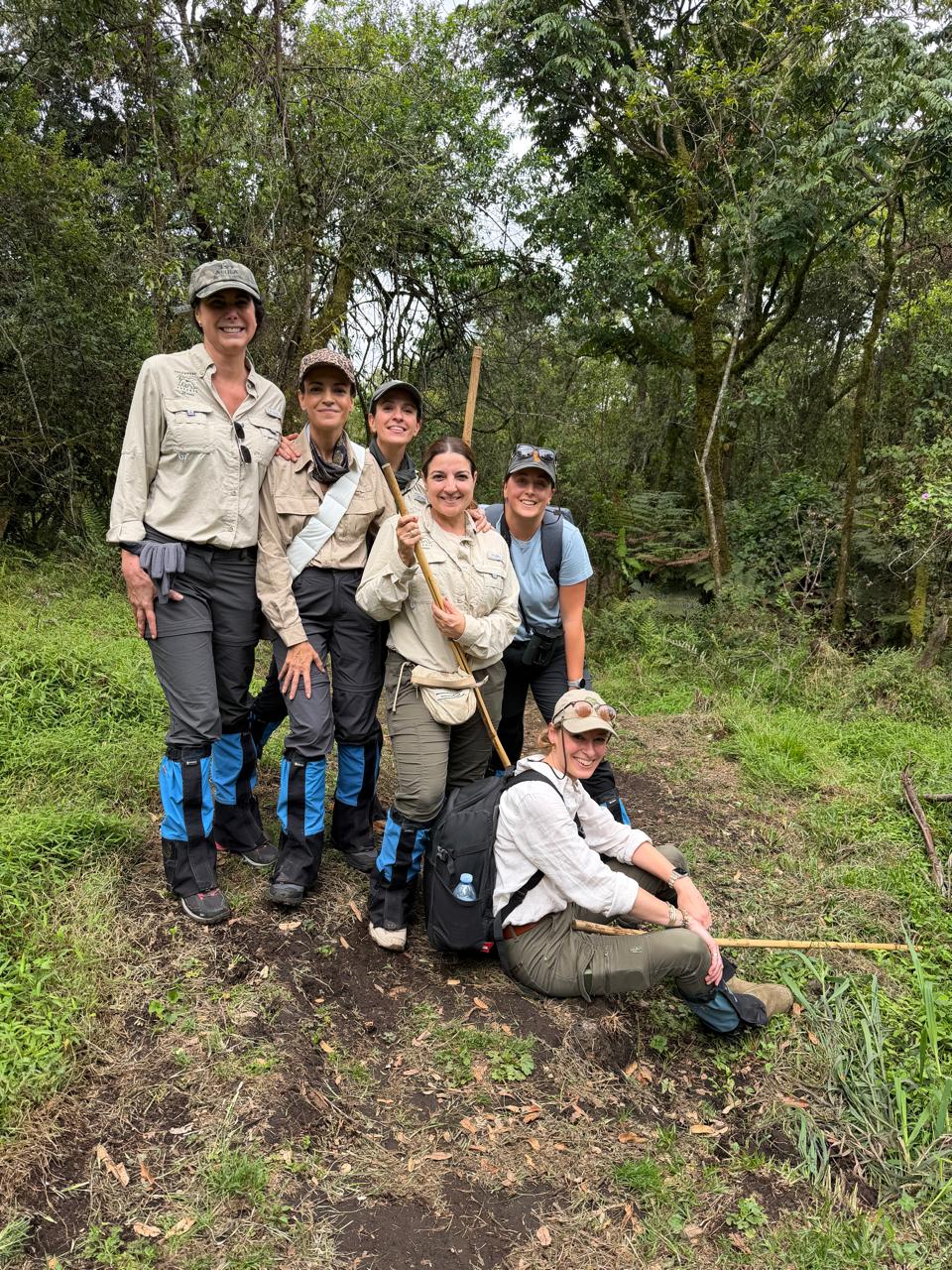
After our gorilla trek, we had time to drive back to Virunga Lodge for a quick shower. The team there did a super quick turnaround with cleaning our hiking boots, and then it was time to say goodbye. To the Virunga team, but also our fellow travel companions whom we’d gotten along so well! We had a blast, teasing Francis with our tardiness and non-stop chattering, sharing many first encounters with chimps, gorillas and other wildlife amongst the group, laughing at dinner over what had happened during the day and talking about all the things travel agents talk about when on safari together.
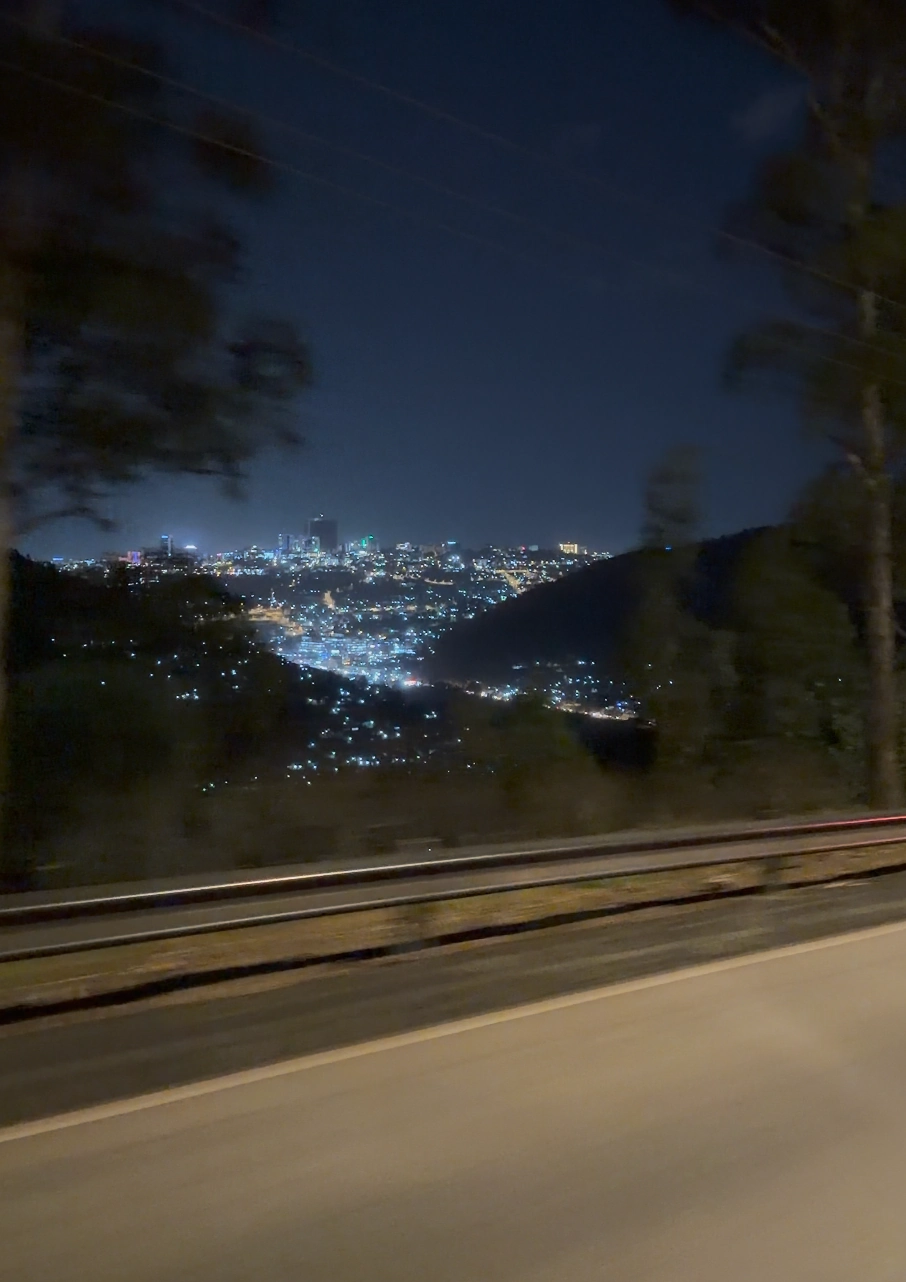
We did the 3-hour road transfer to Kigali, which went quite smoothly now that we had gotten used to the chaos that is driving in Rwanda. Many, many, many hills later, we arrived in Kigali at peak traffic hour. I really enjoyed the approach to Kigali at night. The views of the city lights were beautiful. Rush hour in Kigali though, was a little less peaceful, but we knew Fred was well-versed in navigating it all and he brought us safely to our overnight hotel in Kigali. You can also opt for the helicopter transfer.
Comparing the Gorilla lodges: Bwindi, Mount Gahinga and Virunga
Volcanoes’ “gorilla lodges” - Bwindi, Mount Gahinga and Virunga - are the original lodges in the collection, opened between 1997 and 2004 and fully renovated between 2018 and 2021. They were pioneers in their respective areas, and from a community and conservation commitment perspective, I would consider them pioneers still today. That is especially true for Mount Gahinga.
At Bwindi, you are one with the Impenetrable Forest around you. It is built against the side of the mountain, with the forest canopy stretching below and towering above. It is the only Volcanoes Safaris lodge without far-reaching views. I felt a little squeezed between the forest on one side and the village and access road on the other.
Our gorilla trek at Bwindi was what I would classify as easy. Easier even than the one we did in Volcanoes National Park where we stayed at Virunga Lodge. This just shows how you can’t predict a gorilla trek based on location alone, and how important it is to have an experienced and well-connected local guide who can request certain gorilla families for your trek.
Even then, these are wild animals and you can’t choose the weather either! Luckily for us, we didn’t get rained on once during any of our five primate treks. October is the start of the rainy season here, so we definitely got lucky.
The Mgahinga National Park forest where we trekked the Golden Monkeys is absolutely stunning. Both Nini and I agreed that it was the most magical out of all the forests we hiked during our trip. The gardens at Mount Gahinga lodge are beautiful. The rough access road and the worn state of the nearby houses were the biggest downside. We didn’t do a gorilla trek here, so we can’t compare that experience to Bwindi or Volcanoes. From what we’ve heard, golden monkey treks are a lot shorter and easier in Rwanda though, so you do have an alternative option there if you aren’t keen on the physically challenging hike through the Mgahinga forest.
Whereas all the activities at Bwindi and Mount Gahinga are within close proximity, Virunga Lodge is located quite a drive away from everything. Driving in Rwanda is not for the faint of heart either, so an experienced, local driver is a must. What Virunga lacks in proximity to activities - especially compared to lodges like Singita and One&Only for gorilla trekking - it makes up tenfold in views. The location on the ridge between the twin lakes Bulera and Ruhondo, looking over the Musanze Valley and the Virunga volcano range, is well-worth the drive in my opinion.
You can read more about the differences and similarities between our gorilla treks at Bwindi in Uganda, and Virunga Lodge in Rwanda, here.
Even though Mount Gahinga and Virunga Lodge look out over the same volcano range from opposite sides of the border, they feel very different. Compared to Mount Gahinga, the roads to Virunga are a walk-in-the-park, mostly tarred and litter-free. The drive from Kisoro to Mount Gahinga took 1.5 hours on a dirt road with potholes and loose volcanic rock. The road from Mount Gahinga to the Cyanika border post has a long section of red dust that gets absolutely everywhere.
Mount Gahinga is the most remote of all three lodges, and the only eco-luxury option in this region of Uganda. That comes with a great responsibility to uplift the surrounding community - especially the Batwa people - and one that Volcanoes does not shy away from. The Batwa village walk showed us how much effort the VSPT has put in. It also showed us how few other options the community has. The presence of a well-established and widespread tourism network in Bwindi, and the highly-developed luxury safari industry in the region of Kinigi and Musanze present a very different picture.
Our ideal Uganda Gorilla & Chimpanzee circuit
If we were to visit Uganda again, here’s how we would plan our itinerary:
- Day 1: Fly into Entebbe in the morning and book a Shoebill excursion that afternoon from Hotel No.5
- Day 2-3: Fly to Kihihi, stay two nights at Bwindi Lodge. Take a basket weaving class with Jacinta and visit the Bwindi Bar or the local Pangolin Rescue Centre. Plan a fireside chat with the Gorilla Doctors, and trek gorillas the next morning. Be sure to book a complimentary massage afterwards! Enjoy your second afternoon and evening at Bwindi Lodge, perhaps editing some of your gorilla photos by the fire with a hot chocolate. If you feel up to more walking, take the river walk from the lodge.
- Day 4: One night at Kyambura Gorge Lodge. Fly to Kasese, drive to Kyambura Gorge Lodge for lunch, trek the Lost Chimps of Kyambura in the afternoon and walk the Fig Tree Trail back to the lodge. Book the presentation with the Kyambura Lion Monitoring Project before dinner.
- Day 5-6: Two nights at Kibale Lodge. Drive from Kyambura Gorge Lodge to Kibale, book the Predator Monitoring Drive on the way. Relax at Kibale for the afternoon, meet the Kibale Chimpanzee Project primatologist for dinner. The next day, book the Kazinga Channel Boat cruise in the morning and relax at Kibale Lodge for the remainder of your last day in Uganda (perhaps squeezing in another massage). Or, if you want to do a second Chimpanzee trek on one of your afternoons, you’ve got that option too!
- Day 7: Fly out of Kasese to Entebbe in the morning, and back home from there.
If you have more time and would like to include more community-focussed activities, we would recommend adding one night at Kyambura Lodge.
Customization is key for a primate safari in Uganda and Rwanda. Have a closer look at the Volcanoes Safaris lodges here and contact us for tailored pricing based on your bespoke itinerary.
Volcanoes Safaris: the practical guide
We highly recommend booking your entire Uganda and/or Rwanda trajectory with Volcanoes. Their driver guides are outstanding, knowledgeable, courteous and well-spoken. They are fantastic at requesting activity-related guides, chimp and gorilla groups suited to your fitness levels, and are an invaluable part of navigating and interpreting the local culture.
The transfer vehicles are comfortable and well-appointed, with refrigerated cooler boxes, plugpoints, Wi-Fi (which, if it doesn’t work, is replaced by a hotspot connection to your driver’s phone) and comfortable seats. Beware though, if you are more than 2 people travelling together and can’t fit in the air-conditioned Toyota Landcruiser, the Landrover Defenders can get dusty!
You’ll be in the same vehicle with the same driver/guide throughout, with the only switchover being after internal flights (for us between Bwindi and Mount Gahinga, after flying from Kihihi to Kisoro). Even for the game drives in QENP, the only change being that your roof pops up to allow for game viewing in the park.
The lodge teams are efficient, warm and welcoming, with the exactly right balance between being available and discreet. Your butler and manager are reachable via a mobile phone in the room. Lodges offer all specialized attire needed for treks and the variable weather (rainjackets, fleeces, gaiters). Do take them up on the complimentary massages offered at each lodge, as well as the lodge backpacks for treks. When you hire porters for your treks - which we highly recommend - it is better to use the lodge backpacks rather than your own. Trust us on this one!
Talking about packing, there is no need to overpack! Laundry is complimentary at all lodges, and extremely efficient. You can easily get by with 3, max 4 changes of clothes. Even at the lodges where we only stayed one night, the laundry turn-around was extremely speedy. Quite impressive in the humid, tropical climate. Shoe cleaning is offered after each trek, and I swear my hiking shoes are cleaner now than when I bought them new.
The cuisine is excellent throughout the lodge collection, and the local dishes - mostly various stews combined with steamed green bananas - are a must-try. The drinks selection is small, but well-rounded - I loved the Ugandan Nile Special beer. The wines are South African. Their homemade iced teas and freshly squeezed juices are great and refreshing non-alcoholic options. Nini loved the pineapple spiced iced tea and passion fruit juice. The watermelon juice we were offered on arrival at each lodge was an excellent thirst quencher too.
As you would expect in the countries of coffee and tea, these warm beverages are top-notch. Do try the traditional African spiced tea, which is a bit different at each lodge but very delicious. At the higher altitude lodges, the hot chocolate hits the spot every time. When you are offered a wake up call, do take them up on that! It made me smile every time and I am by no means a morning person. An absolute must.
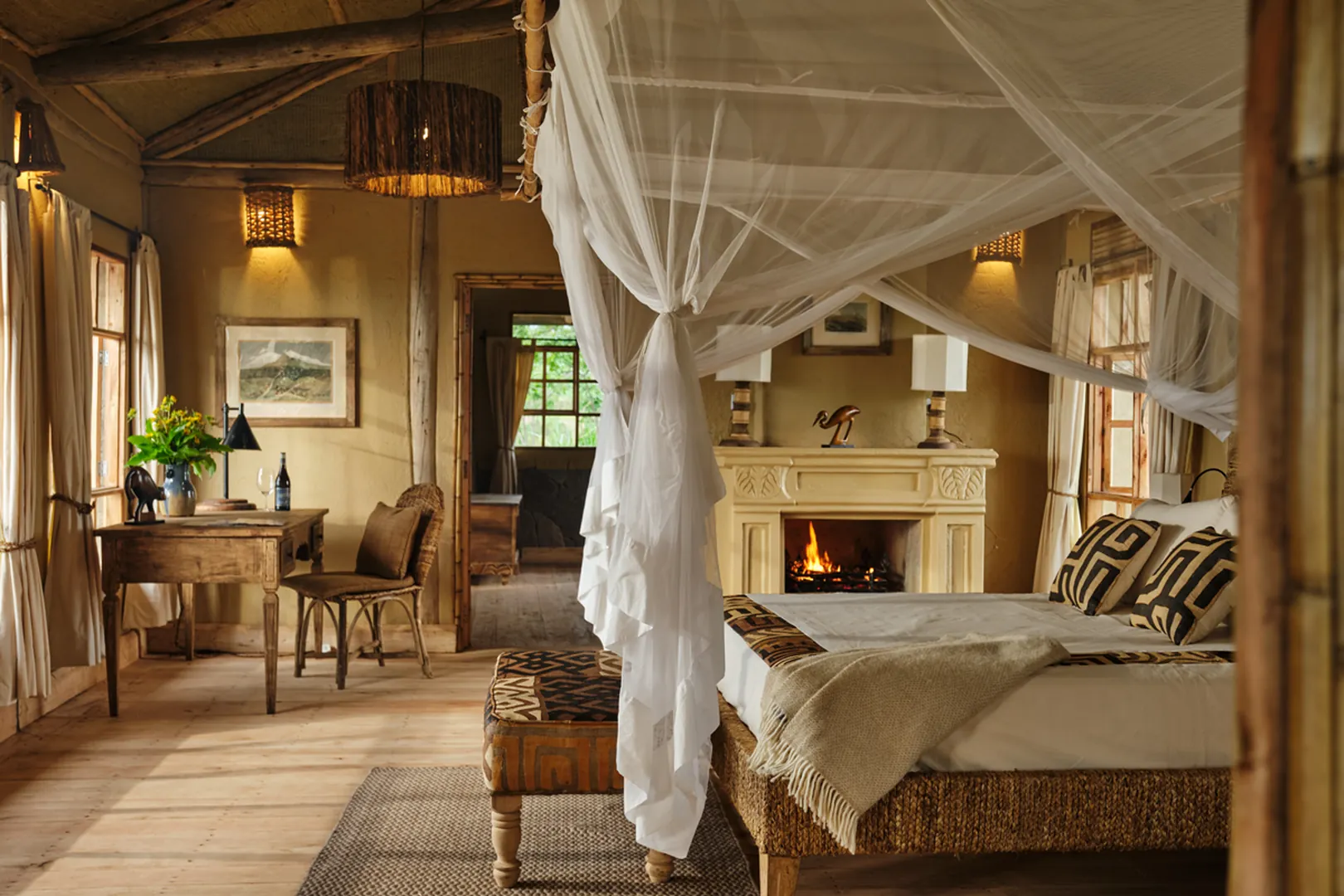
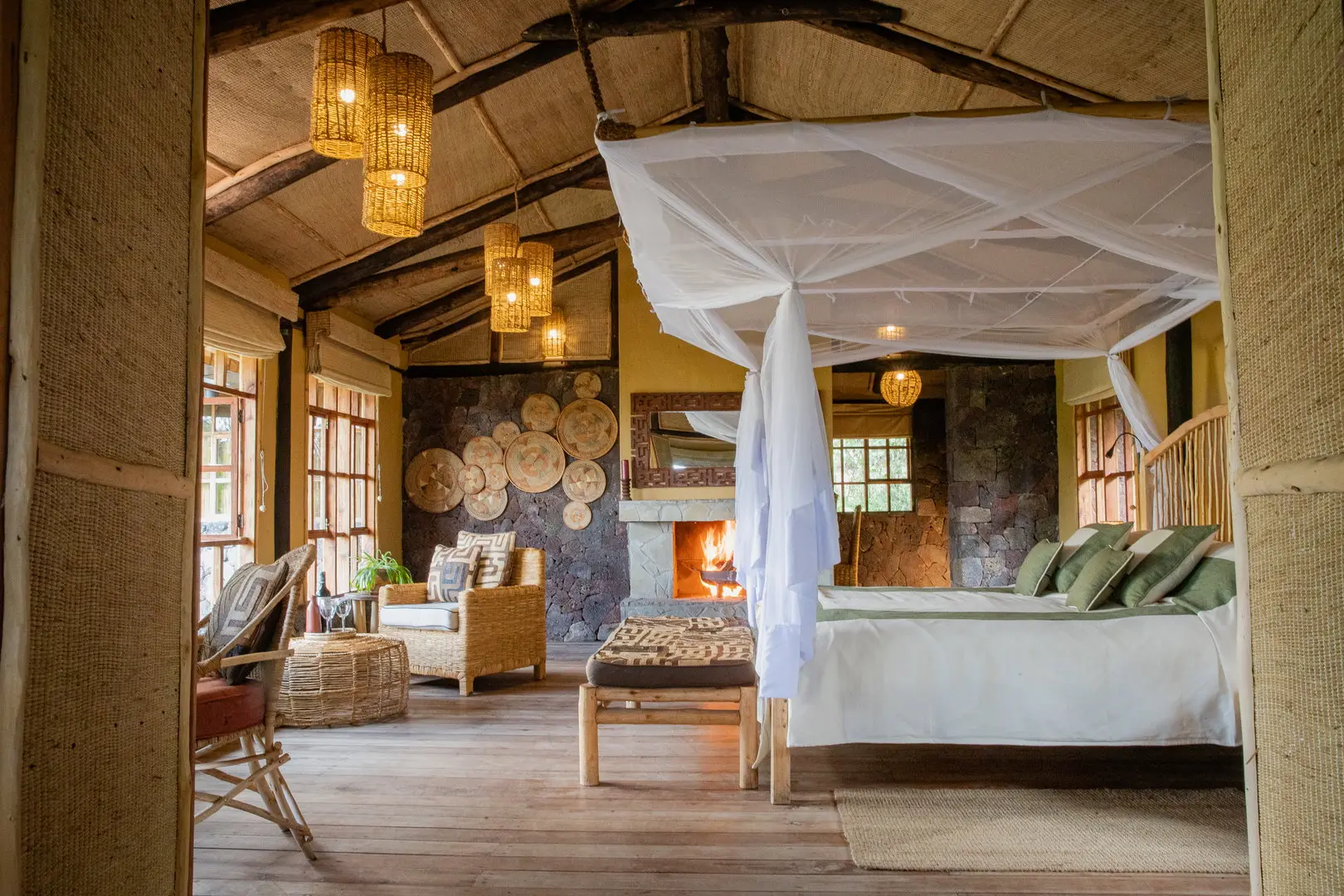
Rooms are incredibly spacious, sometimes so spacious I even felt a little lost in some of them. Even though we had our favourites at each lodge, they are all well-appointed with separate sitting and entrance areas, changing room, bathroom and even multiple fireplaces. I took an outside shower at almost every lodge, even though the indoor bathrooms feel like a spa in their own right. The one thing I did miss, was a bathtub. Especially after a long trek, having the opportunity for a relaxing soak would have been nice. The lodges do have a sauna in the common spa area.
The beds are excellent, and mosquito nets are drawn each night at turndown. The perfect haven to rest and recoup after what will inevitably be the most active safari you’ll ever go on (bar perhaps a primitive walking trail). Adapters are available at every plugpoint, so no need to bring your own. WiFi in the rooms, and even in the main areas, can be spotty at times. But that is an absolute non-issue if you aren’t trying to squeeze in work between activities - like us!
The lodges’ infrastructure is often sprawled out across a large area, with long winding paths between the main areas and the rooms. The layout achieves privacy and intimacy at the same time, and the common areas are spacious without feeling pretentious. Instead, arriving at a Volcanoes Safaris lodge simply feels homey, cozy and a little bit like a warm hug after a long day.
Volcanoes Safaris: luxury eco-tourism as it should be in East Africa
The Volcanoes Safaris lodges in Uganda and Rwanda are exactly what I want from an eco-luxury collection: understated, humble luxury rooted in and sensitive to local culture and aesthetics. Each lodge connects to local community and conservation projects through practical involvement with VSPT. From the lodges themselves, to the staff, the guides and the activities; the atmosphere at all lodges exudes the essence of eco-luxury: not pretentious, not contrived, but simply there.
Interested in traveling to Uganda or Rwanda? Have a closer look at the Volcanoes Safaris lodges here and contact us for tailored pricing based on your bespoke itinerary.
Key Takeaways
- Volcanoes Safaris runs five lodges across the Great Lakes region: Kibale Lodge, Kyambura Gorge Lodge, Bwindi Lodge and Mount Gahinga Lodge in Uganda, and Virunga Lodge in Rwanda. Each lodge connects guests to community and conservation projects run by its non-profit, the Volcanoes Safaris Partnership Trust (VSPT). The tourism-conservation connection is strong throughout the portfolio and adds true meaning and purpose to your journey.
- The lodges share a consistent aesthetic: understated, rooted in local culture, with spacious rooms, excellent beds and warm, discreet service. Massages, laundry, hiking shoes cleaning and trekking gear are included.
- You keep the same driver-guide for each country, which makes a big difference. Our guides requested gorilla and chimp families suited to our fitness and helped us interpret the local culture.
- A shoebill excursion in the Mabamba Swamp, near Entebbe, is a great way to ease into your Ugandan experience. Book an afternoon slot if you can, as we had the nest to ourselves after the morning rush had passed.
- Kibale Lodge, the newest in the collection, has the best views and is geared towards relaxation. Kibale National Park has very high chimp sighting chances but is known to be busy.
- Kyambura Gorge Lodge offers the widest range of activities, from chimp trekking in the gorge to lion monitoring drives and the Kazinga Channel cruise. The rooms closest to the community can be noisy, so it suits travelers looking for immersion more than seclusion.
- Bwindi Lodge is situated right against the forest, with all activities close by, including the Gorilla Doctors fireside chat, the Bwindi Bar hospitality training programme and basket weaving. It is the only lodge without far-reaching views, instead replaced by immesion in the Bwindi forest.
- Mount Gahinga Lodge is the most remote and the only eco-luxury lodge in its area. The Mgahinga forest was the most beautiful we hiked, and the Batwa village walk showed the economic impact of tourism in this region.
- Virunga Lodge has the most spectacular views of the collection, over the twin lakes and the Virunga volcanoes, but it is a long drive from the Kinigi gorilla trekking headquarters.
FAQ about Volcanoes Safaris Lodges in Uganda and Rwanda
Is Volcanoes Safaris worth booking for a primate safari?
Yes, especially if you want to truly see and feel the conservation and community impact of your safari. Volcanoes Safaris has five lodges near Uganda’s and Rwanda’s main primate parks, with the same driver-guide for each country. Its non-profit arm, the Volcanoes Safaris Partnership Trust, runs projects you can visit from each lodge. In our experience, the service, food and guiding were consistently high-level without feeling over the top.
Where are the Volcanoes Safaris lodges?
Volcanoes Safaris has four lodges in Uganda and one in Rwanda. Kibale Lodge is near Kibale National Park, Kyambura Gorge Lodge is on the edge of Queen Elizabeth National Park, Bwindi Lodge is in the Buhoma sector of Bwindi Impenetrable National Park, and Mount Gahinga Lodge is next to Mgahinga Gorilla National Park. Virunga Lodge is in northern Rwanda, on a ridge between Lakes Bulera and Ruhondo, within driving distance of Volcanoes National Park.
Should I stay at Kibale Lodge or Kyambura Gorge Lodge?
Choose Kibale Lodge for views, space and relaxation, and Kyambura Gorge Lodge for activities and community immersion. Kibale Lodge has panoramic views of the Rwenzori Mountains and crater lakes, and gives you access to Kibale’s large chimpanzee population. Kyambura Gorge Lodge offers chimp trekking in the gorge, lion monitoring drives, the Kazinga Channel cruise and several community projects. We preferred Kibale Lodge’s setting, but the chimp trek in Kyambura Gorge was our favourite.
Which Volcanoes Safaris lodge is best for gorilla trekking?
Bwindi Lodge is the most convenient, as the Buhoma park gate is a three-minute drive away. Mount Gahinga Lodge gives you access to Mgahinga’s single habituated gorilla family and the golden monkeys, in the most remote setting. Virunga Lodge has the dramatic views but involves a longer drive to the Kinigi trekking headquarters. Which one is best depends on whether you prioritise convenience, remoteness or views, and whether you want to trek in Uganda or Rwanda.
How long should a primate safari in Uganda be?
Plan at least seven days to trek both gorillas and chimpanzees in Uganda without rushing. That gives you two nights at Bwindi for gorillas, and time at Kyambura Gorge and Kibale for chimpanzees and Queen Elizabeth National Park. Add Virunga Lodge if you want golden monkeys or a second gorilla trek in Rwanda.
How do you travel between Volcanoes Safaris lodges?
You travel by a combination of short domestic flights and road transfers with your own driver-guide. We flew from Entebbe to Kasese, then drove to the Kibale, Kyambura and Bwindi lodges, flew from Kihihi to Kisoro, and drove to Mount Gahinga and across the border to Virunga Lodge. Roads in southwestern Uganda are often bumpy dirt roads, while most roads in northern Rwanda are tarred. Road transfers can take several hours, so build them into your planning.
What is included at Volcanoes Safaris lodges?
During our stay, massages, laundry and hiking shoes cleaning after each trek were included at every lodge. The lodges also provide gaiters, rain jackets, fleeces and backpacks for treks, and staff help you gear up before you leave. Because laundry is fast and included, you can pack light (hand luggage only) - something we highly recommend especially if you are taking East African flights. Be sure to confirm current inclusions when you book.
How does Volcanoes Safaris support conservation and communities?
Volcanoes Safaris supports conservation and communities through its non-profit, the Volcanoes Safaris Partnership Trust (VSPT), which runs projects linked to each lodge. These include reforestation and buffer zones around Kyambura Gorge, the Kyambura Lion Monitoring Project, the Bwindi Bar hospitality training programme, and support for the Batwa community near Mgahinga. $50 of each guest’s nightly rate goes to VSPT. When you book through Wild Wonderful World, 20% of proceeds from your safari also goes to conservation projects in southern Africa.
What is the predator monitoring drive in Queen Elizabeth National Park?
It is a private game drive with the Kyambura Lion Monitoring Project, which tracks lions, leopards and spotted hyenas in the Queen Elizabeth Conservation Area. You go off-road with researchers to find collared predators, so sighting odds are very high and you will likely have the cats to yourselves. The project uses the data to protect carnivores and reduce conflict with the communities living in and around the park.
Can you see shoebills near Entebbe?
Yes. The Mabamba Swamp, a Ramsar wetland on the shores of Lake Victoria, is one of the most reliable places to see shoebills, and it is a short boat ride from Entebbe. A shoebill excursion takes around half a day, which makes it a good option if you arrive a day before your safari starts. We went in the early afternoon and had almost an hour with a nesting female and her chick.
Can you meet the Gorilla Doctors at Bwindi Lodge?
Yes. Bwindi Lodge and Mount Gahinga Lodge can arrange a fireside chat with a vet from Gorilla Doctors, the organisation that provides health monitoring and emergency care for mountain gorillas. We highly recommend booking it the evening before your gorilla trek, as it gives a remarkable insight into the work involved in protecting gorilla populations
Is there Wi-Fi at Volcanoes Safaris lodges?
Yes, but it can be unreliable in the rooms and main areas. The vehicles also have Wi-Fi, with a hotspot from your driver’s phone as a backup. If you need to work during your safari, plan for slow connections.
Planning a primate safari in Uganda or Rwanda? Get in touch with our travel desk to custom-design your ideal safari.
Written by Evelyn Poole, safari marketing specialist and conservation fund director at Wild Wonderful World