

Primates of East Africa: Trekking Chimpanzees in Uganda
A journey to the primates of East Africa: Part 1 - Trekking Chimpanzees in Uganda
This blog series consists of 4 parts:
- Part 1 is about our first encounters with the Great Apes of East Africa during our two Chimpanzee treks in Kibale National Park and Kyambura Gorge
- Part 2 covers the differences and similarities between Gorilla trekking in Uganda and Rwanda
- Part 3 reflects on the difference between chimpanzee and gorilla trekking, as well as the wider conservation context of the protection of these great apes through tourism. A short bonus chapter details my review of our Golden Monkey trek in Mgahinga in Uganda.
- Part 4 contains my review of our entire itinerary with Volcanoes Safaris, including our many other conservation and community experiences. It details what it is like traveling with Volcanoes Safaris, meeting their team and our thoughts about the five lodges we stayed at.
Best place to see chimpanzees in Uganda: same species, same country, completely different experiences
When I got confirmation that yes, I would be traveling to Uganda and Rwanda to experience a primate safari with Volcanoes Safaris (Volcanoes), I couldn’t quite believe it. Having heard fellow safari specialists and guides within our professional and friendship circles talk about their experience seeing gorillas and chimpanzees in the wild for the first time, it had become increasingly clear to me that it’s simply impossible to describe and should rather be felt yourself. Yet here I am, trying to do exactly that! If this four-part blog series conveys the strange confluence of sheer overwhelm - in a positive sense - and profound serenity I felt at the same time, I know I’ve done my job well.
Our journey starts in Uganda’s southwestern sector, where our two chimpanzee treks take us into the national parks of Kibale and Queen Elizabeth’s Kyambura Gorge. Whilst both regions are home to communities of chimpanzees, several species of Colobus monkeys, forest buffalo and elephant, the habitats are vastly different. In this part of the blog series, I recount memorable moments from both experiences and explain the difference between the two regions. My hope is that this will help you identify which region is better for you, or whether it is worthwhile to also experience both options yourself!
Kibale chimpanzee trekking: be prepared to share
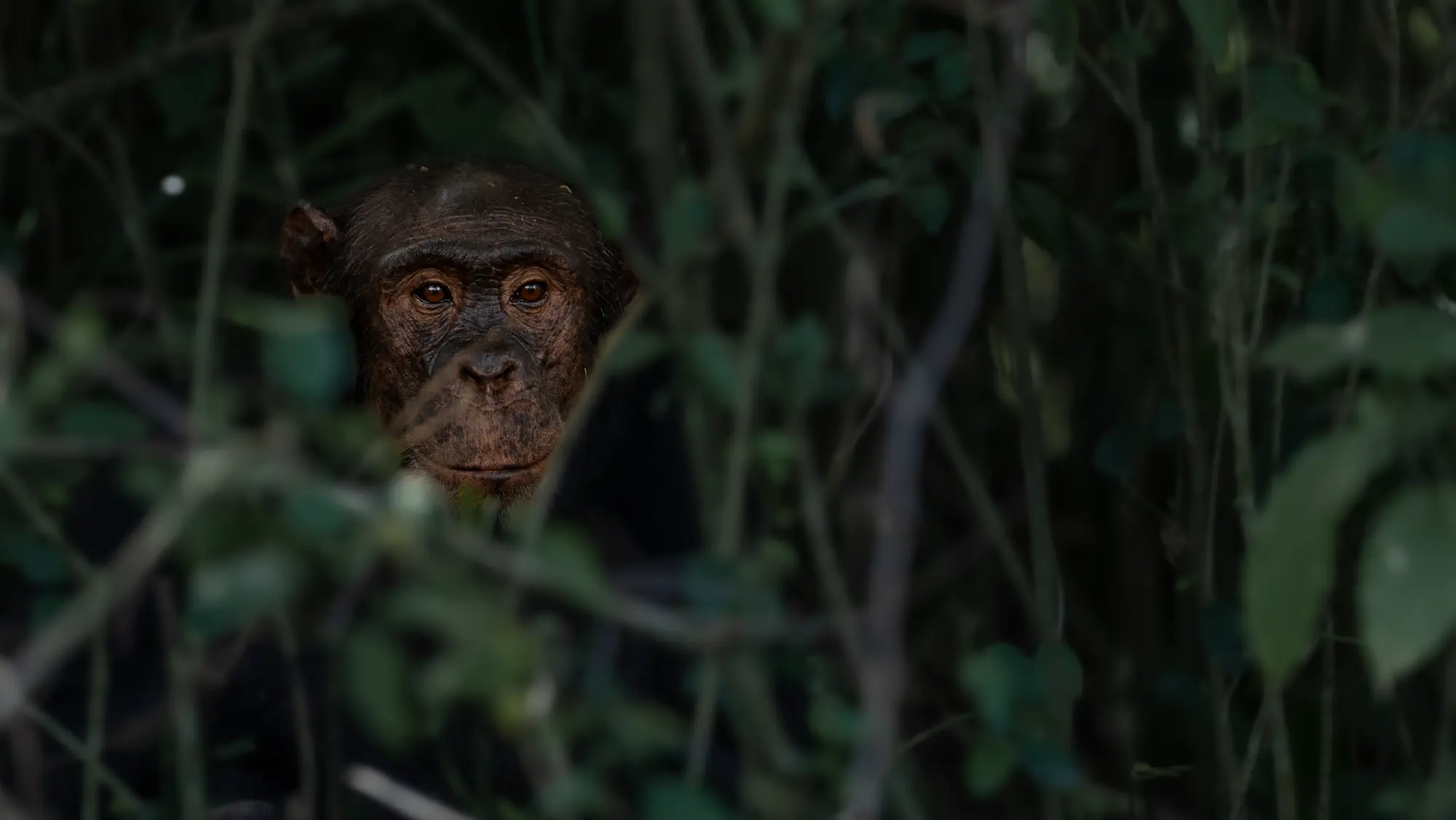
Picture tall trees covered in moss and ferns, standing on a forest floor composed of thick, springy humus layers and leaf litter. A forest so imposing, I even pulled out my compass to get a sense of direction. Something I soon realized was hopeless… The Kibale forest stretches out across an altitude of 1,100 to 1,600m above sea level, and covers almost 80,000ha including the 180km long Kibale-Queen Elizabeth Wildlife Corridor that connects Kibale Forest with the open savannah plains of Queen Elizabeth National Park (QENP). No wonder I couldn’t see the forest through the trees and felt a bit lost in the jungle - literally.
How many chimpanzees live in Kibale?
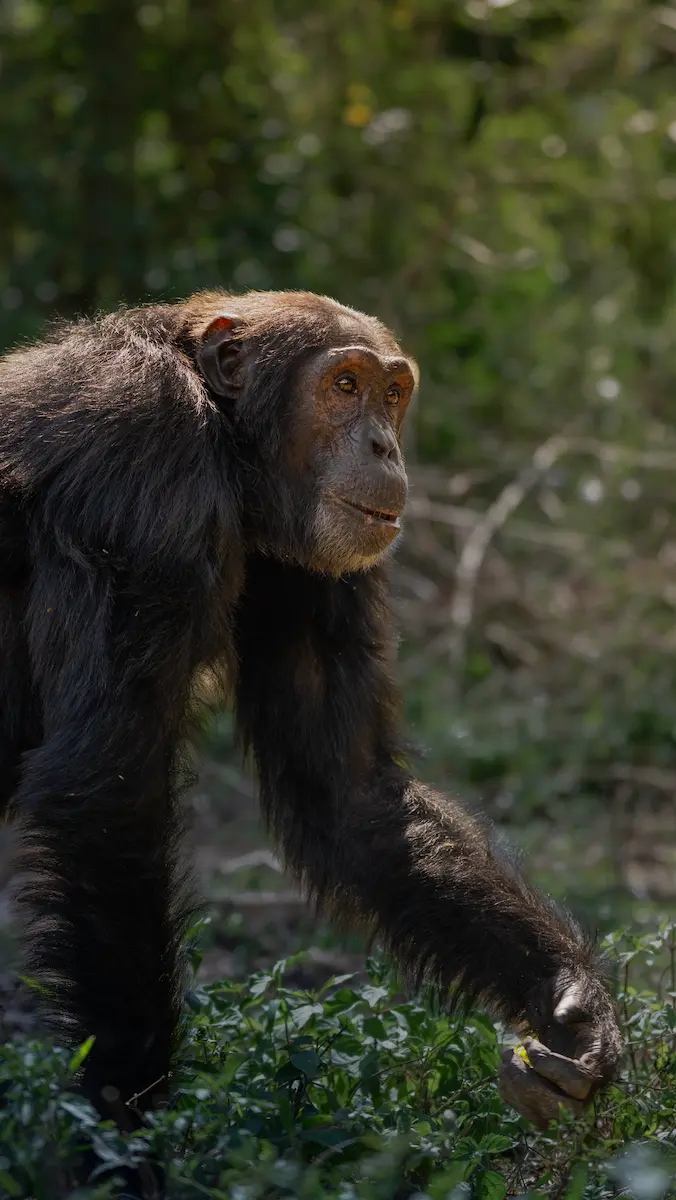
Kibale Forest is home to 13 chimpanzee communities, totalling around 1,500 individuals. Five communities are habituated, two for tourism and three for research. We trekked the Kanyantale Group, which consists of 90 to 120 individuals. These do split up into smaller, temporary parties to forage or rest. The large chimpanzee population means that Kibale is widely considered as the chimpanzee trekking capital of the world.
Naturally, we bought a permit to trek chimpanzees here. At USD300 (2027 rates), standard chimpanzee trekking permits are much cheaper than gorilla permits.
Volcanoes Safaris offers an opportunity for one of the Kibale Chimpanzee Project’s primatologists to join guests for dinner at Kibale Lodge. I would highly recommend this for travelers who are interested in chimpanzee conservation. It is a unique opportunity to gain insider, contextual knowledge about the conservation landscape in the region. I absolutely loved meeting Maggie and we exchanged contacts to stay in touch and share human-wildlife coexistence strategies between us.
Following the Kanyantale community beyond the park boundary
The day of our trek, after a smooth check in at the HQ, we drove to the start of our trail. As is customary for any primate trek these days, trackers wake up early to relocate your assigned group from their nightly resting place. They use radios, cellphones and vocal calls to communicate the whereabouts of the primates with your guide. On this particular afternoon the chimps had decided to move outside of the national park boundaries, indicated by a raised wooden walkway with long nails attached to the sides to stop elephants and forest buffalo from leaving the park. The chimps of course, as well as humans, can easily clear this boundary.
It was a first stark reminder of the permeability of park boundaries and how differently reserves are delineated and protected in East versus South Africa. A difference that became even more clear after we’d found the chimps. With no electric fences to keep them inside the national park, as well as the continuation of forest habitat beyond the official park borders, the chimps simply go where they please.
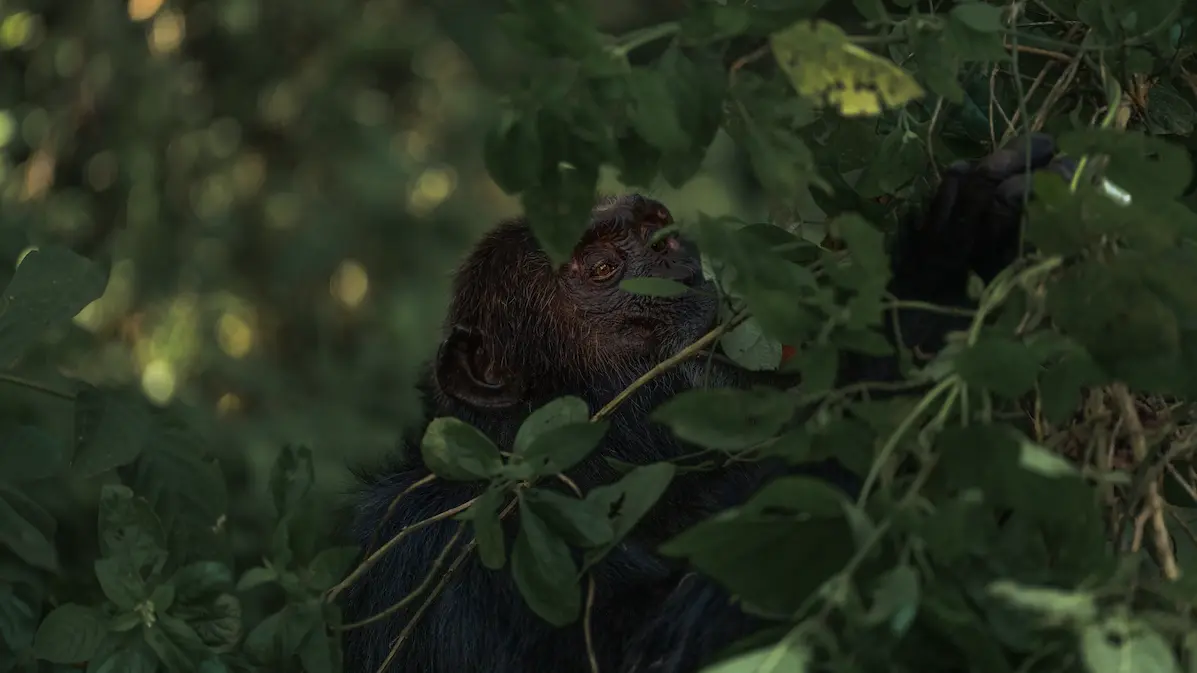
We found them resting next to a dirt road leading up to a nearby village, feeding on the abundant terrestrial herbaceous vegetation but also swinging in the tree canopy and feasting on figs. On our walk here, we crossed paths with many other groups of tourists and researchers. Luckily as we reached the chimps, there was only one other group with them at the same time. As chimps sightings at Kibale are known to be very busy - with sometimes up to 60 tourists at once - this was a stroke of luck for us.
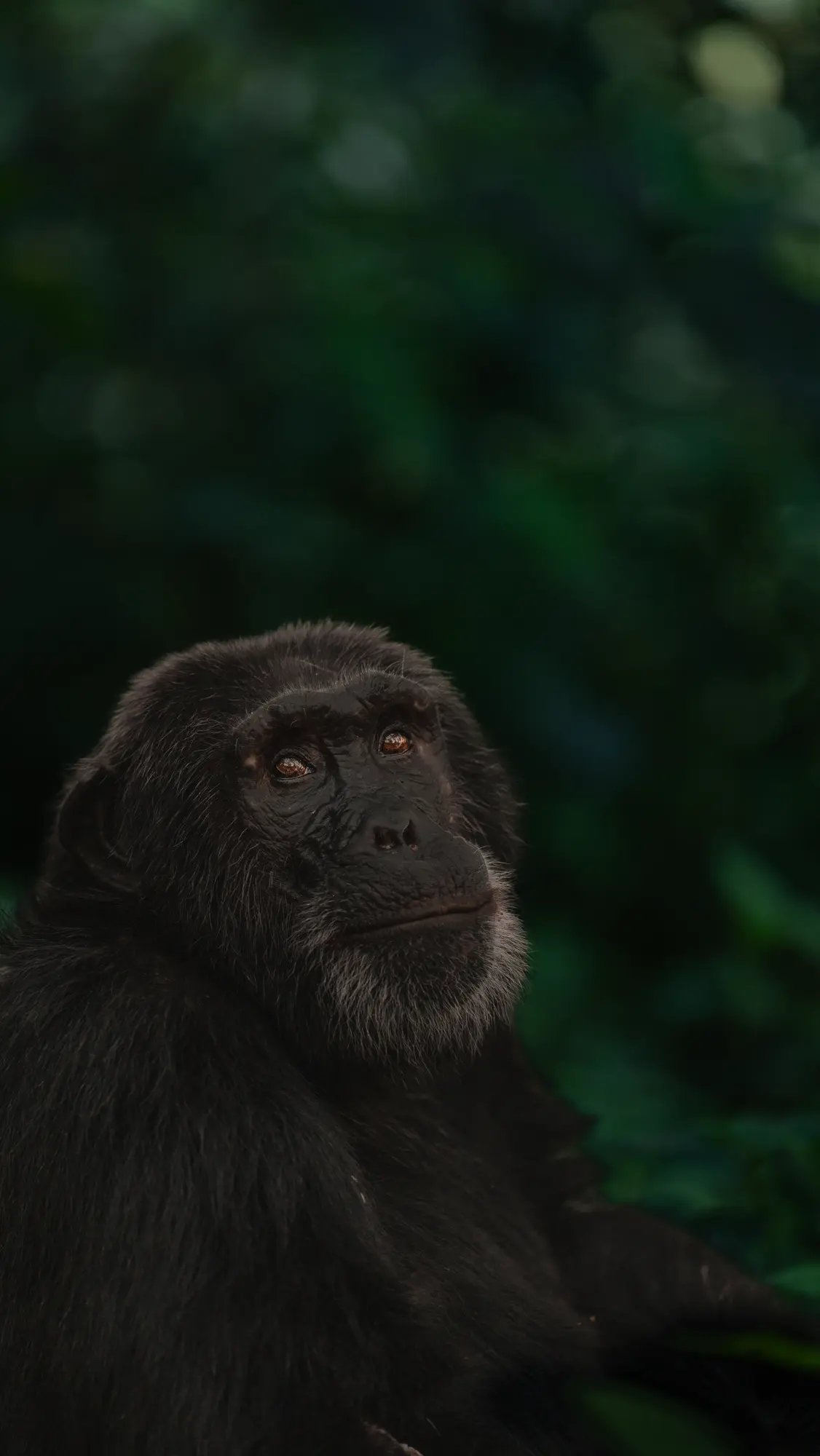
Despite not being inside the national park, we got some great photo opportunities and were able to follow the group while they were feeding and resting. I particularly loved spending time with this older chimp, who was relaxing in the thick undergrowth. After trekking for a good hour and a half in the midday sun, I was inclined to join him!
When our allotted 1 hour with the chimps was up, we said goodbye to the trackers - who would stay with the chimps until sundown. All viewing is limited to 1h per day per chimpanzee or gorilla group to avoid disturbing their natural behavior. Our guide Bosco led us through family farms and past village houses to the nearest pick up point. Communities living here mostly farm coffee and tea plantations because chimps and other wildlife don’t eat these crops. Here, we meet Francis and Petrus, our drivers and guides for the Ugandan part of our trip with Volcanoes, and hop back into our Landrover Defender 110s to return to Kibale Lodge.
Luxury chimpanzee safari Uganda: the Lost Chimps of Kyambura Gorge
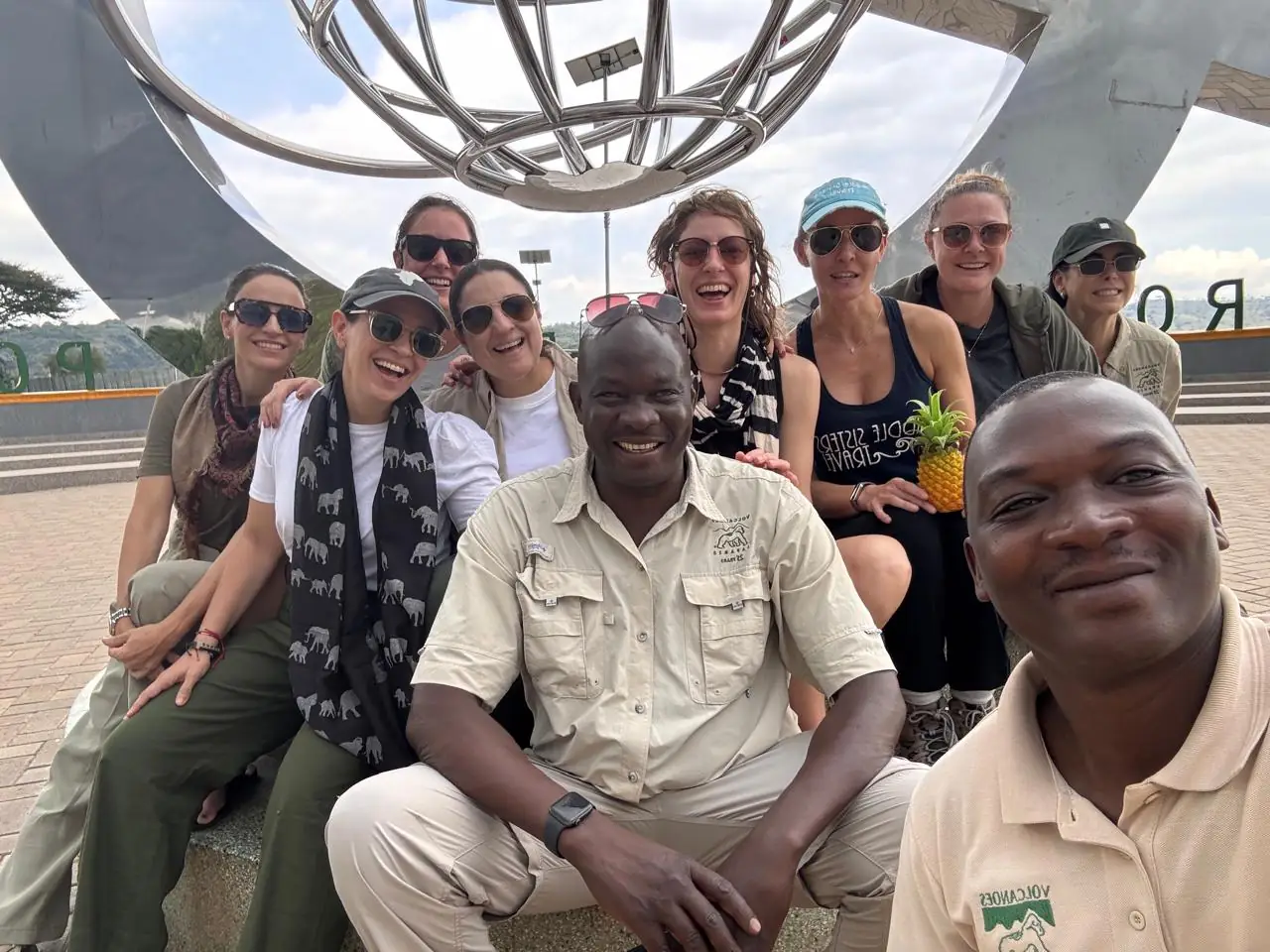
The next day, we went from the tropical forest of Kibale, to the riverine forest of the Kyambura Gorge. We crossed the equator on our way from Kibale to Kyambura Gorge Lodge, taking the opportunity for the obligatory equator group picture. I had never been on the equator so that was another first for me!
Why the Kyambura chimpanzees are isolated
The Kyambura Gorge itself is a truly impressive sight. Part of the Albertine Rift, it is home to a now isolated community of 30 or so chimpanzees. Demarcating the north-eastern boundary of the Kasenyi plains of Queen Elizabeth National Park (QENP), this trek would take us below the 1,100m elevation of the gorge’s rim: a 100m drop to the forest floor.
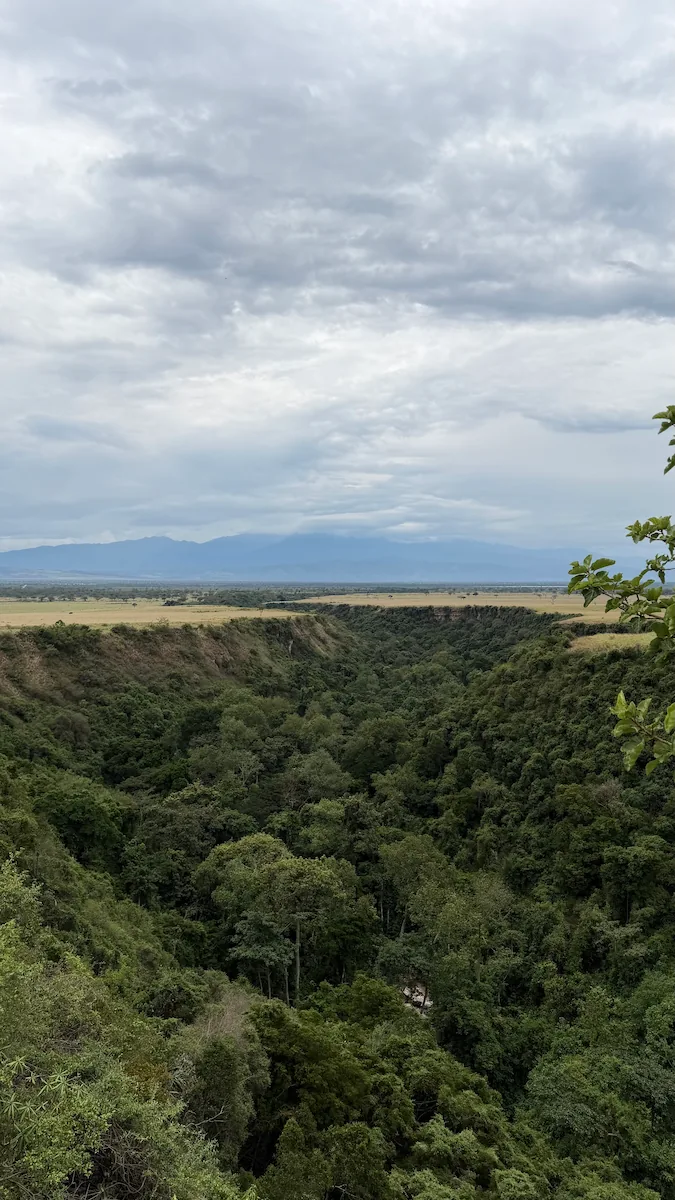
The challenges that this chimp community faces after being cut off from the larger, nearby forest ecosystems like Kalinzu Forest and Maramagambo Forest due to deforestation and human settlement expansion are significant. The work that the Volcanoes Safaris Partnership Trust (VSPT) does with the surrounding community includes the development of bufferzones, reforestation and hopefully one day, establishing a corridor to reconnect these chimpanzees to the forests located southward from the Gorge.
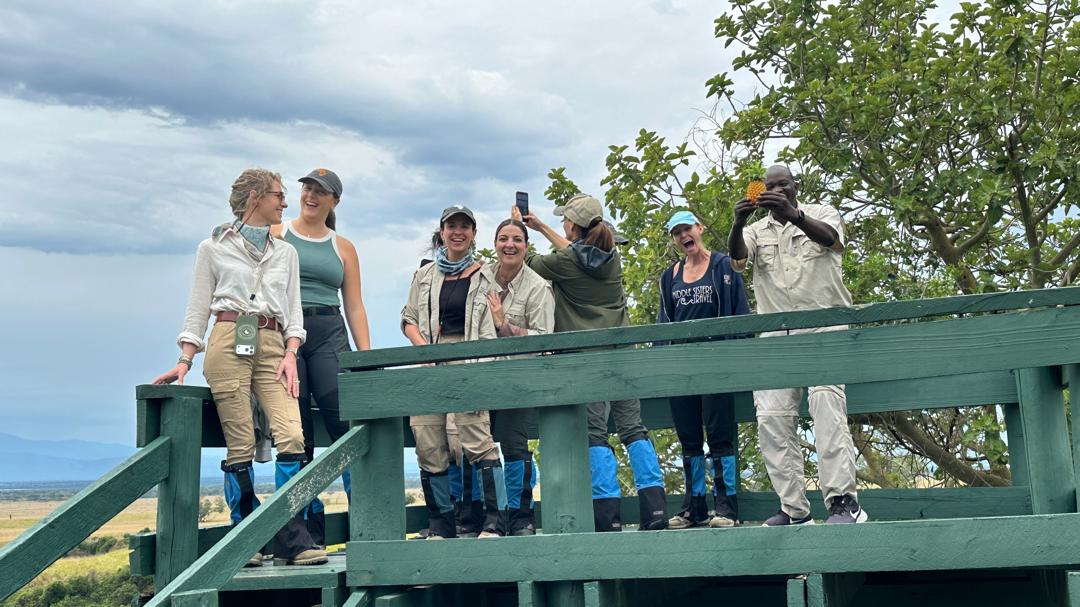
With only one chimpanzee community comes just 16 permits per day: one group of 8 in the mornings and one group of 8 in the afternoons. This small scale was noticeable from the outset and made the whole experience totally different from Kibale. From our approach towards Fig Tree Camp through QENP, to signing our name at the HQ (a small hut at the edge of the plains), our briefing with Emmanuel and Judith (our guide and ranger for our trek) under the thatched pagoda with only our group of 8 and the views of the gorge we were about to descend into from the viewing deck at the highest point; every part felt exclusive, private and considered.
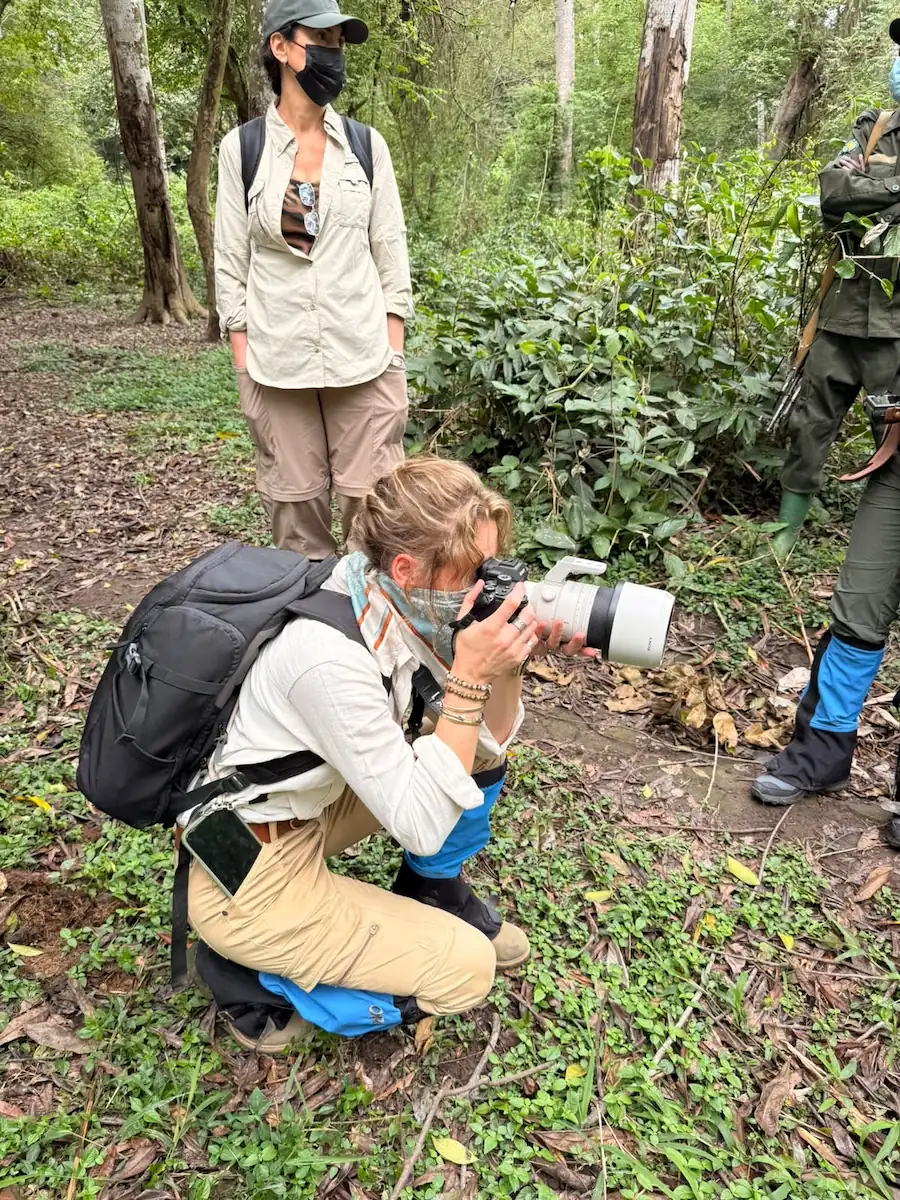
Descending into the gorge: 100m drop below the Kasenyi Plains
Emmanuel informed us that the trackers had found some of the chimps to the north of the viewing deck. So, very much like in Kibale, we drove from HQ along the edge of the gorge, to the start of our trail. A steep descent followed, on slopes heaped high with leaf litter. But soon - much sooner than I expected - we reached the banks of the river where the ground levelled out. Wary of forest buffalo, we proceeded as a group, crossing the river using an old iron bridge and wooden walkway.
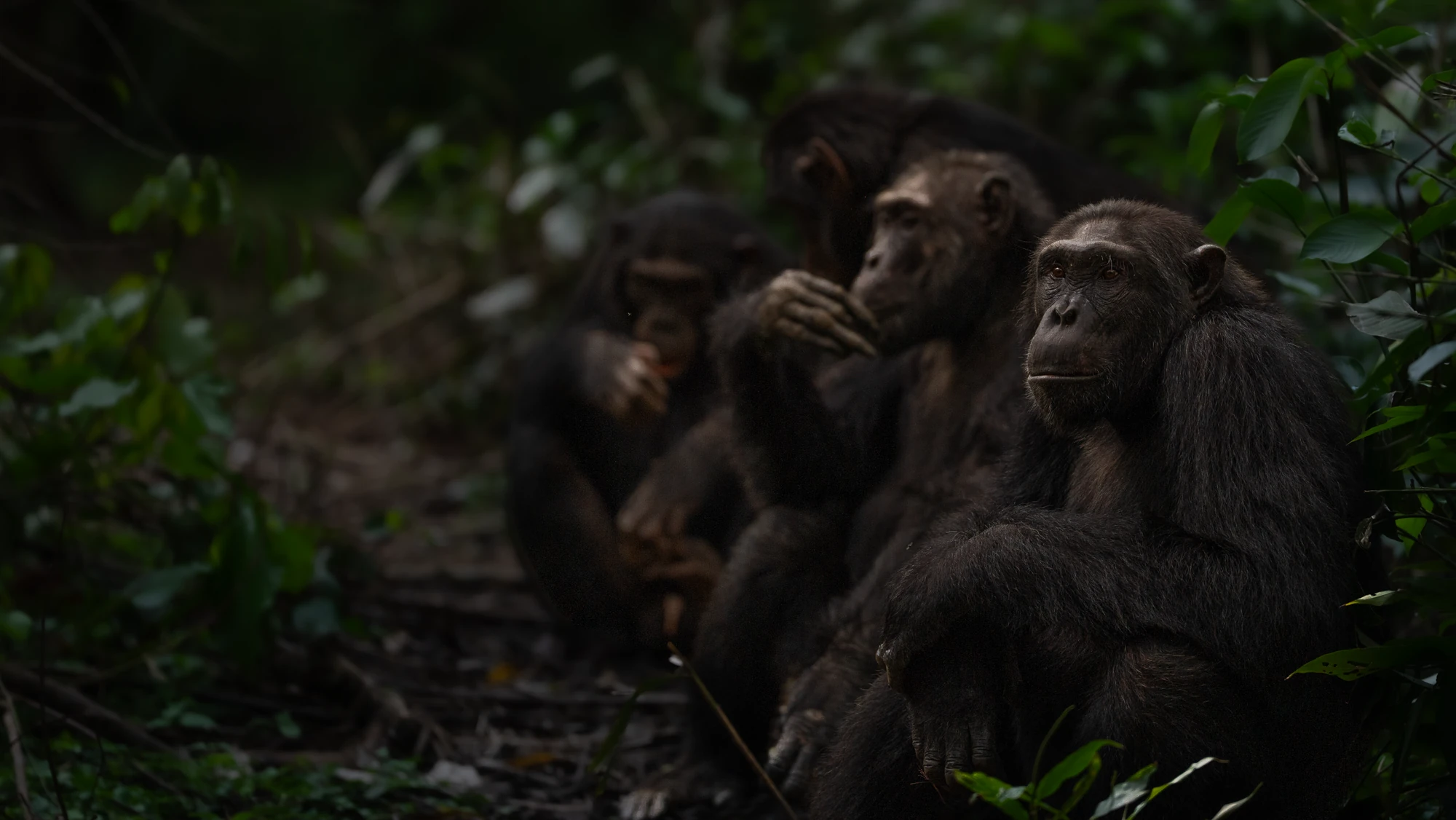
The whole walk felt like we had been dropped off the edge of the world and landed in an enchanted forest. Very “Alice in Wonderland”-like. The chimps were resting, grooming. It was peaceful, still and yet so much was happening at the same time. A younger male grooming his dominant senior. An introverted “bodyguard” of the alpha male self-grooming - refusing assistance even when politely offered by the younger male.
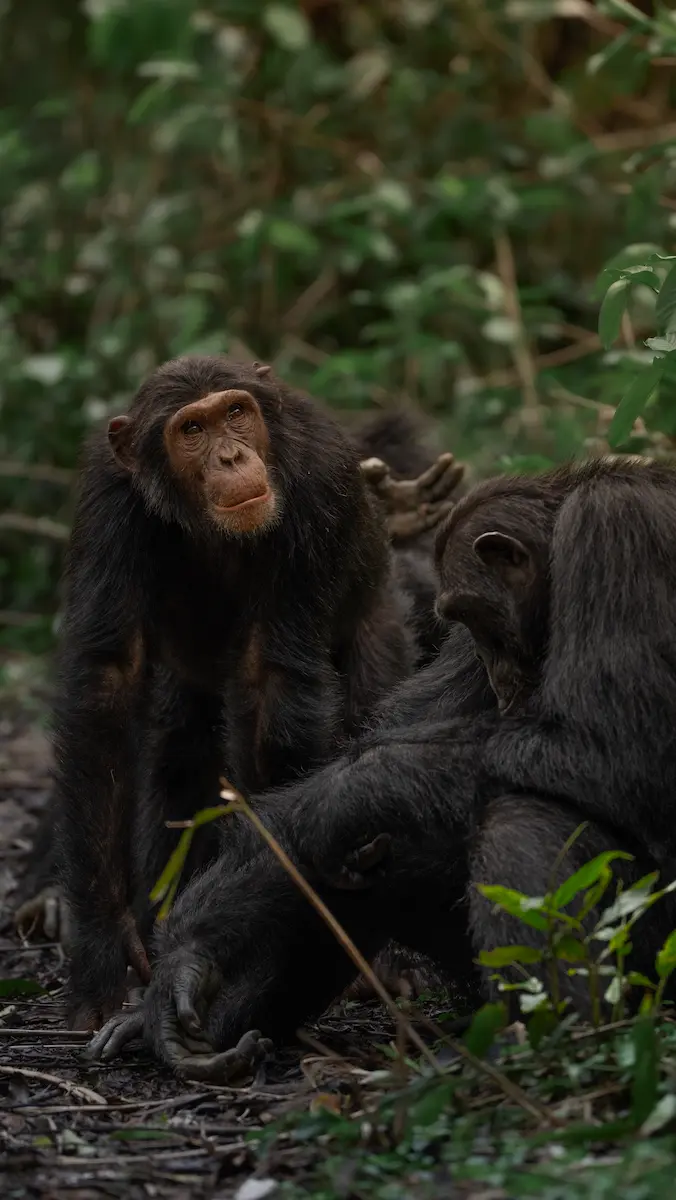
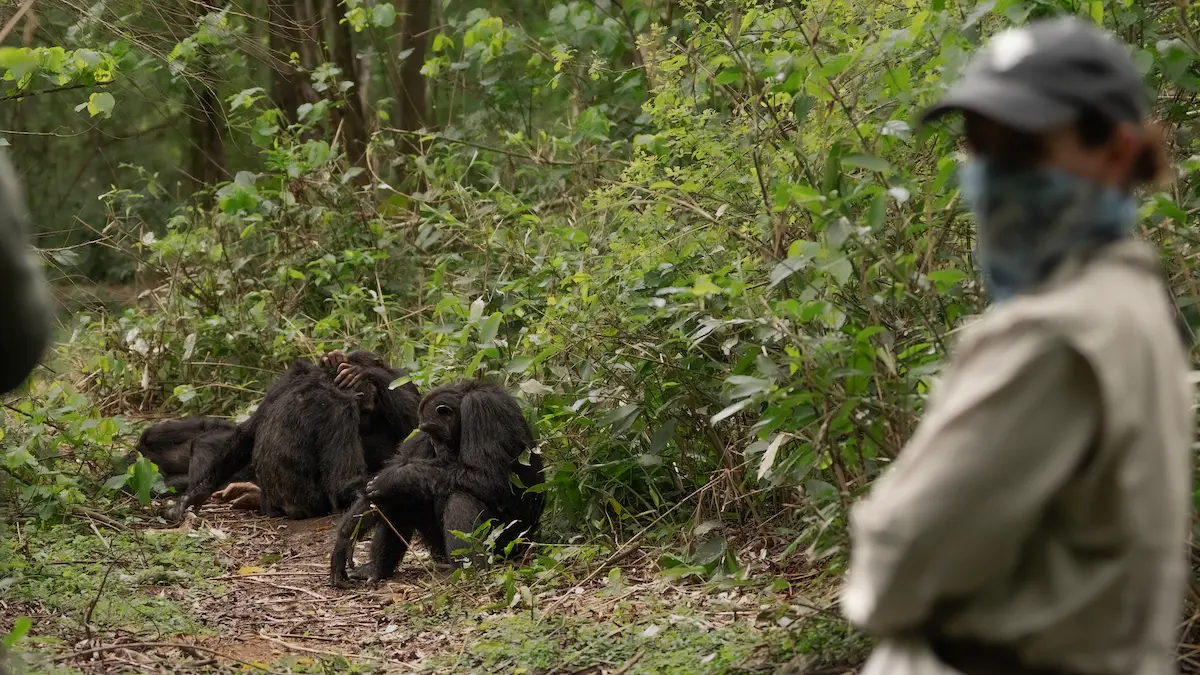
Some of the females were still feeding in the trees, or keeping out of sight with small babies. Until it was time to move on and find a mid-afternoon snack. A search that led us to follow them back across the river, up the slopes, not far from where we had originally started our trek.
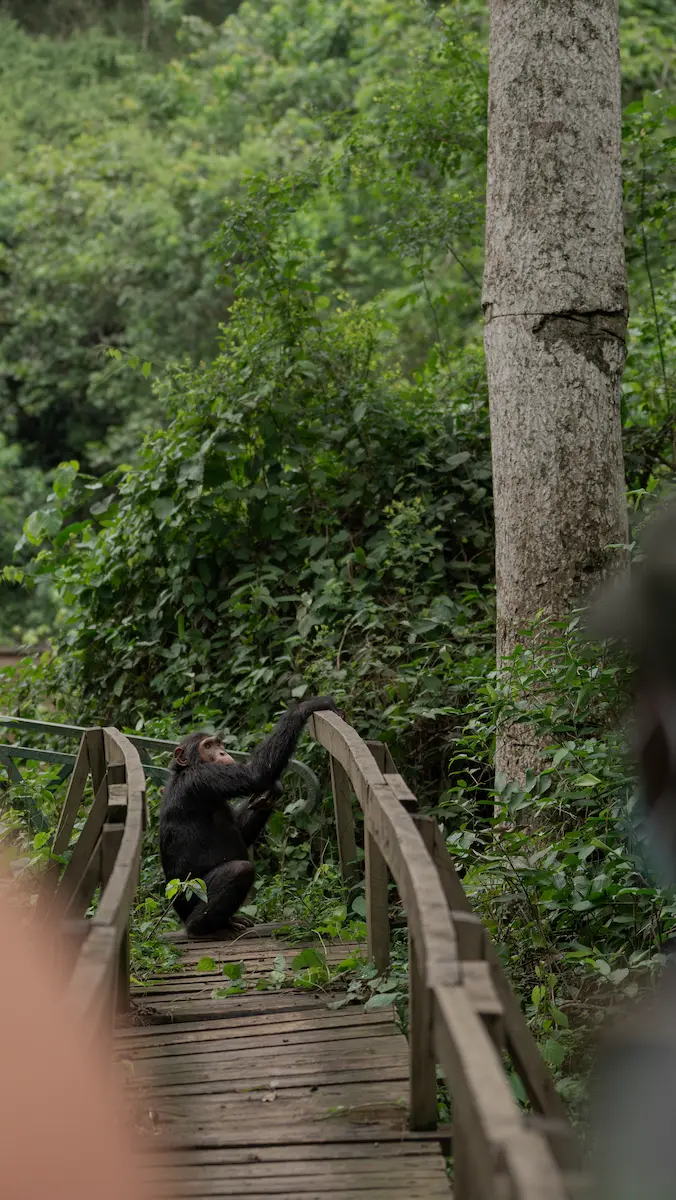
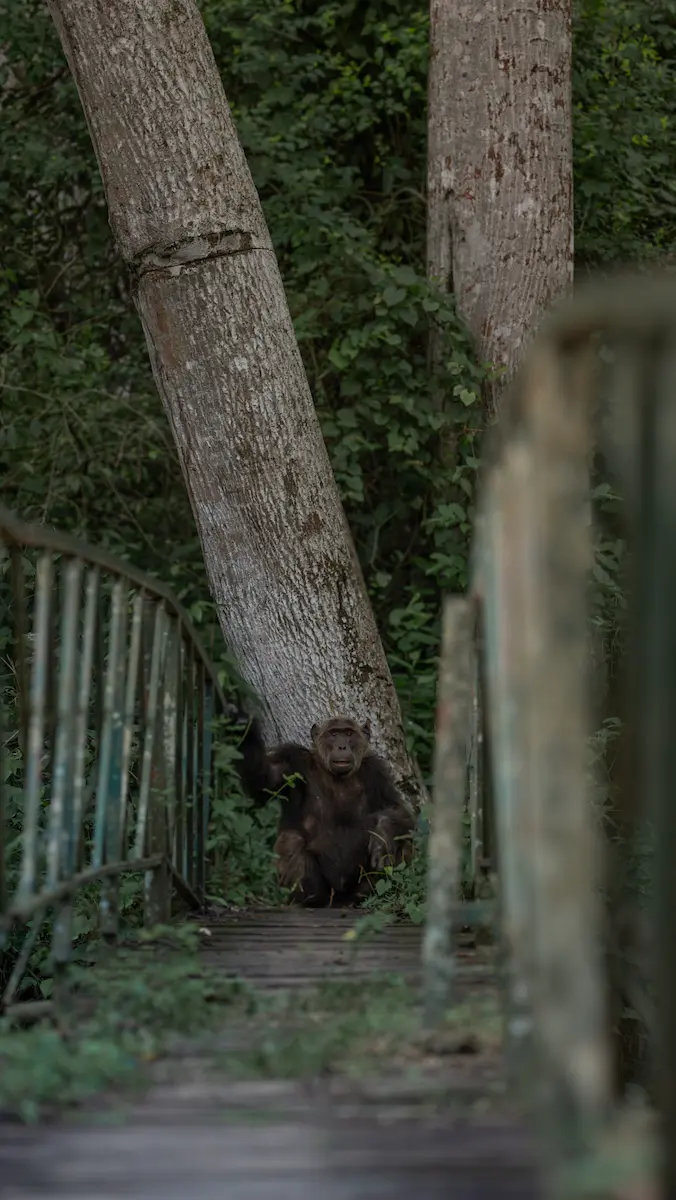
When crossing the bridge, some of the adult males went first, a “guard” pausing on the bridge to hold us at a distance. After us, an elderly male waited for the females and baby. Waiting for us to clear the bridge and move away, before crossing himself. Up the banks we went again, all the way to the edge of the gorge, where we left them feeding on protein-rich wild Grewia leaves.
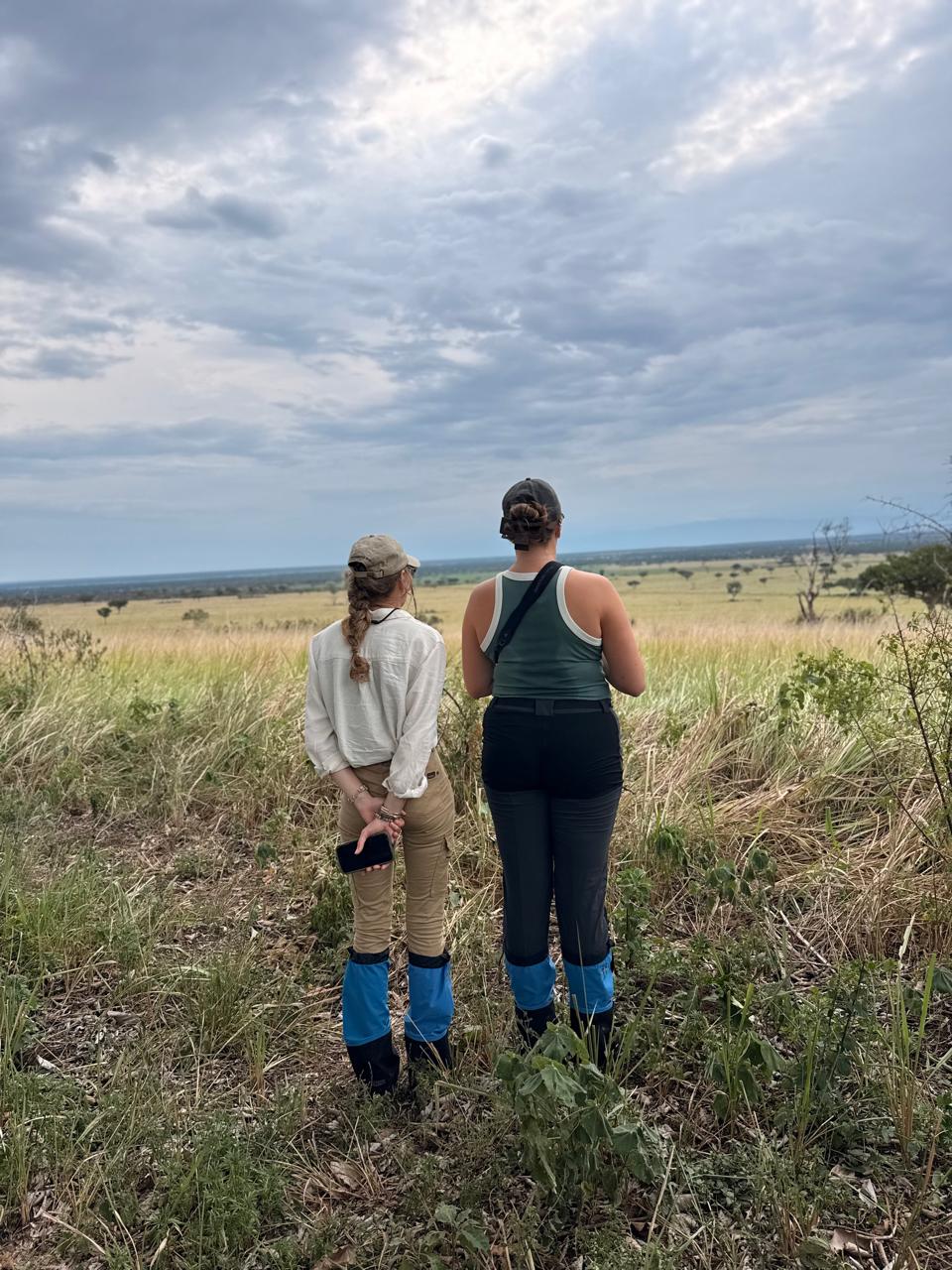
As we pop out onto the road, there are Francis and Petrus once again. This time though, instead of driving us straight back to the lodge, we only drove a short distance back to HQ. From there, we walked the Fig Tree Trail back to Kyambura Lodge, spotting a pair of black-and-white casqued hornbills to match the black-and-white Colobus monkeys we encountered in the gorge’s tree tops earlier.
And with that, our two chimp treks in two days are over. Two completely different experiences, in two completely different locations and habitats. Here are the key takeaways:
Key Takeaways: Kibale vs Kyambura Gorge, which chimpanzee trek is right for you?
- Kibale Forest National Park is home to around 1,500 chimpanzees, with two communities habituated for tourism. Sightings are reliable, but Kibale is busy. More chimps means more trekking permits are available. 84 chimpanzee permits are available daily, which is split into 72 standard chimpanzee trekking permits and 12 chimpanzee habituation permits.
- We could see and feel this during our trek, crossing paths with several groups of researchers and other tourists. At Kibale, we followed part of the Kanyantale community out of the park, past old cabins and a dirt road, to the edge of family farms and plantations. It was a stark reminder of the permeability of the national park boundaries for both people and chimps.
- Kyambura Gorge is a forested rift on the north-eastern edge of Queen Elizabeth National Park. It shelters a small chimp community, isolated from other populations after connecting forests were cut down for settlements. You descend steep slopes thick with leaf litter to the Kyambura River at the bottom of the gorge.
- Like in Kibale, trackers keep tabs on the chimps movements, which meant that fifteen minutes into our walk, we found the chimps. After grooming and resting, they walked straight past us and crossed the old iron bridge. We had ample time to observe their social behaviours and group dynamics - and we had them all to ourselves.
- At Kibale, with the large chimp population, the chances you will see chimpanzees are basically 100%. The tropical rainforest is beautiful and you can request groups that are found closer to HQ or on an easier path in case you cannot hike far.
- At Kyambura, the treks can be steeper and longer. In return you get fewer people, a hidden forest, and an encounter that feels more intimate.
- Volcanoes Safaris Partnership Trust protects the Gorge and strives to reconnect the “Lost Chimps” with other populations through a forest corridor, habitat and livelihood projects.
FAQ about Chimpanzee trekking in Uganda
Is Kibale Forest or Kyambura Gorge better for chimpanzee trekking?
It depends on what you value more. Kibale offers very high sighting odds and easier trail options, while Kyambura Gorge offers a smaller, more private experience in a sunken forest, with steeper terrain. Kibale is home to around 1,500 chimpanzees and issues 72 standard trekking permits a day, so you will likely cross paths with researchers and other visitors. Kyambura is home to a single isolated community of around 30 chimpanzees, with only 16 permits a day. If you have time, doing both gives you two very different experiences of the same species.
How many chimpanzee trekking permits are available per day in Kibale?
Kibale issues 84 chimpanzee permits a day: 72 standard trekking permits and 12 chimpanzee habituation permits. Standard permits are split between a morning and an afternoon session, each with one hour in the company of the chimpanzees. Kyambura Gorge, by comparison, issues 16 permits a day, eight in the morning and eight in the afternoon. In peak season Kibale permits sell out, so book well ahead.
What is the chimpanzee habituation experience in Kibale?
The chimpanzee habituation experience is a full day in the forest with the researchers and trackers who are getting a chimpanzee community used to human presence. Only 12 habituation permits are issued each day. Instead of the single hour you get on a standard trek, you spend several hours following the group, from when they leave their nests to when they settle again. It suits travelers who want to understand chimpanzee behaviour and research in depth, and who are comfortable with a long, physical day.
How much does a chimpanzee trekking permit cost in Uganda in 2027?
From 1 January 2027, a Kibale chimpanzee trekking permit costs USD300 per foreign non-resident, and a Kyambura Gorge permit is USD200. Permits cover one guided trek and one hour with the chimpanzees. They do not include accommodation, transport or park entry fees. Uganda Wildlife Authority can revise its tariff, so confirm current rates with your safari planner when booking.
How likely am I to see chimpanzees in Kibale and Kyambura Gorge?
Sighting odds are very high in Kibale and good in Kyambura Gorge. Kibale has two communities habituated for tourism and a large population, so trackers almost always locate a group. In Kyambura the community is small and moves through a deep gorge, so treks can take longer, though on our trek we found the chimpanzees fifteen minutes after setting off. In both parks, trackers go out early to find the chimpanzees and radio their position to your guide.
How long does a chimpanzee trek take?
Most treks take two to four hours in total, including one hour with the chimpanzees. The time it takes to reach them depends on where the trackers find the group that day. In Kibale we walked for around an hour and a half before reaching the chimpanzees. In Kyambura the walk is usually shorter, but it starts with a steep descent into the gorge.
How hard is chimpanzee trekking in Uganda?
A moderate level of fitness is enough for Kibale, while Kyambura Gorge needs more agility. In Kibale you can ask for a group closer to the trailhead or on an easier path. In Kyambura you descend steep slopes covered in leaf litter, cross the river on a bridge and walkway, and often climb back out of the gorge following the chimpanzees. Good grip and steady footing matter more than speed.
What is the minimum age for chimpanzee trekking in Uganda?
The minimum age for chimpanzee trekking in Uganda is 12 years, in both Kibale and Kyambura Gorge. The rule protects chimpanzees from human diseases and children from unpredictable animal behaviour. Gorilla trekking has a higher minimum age of 15.
How busy is chimpanzee trekking in Kibale compared to Kyambura Gorge?
Kibale is noticeably busier. With 72 standard trekking permits a day plus research teams in the forest, you are likely to meet other groups on the trails. Kyambura Gorge has one morning and one afternoon group of eight, so 16 visitors a day in total, and you won't encounter any other tourists during your trek.
When is the best time to go chimpanzee trekking in Uganda?
Chimpanzee trekking runs all year, but the drier months of June to September and December to February make the trails easier to walk. Rain makes the slopes in Kyambura Gorge in particular more slippery. Uganda Wildlife Authority offers discounted low season permits for April, May and November, which can suit travelers who don’t mind wetter conditions. We traveled at the beginning of the rainy season and didn't get rained on once during any of our treks.
What should I wear for chimpanzee trekking?
Wear long trousers tucked into your socks, a long-sleeved shirt and waterproof hiking boots with good grip. Gardening gloves help when grabbing branches on steep sections, and a light rain jacket is useful year round. Bring water and a snack, and keep the flash off when photographing the chimpanzees. Your guide will brief you on how close you can get and how to behave around the group.
When you travel with Volcanoes Safaris, all hiking specific gear is offered, including rain jackets, fleeces, gaiters, gloves, masks and backpacks for your things and packed lunches if needed. Bring your own hiking shoes and pants.
Does chimpanzee trekking support conservation in Uganda?
Yes. Permit fees fund Uganda Wildlife Authority’s protection of the parks, and in Kyambura Gorge your visit also supports a specific community and conservation project. Volcanoes Safaris Partnership Trust has run the Kyambura Gorge Ecotourism Project since 2009, working with the Jane Goodall Institute and Uganda Wildlife Authority on buffer zones, reforestation and livelihood projects around the gorge. The long-term goal is a forest corridor to reconnect the isolated Kyambura chimpanzees with forests to the south.
When you book through Wild Wonderful World, your safari also funds conservation directly. Wild Wonderful World Safaris donates 20% of proceeds to our sister Conservation Fund.
Can I meet a chimpanzee researcher during my safari?
Yes. If you stay at Kibale Lodge with Volcanoes Safaris, a primatologist from the Kibale Chimpanzee Project can join you for dinner. It is a chance to ask about chimpanzee behaviour, research and the conservation pressures in the region that you might not get on the trek itself. We recommend it for anyone interested in the conservation behind your encounters.
Planning a primate safari in Uganda? Get in touch with our travel desk to custom-design your ideal safari.
Written by Evelyn Poole, safari marketing specialist and conservation fund director at Wild Wonderful World