
Primates of East Africa: Trekking Gorillas in Uganda and Rwanda
A journey to the primates of East Africa: Part 2 - Trekking Gorillas in Uganda and Rwanda
This blog series consists of 4 parts:
- Part 1 is about our first encounters with the Great Apes of East Africa during our two Chimpanzee treks in Kibale National Park and Kyambura Gorge
- Part 2 covers the differences and similarities between Gorilla trekking in Uganda and Rwanda
- Part 3 reflects on the difference between chimpanzee and gorilla trekking, as well as the wider conservation context of the protection of these great apes through tourism. A short bonus chapter details my review of our Golden Monkey trek in Mgahinga in Uganda.
- Part 4 contains my review of our entire itinerary with Volcanoes Safaris, including our many other conservation and community experiences. It details what it is like traveling with Volcanoes Safaris, meeting their team and our thoughts about the five lodges we stayed at.
Two gorilla treks in two countries: a comparison between Bwindi Impenetrable Forest in Uganda and Volcanoes National Park in Rwanda
After two days of trekking chimpanzees, it was time to head further south. Here, we would encounter the mountain gorillas, a new species of Apes and from what we’d been told, an entirely different experience. After a day of “rest” - which in actual fact consisted of a fascinating morning drive in QENP with Kyambura Lion Monitoring Project and a relaxing afternoon boat cruise on the Kazinga Channel - we headed to Bwindi Lodge.
Located in the Buhoma sector of Bwindi Impenetrable Forest, we geared up to trek the other Great Apes: mountain gorillas. Larger, slower and bulkier, this species is usually the star-attraction of any primate safari in Uganda or Rwanda. A perception that in my opinion, could be challenged. More on that in Part 3 of this series, here.
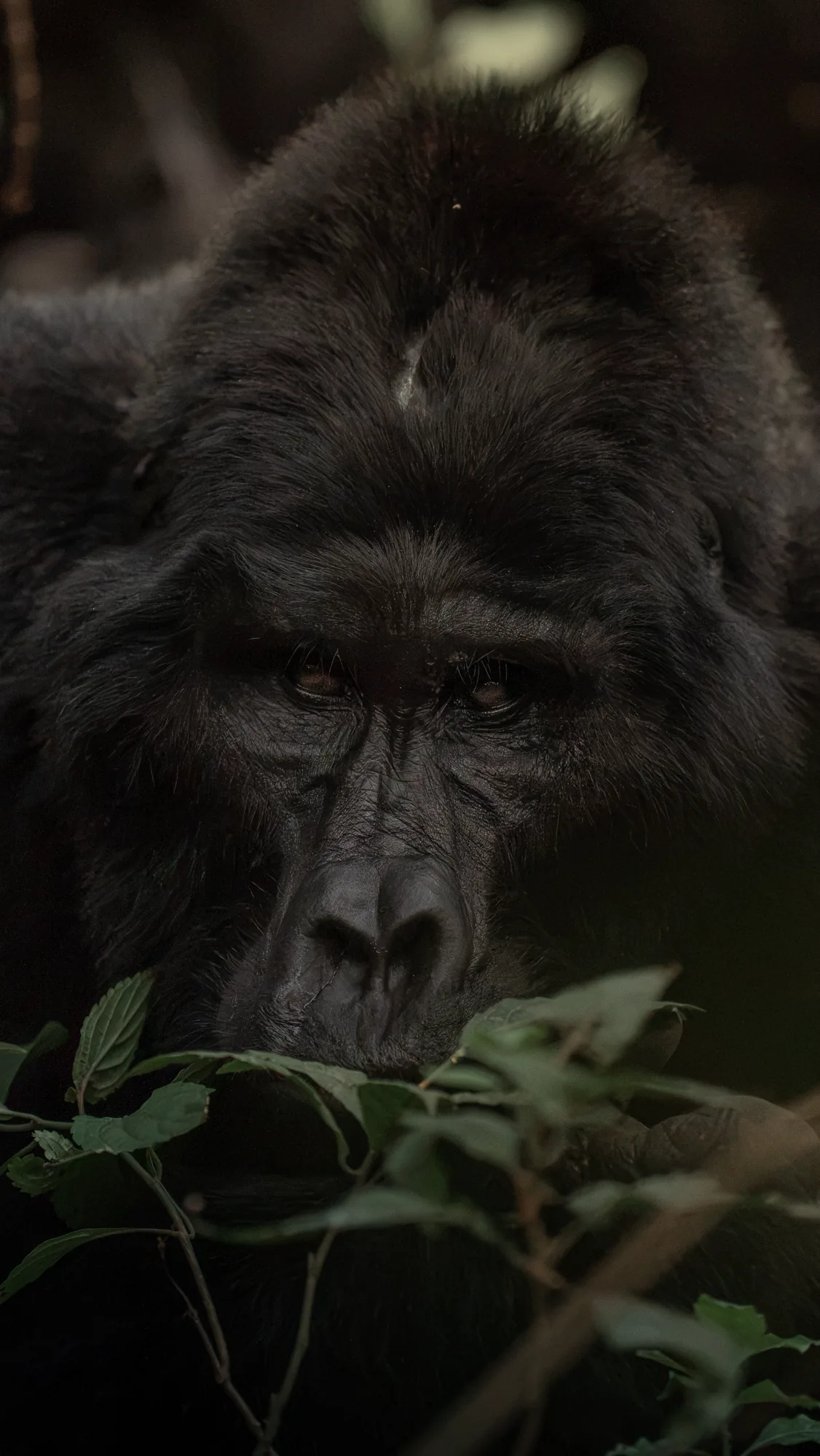
Meeting the gorillas of Uganda in Bwindi’s Buhoma sector
Bwindi Impenetrable Forest is a daunting place. The name itself promises a challenging trek through thick bush, riddled with roots, tangled vines and numerous other treacherous natural obstacles. With 60% of the park at over 2000m altitude, breathing would also be harder. Not to mention that literally everyone we spoke to told us: “trekking in Bwindi will be long and hard, be prepared!”
Starting our gorilla trek: a brief insight into the Batwa culture
The morning of, at HQ, the Batwa traditional dancers added to the mystery of the whole experience during their performance: singing and dancing around a - frankly terrifying - forest spirit. Usually portrayed by a small child, completely disguised under a dense costume of dry sticks, brush, or palm leaves, the performance mirrors ancient Batwa animistic beliefs, honoring the invisible forest spirits (creatures of the wild) and ancestors who they believed protected and shared the deep jungle with them for thousands of years.
When it came to actually starting our trek, we were informed that we would be tracking the Rushegura gorilla family. And luckily for us, they are generally one of the easier groups to trek and known as a calm family. After the trek, we found out that our thoughtful Volcanoes Safaris guide Francis had something to do with that request - after noticing that our two chimp treks in the two days prior had taken it out of us.
So we headed off, leaving HQ by car once again and driving quite a distance along the edge of the Park until we met our porters at the start of the trail. Locals displayed gorilla art for sale as we gratefully handed over our packs and started our trek up the hills of Bwindi Impenetrable Forest.
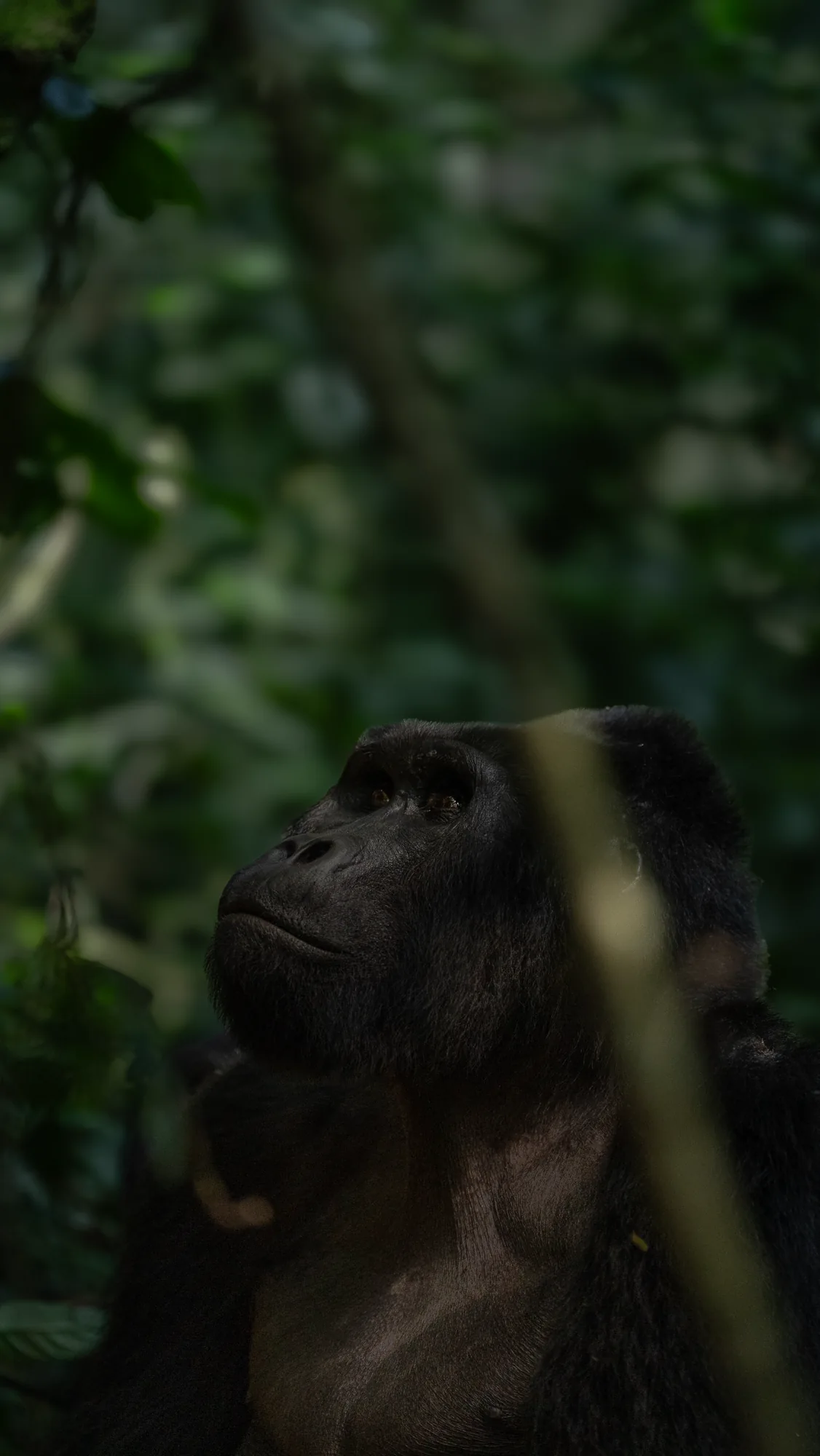
Encountering gorillas in the wild: magical, and a little perturbing
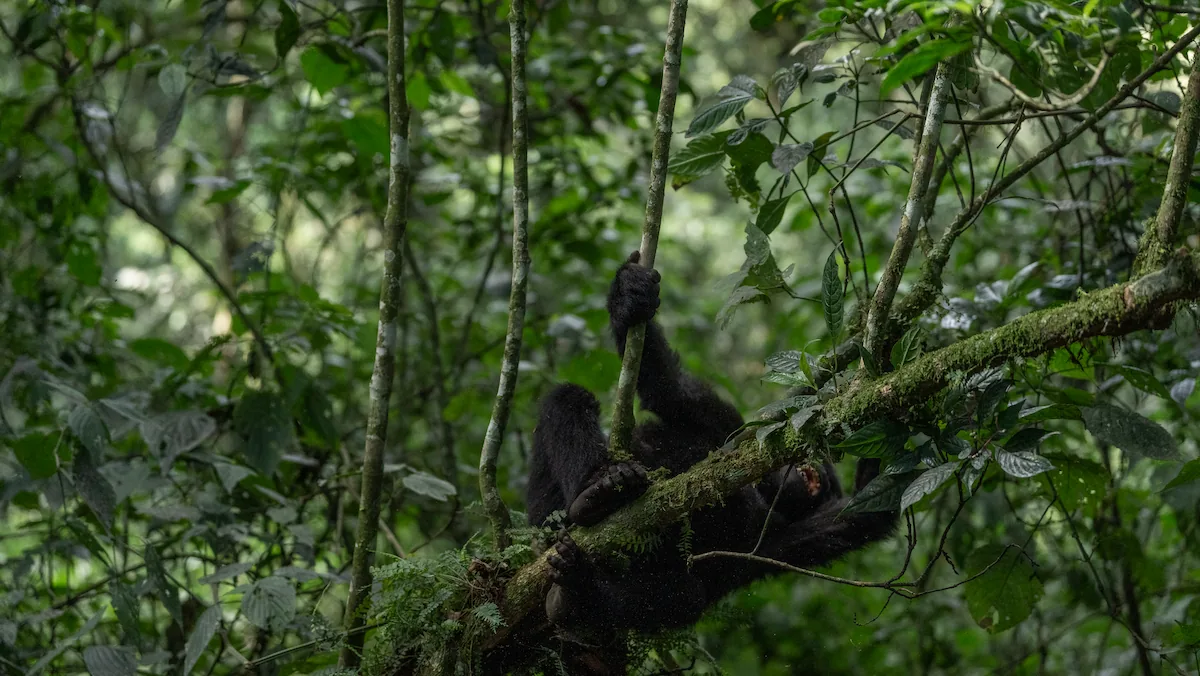
Barely an hour of climbing later, we found them! The Rushegura family often moves along the edge of the national park, so we didn’t end up having to trek deep into the forest in order to find them. Scattered amongst the undergrowth, the family was looking for a place to siesta. Something the youngsters did not agree with, and they decided it was playtime rather than resting time.
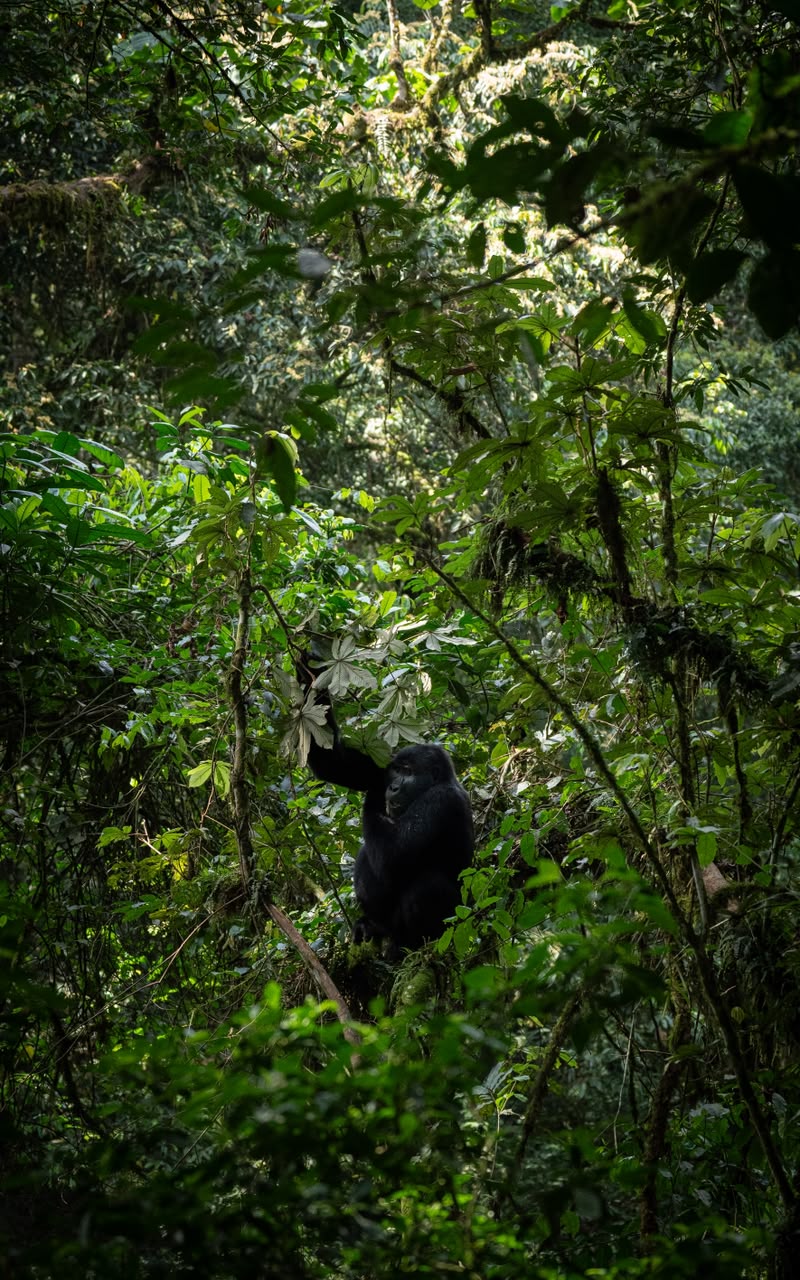
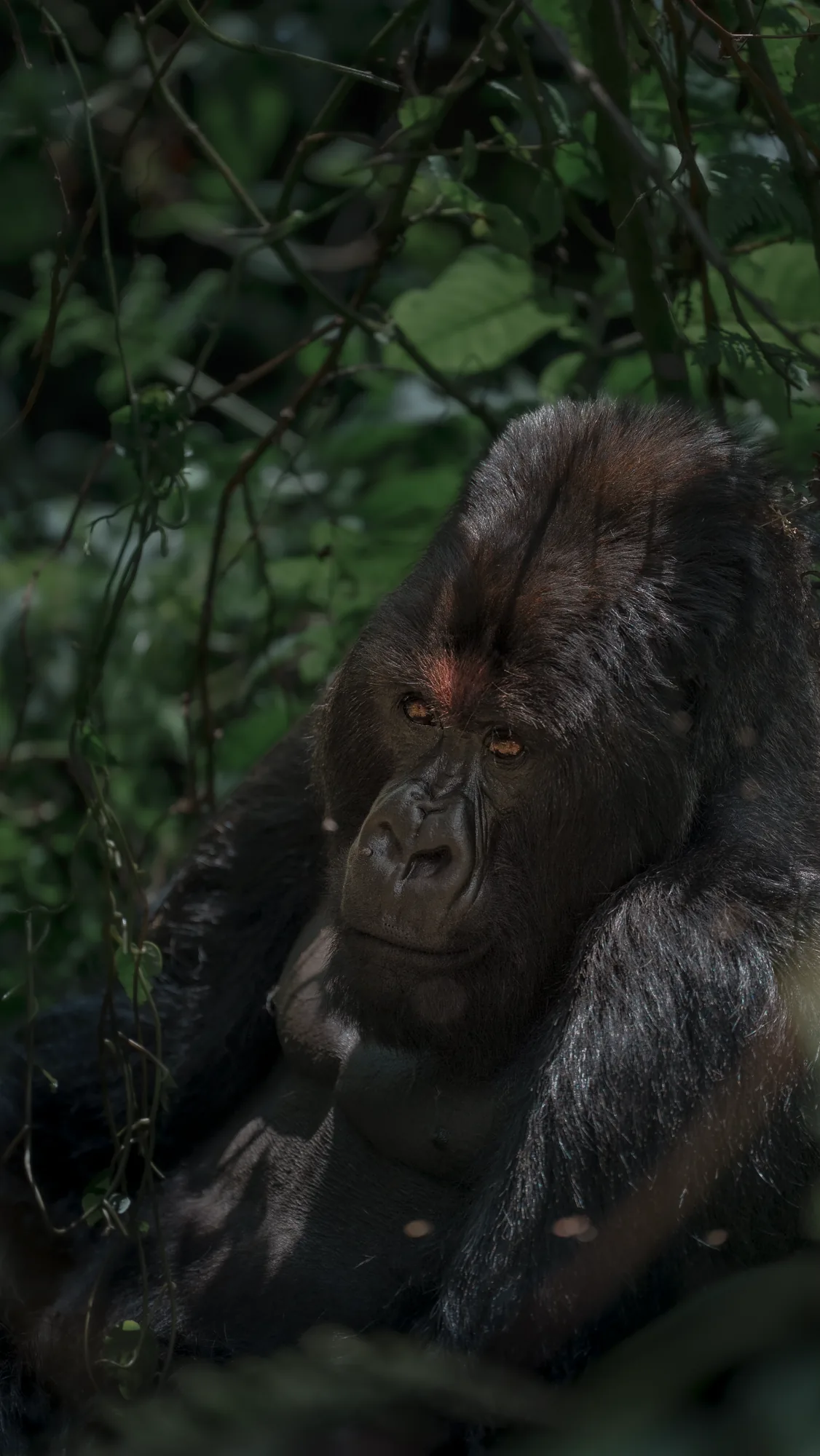
Remembering all the advice I’d been given by fellow photographers and guides, I decided to take a few videos and photos of the silverback lounging and the babies playing on moss-covered vines. I soon realized just how difficult it is to focus your camera on these black-faced animals amongst the shady patches of vegetation - courtesy of the bright sunshine trying to pierce the dense canopy of the forest above. For some reason, it hadn’t been as tricky with the chimps!
Instead of getting frustrated at not being able to adequately capture the moment, I decided to switch my camera off and just sit with the family instead. The females trying to snooze with two babies bouncing on and off their bellies and falling from the vines strung above them, was a very entertaining sight indeed.
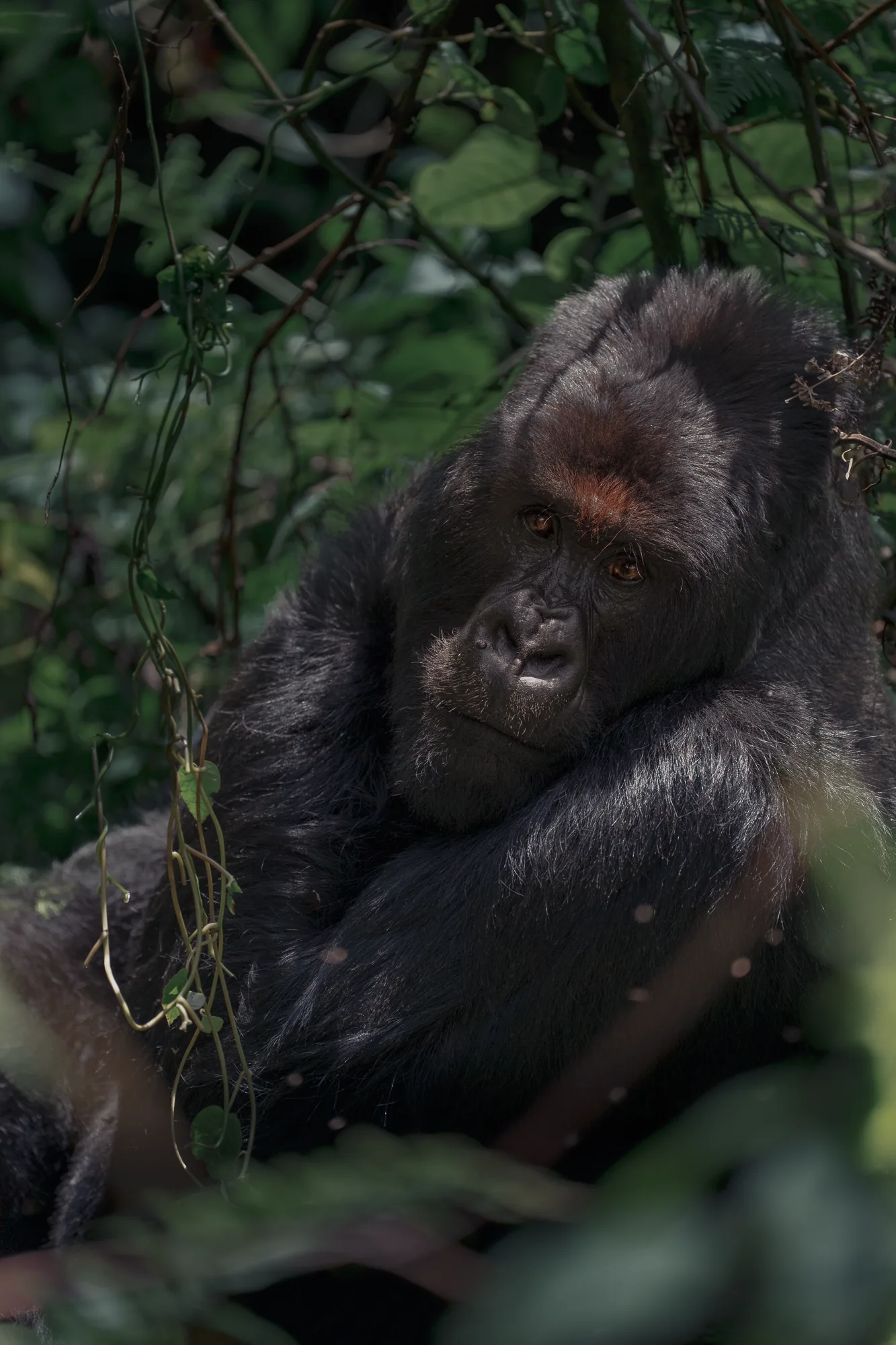
It felt intimate and incredibly close - literally - and I got the impression that the silverback agreed with that sentiment. For the 15 minutes we sat there with them, he did not once take his eyes off us. Watching us, as much as we were watching them. Not scary, per se, but a tad unnerving nonetheless, realizing that a 200kg wild animal, made entirely out of pure muscle, is keeping tabs on your every move from less than 5m away.
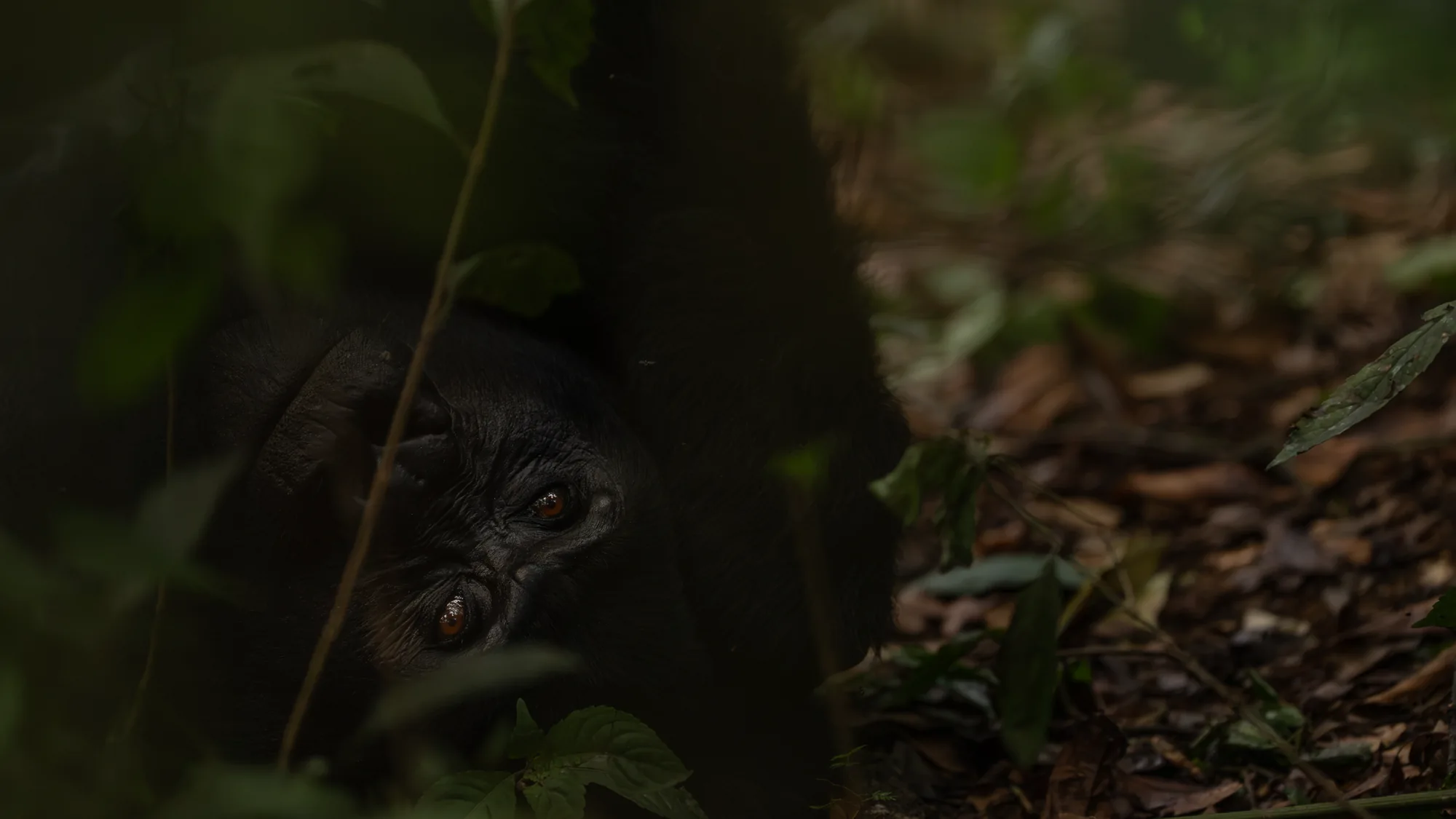
However, one moment I will probably remember forever, was when nap time had been declared over by the females, and the silverback grunted his disapproval of that decision. Not too dissimilar from my husband when he gets woken up early from a Sunday afternoon nap… Rolling over onto his stomach, a female sat with him, pulling her baby into her arms for a grooming session. For a few precious minutes, she groomed the little one with the silverback closely watching and enjoying this pocket of quiet time with his family.
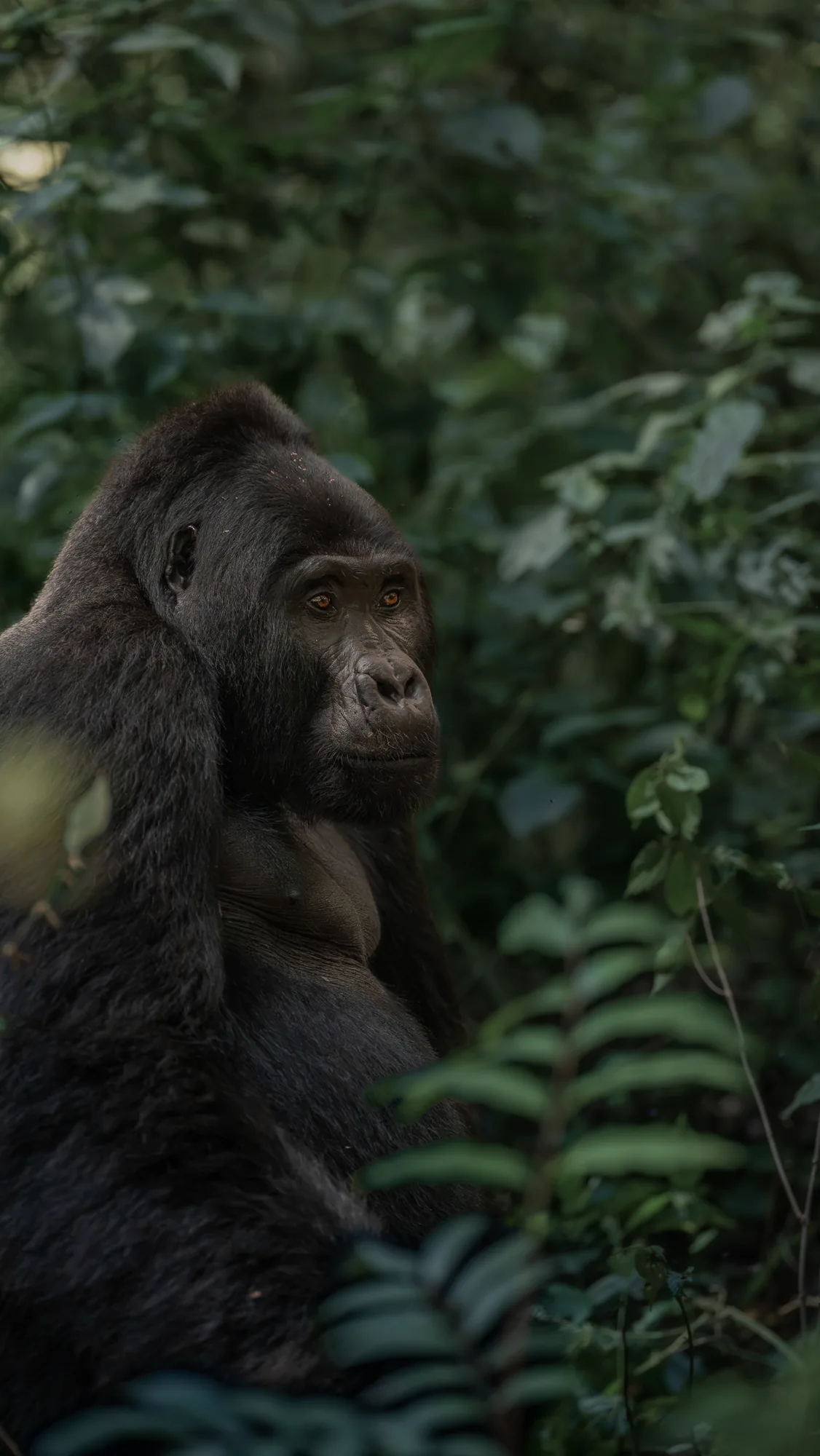
As the entire family got up and mobile, we followed them for a short while until a blackback in the group decided our time with them was over. The trackers who knew him told us that he was known to push people sometimes. So after snapping a few more pictures, we quickly agreed to head back, even though we were a little bit shy of our allotted hour.
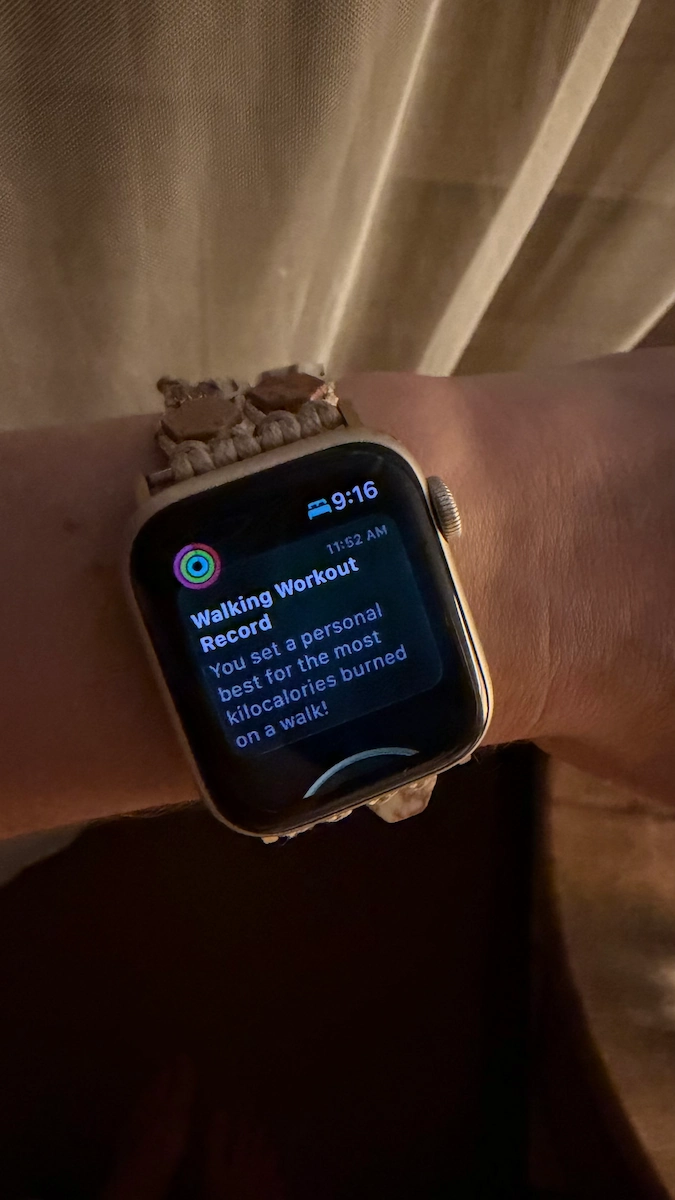
Looking back at this trek, I don’t remember it being extremely challenging. My smartwatch however, had different ideas. That evening I received a notification: “Walking Workout Record: a personal best for the most kilocalories burned on a walk”. I guess seeing gorillas for the first time really does make you forget the effort needed to get there!
Bwindi is a special place, and the people in the Buhoma sector are extremely warm and welcoming. We visited the local Ride4AWoman centre, as well as the Pangolin rescue centre - and there were so many more activities we didn’t have the time to explore fully. Read more about our non-primate related activities at Volcanoes Safaris Bwindi Lodge here.
An unplanned encounter: the mountain gorillas of Rwanda’s Volcanoes National Park
A last minute permit and a whole new environment
We’d only planned one gorilla trek for this safari. The trekking permit is a lot more expensive in Rwanda compared to Uganda (USD1,500 vs USD800), and there wasn’t a whole lot of time left. However, while an hour with the chimps had felt generous, our hour with the gorillas in Bwindi had felt so short. And so, Nini and I both decided to try our luck and managed to secure a last-minute permit for a gorilla trek in Volcanoes National Park in Rwanda.
Here, just across the border and less than 60km from Bwindi as the crow flies, our whole experience felt completely different from the outset. As soon as you cross the border at Cyanika, not only do you now drive on the right-hand side of the road, bicycles join the fray of hooting cars, boda-bodas (local motorcycle taxis) and the many, many people walking on the side of the - pristine and litter-free - tarred roads.
Eucalyptus trees line the roadside and gone are the rural farming villages along the red dirt roads of southwestern Uganda. While many Rwandans living here still tend to their family plots, and you do see those along the road, this part of the country and its main town of Musanze feel much more urbanized.
The beginning of our gorilla trek in Rwanda: a trek into the plantations of the land of a thousand hills
It is hard to believe that only a few km away, a precious gorilla habitat shared between Rwanda, Uganda and the Democratic Republic of Congo is being preserved. The Virunga Massif is a chain of eight volcanoes where Rwanda, the Democratic Republic of the Congo, and Uganda meet. Mount Sabyinyo is the only one shared between all three countries. We visited two of the three national parks that protect this region: Mgahinga Gorilla National Park in Uganda - where we trekked the Golden Monkeys - and Volcanoes National Park in Rwanda, where we were about to start our second gorilla trek.
The Kinigi gorilla trekking HQ gives off the same “urban” vibe that characterizes this northwestern point of Rwanda. Featuring a full-blown coffee shop with espresso machines, professional baristas and a central pagoda that can compete with any upmarket coffee shop in Kigali, the Rwanda Development Board knows who they are catering to: 96 high-end safari travelers daily, coming to see the 12 habituated mountain gorilla families in Volcanoes National Park and by doing so, sustaining their protection.
After our briefing with park ranger Rukundo, we get back in the vehicle and drive a short distance to the start of our trail to see the Segasira gorilla family. Starting from the bottom of the village, a steep hike follows, through the potato, tobacco and pyrethrum flower fields. The latter are a daisy-like perennial whose flower heads are picked and dried before being processed as a natural insecticide. Whereas in Bwindi we passed some fields on our trek, those did not come close to the vastness of the plantations we hiked through on these slopes.
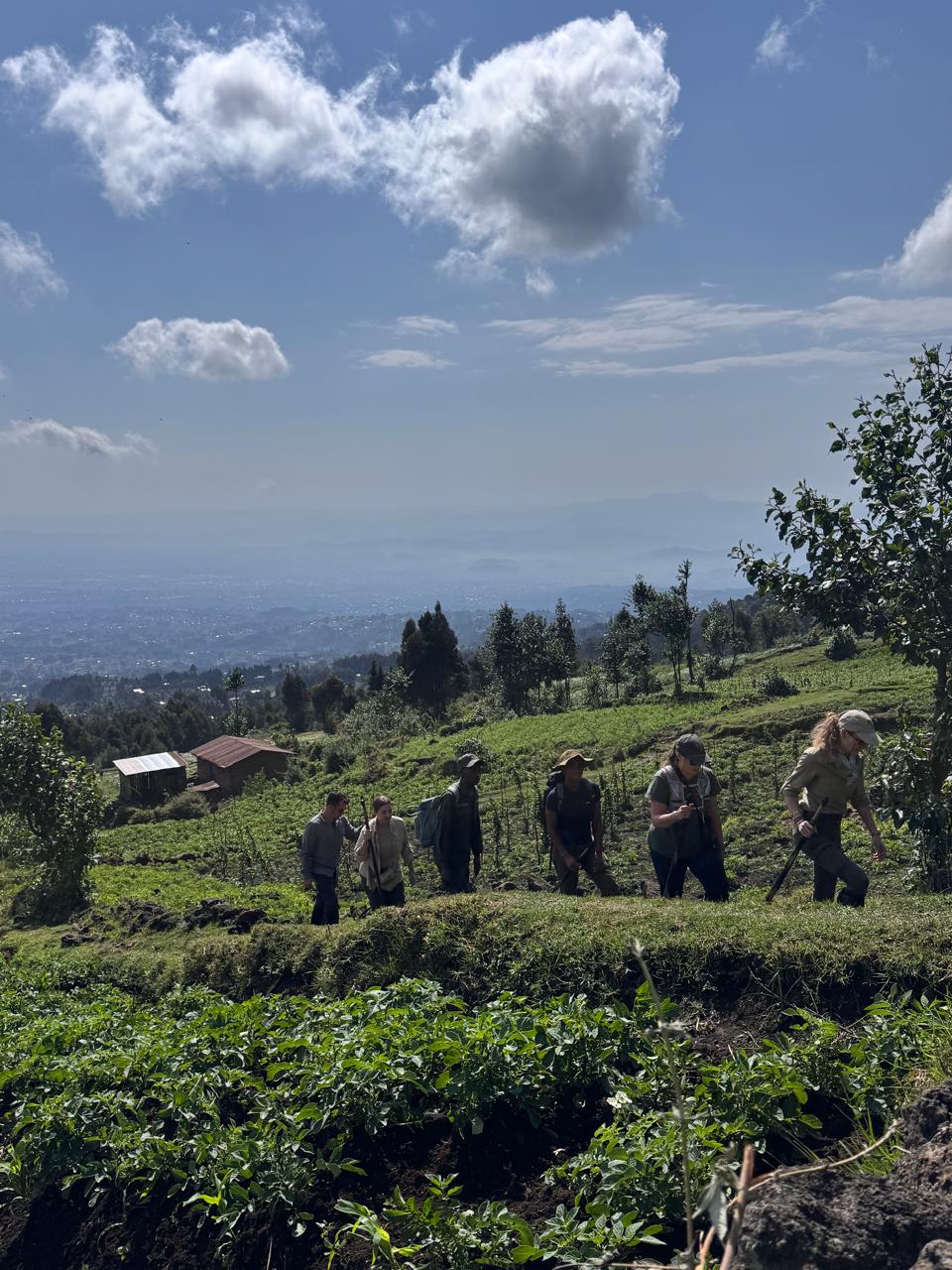
And steep slopes we climbed. Littered with loose rocks, the narrow paths were arduous. Even though our group was fit, frequent breaks were very much needed. “Pole Pole” (“slowly slowly” in Swahili) was the motto of the day! This also gave our guide Rukundo plenty of opportunity to explain the history of the region, the legacy of Dian Fossey and his own journey to becoming a guide.
The altitude was a kicker. Starting at 2,400m above sea level, the majority of our trek took us higher than even the highest point in Bwindi. To those that tell you gorilla trekking in Rwanda is easier than Uganda; I’d say that for us, it was the exact opposite!
Into the Volcanoes National Park, encountering the massive gorillas of the Virunga Massif
At the edge of the farmland, a dry-stacked volcanic stone “buffalo wall” separates the National Park from the farmlands directly adjoining the park boundary. We’d seen an aerial photo of this wall, and seeing it up close and personal after hiking through the farmlands really brought home the stark divide between them and the protected area of Volcanoes National Park. Very different from the gradual buffer zone around Kibale National Park in Uganda.
Rukundo told us about plans to buy up and rehabilitate more land directly adjoining the park, to create a wider bufferzone for the gorilla population. A plan I think Dian Fossey would have advocated for herself.
After we had scaled the wooden ladder built across the wall, and crossed the ditch on the other side, it was time to roll down our sleeves and don our gloves to brave the thick stinging nettles. This part was very muddy and slippery, but mercifully level. The forest itself was dense, but after a few calls back and forth between Rukundo and the trackers, we finally found the gorillas.
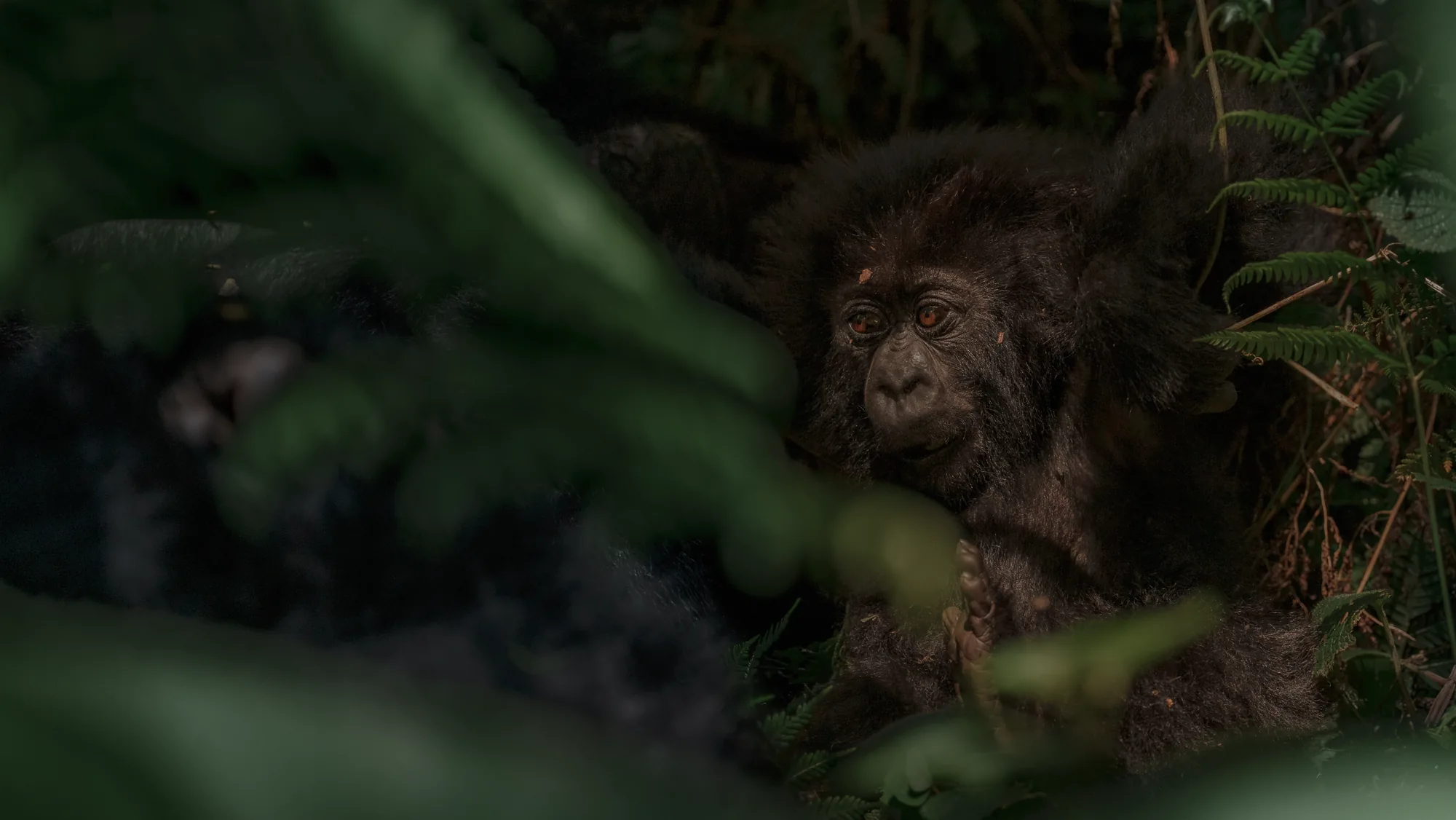
Like in Bwindi, we found them in the thick vegetation, in the midst of a feeding and foraging session. The main difference was the sheer size of these gorillas compared to the Rushegura family we saw in Bwindi. Even if the only males in this Segasira group were the silverback (Segasira himself) and a tiny baby, who had just gotten his name in the 2026 naming ceremony that took place a few weeks before: Ngabonzima, meaning "protector" in Kinyarwanda.
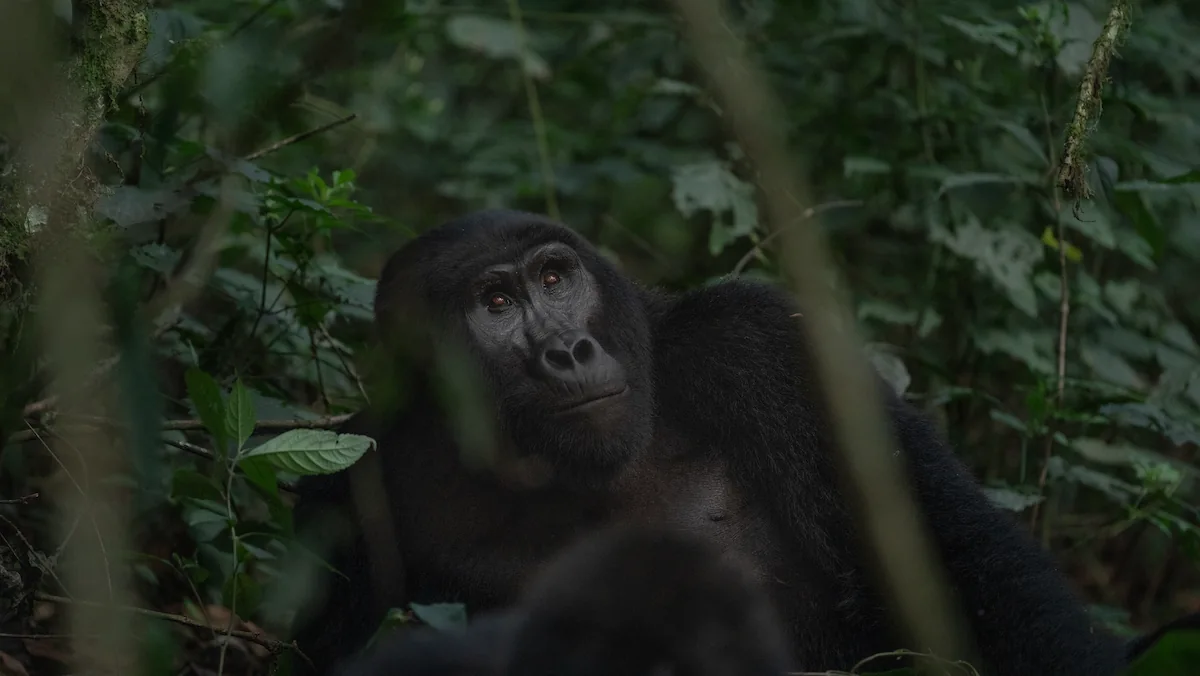
Segasira the silverback was massive. To me, he looked almost twice the size of the two silverbacks in Bwindi’s Rushegura group. He was also much more relaxed around us, not keeping such a close eye and comfortably moving away with his back towards us. He was truly impressive and majestic.
Gorilla trekking in Rwanda vs Uganda: same same, but different
These gorillas in the Virunga Massif live at much higher altitudes. This makes their coats shaggier, longer and denser, with shorter limbs and a larger body mass. The altitude impacts temperatures and vegetation - and thus gorilla diet - differences between the two regions, which accounts for the gorillas’ apparent difference in size. If you look closely, the mountain gorillas in Virunga also have a distinct dorso-nasal cleft, whereas those in Bwindi do not.
For me, the denseness of the vegetation and the uneven forest floor, littered with vines and raised roots, made for a pretty much identical forest experience. It also meant that I spent less time trying to photograph the gorillas and more time observing them. The photographic opportunities just weren’t as optimal and abundant during both our treks, and that was absolutely fine.
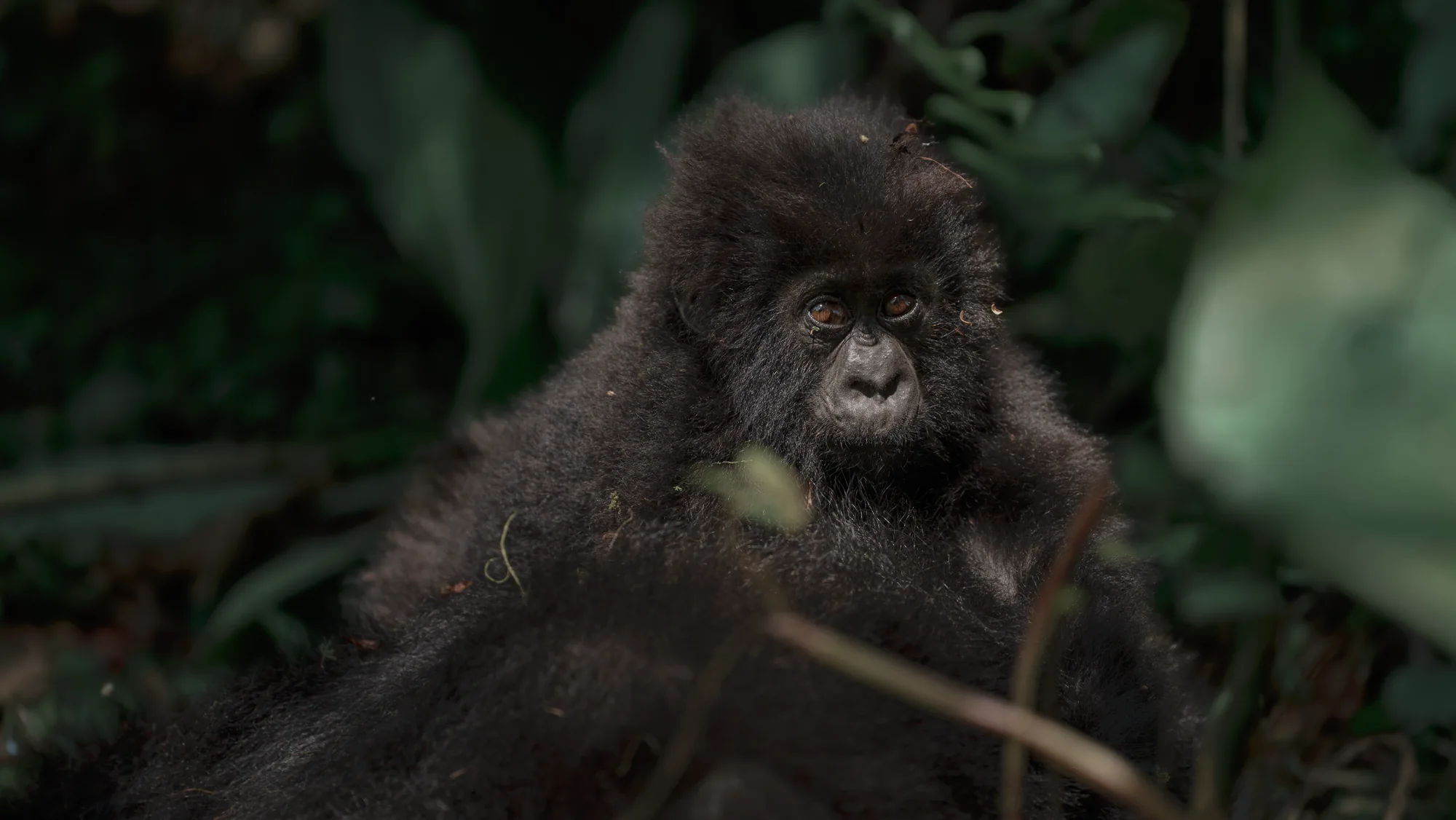
Like in Bwindi though, I had a wariness about me and did not enjoy how close the rangers and trackers placed us to the gorillas. More about the prescribed 7-8m distance here. Whilst I’m sure it is what many tourists want, the constant clearing of vegetation to improve our view of the gorillas soon started to feel intrusive and unnecessary - especially considering I was the only one in our group with a professional camera.
As the group moved higher, we were told to follow, splitting up and ending up in the middle of the gorilla family. One lady in our group got a leg hug, another a small charge. Whilst it might have been fine in a more open setting, the uneven terrain often made it difficult to quickly move out of the way when a gorilla suddenly decided it wanted to sit where I was standing…
A bump and a small shove later, and our guide decided to cut our hour short yet again out of respect for the gorillas’ signals that they’d had enough of us. I cannot help but wonder though, that if we hadn’t pushed in between the family and instead had trailed from a larger distance, things might have been different.
For a full comparison between our five primate treks - two chimpanzee treks in Uganda, one gorilla and one golden monkey trek in Uganda, and one gorilla trek in Rwanda - read my primate safari review here.
Key Takeaways
- Bwindi Impenetrable Forest in Uganda and Volcanoes National Park in Rwanda both protect mountain gorillas and are less than 60km apart as the crow flies, but our trekking experiences start very differently. Southwestern Uganda feels rural, with red dirt roads and family farms, while Rwanda’s Musanze region is more urbanised, with tarred roads and a gorilla HQ in Kinigi that has its own barista coffee shop.
- A gorilla permit costs USD800 in Uganda and USD1,500 in Rwanda. Rwanda issues 96 permits a day across 12 habituated gorilla families, eight per family.
- In Bwindi’s Buhoma sector, we trekked the Rushegura family, known as one of the calmer groups and one that often moves along the park edge. We found them after barely an hour of climbing. The silverback watched us closely for the entire time we sat with the family.
- In Rwanda, we trekked the Segasira family. The hike started at 2,400m and climbed steeply through potato, tobacco and pyrethrum fields before crossing the volcanic stone buffalo wall into the park. For us, Rwanda was the harder trek, not the easier one.
- Bwindi’s forest edge is gradual, with farms and villages running up to the trees. In Rwanda, the rock wall marks a hard line between farmland and park. There are plans to buy and rehabilitate land along it to widen the buffer zone for the gorillas.
- The Virunga gorillas live at higher altitude than those in Bwindi, which gives them longer, denser coats. Segasira, the silverback, looked much larger than the two silverbacks in the Rushegura group.
- Both treks ended early because the gorillas signalled they’d had enough of us. In both parks, we were placed much closer than the 7 metre guideline.
- Photographing gorillas in dense forest is hard. Their dark faces and the patchy light under the canopy make focusing your camera difficult. Resist the urge to increase your ISO and rather shoot at a higher exposure and brighten RAW photos in post-production. If you are getting frustrated, rather switch your camera off and enjoy the sighting. An hour with the gorillas feels short!
FAQ about Gorilla Trekking in Uganda and Rwanda
Is gorilla trekking better in Uganda or Rwanda?
Neither is better overall and they suit different travelers. Uganda’s permit is cheaper, at USD800 versus USD1,500 in Rwanda. Bwindi’s different sectors give you more lodge and route options. The gorilla encounter itself, one hour with a habituated family in thick forest, is very similar in both countries. And in both cases, you are able to request families that are generally seen closer to the edge of the forest if you can't walk very far. Our trek in Rwanda was physically more taxing, even though general opinion says otherwise.
How much does a gorilla trekking permit cost in 2027?
A gorilla trekking permit costs USD800 per foreign non-resident in Uganda and USD1,500 in Rwanda. For 2027, Uganda offers a reduced rate of USD600 in April, May and November. Permit prices can change, so confirm current rates with your safari planner when booking.
How many gorilla permits are available per day?
Rwanda issues 96 gorilla permits a day, across 12 habituated families in Volcanoes National Park. In both Uganda and Rwanda, each gorilla family can be visited by a maximum of eight people per day, for one hour. Permits for June to September sell out months ahead, so book as early as you can.
Is gorilla trekking harder in Uganda or Rwanda?
It depends more on the gorilla family you are assigned than on the country. Rwanda’s treks start at around 2,400m and climb higher, which makes the altitude harder for many people. Bwindi has steep, slippery terrain and more than half the park sits above 2,000m. For us, Rwanda was the harder trek. If fitness is a concern, your guide can request a family that is on average easier to reach. You also have the option to be transported by stretcher, for an additional fee of USD300.
How long does a gorilla trek take?
A gorilla trek can take anywhere from one hour to most of the day, plus one hour with the gorillas. The time depends on where the trackers locate the family that morning. In Bwindi, we found the Rushegura family after about an hour of climbing. In Rwanda, the trek through the farmland and up to the park boundary took us considerably longer.
What is the minimum age for gorilla trekking?
The minimum age for gorilla trekking is 15 years in both Uganda and Rwanda. The rule protects gorillas from human diseases, which they are highly susceptible to, and young people from unpredictable behaviour from large animals. Chimpanzee trekking has a lower minimum age of 12.
How close do you get to the gorillas?
The guideline in both Uganda and Rwanda is to stay 7 metres from the gorillas, but in practice you will often be much closer. On both our treks we were placed within a few metres, and the rangers cleared vegetation for better views. Gorillas also approach visitors themselves, and during our trek in Rwanda one guest received a leg hug and I got bumped. If you would rather keep more distance, tell your guide at the briefing.
Are the gorillas in Uganda and Rwanda different?
Both are mountain gorillas, but the gorillas of the Virunga volcanoes live at higher altitude than those in Bwindi, which gives them longer, denser coats. Their diets also differ with the vegetation at each altitude. In our experience, the Segasira silverback in Rwanda looked much larger than the two silverbacks we saw in Bwindi, though individual gorillas vary in size.
Can you do gorilla trekking in Uganda and Rwanda on the same trip?
Yes. Bwindi and Volcanoes National Park are less than 60km apart as the crow flies, and you can cross between them at the Cyanika border near Mgahinga. You need a separate permit for each country. We added a last-minute trek in Rwanda after our trek in Bwindi, and comparing the two gave us a much clearer picture of how these gorillas live in different habitats. You can also trek a gorilla family in Mgahinga Gorilla National Park.
Do I need a porter for gorilla trekking?
You don’t need one, but we highly recommend hiring a porter. They carry your bag on steep and slippery sections, help you over obstacles, and the USD20 fee goes a long way towards supporting their livelihoods. That income gives local families a direct economic stake in the gorillas’ protection. If you plan on hiring a porter, use the backpacks provided by the lodge instead of your own.
How do you photograph gorillas in the forest?
Expect it to be harder than photographing other wildlife. Gorillas’ dark faces and the patches of sunlight breaking through the canopy make focusing and exposure difficult, and flash photography is not allowed. Set your camera before your trek starts, and be prepared to put it down. Some of our best moments with the gorillas came after we switched our cameras off.
Does gorilla trekking support conservation?
Yes. Gorilla permits fund the protection of the parks, and both Uganda and Rwanda share part of their tourism revenue with communities living next to the parks. Rwanda’s plans to buy and rehabilitate farmland along the Volcanoes National Park boundary will widen the buffer zone for the gorillas and is a direct conserquence of the increasing gorilla population. When you book through Wild Wonderful World, 20% of proceeds from your safari goes to conservation.
Planning a primate safari in Uganda and Rwanda? Get in touch with our travel desk to custom-design your ideal safari.
Written by Evelyn Poole, safari marketing specialist and conservation fund director at Wild Wonderful World