




Getting ahead: why an unscripted family safari in Africa is the most valuable thing you can give your child
Key takeaways
- A safari is a family holiday where every generation moves at the same pace, without screens, shaped by dawn, dusk and the movement of the animals. This makes it the perfect way to reconnect across multiple generations.
- The deepest value for a child comes from taking part, not watching. On a conservation-led safari, children move from spectators to participants, helping with species monitoring, data collection or habitat work alongside ecologists and vets.
- Authentic cultural interactions - like the San or the Hadzabe people - replace a flattened, screen-based idea of different cultures with a first-hand one. Trying and failing at skills others have mastered over generations teaches children humility, perspective and respect for different cultures.
- For younger children, time in wild places builds respect for the natural world, and an early sense that they are part of it, not in control of it. That understanding is what leads people to protect wilderness later in life.
- For teenagers, sustained involvement in conservation builds the depth and character that university admissions increasingly look for, over a long list of activities. One guest's daughter first went on safari at seven, went on to advocate for wildlife, and a decade later found it shaping her college applications.
- Starting early matters. Admissions counselors advise beginning around fourteen, because two to three years of returning to a destination, growing more capable each time, is what separates a true interest from a contrived one.
- The question to ask before booking is what your child will have done by the time you get home, and whether they come back with a story they lived or only a photograph they took.

The script for meaningful, luxury family vacations has changed
For years, luxury travel has followed a familiar script; exceptional comfort and quality at every touchpoint. It is a genre built almost entirely around spectacle, and for years, spectacle was the goal.
That has started to change. Across the wider luxury travel industry, a quieter, less performative instinct is taking hold. A 2026 Forbes piece on "deep luxury" describes the shift plainly: “travel is moving beyond material excess toward sensory design, heritage connection and human-centric service, experiences that resonate on a deeper emotional level rather than simply looking impressive.”
Today, affluent travelers are seeking experiences that resonate with their values and create a genuine sense of purpose, not simply status. In 8 years of designing bespoke, multi-generational safaris, we have learned these three things about family travel in Africa:
- An African safari strengthens multigenerational bonds like no other: there’s nothing that says connection like sitting around a campfire with whooping hyenas in the distance.
- Safari experiences build up older kids and young adults for life after school and college.
- And safari sets younger children up for awe and wonder, creating core memories of nature and wildlife during their formative years.
Here is what that looks like in practice.
An African safari offers something real underneath the spectacle
An African safari is one of the few areas of the luxury travel market with something real underneath the spectacle - actual wilderness and access to experiences, places and people far removed from everyday life.
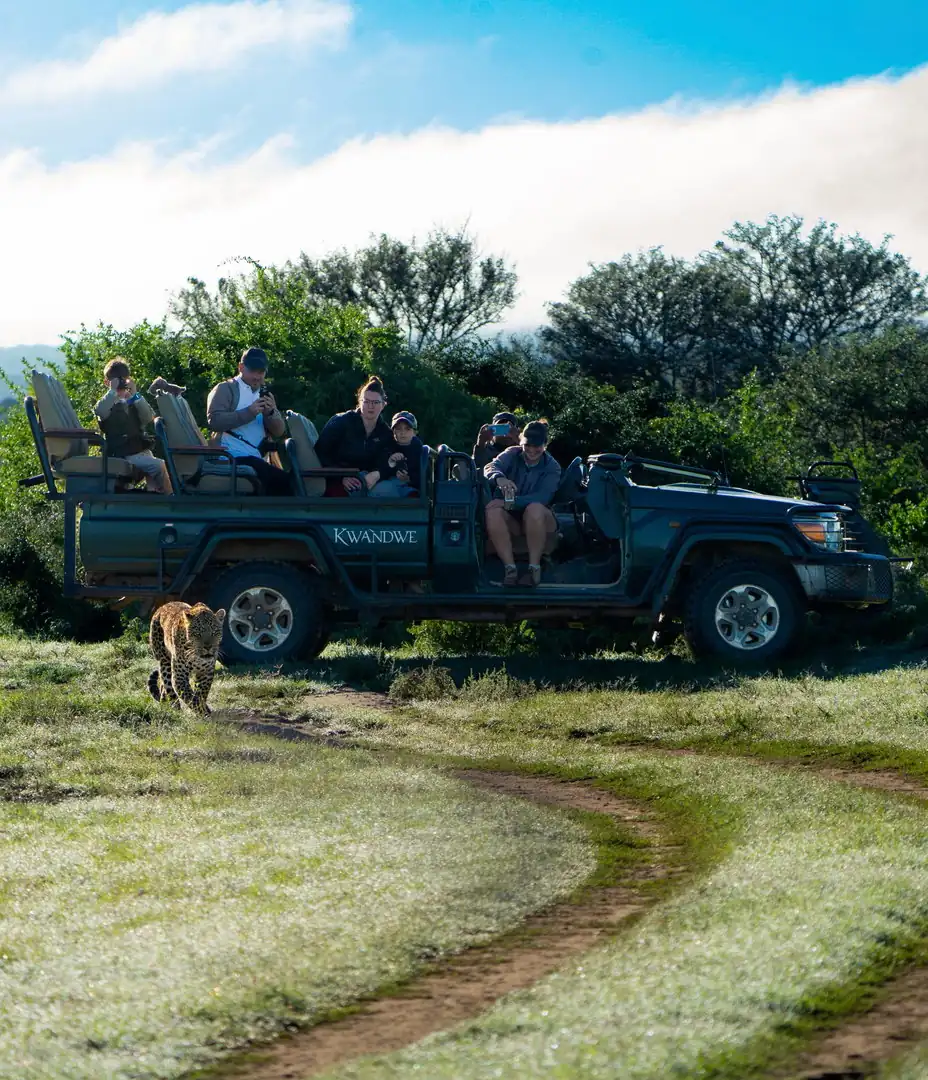
A safari does something a beach holiday or a city break cannot. It allows you to disconnect from the noise and reconnect with nature. The day is shaped by dawn and dusk, by where the animals happen to be. There is a leopard in a tree, or there isn't, and either way, you are watching in real time, with nothing standing between you and the moment.
Families and multi-generational travelers are one of the fastest-growing segments in this quieter model of luxury travel, and not by accident. One of the clearest reasons families give for choosing them is the desire for real connection.
This is where a safari becomes genuinely unique among family holidays, rather than simply another premium travel category. It is one of the very few experiences left that is inherently multi-generational, unhurried, and impossible to half-attend. Disconnection stops being the goal and reconnection becomes the unexpected benefit.
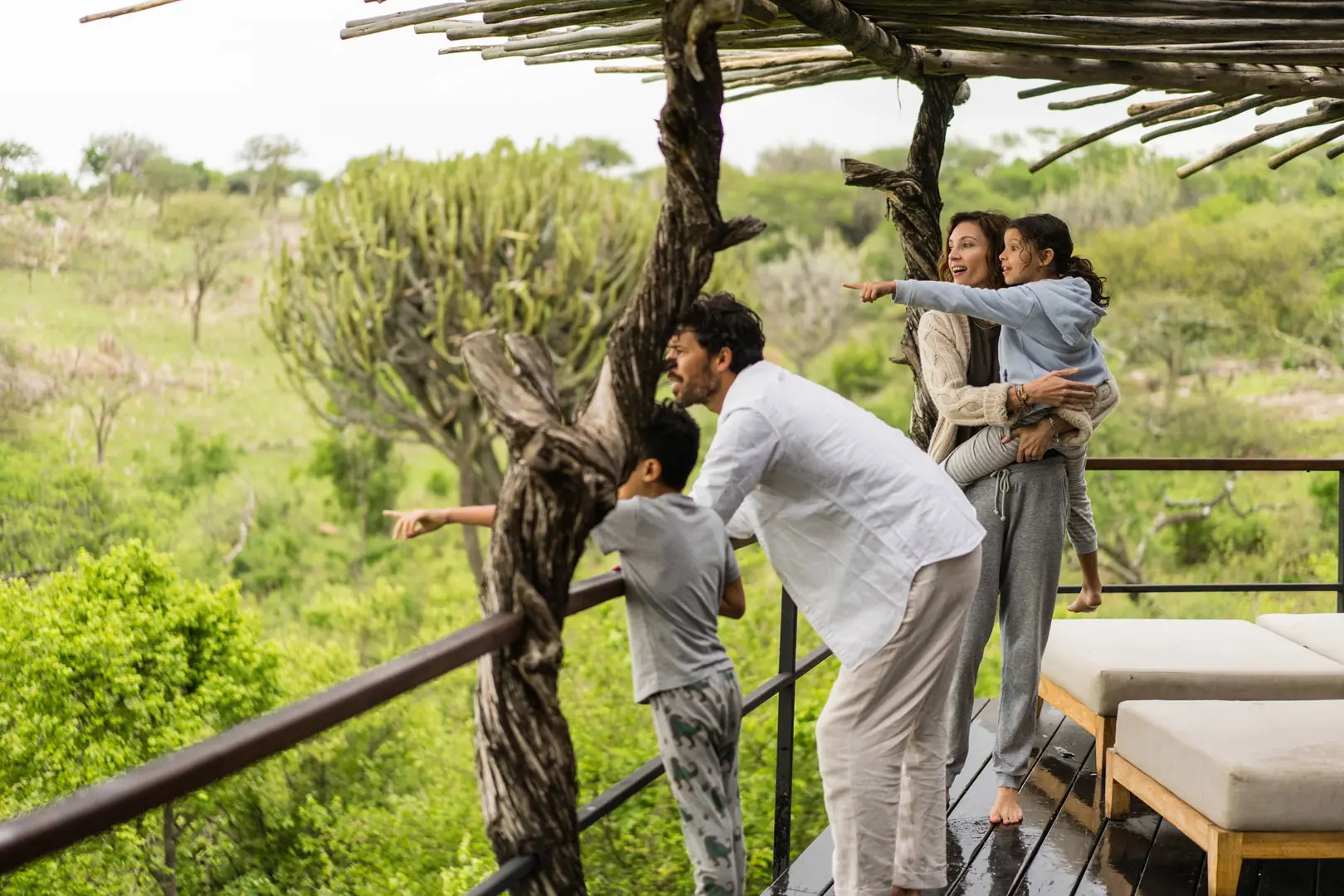
Around a fire, on a game drive, in the stillness of a bush morning, families end up talking again simply because there is finally room for it. It is not manufactured bonding. It is what happens naturally when the noise is switched off and everyone is having the same holiday, at the same pace, for possibly the first time in years.
Kelly phrased it simply but beautifully when recounting her highlights from a recent family safari: “The unexpected trip to Cape Town, our last dinner in Botswana together and a cold slow morning family bed snuggle are some of my personal highlights.”
But in a world where we seek deeper connection and meaning, experiencing an “impact safari” goes further than simply switching off. It is the difference between watching something and becoming part of it.
From spectator to participator: a shift from passive appreciation to active engagement
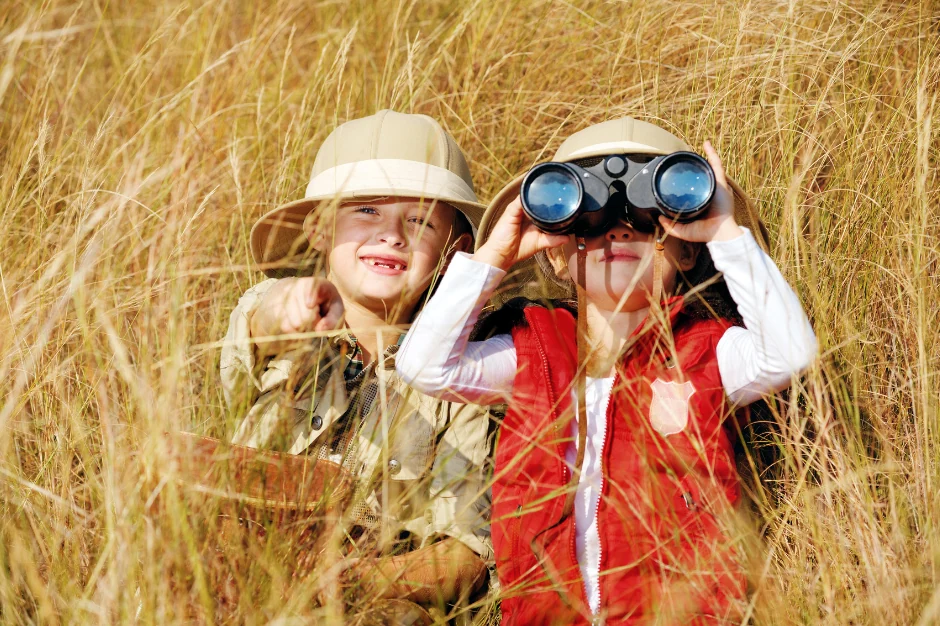
Most safari experiences, wonderful as they are, position your family as an audience. You sit in a vehicle, you observe, you photograph, and you leave the landscape exactly as you found it. But there is a deeper kind of experience available. One that turns a family from spectators of the natural world into people who have actually done something for it.
I am talking about conservation and the teams of people dedicated to the protection of wildlife and wilderness spaces. An opportunity exists to build your safari around direct, hands-on involvement in the actual work of protecting a species or a habitat, in addition to simply observing it from a respectful distance.
“This can mean joining species monitoring and data collection, supporting habitat restoration, or working alongside vets and ecologists during active fieldwork” explains Michelle from Wild Wonderful World, who specialises in conservation driven safaris.
“The benefits run in both directions. Researchers and reserves gain extra hands and, in some cases, genuinely useful data. Guests gain practical skills and a far deeper understanding and connection to the species and habitats in question.”
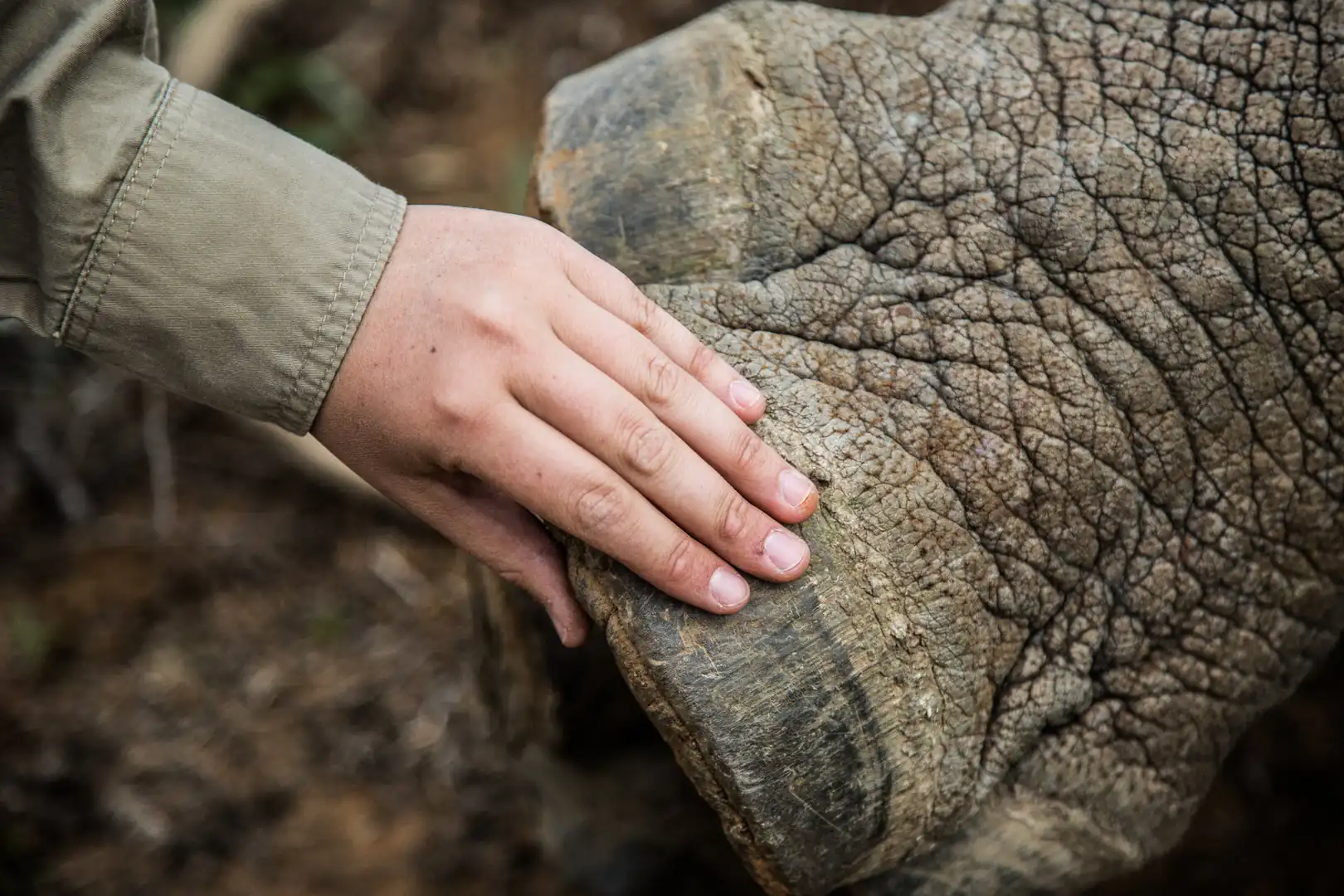
One of the most unique reserves you can get involved in conservation is at Kwandwe, in South Africa's Eastern Cape. Roughly 3,000 black rhino remain in South Africa, and a significant portion of that population lives in the Great Fish River Valley that Kwandwe protects. Here, you can join the reserve's rhino monitoring and management programme. This is not just a demonstration staged for visitors. When a rhino needs to be immobilised for its DNA to be sampled, for a young animal to be ear-notched, or for an adult to be fitted with a solar-powered tracking collar, you get the opportunity to work alongside the ecological team and the vet as it happens.
This is the real distinction between watching and doing. A game drive teaches a guest that wildlife is precious. Standing beside a sedated rhino, understanding exactly why that collar exists, teaches something closer to responsibility, that its survival is not automatic, and that ordinary people can be part of protecting it. That shift, from passive appreciation to active participation, is the entire idea behind "depth" made concrete.
The same distinction, but through human connection
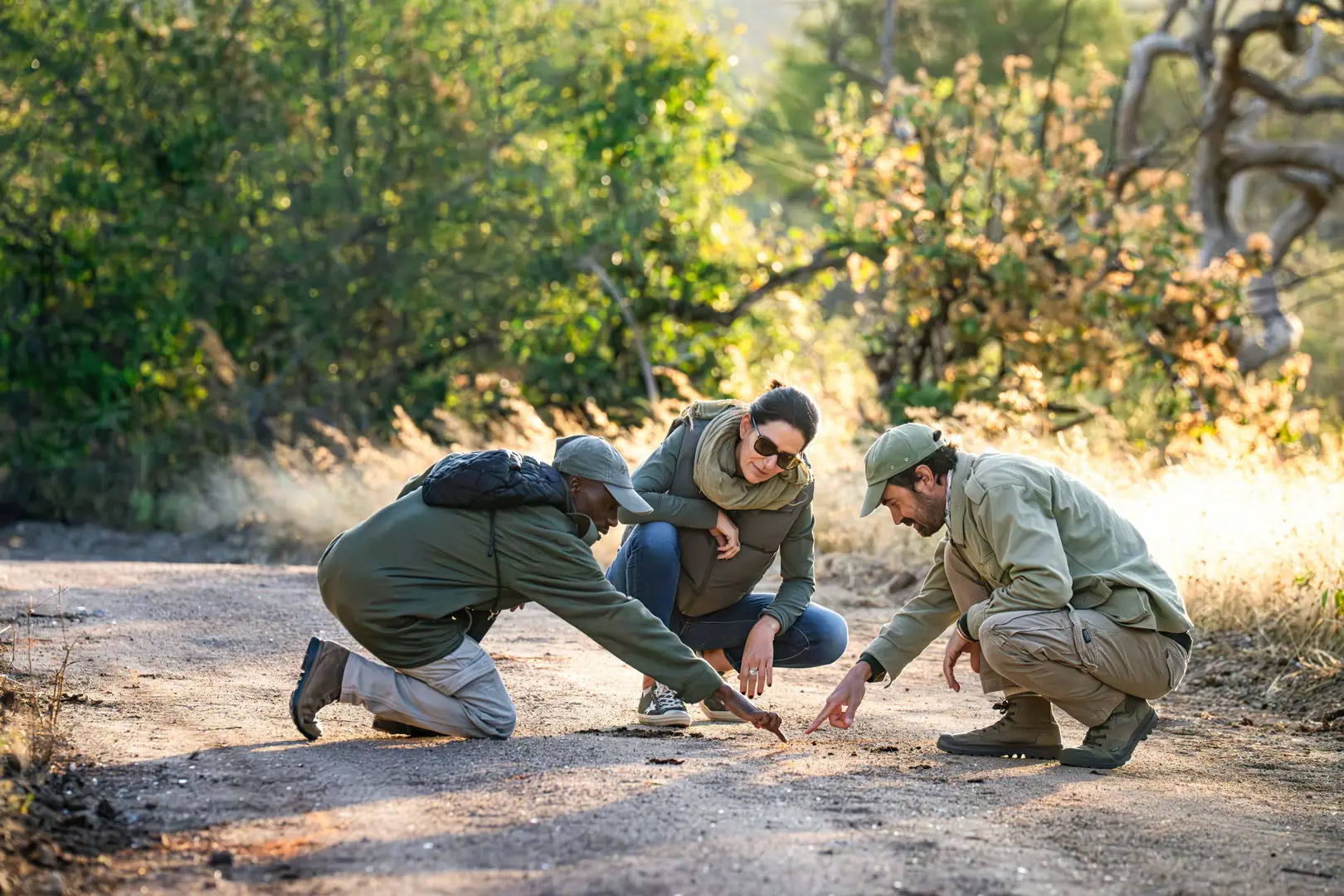
Depth of experience extends to cultural immersion too, and it's worth understanding why the two work the same way. "It's not about novel experiences," says Michelle. "It is the same mechanism at work as joining a conservation programme. A person who has only ever encountered other cultures through a screen holds a flattened, second-hand version of what that culture actually is. Spending real hours walking beside the San or the Hadzabe, following their pace, learning their skills, being genuinely useless at something they are extraordinary at, replaces that flattened idea with a textured, humbling, first-hand one."
At Jack's Camp in Botswana, families can walk the salt pans of the Makgadikgadi with San Bushmen, learning to read a landscape that looks, to most of us, entirely empty, uncovering food hidden beneath its surface using tracking skills built over thousands of years. At Mwiba in Tanzania, families can walk with the Hadzabe, one of the last hunter-gatherer communities left in the world, foraging for wild honey and glimpsing a way of life barely changed in millennia. An observer photographs this. A participant tries, fails, and tries again, which is a far more honest way to encounter a culture, and a far more compelling story to tell an admissions officer than any listed activity.
This is the actual mechanism behind ‘depth over excess’. It is not about doing less. It is about replacing consumption with participation, watching a rhino from a vehicle versus helping monitor its survival, admiring a landscape versus being taught to read it by the people who have read it for generations.
Christina, Strategic Partnerships Manager at Wild Wonderful World, explains what safari can do for younger children: “I hope [my children] grow up with a healthy respect for the wilderness, understanding that not everything is meant to be touched, owned, or experienced firsthand. I love that there are still parts of Africa untouched, still safe havens for animals exactly as they should be. More than anything, I hope [they] grow up knowing they're a part of this world, not the controller of it. Understanding your place in something bigger than you is what makes you protect it properly, not dominate it."
Getting ahead: turning an unscripted encounter on your family holiday into a college application
Most families choosing a safari already know the basics. The lodges, the guiding, the sightings. What fewer families know is that the trip itself can do something no summer internship, school club, or manufactured ‘passion project’ can: give a child a genuinely lived answer to a question every university application eventually asks.

Grades and test scores no longer separate anyone. Grade inflation has pushed transcripts upward across the board, and with more applicants than ever holding near-identical academic profiles, admissions officers everywhere have shifted their attention to something harder to fake: depth, character, and a genuine story.
Here is what that looked like for Mike, who took his daughter on safari: “Taking our daughter on Safari in South Africa when she was 7 years old and meeting Michelle with Wild Wonderful World literally changed the trajectory of our lives. Upon learning about the dangers to wildlife, our daughter set out on a mission that no one could have predicted. She found a voice to help advocate for wildlife – and in so doing, built inherent skills (and a life journey) that has been invaluable. As she now navigates the College Admissions process almost a decade later, it’s clear that doors are being opened that none of us could have foreseen on that very first Game Drive.”
The old advice was to do a little of everything, debate club, a sport, some volunteering, a musical instrument, and hope it added up to an impressive page. That advice no longer holds. Admissions offices now openly favour what's known in the industry as a "spike," a single area of real, sustained depth, over a scattershot list of activities. Harvard's own admissions office has said publicly that it looks for "sustained engagement" and "real passion," not breadth for the sake of it.
Why starting young is important
Crucially, officers can tell the difference between a genuine spike and a manufactured one.
The window for this matters as much as the experience itself. Counsellors who specialise in university admissions now advise starting the process as early as fourteen, not because a fourteen-year-old needs a five-year plan, but because two to three years of authentic, deepening involvement is what separates a real passion from a last-minute addition to a form.
A teenager who returns to a programme like Kwandwe's more than once, growing more capable and more curious each time, is not performing an interest for an admissions officer. They are living one, years before they ever have to write about it. Real, sustained, hands-on involvement in something bigger than yourself is a different story entirely.
This is the heart of it. Watching wildlife from the back of a game vehicle is a wonderful thing. But taking part in the conservation of wildlife is transformative. Tracking with the San has something far beyond qualifications on paper that no amount of extracurricular clubs can manufacture. It is also exactly the kind of lived experience that truly distinguishes a personal statement or UCAS response.
A vacation with true ROI: a family investment that stands the test of time
A safari built around genuine participation gives a family two things at once: the rare, quiet gift of reconnecting with each other, and a set of experiences that will shape how a child sees the world, and how a university sees that child, long after the trip is over.
The question worth asking before booking another conventional itinerary isn't where to go. It's what your child will have actually done by the time you get home, and whether it's a story they lived, or a photograph they took.
FAQ about family safaris
What makes a family safari in South Africa a good choice?
A family safari in South Africa is practical for families. Reserves are linked by short scheduled and charter flights, English is widely spoken, private hospitals are within reach of the main safari regions, and it's easy to combine the bush with time in Cape Town or on the coast. Several reserves, including Kwandwe in the Eastern Cape, also offer conservation experiences that children and teenagers can take part in.
Why choose a multigenerational safari in Africa?
A multigenerational safari in Africa is one of the few holidays where grandparents, parents and children share the same pace and the same experiences. The day follows dawn, dusk and the movement of the animals, with long stretches of time together around the fire or on game drives. Families often find they talk more on safari than they have in years, simply because there is room for it.
What is a conservation safari for families?
A conservation safari for families is built around taking part in the work of protecting wildlife, as well as watching it. Depending on the reserve, this can include species monitoring, data collection, habitat restoration, or working alongside vets and ecologists during active fieldwork. Children come home with practical skills and a first-hand understanding of what protecting a species involves.
Can you take part in conservation on safari?
Yes. Some reserves welcome guests into their conservation programs, as long as the work is part of the reserve's actual management and not staged for visitors. Researchers gain extra hands and, in some cases, useful data, and guests gain a far closer understanding of the species and habitats involved. Wild Wonderful World plans safaris around these programs and can advise on which ones suit your family's ages and interests.
Where can you have a hands-on rhino conservation experience in South Africa?
Kwandwe Private Game Reserve in the Eastern Cape offers a hands-on rhino conservation experience in South Africa. The reserve protects part of the Great Fish River Valley, which holds an important black rhino population - in addition to a thriving white rhino population.
What does Kwandwe rhino monitoring involve?
Through Kwandwe rhino monitoring, guests join the reserve's ecological team and vet when a rhino is immobilized for management. That might mean taking DNA samples, ear-notching a young animal for identification, or fitting an adult with a solar-powered tracking collar. Guests see why each step matters for the animal's protection and take part as it happens.
Is a safari with teenagers worth it?
A safari with teenagers can shape how they see the world long after the trip. Taking part in conservation work, or learning skills from communities who have lived in these landscapes for generations, gives teenagers responsibility and perspective that a conventional holiday rarely offers. Teenagers who return to the same program over several years build real depth in something larger than themselves.
What is walking with San Bushmen in Botswana like?
Walking with San Bushmen in Botswana, from Jack's Camp on the edge of the Makgadikgadi Pans, shows a landscape that looks empty to most visitors in an entirely different light. San guides share tracking and foraging skills built over thousands of years, including how to find food and water hidden beneath the surface. For children, trying these skills and struggling with them is a humbling, first-hand lesson in how much knowledge people and places can hold.
What is the Hadzabe experience in Tanzania?
The Hadzabe experience in Tanzania, offered from Mwiba Lodge, invites families to walk with one of the last hunter-gatherer communities in the world. Guests follow the Hadzabe as they forage for wild honey and gather food, and see a way of life that has changed little over millennia. The experience asks guests to take part and learn at the Hadzabe's pace, not just observe.
What age is best for a family safari?
There's no single answer to what age is best for a family safari, because different ages gain different things. Younger children, from around six, build a sense of wonder and respect for wildlife. Many lodges set minimum ages for game drives and higher limits for walking activities, so itineraries need planning around them. From about fourteen, teenagers can take a more active role in conservation work, and returning over two to three years lets them deepen that involvement.
Can a safari be one of the meaningful summer experiences for college applications?
A conservation safari can be one of the more meaningful summer experiences for college applications, especially if a teenager returns to the same program over several years. Admissions counsellors increasingly advise sustained depth in one area over a long list of activities, and hands-on involvement in protecting a species shows curiosity, responsibility and commitment. The North American summer is also the southern African dry season, when wildlife gathers around water and game viewing is at its most rewarding.
Written by Michelle Pengilly
.webp)
.webp)





.webp)