
In April 2026, we received a call from Jess Watermeyer at the African Wildlife Conservation Fund. Denning season was approaching, and several packs in Savé Valley Conservancy were moving without collars. One in particular, called Mimic's Pack, had a history of snaring incidents and regularly denned close to resettled community areas. Without a collar, the team has no way to track where they were going or where they are picking up wire snares.
Thanks to a donation from a family who traveled on safari with us recently, we committed to funding a new collar deployment.
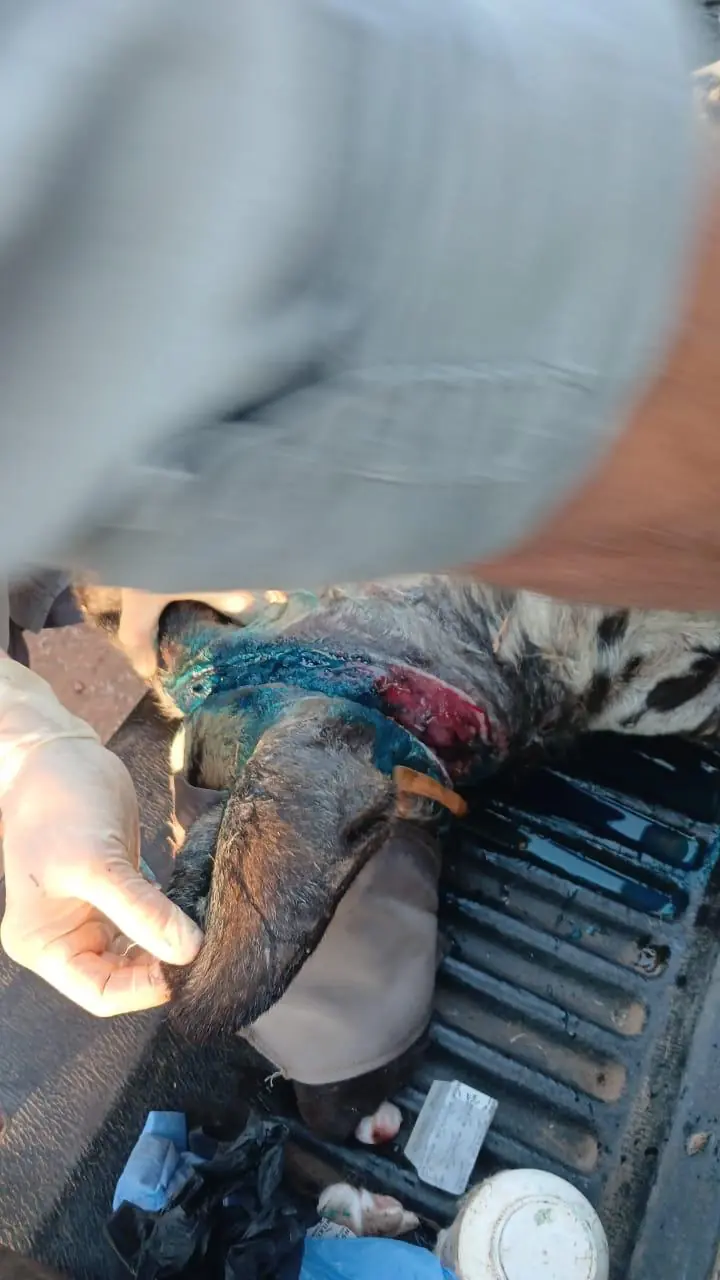
The weather and circumstances delayed the collar deployment. In August, vets on site couldn’t get a window to locate and place the GPS collar. During the next collaring window in September, the team searched for the pack for the better part of a week. When they finally found them, they saw that one of the dogs had picked up a wire snare. The cable had wrapped around its neck and across the head and caused a nasty wound.
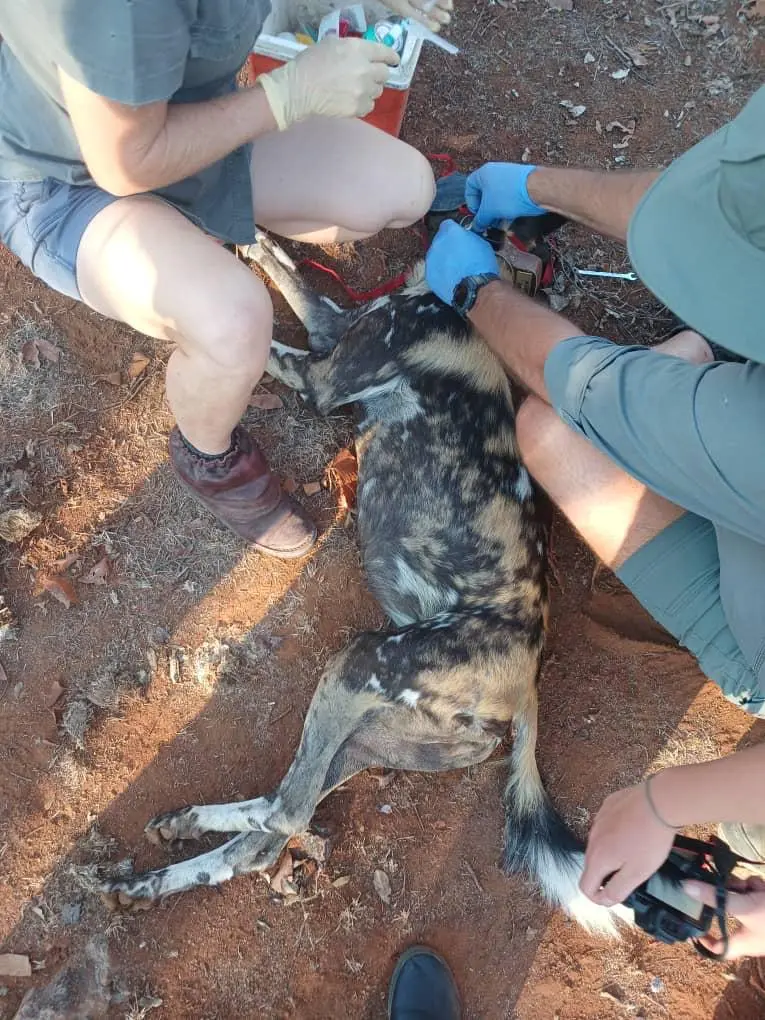
The team managed to dart the snared dog to remove the snare, and fitted the satellite collar on a second female. Our safari guests who donated towards the collar named her Bianca. Bianca and Mimic's Pack were finally on the map and the team able to track their movements to determine where the dogs are getting snared and focus anti-poaching efforts.
Two and a half weeks later, Jess sent us a disheartening message:
“Unfortunately I have some very sad news. Bianca, the dog we collared has been killed by poachers. We were able to retrieve the carcass and the collar, so we are hopeful to redeploy, but right now we are just trying to find the rest of the pack and check they are okay.”
The mortality alert came through via the collar. The team tracked the signal, but Bianca’s body had been moved a significant distance from where she died. Heavy rain made it difficult to follow up on tracks, and her carcass was found in the river. Foul play is suspected.
The collar has been retrieved and AWCF will redeploy it as soon as they locate a suitable candidate. The team continues their search for the rest of Mimic's Pack to make sure that they are ok.
Outcomes like this are disheartening, but a very clear sign of the need to keep monitoring Wild Dog packs in this area. If it wasn’t for the collar, the team would haven’t have known this incident had happened and they wouldn’t have been able to locate Bianca’s body.
At the very least, the monitoring team can now prioritize searching for the rest of the pack, to determine whether any other dogs might have been hurt or killed. When they relocate the pack, they will redeploy the collar to enable continued monitoring and mapping of human-wildlife conflict incidents in order to better direct anti-poaching efforts.
$2,500 will fund one predator GPS collar and 12 months of satellite data fees. If you would like to support the redeployment of this collar or fund a new one for a pack still operating without tracking, you can donate here.
AWCF currently monitors 10 wild dog packs comprising more than 100 individuals across Savé Valley Conservancy. Tracking collars are the primary tool the field team relies on to respond to snaring incidents, monitor denning, and prevent fatal encounters with human communities. Right now, collar coverage is failing across several packs at a critical time of year, with denning season in full swing.
Sponsoring Wild Dog GPS collars is one of the funding gaps we fill, in order to enable conservation teams to carry out their field work of monitoring and protecting this endangered species.
The immediate gaps are:
In total, AWCF is requesting funding for 4 to 5 collars to cover the two failing deployments, and two packs at high risk of human-wildlife conflict. Because Wild Dog packs move such large distances, and never stay in one place for long, having readily deployable collars available at any given time means that the team can optimize sightings and act fast when needed.
Each collar has a direct, traceable conservation outcome: faster response to snaring, informing targeted anti-poaching deployment, and the ability to better coordinate protecting of packs that den in the most dangerous parts of the conservancy.
$2,500 funds one collar, but smaller contributions fund logistics and veterinary fees to deploy available collars. To contribute, you can donate here. Collar donors will receive personalised quarterly updates about the collared pack’s movements and wellbeing.
To receive our public field updates, subscribe to our newsletter.
Written by Evelyn Poole, Conservation Fund Director
.webp)