
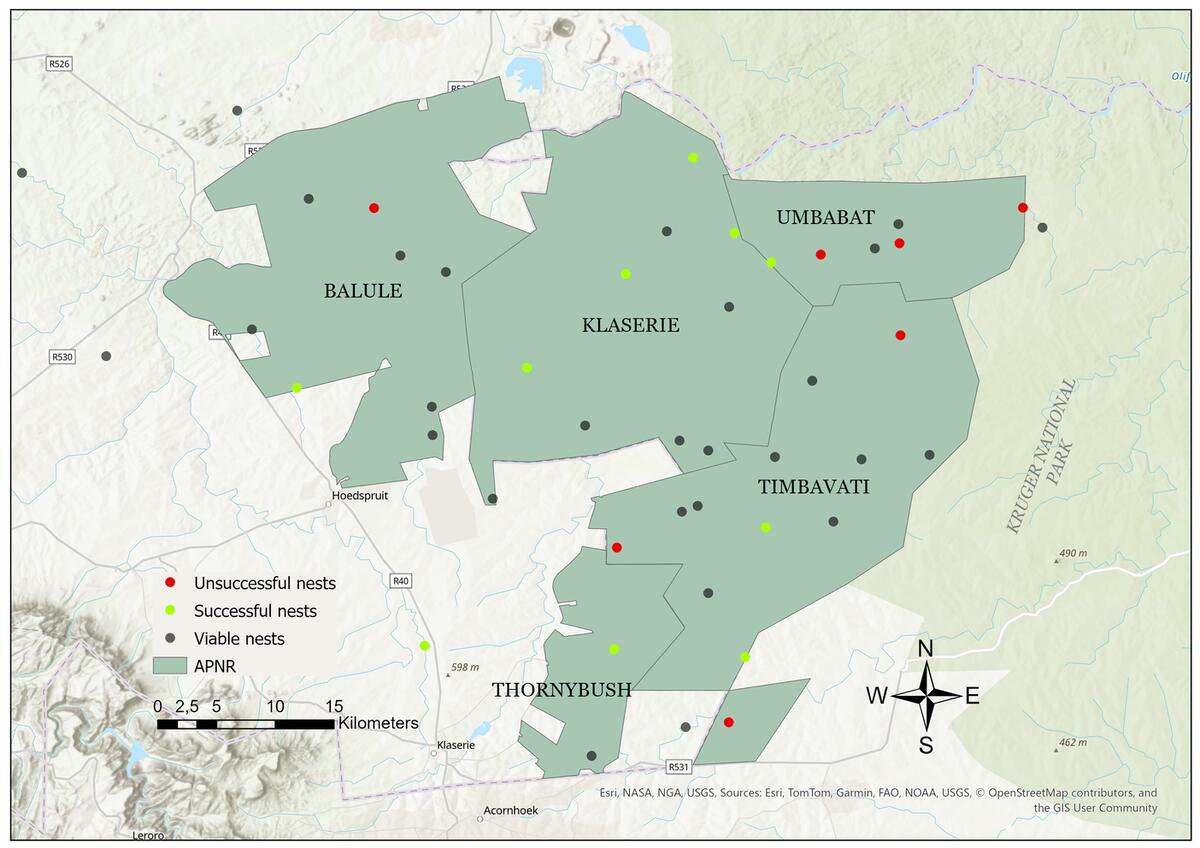
The season produced 16 breeding attempts across the APNR, with 9 chicks successfully fledging. A success rate of 56.3% that is lower than the long-term project average of 68.7%. However, in absolute numbers, 9 fledglings is actually above the seasonal average of 7. Some contributing factors to the lower-than-average relative success rate, but higher-than-average absolute success rate are:
Overall, the project team considers the outcome a success given the circumstances.
The continued dependence of the population on artificial nests remains striking. Over 25 years and 278 monitored breeding attempts, 85.9% of successful outcomes have occurred in nest boxes. This season, 13 of 16 attempts were in artificial nests. Natural cavities, particularly those exposed to prolonged wet conditions, remain unreliable. A chick found deceased at Ingwelala's natural nest in February is likely evidence of this. The group there has since been provided with a more suitable nest box for the seasons ahead.
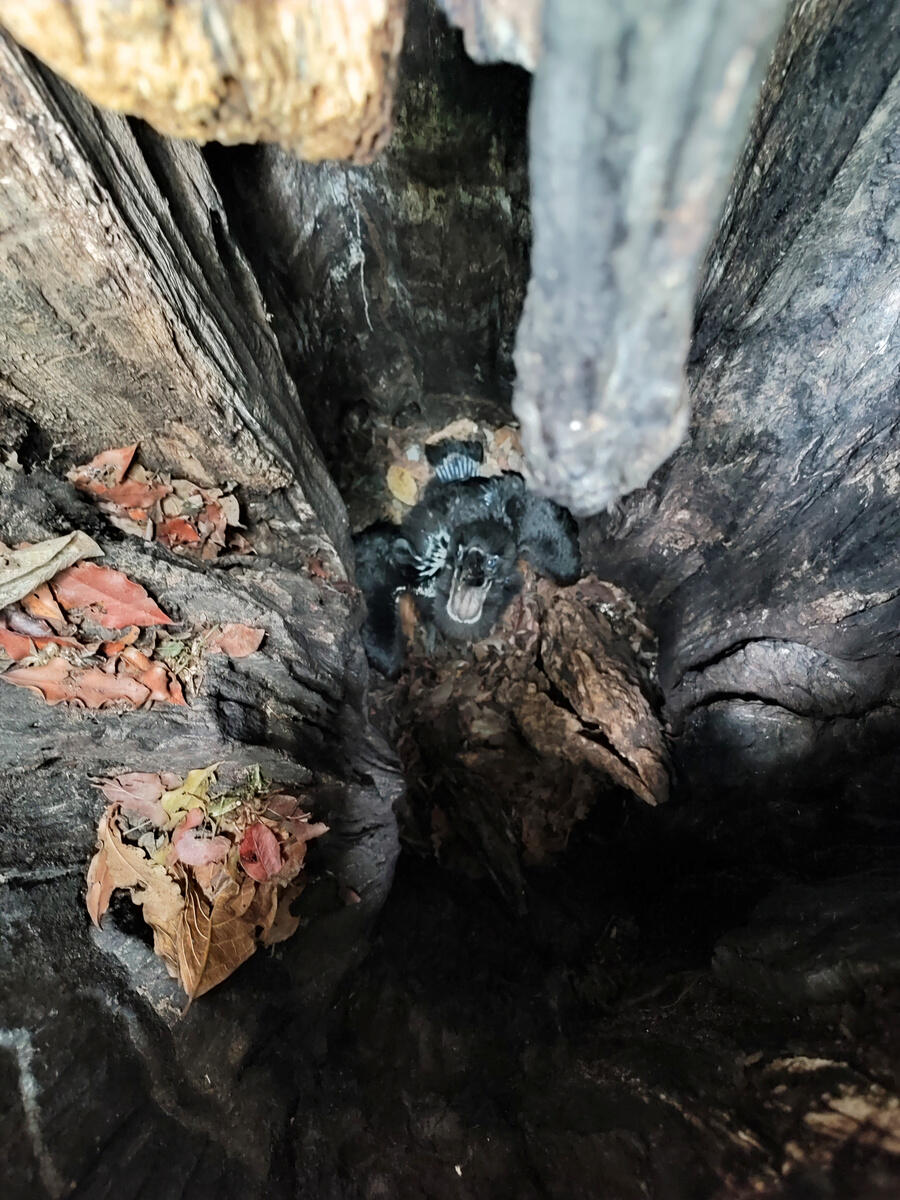
A more hopeful story came from Moditlo in Blue Canyon Conservancy, where a chick discovered in a Jackalberry tree cavity roughly 3 metres deep survived flooding, proximity to a river, and weeks of inaccessibility for the research team, before being confirmed as a newly fledged juvenile in March.
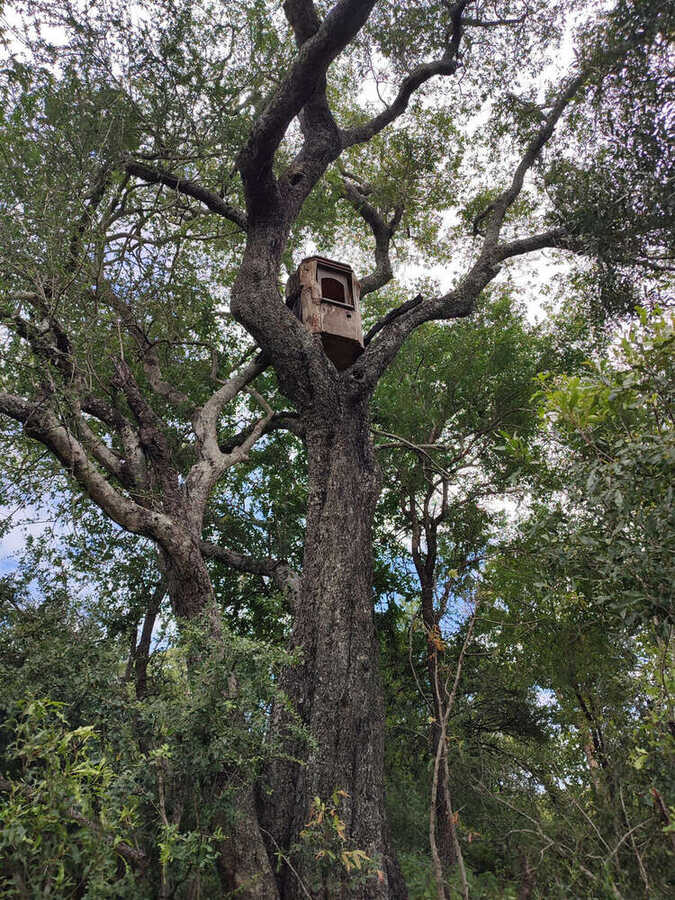
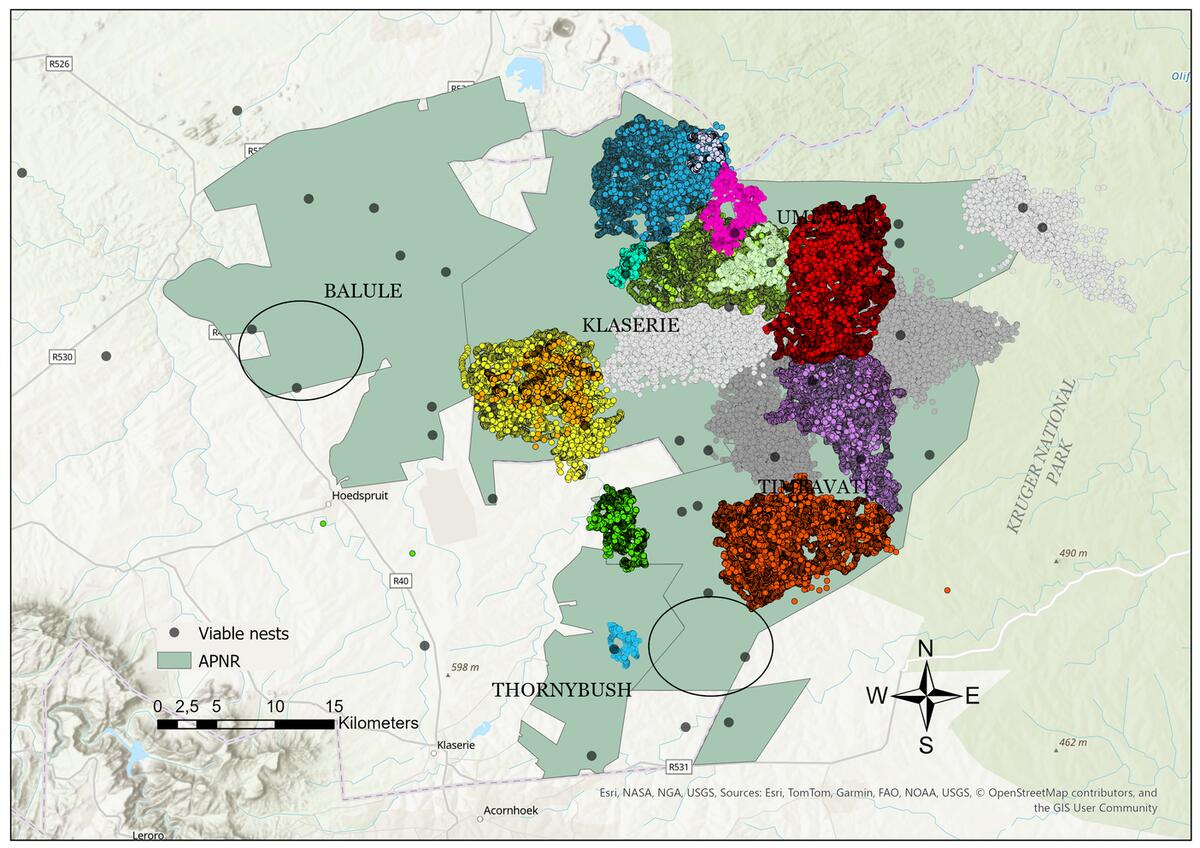
The nest network grew again this season. A new box was placed on Olifants River in Balule PNR, the first artificial nest in that reserve. A second was installed on Ukhozi Nature Reserve, also within Balule, positioned strategically for dispersing birds establishing new territories rather than any resident group. Expanding available sites into suitable habitat ahead of demand is central to the project's approach to long-term population growth. And nest placement is now being approached more scientifically than ever, through the tracking data analysis.
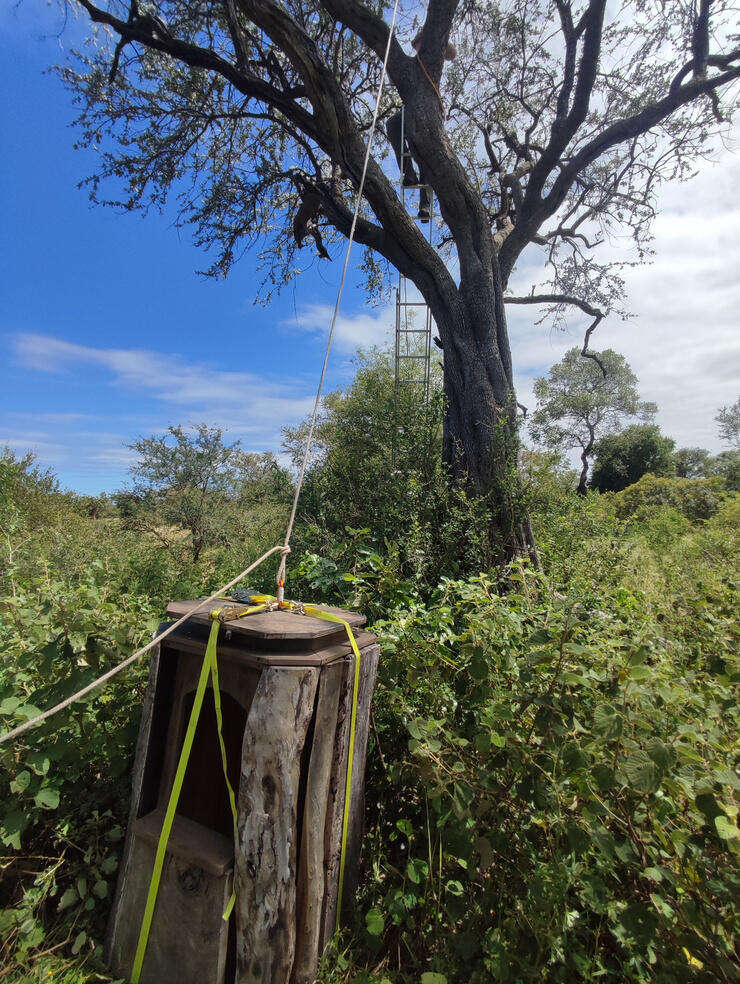
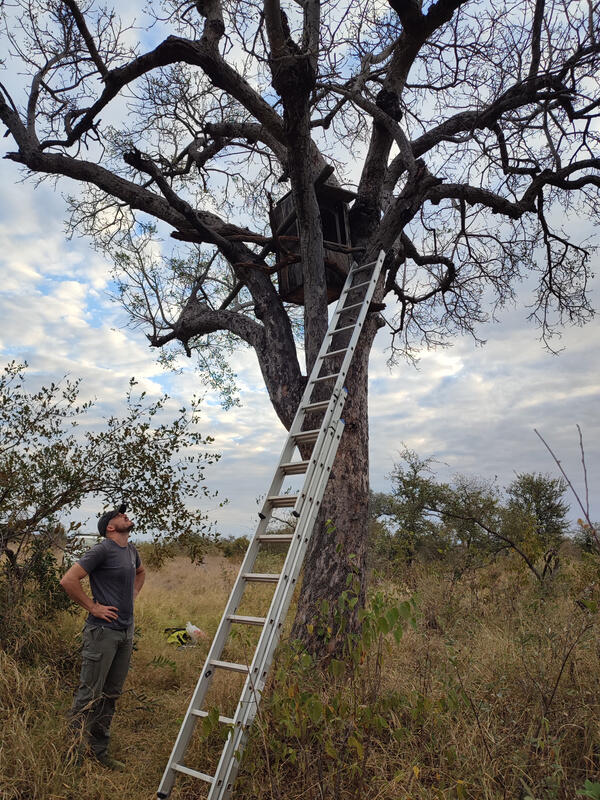
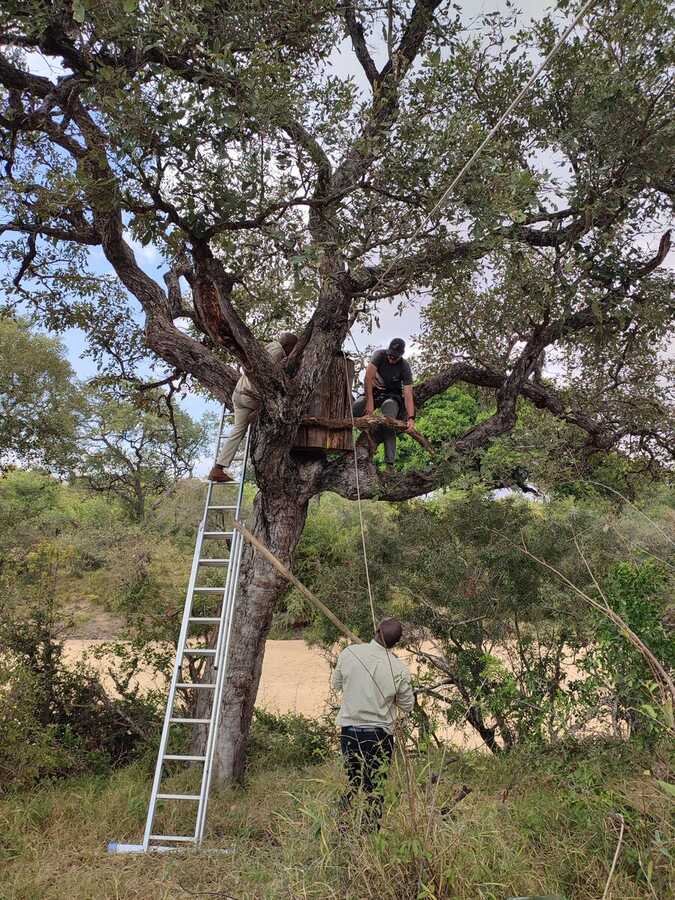
Replacement nests were installed at Yankee Dam (Umbabat, with thanks to Robbie and July from Monwana Game Lodge - who joined Christina from Wild Wonderful World and the project team for the installation) and Timbavati (Blatherwick property), upgrading older designs that tended to retain heat. Research has shown that elevated internal nest temperatures affect chick growth and survival even in breeding attempts that initially appear successful. The team has six more old nests to replace this year.
The network now consists of 41 sites across the five reserves: 9 in Balule, 11 in Klaserie, 2 in Thornybush, 13 in Timbavati, and 6 in Umbabat.
In December 2024, a subadult male ground hornbill was released back into Umbabat after several weeks of treatment. He had been found sick on a private property, suspected to have ingested window putty. A leg-mounted tracking device was fitted before his release. Then, for 17 months, we didn't know what had happened to him. No signal. No sightings. The team assumed he had either died or moved beyond the tracking signal receivers into Kruger National Park.
But in July 2026, a signal was picked up! The bird was alive. He had rejoined a group, most likely his original family. Tracking data showed he had covered approximately 280 km2 since release, nearly three times the average territory size for groups across the APNR. Movement data from rehabilitated and released ground hornbills is extremely rare. This bird is now providing information that will inform how the project approaches future rehabilitation and release decisions.
This success is only possible because of the new tracking technology that is being developed through Kyle's postdoc - funded in a large part with Wild Wonderful World's support.
All 9 chicks that fledged were fitted with tracking rings before leaving their nests, bringing the total number of birds currently being tracked to 16. The devices have generated approximately 170,000 location records. Combined with historic data from previous research, the total dataset now consists of 205,000 locations in August 2026.
This is the first time GPS tracking rings have been deployed on Southern Ground Hornbills anywhere. The data is beginning to answer questions that were previously unanswerable: how groups maintain territorial boundaries, how juveniles disperse after leaving their natal group, and whether the current network of artificial nests is positioned optimally within those territories.
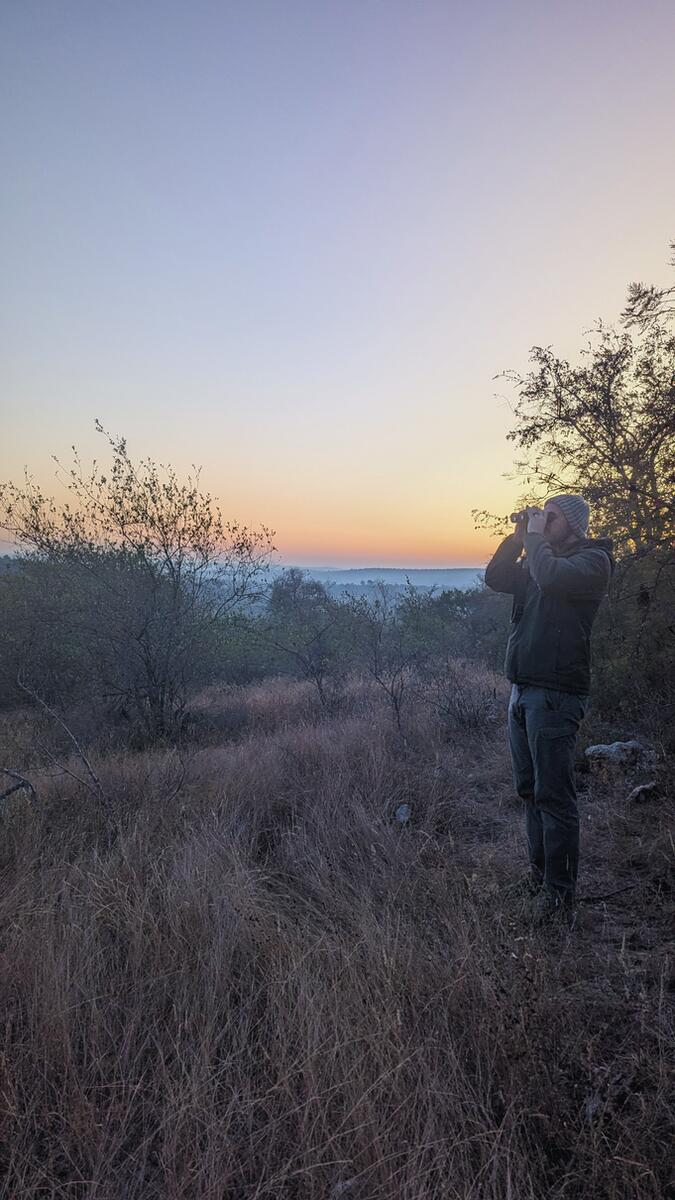
Winter has shifted the team's focus to data analysis and tracking. Kyle and Carrie head out once or twice a week before dawn (that means a 3am wake up!), using the birds' distinctive booming calls to locate juveniles and download movement data. The morning window is brief, typically 10 to 15 minutes before the birds fall silent and move. Missing it means starting again the next day.
Of the nine chicks fledged this season, six have been confirmed as doing well as of July 2026. Three, Caroline, Blatherwick, and Ntoma, had not yet been relocated. The team continues to ask guides and guests across the APNR reserves to report any sightings of birds fitted with tracking rings.
Carrie Hickman has been awarded her PhD, with graduation in September 2026. Her thesis focused on the impacts of hot weather on behaviour and reproduction in this long-lived cooperative breeder, and draws on over 25 years of the project's data. It is available on request through info@apnrhornbill.com.
A paper by Middleton et al., published in The American Naturalist in 2026, found that hot-dry weather is associated with worse reproductive outcomes regardless of group composition. For a species already listed as endangered and living on a continent warming at twice the global average, the implications are significant.
A new PhD project is being developed, building on this foundation to examine broader ecological change across the APNR landscape and its effects on ground hornbills and other wildlife.
Wild Wonderful World has supported Kyle and Carrie's research since 2018. Over the past 3 years, we have contributed ZAR1,171,400 (approximately USD73,120) towards the project, covering 19 tracking rings, 18 receivers, 11 camera traps, researcher salaries, fieldwork equipment, vehicle maintenance, and more.
In addition, Wild Wonderful World Conservation provides administrative support for the APNR Ground Hornbill Project through:
.webp)