

Vintage Safari Lodges in Africa: Our 2027 Picks
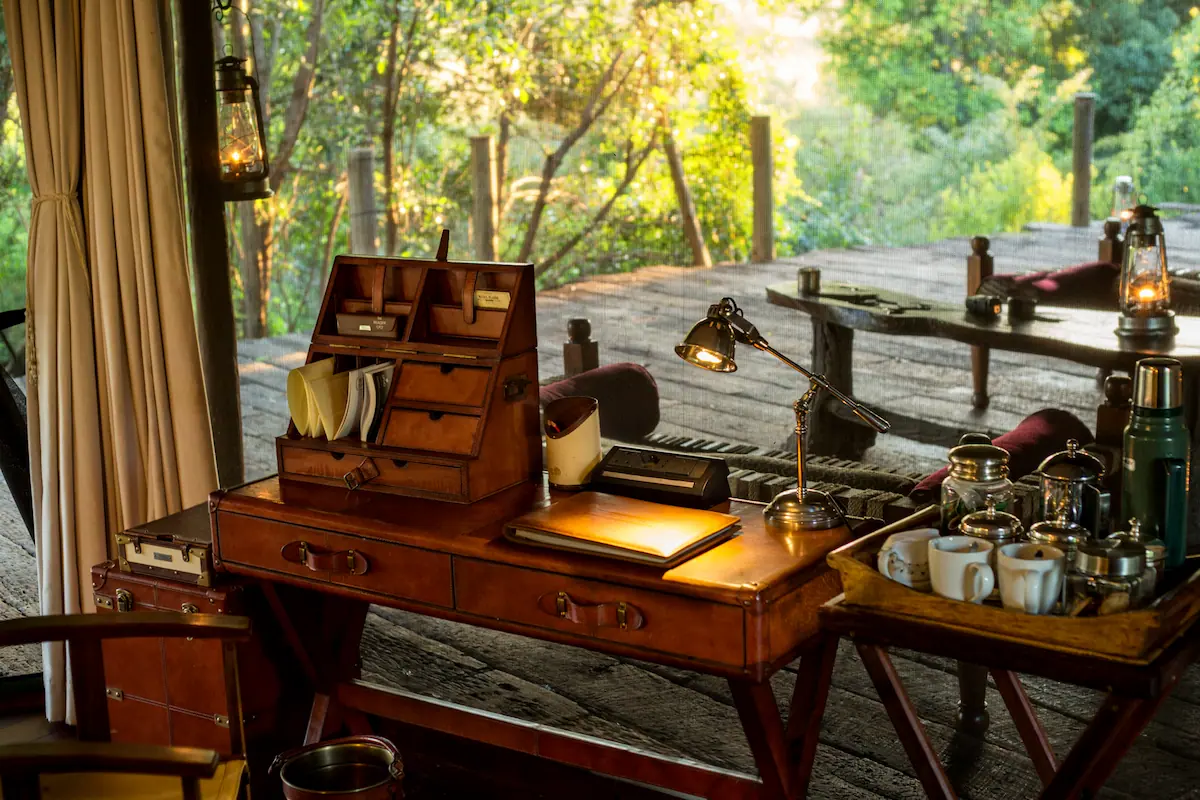
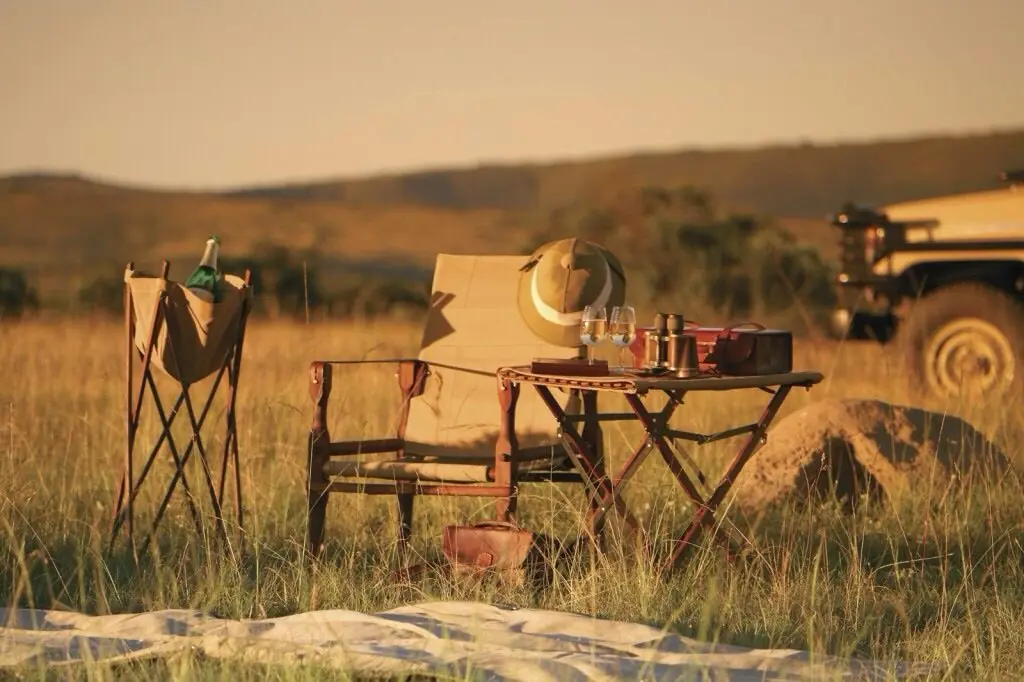
We’ve all seen - and perhaps idealized - the vintage safari aesthetic based on the 1985 “Out of Africa” film. A vintage safari is styled on the golden age of safari, roughly the 1920s to 1940s. Think vintage safari lodges featuring canvas tents, campaign furniture, brass and leather accents, small camps and unhurried days.
Tied to an aesthetic, sure. But for us more importantly, it is tied to a distinct feeling. One of home, timelessness, authenticity, living according to nature’s rhythms and respect for tribal cultures native to the land.
In this blog, we explain what that feeling is like and list our top vintage safari lodges to visit if you want to experience it for yourself.
Africa is home, and not just at luxury tented camps
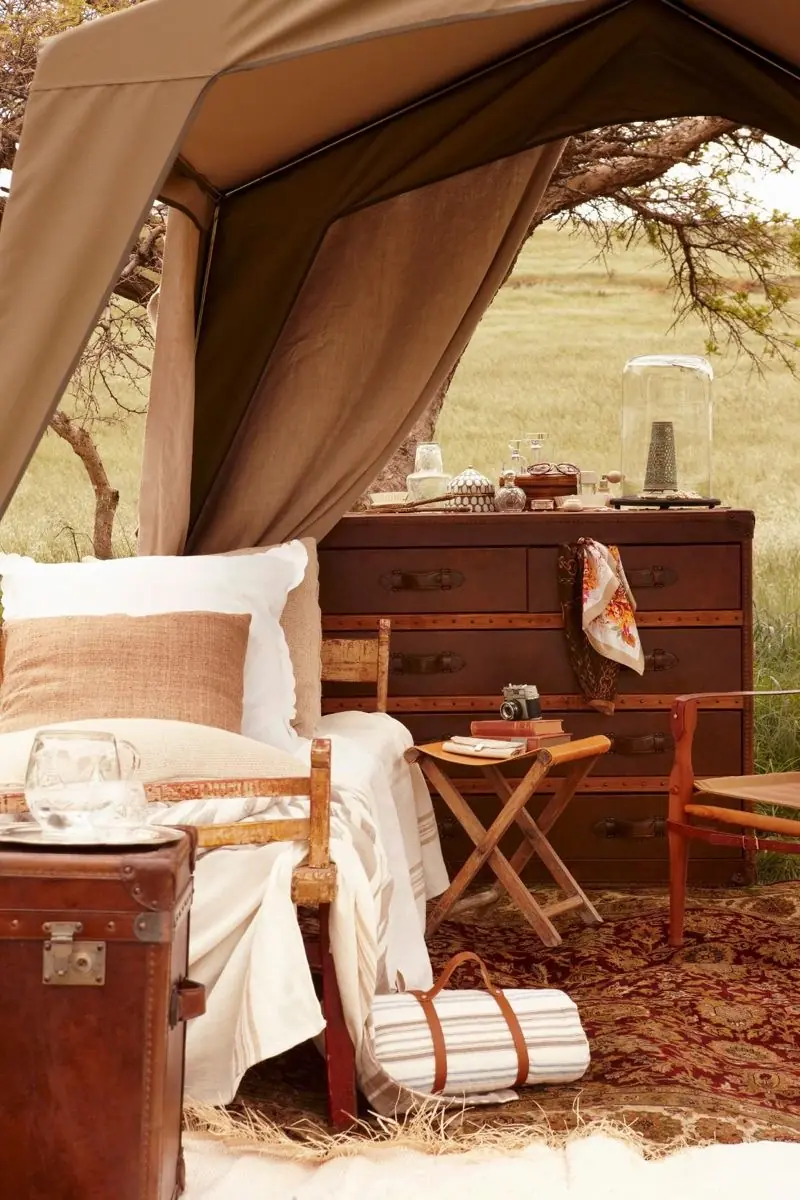
To us, Africa is home. Not metaphorically. Home. And the strange, wonderful thing is that people who have no history here, no blood tie, no childhood memory of this continent, arrive and feel it too. For the days or weeks they spend here, it becomes their home as well. It stays with them long after they've left, imprinted somewhere they didn't know they had room for.
We've spent most of our careers inviting people to see the Africa we live in. Classic. Timeless. Slow. A cup of something hot in hand as dawn rises and the light becomes golden. Every single day we wake up here, we still think: I cannot believe this is my life. The pulse that runs through this continent takes a hold of you the moment you step into it. And it never really lets go.
What’s that saying by Brian Jackman? “Everything in Africa bites, but the safari bug is the worst of all.”
Africa: timelessness like nowhere else on earth
At the heart of all of this, is Africa’s timelessness. These days, there aren’t many places where you can actually travel back in time. Authentically. Away from road noise, light pollution and city smells. No jarring alarm clocks or fancy hue lights programmed to mimic the sunrise in a place you can’t see the real thing.
Waking up on safari, you feel the crisp morning air seeping its way through the blankets, rising up from the cold, dewy ground. It elegantly whirls its way through the open windows and tickles the tip of your nose. That shift in temperature has your eyes open before your eyelids agree to it. Then the nightjar's last call fades away, and the emerald-spotted wood dove starts its morning call — "du-du-du-dududududrru" — often described as a little ball bouncing to a stop. Closely behind it, the crested francolin makes sure the whole world can hear he’s awake too.
That's when you know it's time to get up for some coffee and rusks, before we leave for morning game drive.
And long before there was a canvas safari tent, there was a Bushman awakening beneath an animal skin under the shade of a jackalberry tree, feeling that same cold morning air arrive. Moving with the rhythm of the day, of nature, of the wild.
This feeling isn't new. It's one of the oldest we have. Somewhere in Africa, we've mastered the impossible pairing of wildness and comfort. To be woken by the morning breeze, coffee steaming in your hands, looking out over the plains — crisp linen against skin, wilderness against window — well, that's about as close to heaven as we've found. It shouldn't work. A landscape that enormous and a bed that soft have no business existing in the same moment. And yet here, they do.
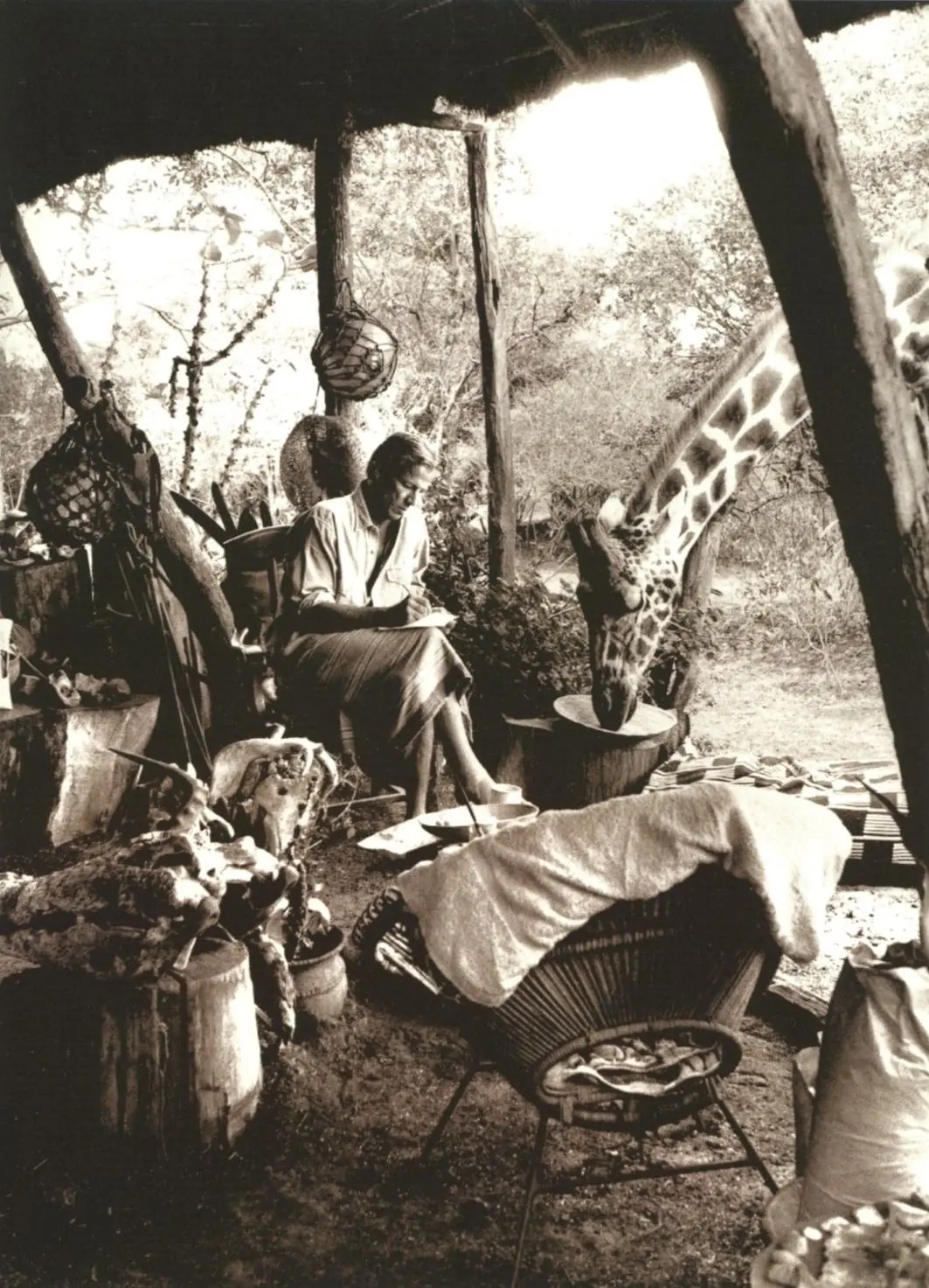
We invite you to come feel at classic safari lodges Africa
This is what we are here to do: to gift these feelings, emotions, memories, to those who visit us. The hands that press linen so crisp it is an art form. The cooks whose meals you'll still be describing to friends a decade from now. The rangers and trackers who take you out at first light so the animals can keep roaming free, exactly as they always have.
The craftsmen, the artisans, the guides and conservationists who've spent decades perfecting their art - so as to share it with you. The carvers and weavers and storytellers who flood this continent with their craft, still bringing things to life by hand and the spoken word. These are the people who've dedicated their lives protecting that and then choose to share it with visitors who arrive not knowing what to expect but leave forever changed.
We can talk about this feeling until we’re blue in the face, but the real, true, old-school Africa doesn't translate from being admired from a distance. It has to be felt. So come feel it with us, at these lodges that we selected for their vintage safari aesthetic and old-school charm.
Where the canvas tents make room for more of us to have the feeling of that morning air. A softer place to land, so the feeling could be shared rather than survived. A chair on the veranda, made by a local artist, where you get to enjoy your morning coffee with Abraham's rusks, made from a recipe written a hundred years ago - yet still exactly right.
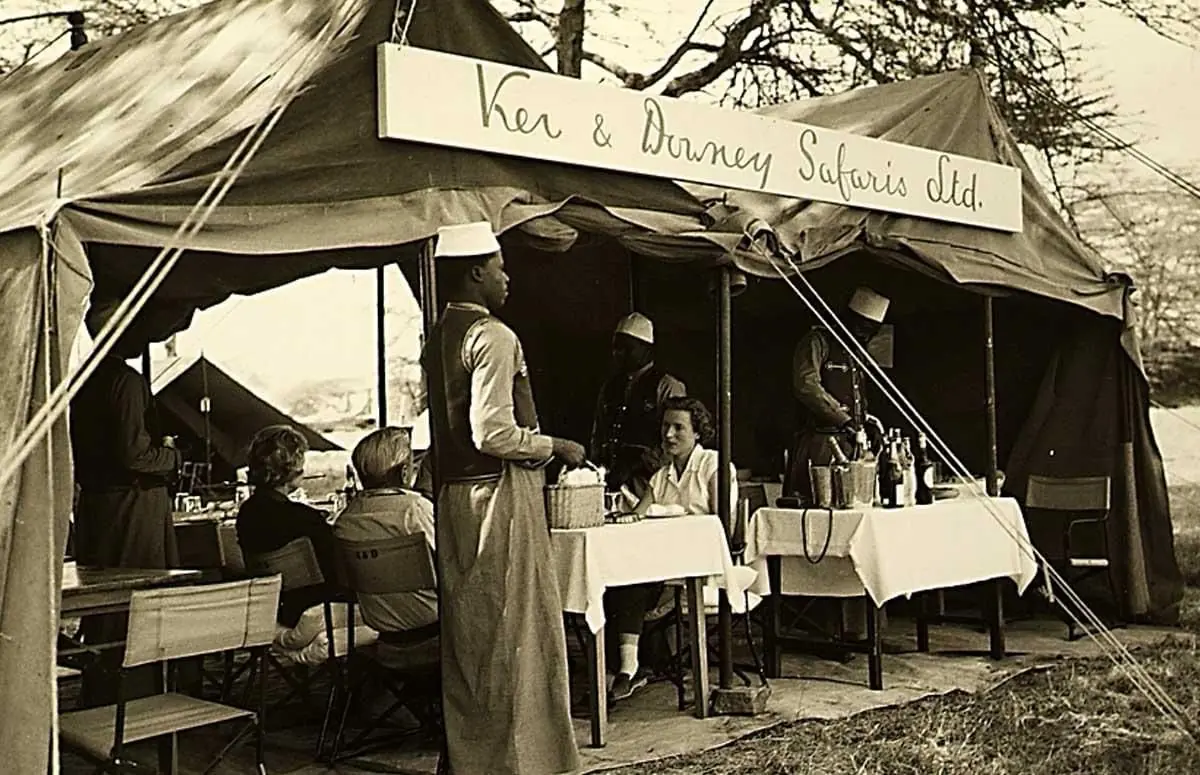
Vintage Safari Lodges in Africa: Where to Find the Classic Safari Feeling
That feeling we keep coming back to — the crisp morning air, hot coffee cupped before dawn, stepping gracefully into a pulse far older than memory — is one we strive to share with our guests. The lodges we chose convey the vintage safari aesthetic and heritage, and share our conservation-first ethics. Ensuring the preservation of the wild spaces that enable us to go on safari in the first place.
Some are family homes thoughtfully reimagined to accommodate visitors. Others are tented luxury camps crafted to echo the classic explorer safari era, brimming with canvas, brass accents, campaign furniture and journeys made on foot. A few hold a heritage deeper still, honoring stories that predate safari entirely. All are places where the preservation of natural spaces is as central as your safari experience, and built into the lodges’ purpose.
This is where we send guests who want to feel it, not just read about it.
Best vintage safari lodges for 2027 overview
| Lodge | Country | Vintage Safari features | 2027 Rates |
|---|---|---|---|
| Singita Castleton | South Africa | Restored family farmhouse, exclusive use | ZAR 451,600 per night for the lodge (1-8 guests) |
| Singita Pamushana | Zimbabwe | Architecture referencing Shangaan culture | US$2,525 per person per night |
| Jack's Camp | Botswana | 1940s style canvas camp, rebuilt in 2020 | US$2,305 per person per night (incl. $60 conservation fee) |
| Duba Plains Camp | Botswana | 1920s campaign style tented camp in the Okavango Delta | US$2,630 per person per night (incl. $100 conservation fee) |
| Singita Sasakwa | Tanzania | Edwardian manor house overlooking the Serengeti | US$2,720 per person per night |
| Little Chem Chem | Tanzania | Canvas safari tents in intimate camp setting | US$1,715 per person per night (incl. $210 conservation fee) |
| Mara Plains Camp | Kenya | Classic tented camp with lowest guest density conservancy in the Mara | US$2,030 per person per night (incl. $100 conservation fee) |
| Virunga Lodge | Rwanda | Hand-built with local techniques, Dian Fossey | US$1,340 per person per night (incl. $50 conservation fee) |
| Kibale Lodge | Uganda | Typical local bandas, chimpanzee trekking | US$1,040 per person per night (incl. $50 conservation fee) |
Singita Castleton, Sabi Sand, South Africa
Castleton was once simply a family home, the farmhouse belonging to the grandfather of Singita’s Founder, Luke Bailes, long before it became a lodge. That history is still tangible today. The stone-walled homestead still carries the weight of a place lived in for generations, and the six cottages around it borrow the same unhurried, country-house register: tartan and ticking stripe, refashioned antiques, deep verandas built for overlooking the tranquil lawns and busy waterhole frequented by game.
- A restored 1920s-era family farmhouse, not a reproduction
- Original and refashioned antiques throughout the main house
- Deep, furnished verandas overlooking tree-shaded lawns and a working waterhole
- Exclusive-use, so the pace of the day belongs entirely to you
- 2027 rates start from ZAR 451,600 per night (1-8 guests)
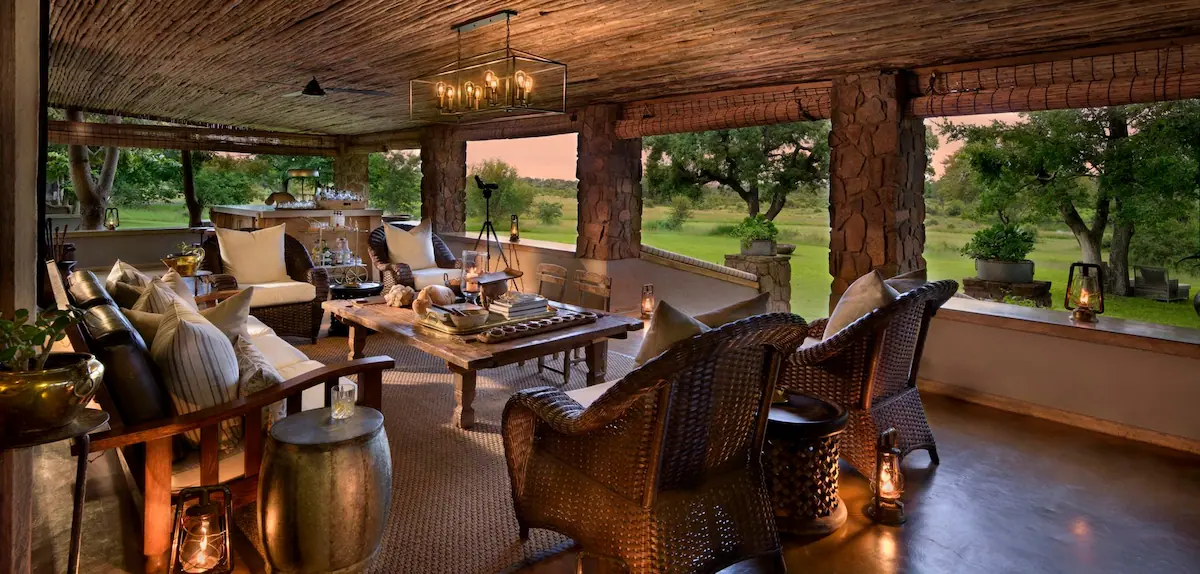
Singita Pamushana, Malilangwe Wildlife Reserve, Zimbabwe
Pamushana looks further back than the safari era altogether. Its architecture takes its reference point from Great Zimbabwe, the nine-hundred-year-old stone city that gave the country its name, and the interiors draw on Shangaan pattern, craft, and colour.
This is a different kind of timelessness than the canvas-tent tradition. Older, rooted in the continent’s native tribal traditions rather than in the era of European exploration. For a guest drawn to the idea of Africa as a place with a past worth honouring, Pamushana offers a version of that past shaped by the people who have always called this land home.
- Architecture referencing the dry-stone construction of the Great Zimbabwe ruins
- Interiors built around Shangaan craft: hand-carved furniture, woven leather, hammered brass
- Perched on a sandstone ridge over the Malilangwe Dam, within a 130,000-acre reserve
- Rock art sites within the reserve connect guests to human history that predates any lodge
- 2027 rates start from US$ 2,525 per person, per night.
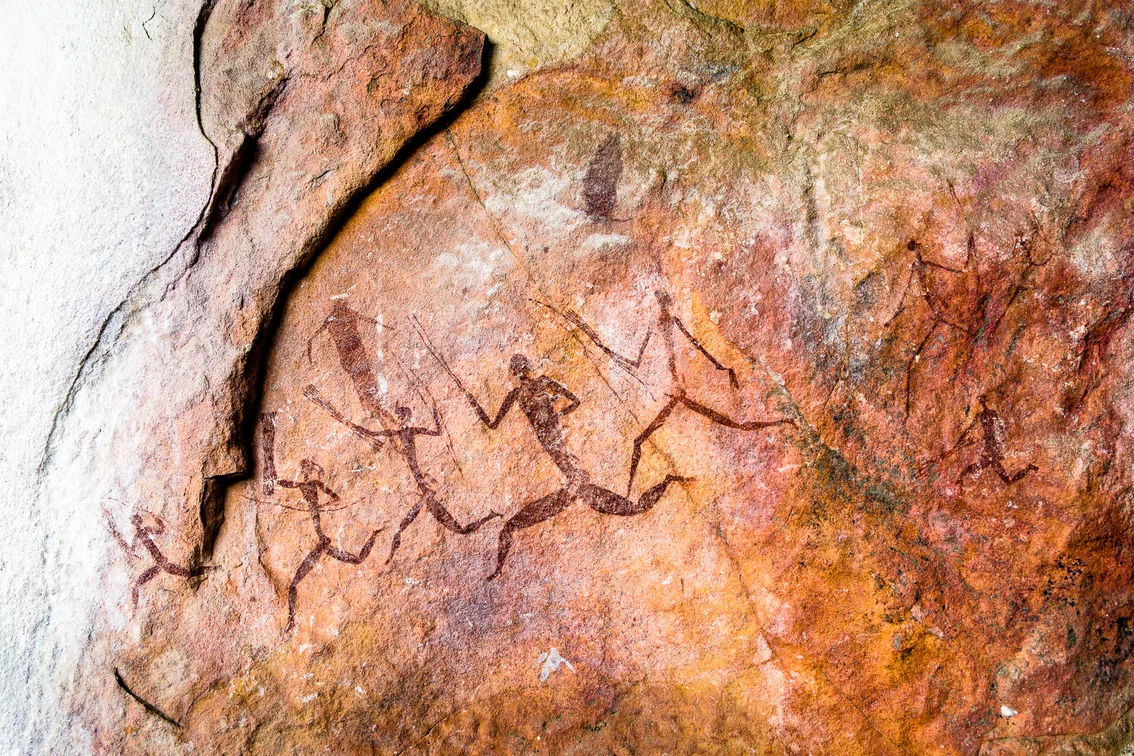
Jack’s Camp, Makgadikgadi, Botswana
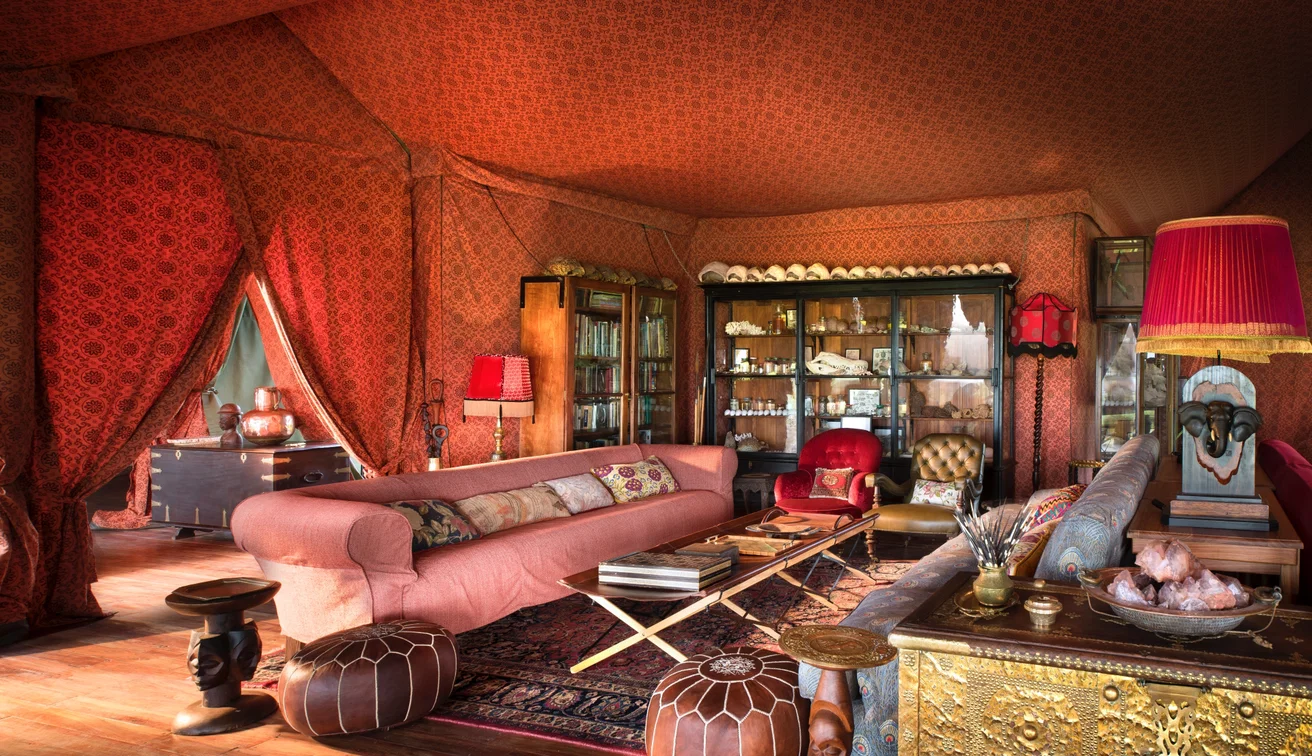
Jack’s Camp was built by Ralph Bousfield in 1993, after his father Jack passed away. Jack had set up the original camp in this location in the 1960s. Ralph himself is a fifth-generation guide who has been guiding since 1976. With family ties in Africa since the 1860s, you can feel the history woven throughout this tented camp.
Completely rebuilt and reopened in late 2020, Jack’s Camp still features campaign furniture, brass fittings, patterned canvas, and palm-fringed mess tents on the edge of one of the largest salt pans on earth. It’s the closest thing to stepping directly into a 1940s safari expedition, without giving up modern comfort.
- Vintage campaign furniture and Persian rugs sourced to evoke a 1940s expedition camp
- Set on the edge of the Makgadikgadi salt pans, one of the most remote landscapes in Botswana
- Natural history museum on-site, reflecting the family’s rich African history
- Access to habituated meerkat colonies and walks with San Bushmen guides
- 2027 rates start from US$ 2,305 per person, per night (incl. $60 conservation levy)
Duba Plains Camp, Okavango Delta, Botswana
Duba Plains Camp was built by Dereck and Beverly Joubert, the founders of Great Plains Conservation, and designed specifically to recall the classic African safari style of the 1920s. The concession is one of the most game-rich corners of the Delta, the same waters and floodplains that filled the Joubert’s documentaries on lion and buffalo. Every booking here supports Great Plains Conservation’s work, giving the vintage aesthetic a living, present-day counterpart.
- Five tents designed in deliberate 1920s campaign style, rebuilt in 2017
- Raised on decking made from recycled railway sleepers
- Home ground of conservationists Dereck and Beverly Joubert, featured in their Nat Geo films
- One of the few operators on a private, low-density concession
- 2027 rates start from US$ 2,630 per person, per night (incl. $100 conservation levy)
Singita Sasakwa Lodge, Grumeti Reserve, Tanzania
Sasakwa is an Edwardian manor house set on a hilltop above the Serengeti plains, a deliberate nod to the era when explorers and naturalists first documented this landscape. With croquet lawns, a clock tower, and hand-painted murals, it leans fully into the vintage safari aesthetic.
- Edwardian manor-house architecture, complete with clock tower and croquet lawn
- Antique furnishings and hand-painted botanical and wildlife murals throughout
- Views across the Serengeti’s western corridor, part of the annual wildebeest migration route
- Working relationship with the Grumeti Fund, which protects the surrounding reserve
- 2027 rates start from US$ 2,720 per person, per night.
.webp)
Little Chem Chem, Tarangire-Manyara, Tanzania
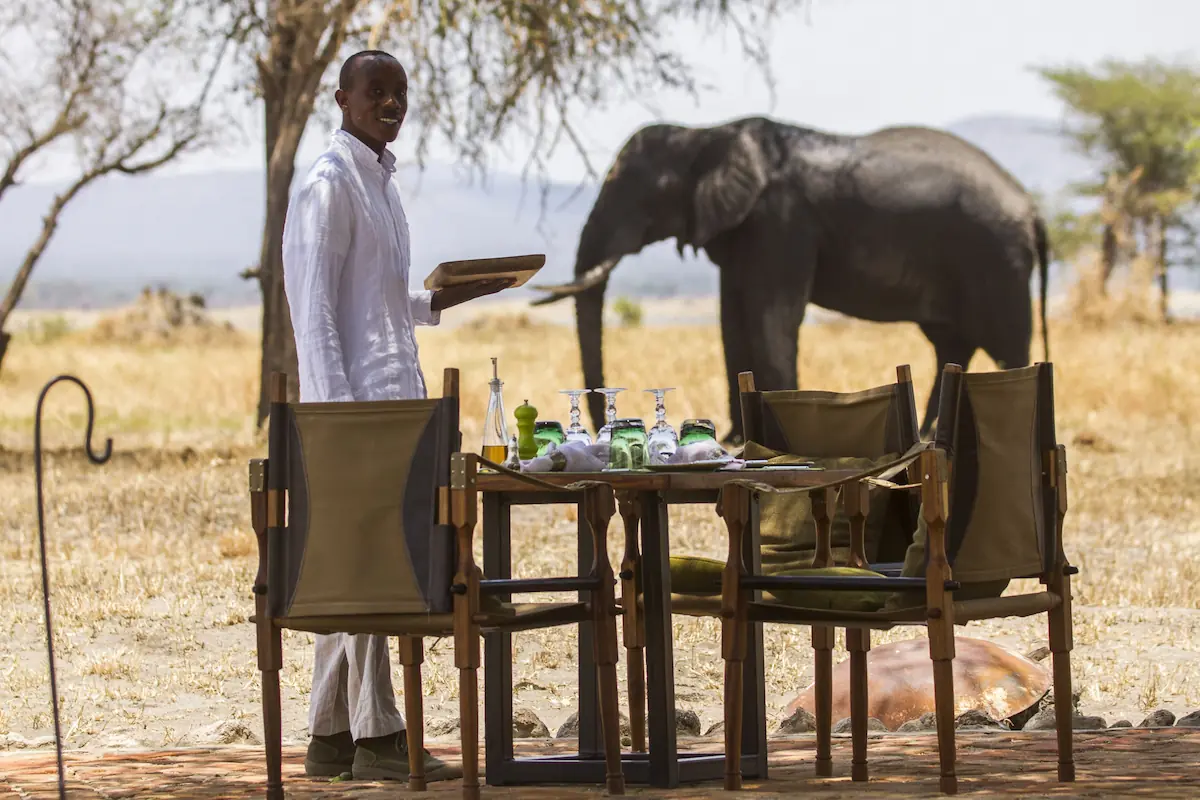
Little Chem Chem keeps things simple and close to the ground. Six canvas safari tents on a private concession between two ecosystems, run with the kind of intimacy that you only find in such small camps. There’s little separating you from the plains outside, allowing you to feel one with the wilderness surrounding you.
- Real canvas tents rather than fixed structures, true to the original mobile-camp tradition of vintage safari expeditions
- Just six tents, keeping the camp intentionally small and personal
- Positioned on a private concession bridging Tarangire and Lake Manyara ecosystems
- Safari experiences built around walking and open-vehicle game drives, in keeping with an unhurried pace
- 2027 rates start from US$ 1,715 per person, per night (incl. $210 conservation levy)
Mara Plains Camp, Olare Motorogi Conservancy, Kenya
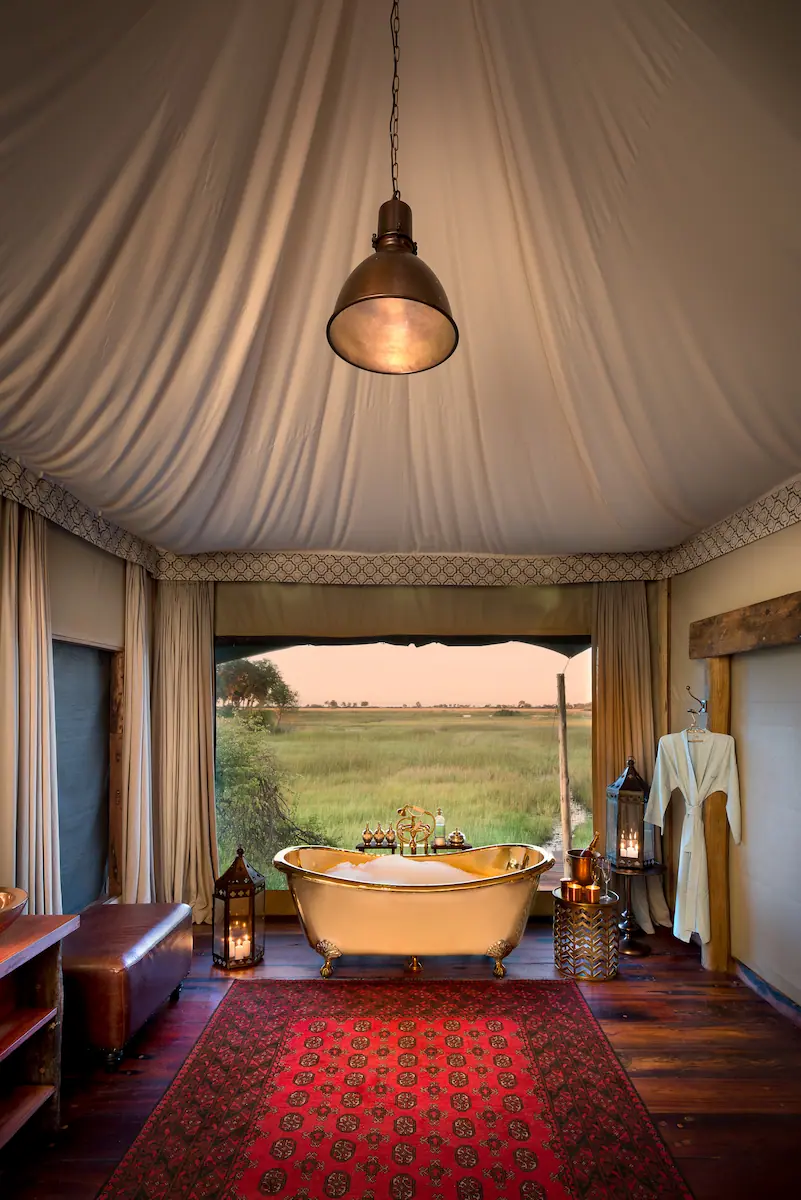
Mara Plains sits in one of the most exclusive conservancies bordering the Maasai Mara, tented in the classic sense with accents of East Africa’s rich safari history: canvas, rich-toned wood, leather and copper bath tubs. The low guest density (one guest bed per 350 acres) enables a Maasai Mara safari without the crowds.
- Classic tented-camp design set within the 13,000ha private concession of Olare Motorogi Conservancy, on the northern border of the Maasai Mara National Reserve in southwestern Kenya.
- Low-density conservancy model limits vehicle numbers at sightings
- Traditional furnishings in leather and dark wood, rather than a contemporary redesign
- Positioned for year-round resident wildlife, not only the migration season
- 2027 rates start from US$ 2,030 per person, per night (incl. $100 conservation levy)
Virunga Lodge, Volcanoes National Park, Rwanda
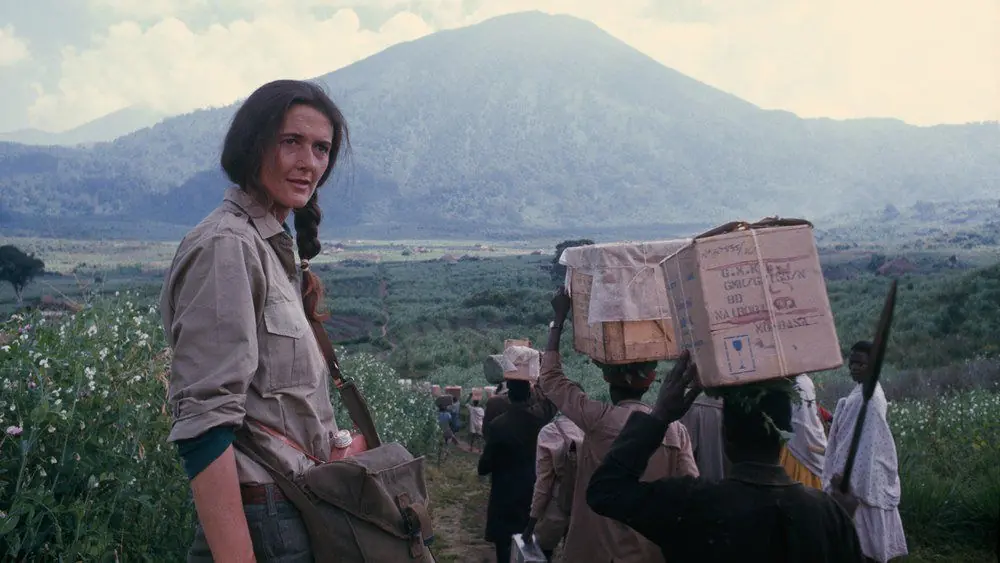
Opened in 2004, Virunga Lodge was the first safari lodge in the area, built to catalyze luxury eco-tourism and help relaunch gorilla conservation travel in post-war Rwanda. It sits high on a ridge above the twin lakes of Bulera and Ruhondo, looking out toward the volcanoes where Dian Fossey spent nearly two decades studying and protecting the mountain gorillas that still live there today.
The lodge was built by hand, using the same artisan building traditions of hand-built techniques passed down through generations with local, natural materials. Throughout, it connects guests to a specific chapter of conservation history rather than a generic gorilla-trekking itinerary.
- Hand-built by local artisans using traditional Great Lakes building techniques
- Ridge-top position overlooking Lake Bulera, Lake Ruhondo, and the Virunga volcano chain
- Within reach of Volcanoes National Park, where Dian Fossey established her Karisoke research camp and gorilla trekking is offered
- USD 50 of every night’s rate supports the Volcanoes Safaris Partnership Trust, funding community and conservation programmes in the region
- 2027 rates start from US$1,340 per person, per night (incl. $50 conservation levy)
Kibale Lodge, Kibale Forest, Uganda
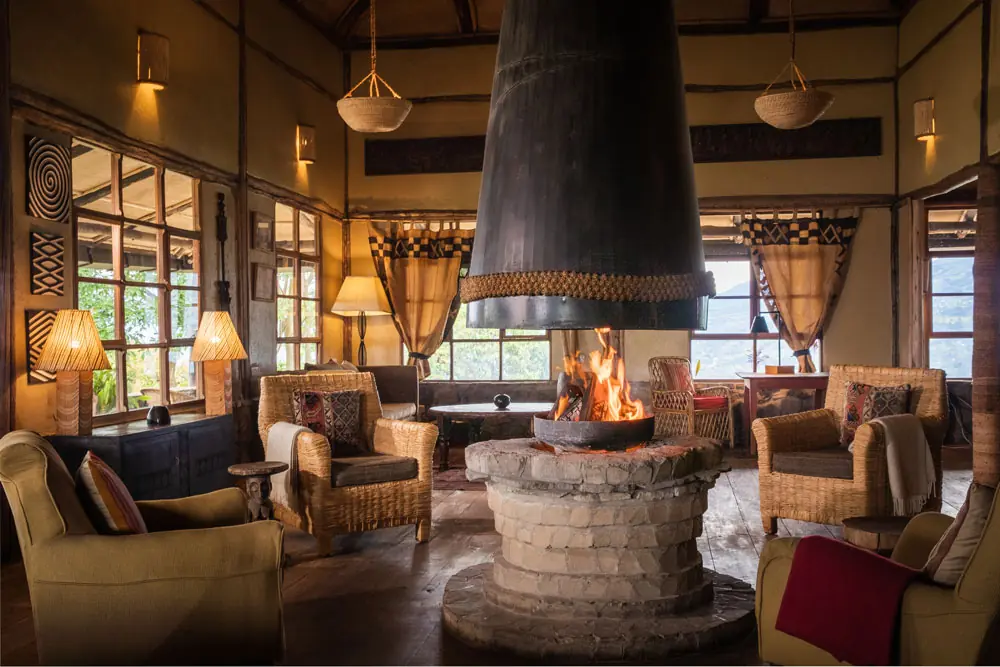
Kibale Lodge is the newest of the Volcanoes Safaris properties, but with a building tradition that is older than any of us. Walls of red soil and limestone, reed doors, furniture woven from banana-leaf fibre, all shaped by local artisans rather than imported.
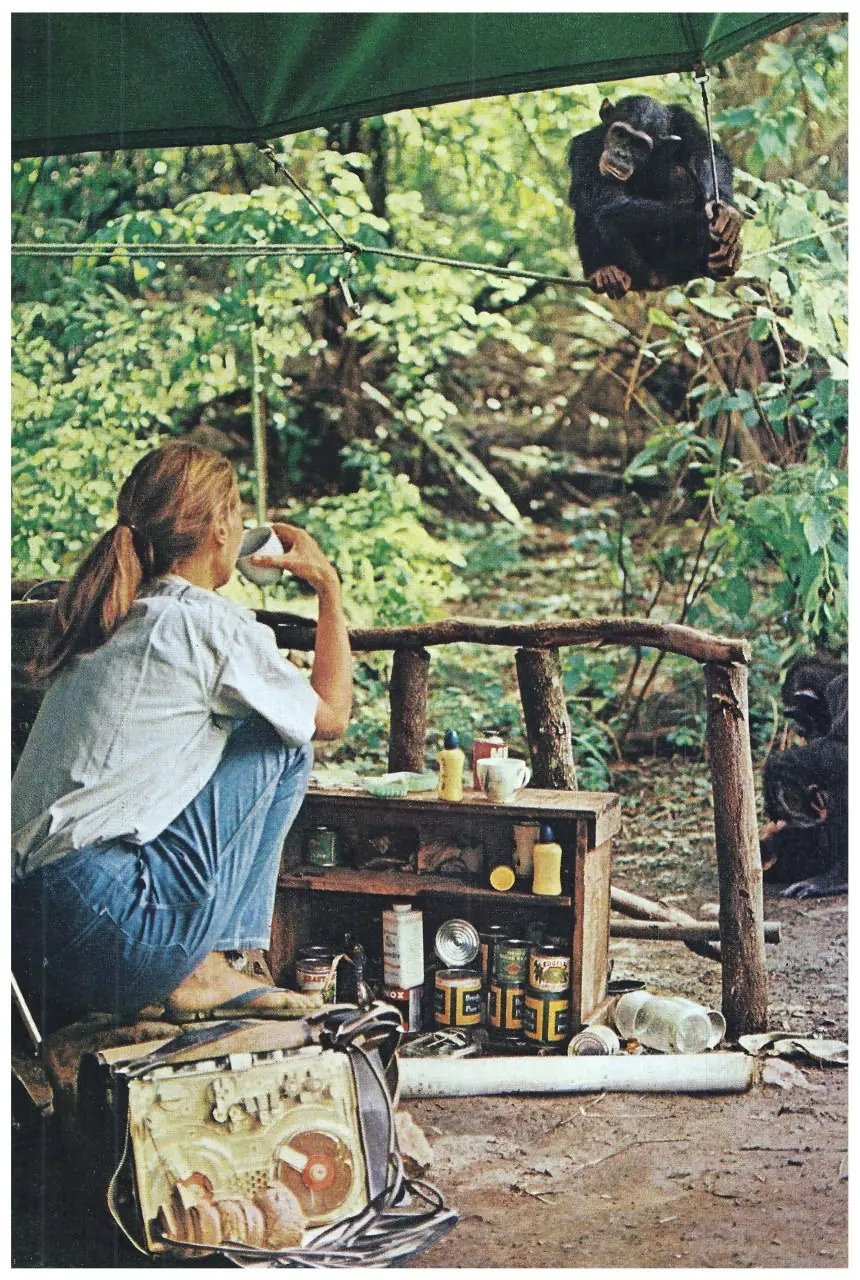
Fifty dollars from every night’s stay goes the Volcanoes Safaris Partnership Trust. They run Roots and Shoots, the Jane Goodall Institute’s education programme in schools near the lodge. It’s a living continuation of the same work Goodall began decades ago in Gombe: teaching the next generation to protect the primates living alongside them.
- Built using traditional materials: red soil and cow dung walls, papyrus roofing, reed doors. Hand-built furniture in banana-leaf fibre and eucalyptus wood, made by local artisans
- USD 50 of every night’s rate funds the Volcanoes Safaris Partnership Trust, which funds programmes including Roots and Shoots run with the Jane Goodall Institute
- The communities surrounding the lodge farm their family plantations as they have done for the last century, and several community-led conservation projects contribute to the continued protection of Kibale National Park and surrounding wetlands like the Bigodi Wetland Sanctuary
- Meet the primate researchers from the Kibale Chimpanzee Project and follow in Jane Goodall’s footsteps
- 2027 rates start from US$1,040 per person, per night (incl. $50 conservation levy)

Come home, briefly or forever
That's the pulse we want people to feel before they've even booked a flight. Not a style. Not an era. A homecoming for those of us lucky enough to live here every day, and for everyone who steps off the plane and feels, for the first time, like they've arrived somewhere they didn't know they'd been missing.
Africa is home. For a week, or for a lifetime, it's yours the moment you let it in.
Contact us to plan your vintage luxury safari.
Vintage safari FAQ
What is a vintage safari?
A vintage safari is styled on the golden age of safari, roughly the 1920s to 1940s. Expect canvas tents, campaign furniture, brass and leather, small camps and unhurried days. Some lodges recreate that era, while others carry older heritage, such as stone architecture that predates safari, or restored family homes.
Which lodges in Africa have a vintage safari feel?
Our nine picks for 2027 are Singita Castleton (South Africa), Singita Pamushana (Zimbabwe), Jack’s Camp and Duba Plains (Botswana), Singita Sasakwa and Little Chem Chem (Tanzania), Mara Plains Camp (Kenya), Virunga Lodge (Rwanda) and Kibale Lodge (Uganda). Each has a distinct vintage feature, from 1920s campaign style to hand-built with local materials and techniques.
Are these vintage safari lodges less comfortable?
No. The vintage is in the design and feeling, not the comfort. Even the most vintage-y looking camps have modern amenities. Jack’s Camp was rebuilt and reopened in late 2020 with solar power and private plunge pools. Duba Plains has raised suites with private verandas, a library and a wine cellar.
Can I combine gorilla or chimpanzee trekking with a vintage safari?
Yes, it is absolutely possible to follow in the footsteps of conservationists like Dian Fossey and Jane Goodall - who started their primate research in the 1960s. Virunga Lodge in Rwanda, near Volcanoes National Park, offers gorilla trekking, and Kibale Lodge in Uganda is set in Kibale Forest, known for chimpanzee trekking. Both can be paired with a safari elsewhere in Africa, ideally Kenya or Tanzania to complete your East African vintage safari tour. Trekking permits must be secured in advance, so we plan the sequence of your trip around them.
How does staying at these lodges support conservation?
Wild Wonderful World directs 20% of safari booking proceeds to the Wild Wonderful World Conservation Fund. Here, funding is distributed to a vetted portfolio of conservation projects, reviewed annually based on funding gaps and urgency of need.
This 20% conservation contribution is supplemented by lodge-based conservation levies. For example, Volcanoes Safaris Kibale and Virunga Lodge donate $50 from every night’s stay to the Volcanoes Safaris Partnership Trust. The trust supports long-term, self-sustaining initiatives surrounding the specific lodge zones in Uganda and Rwanda. Great Plains Conservation contributes $100 USD per person, per night to the Great Plains Foundation. This funds local community border security, specialized anti-poaching units, landscape restoration programs, indigenous education initiatives and rural farming protection barriers.
At Wild Wonderful World, conservation is built into our model to ensure that each safari matters. Should you have any questions about the specific impact your safari makes, we are here to answer them.
Written by Christina van der Merwe, sales and partnerships manager, and Evelyn Poole, marketing manager at Wild Wonderful World



.webp)
.webp)





.webp)