A young bull elephant was relocated after short search with helicopter. Whilst running from the helicopter, the vets could see that he was breathing through his mouth, and the snare wound was bleeding - an indication that the trunk was severely compromised. After immobilisation, his body condition was noted to be extremely poor, which indicates that the snares had been present for long and impeded both breathing and feeding.
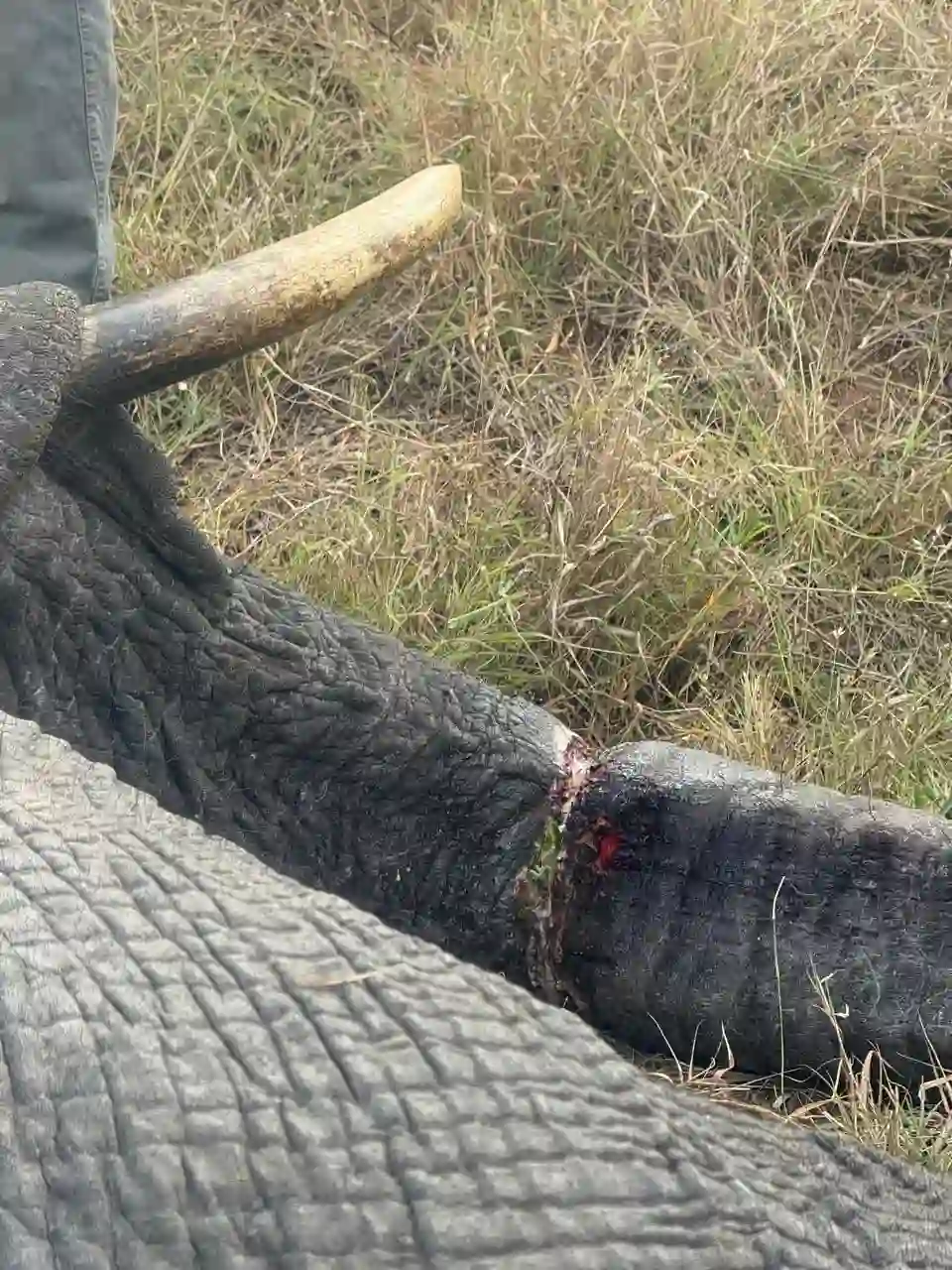
The remaining wire snare was immediately cut as soon as the team reached the sedated elephant. A second snare wound was found towards end of trunk. Unfortunately, that snare had cut off the distal part of the trunk, with severe scarring of the end restricting breathing further. The fresh snare wound was cleaned and disinfected. The lower snare wound also cleaned and treated, with sections of scar tissue removed to enlarge the openings. Even while the elephant was still down, the respiration was much improved by this intervention.
Elephants rely on their trunks to feed, drink and breathe. They grasp branches, roots and other objects underneath shrubbery often, or use their trunk to scope out clearings in dense bush environments. That is why we often see trunk snares in adult elephants, and compared to foot or leg snaring wounds, they are often quite tough to heal due to the sensitive tissues present. Event though he had lost the distal part of his trunk, this elephant was found to still have the full use of the remaining length - a hopeful sign that he should survive. With scar tissue removed and his breathing restored, he should hopefully have enough time to gain back condition before the lean, dry winter months
The total cost of the veterinary intervention was R7420, which was split between African Wildlife Vets, Wild Wonderful World, Down2TheWire, Elephants Alive and Scales Conservation Fund. The majority of this cost was medical supplies. Klaserie Nature Reserve funded the helicopter time.
You can help keep us operational by donating to our Rapid Response Fund here.
.webp)