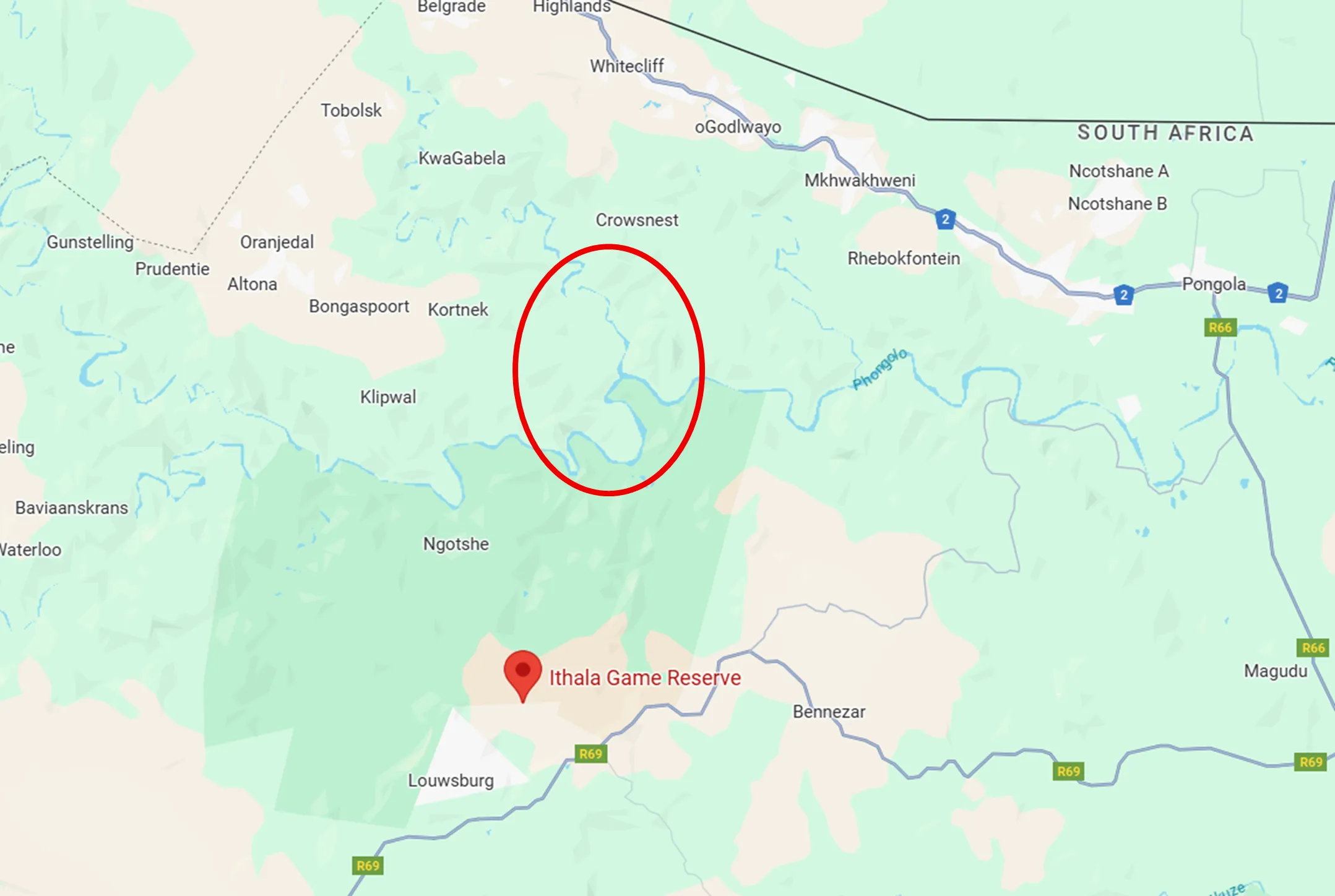
Ithala Game Reserve is one of South Africa's most scenic parks. 290 km2 in size, it is located 400 km north of Durban in KwaZulu-Natal, South Africa. The reserve is unfenced (pending funding), with the Phongolo River marking the northern boundary. Due to a lack of physical boundaries, animals, especially elephant, sometimes move beyond the safety of the park into the neighboring mountains and riverine areas, which puts them at risk of coming into conflict with humans. Back in March 2025, we funded an operation to muster over 100 elephants back into Ithala by helicopter.
Key to the whole operation was that a few of the elephants in the herd were collared with GPS tracking collars. As the reserve is currently unfenced, knowing if and when the elephants move out of the park boundaries is critical to deploying teams to ensure their protection.
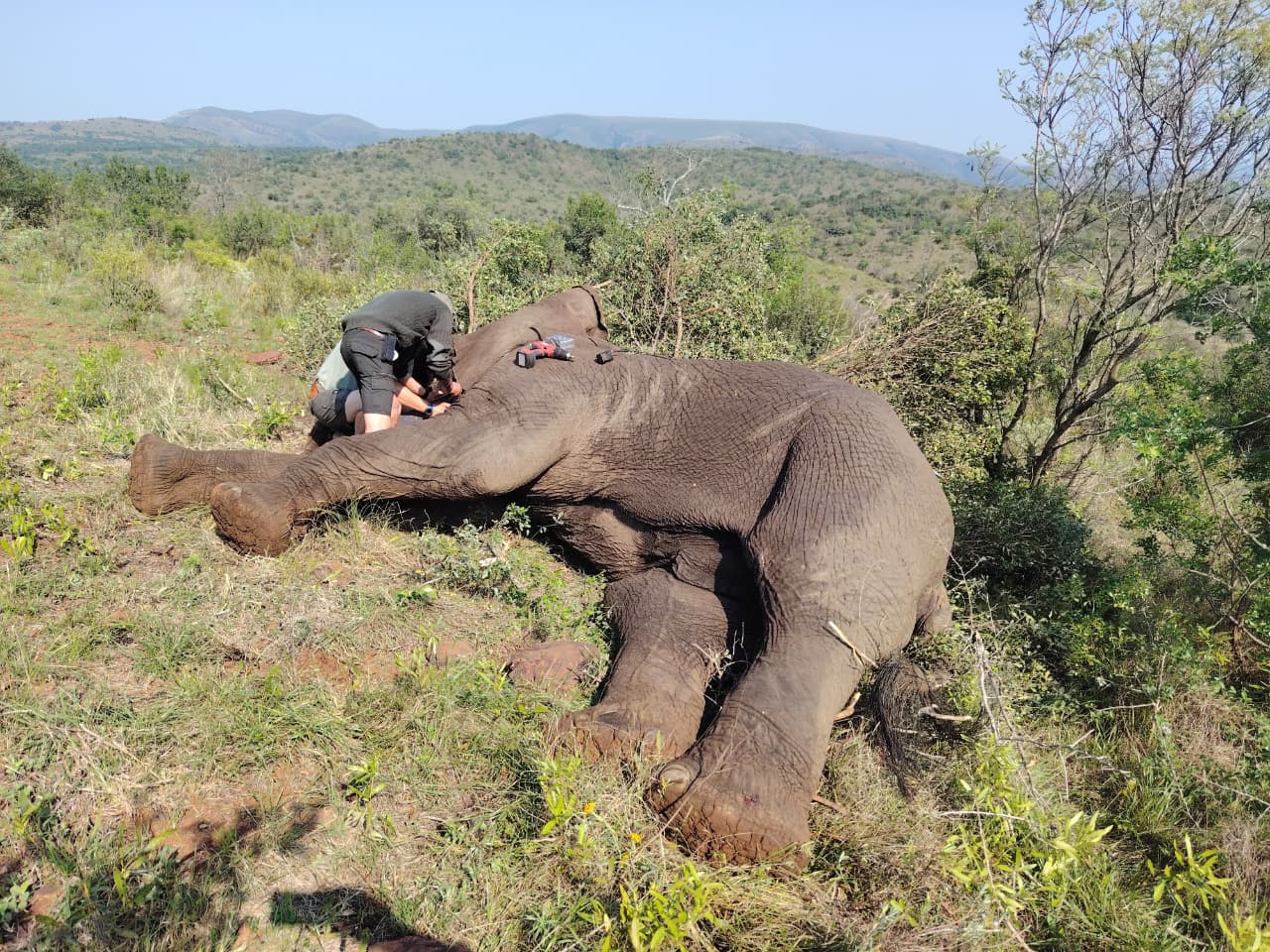
This Elephant collaring took place to coincide with a rhino dehorning at Ithala Game Reserve in October (conducted at the same time to avoid incurring additional costs of ferrying the helicopter to/ from Ithala Game reserve, from its base in Hluhluwe). A total of 9 collars were deployed, 8 of which were supplied by Ezemvelo KZN Wildlife and 1 which was kindly donated by a Wild Wonderful World donor. The new collars were used to deploy on un-collared herds as well as to replace old existing collars which were about to reach the end of their lifespan (some of which were as old as 2020/2021).
Ithala is known for its deep valleys and rugged mountainous terrain and, as luck would have it, the target elephants were mostly found in extremely difficult places to work on. Two elephant cows had to be moved, with their herd, up a steep valley to reach a plateau of relatively flat ground to be able to work on them safely, this meant darting them, and keeping them on a small tabletop of a plateau with steep drop-offs on either side, which was a bit stressful! Another two animals were found in the Mhulumbela valley, one of narrowest and steepest valleys of Ithala, where they had to be pushed over several bends of the Mhulumbela river and steep hills until they could be darted on a small peninsula which was flat and open enough for the helicopter to land after they went down.
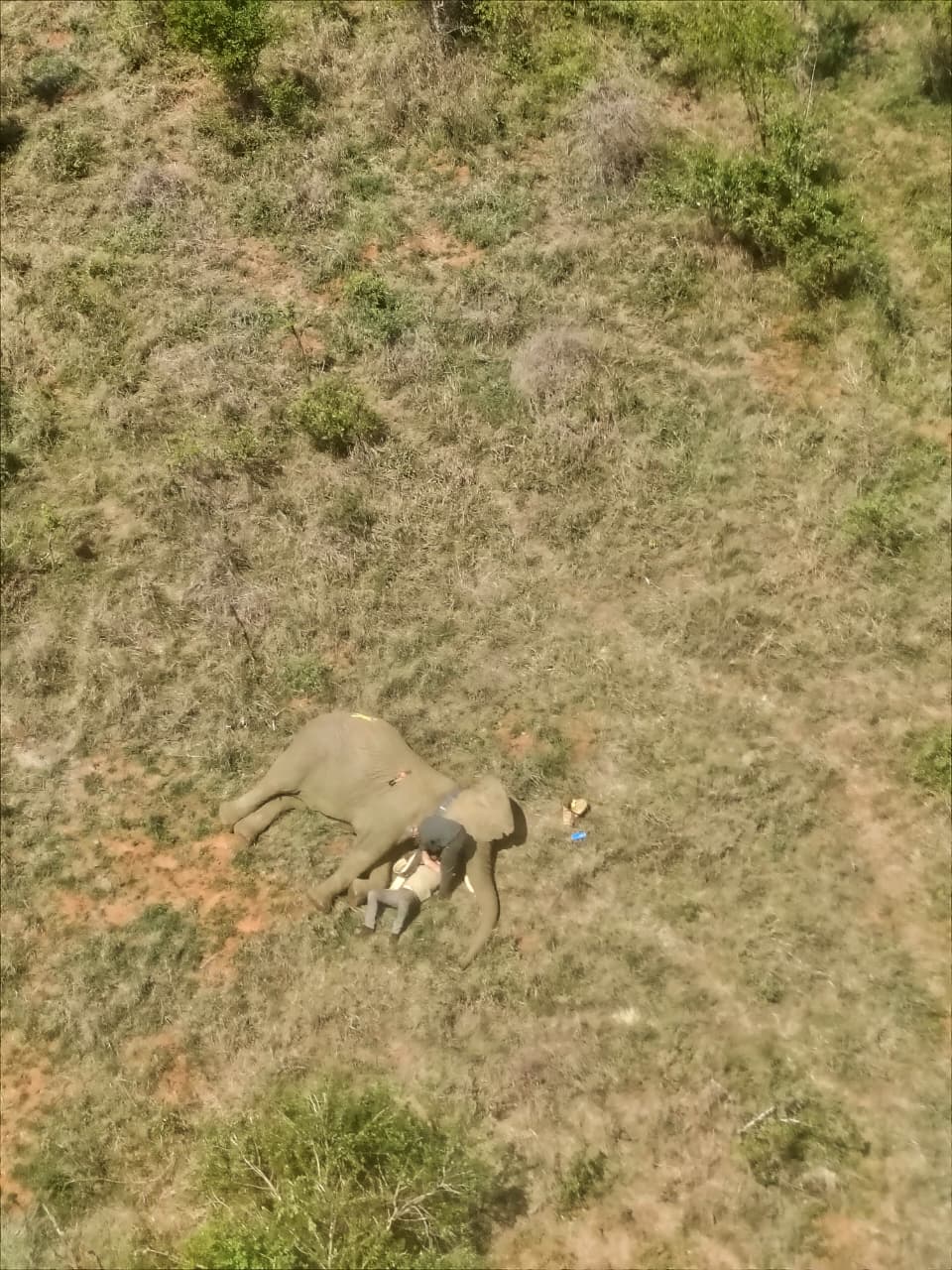
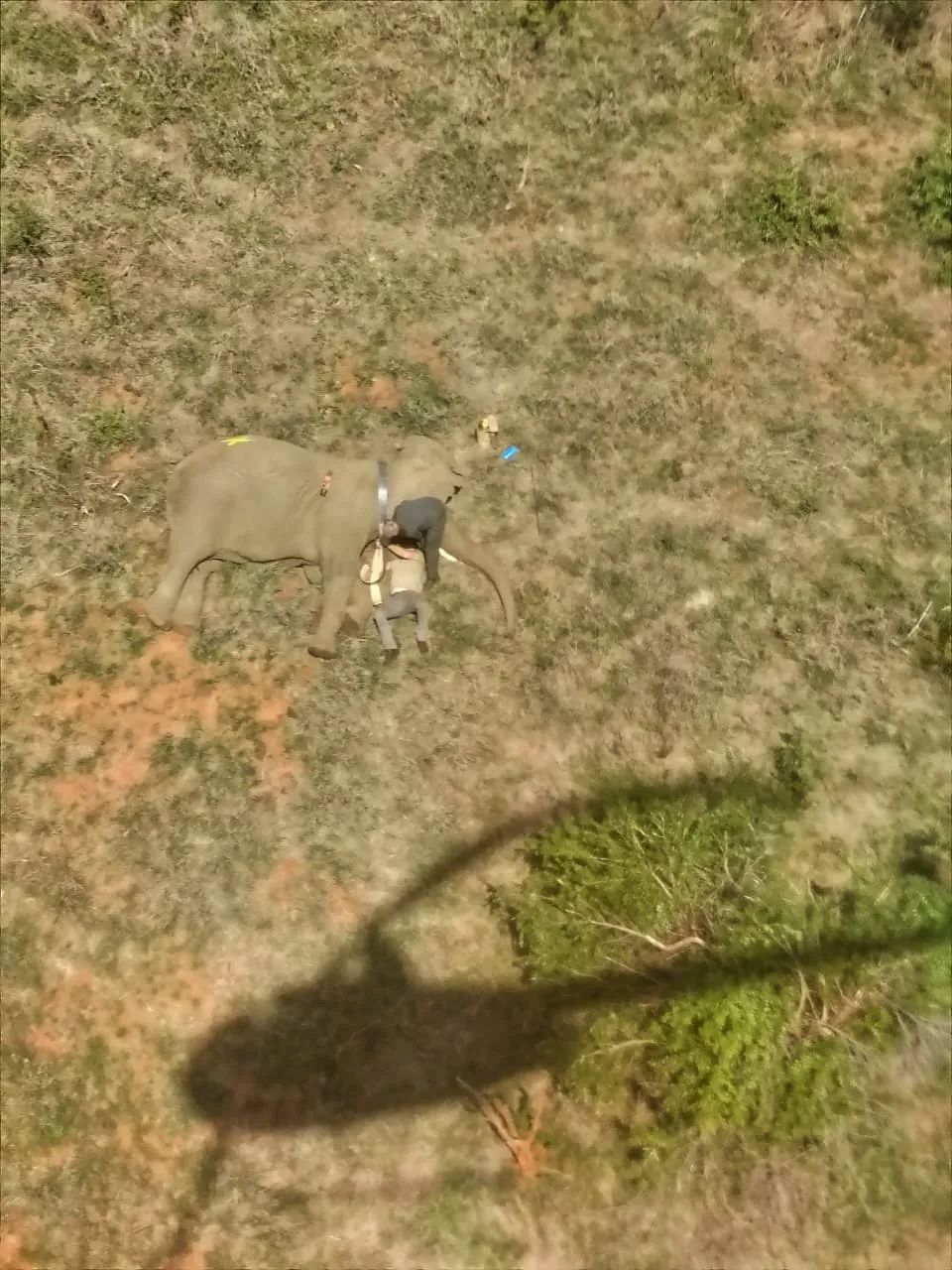
One bull that needed to be re-collared was incredibly difficult to work with, not only for the area he was initially found in, but also for the way in which he behaved with the helicopter; this elephant did not listen to the helicopter at all and kept running into difficult to access areas. After a substantial amount of time chasing him on the first day of operation, the vets realized it would be too dangerous to dart the bull with no ability to control his direction and movements. They decided to leave him and monitor his existing collar to try to locate him again at a later date, when hopefully he moved to a better area to work on him. On the last day, the bull followed a breeding herd into the Ngubhu basin which was a much better area to find him in, and the vet managed to put a dart in and get him down on a relatively flat piece of ground. Although the area he went down in wasn’t too bad, he unfortunately fell on his side with his neck flattening some trees. This made removing the old collar and sliding the new collar around the bottom of his neck extremely difficult. With just a small team of 3 - the vet, reserve section ranger & helicopter pilot, the 3 managed to fit a new collar, but had to cut off the older collar and leave it underneath the bull, with the aim of retrieving it once the elephant had stood up and moved off.
Another elephant bull was found on his own near the Phongolo River in thick Lantana (plant). He was pushed towards an open(ish) area towards the Phongolo river, but as soon as the dart hit, he turned around and headed straight back towards the Lantana thickets. He unfortunately went down in a compromising position downhill on a slope, in the thickets, which would have been impossible to work on and get a collar on, as well dangerous for the elephant to be in that position for an extended period of time. As the helicopter pilot couldn’t land anywhere nearby, he found the closest open ground to get as low as possible for the vet to jump out, and the vet had to push through dense Lantana to get to him as quickly as possible to inject a reversal drug and get him up again. Fortunately, he was able to get up fine, and the vet walked a couple of hundred meters toward the Phongolo River where the helicopter had found a space to land!
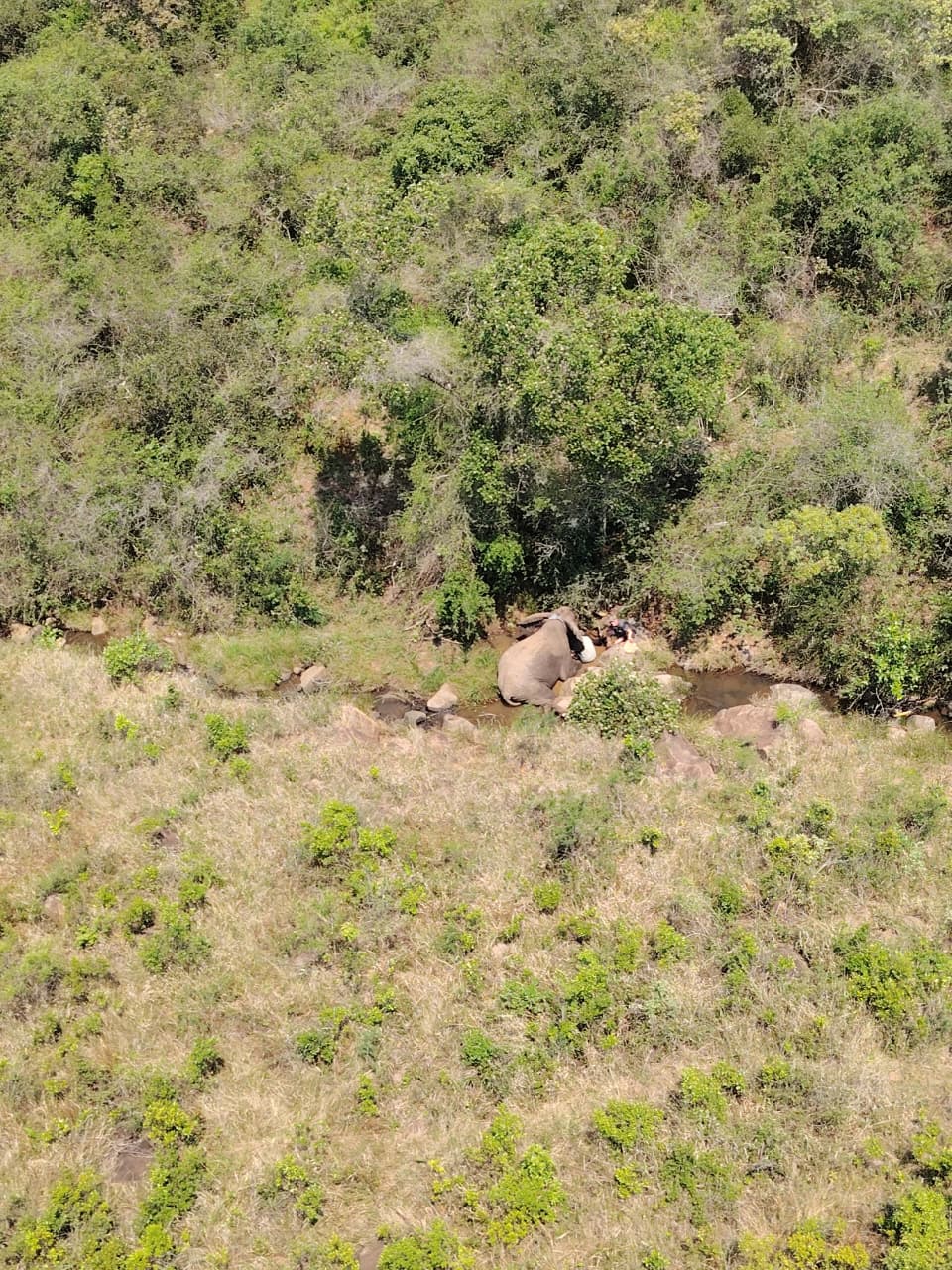
On the last day of operation, the team did not expect to find an un-collared herd, but managed to locate one near the beginning of a steep ravine. All was looking good as the helicopter pilot was managing to push the herd into an open area, but near the halfway mark of induction after darting, the herd made a turn for a thicket on the opposite side of a small river. The cow the vet had darted suddenly felt the effect of the drugs and came to a standstill in the small river. Panic ensued as they saw her go down, but dangerously with her trunk going limp in the water. Her herd stood protectively around her. The helicopter managed to drop the Vet and reserve manager off in the first open spot he could find, the flew off so he could usher the rest of the elephants off to make the area safe for the vet to work. As soon the herd moved off, the vet ran toward the river and found the elephant cow on her down on her chest with her trunk in the water. He immediately jumped in and pulled the trunk out of the water. Fortunately, she was stable and breathing well, and he managed to put the collar on while the reserve manager held her trunk safely out of the water. They made a quick plan to wedge her trunk in a tree on the bank of the river, injected her the reversal drugs and made their way back up the opposite slope where the helicopter was waiting (in a particularly confined landing zone!).
All in all, an extremely challenging area to operate in, but very successful with all 9 elephant collars deployed.
Update from the field: 23/11/2025
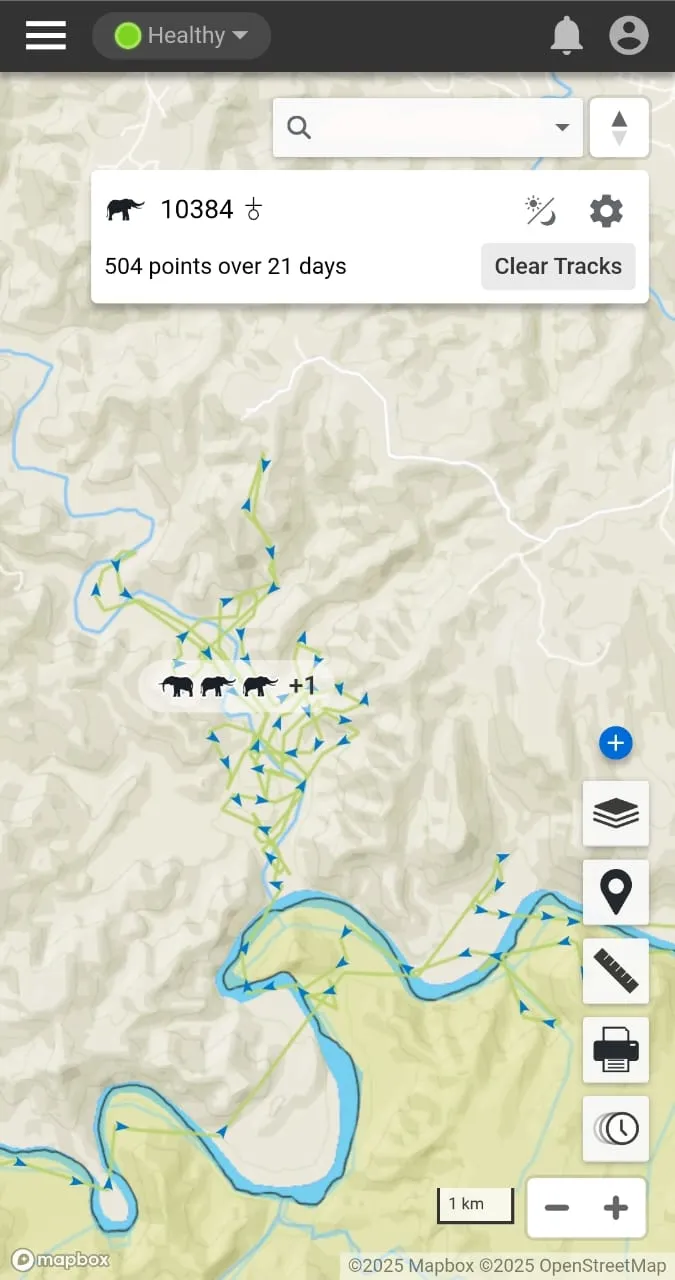
The good news is that the collars are working superbly, the less good news is that the data is showed one of the elephants (fitted with the Wild Wonderful World collar) joined a herd of others that moved outside the game reserve boundary!
Below is an overview of the elephants' movement over the last 21 days. The Earth Ranger program logs the uploaded GPS locations from the collar (which uploads a position every few hours). The data is vital for reserve management to know when animals have left the reserve boundary and exactly where they are. As you can see, the collared elephant and it’s herd is currently outside the game reserve (north of the river). Reserve management are keeping a close eye on them to see where they go. If they venture too far, a helicopter will be called to usher them back into the safety of the reserve.
Without a GPS collar, there would be no knowing exactly where the elephants go, and so it would be impossible to monitor their location and therefore ensure their safety (ensuring they keep away from people and communities). A huge thank you to our Wild Wonderful World donor who donated this collar and keep this elephant safe.
.webp)