




The safari we never expected: how real-time conservation action saves rhinos
Wildlife heroes fighting to save rhinos from extinction…. that is what we witnessed on a recent rhino dehorning operation. The day we arrived on safari at Manyoni reserve in Kwazulu-Natal, poachers had taken the life of a mother rhino, leaving her dependent calve orphaned. Over the past decade, we’ve become aware of the rhino poaching crisis, yet it was surreal to hear that an incident occurred on the reserve while we were on safari. The news hit us in the gut!
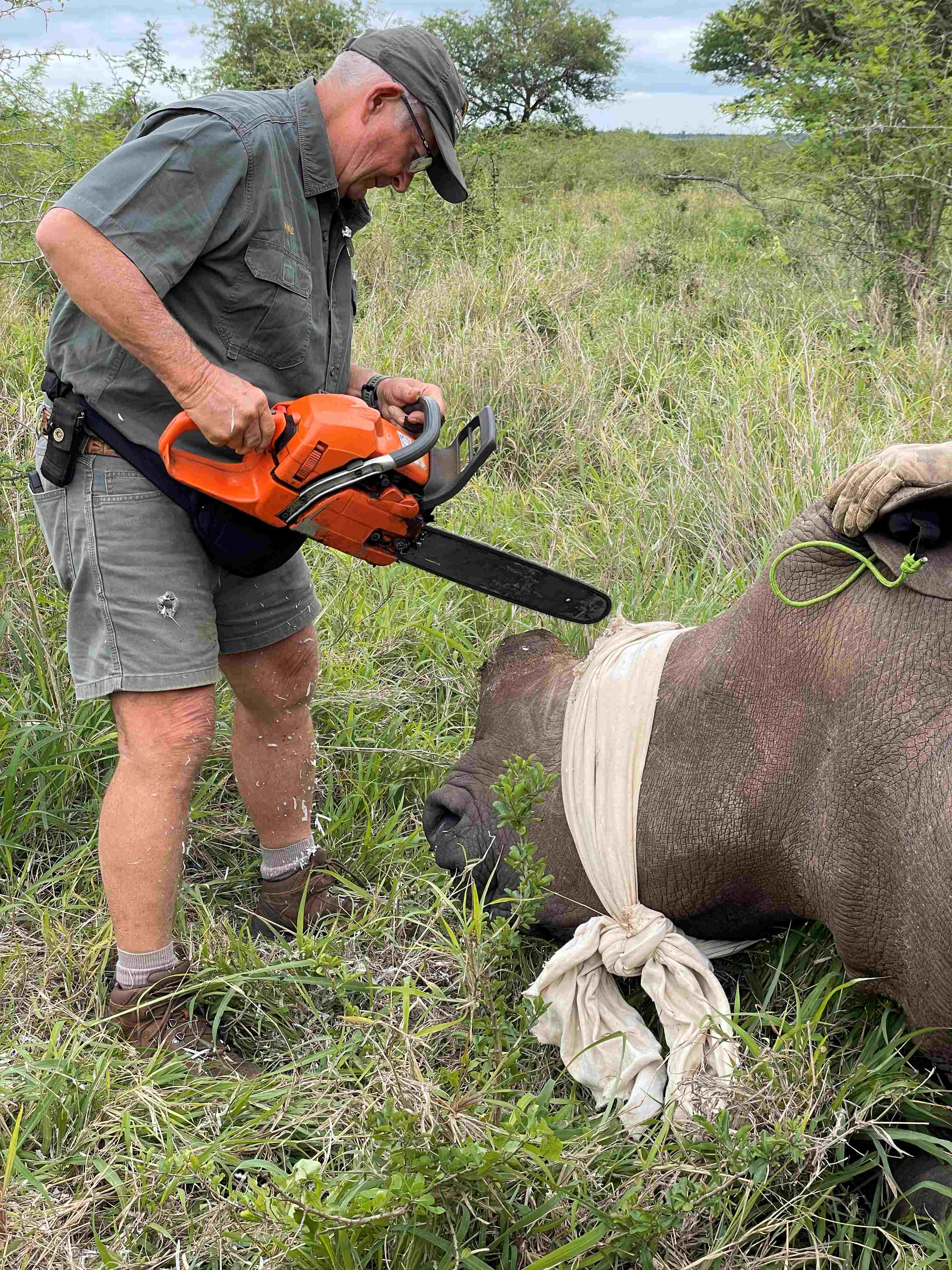
The next morning, we skipped our safari drive for the rare opportunity to join Michelle on a horn trimming operation on the reserve. Horn trimming is a preventative measure that has proven to be effective in reducing poaching incidents on reserves. However, it can be controversial as some believe it is an extreme measure and in an ideal world, wildlife lives naturally without alteration.
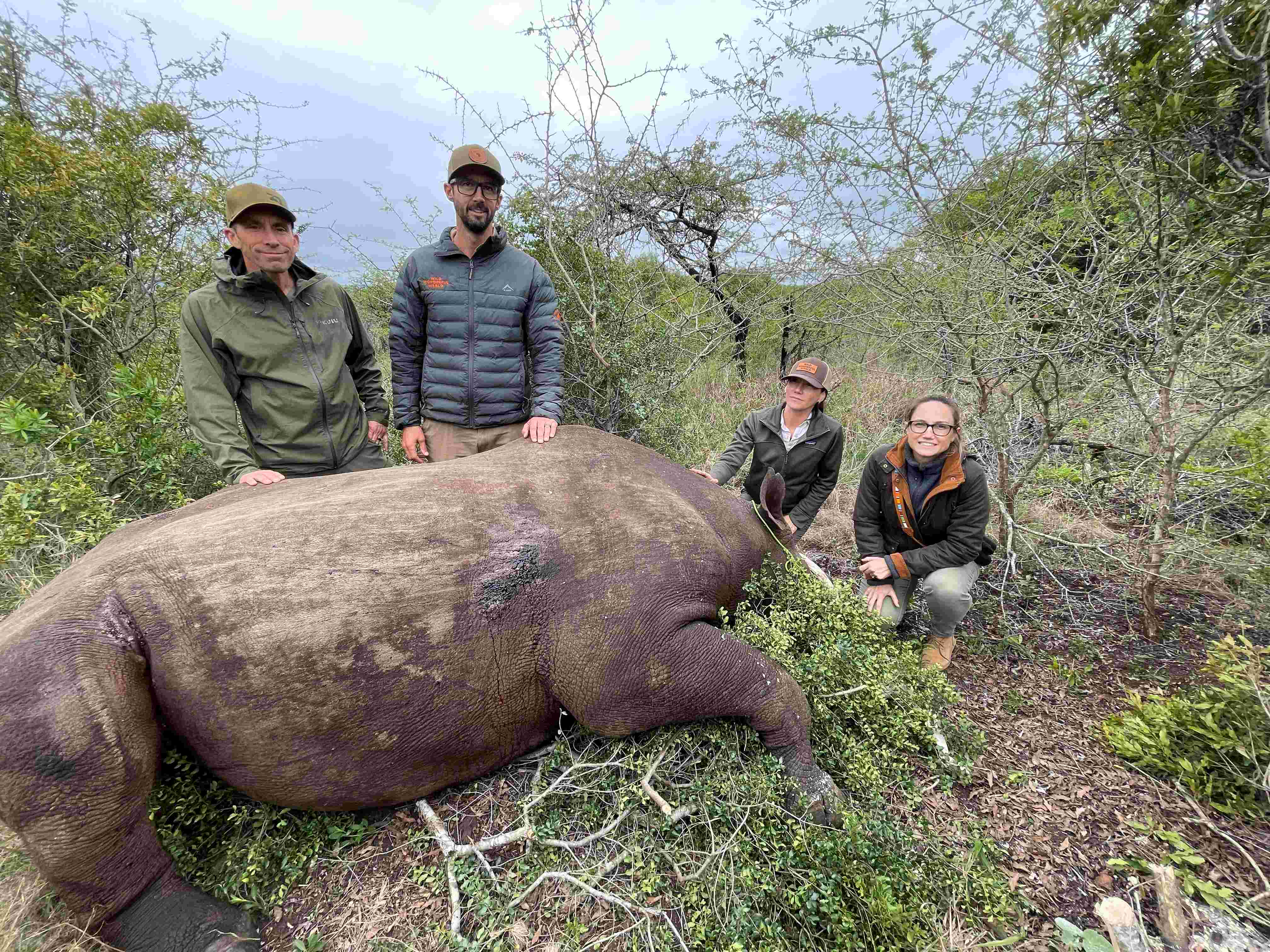
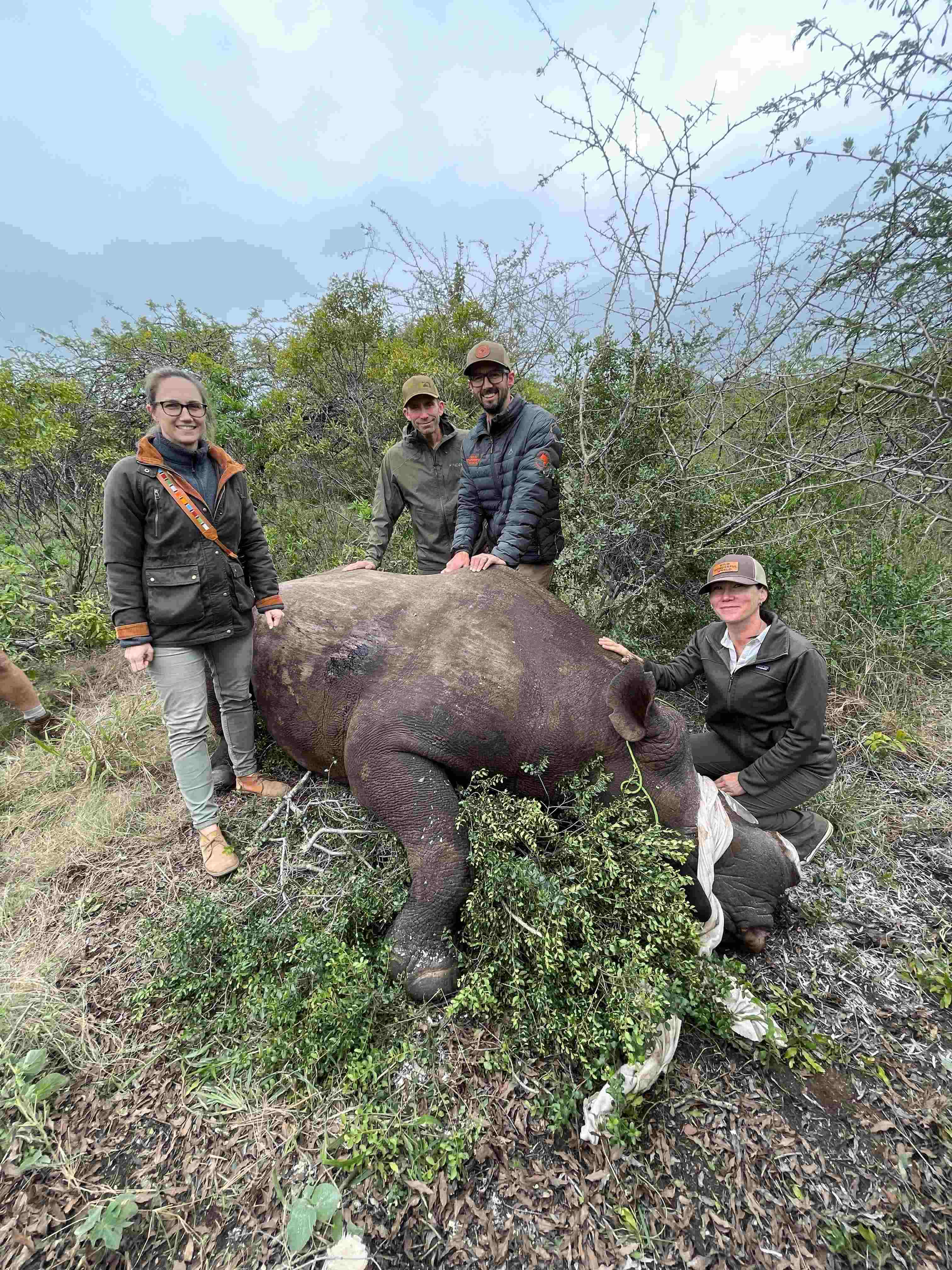
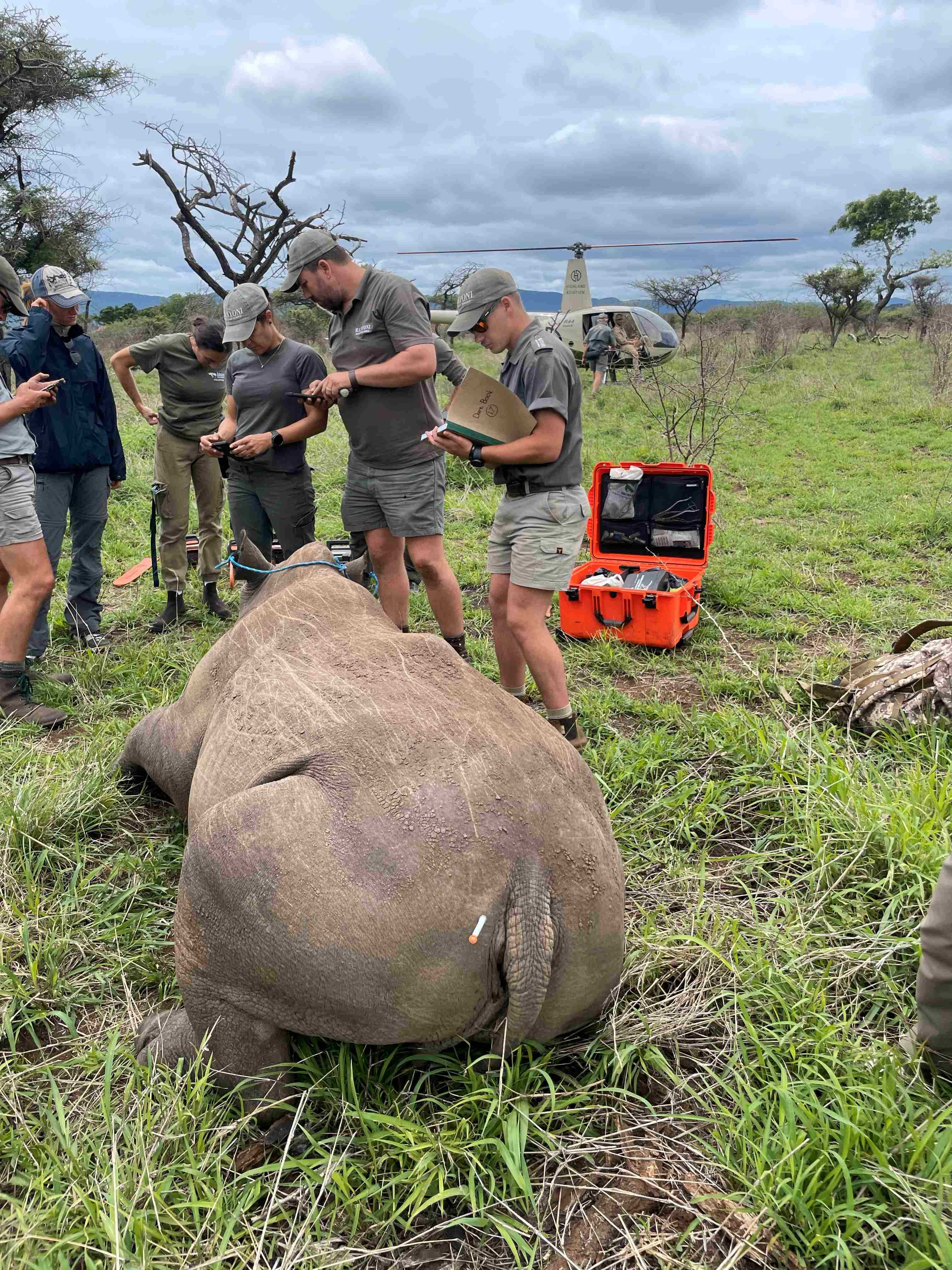
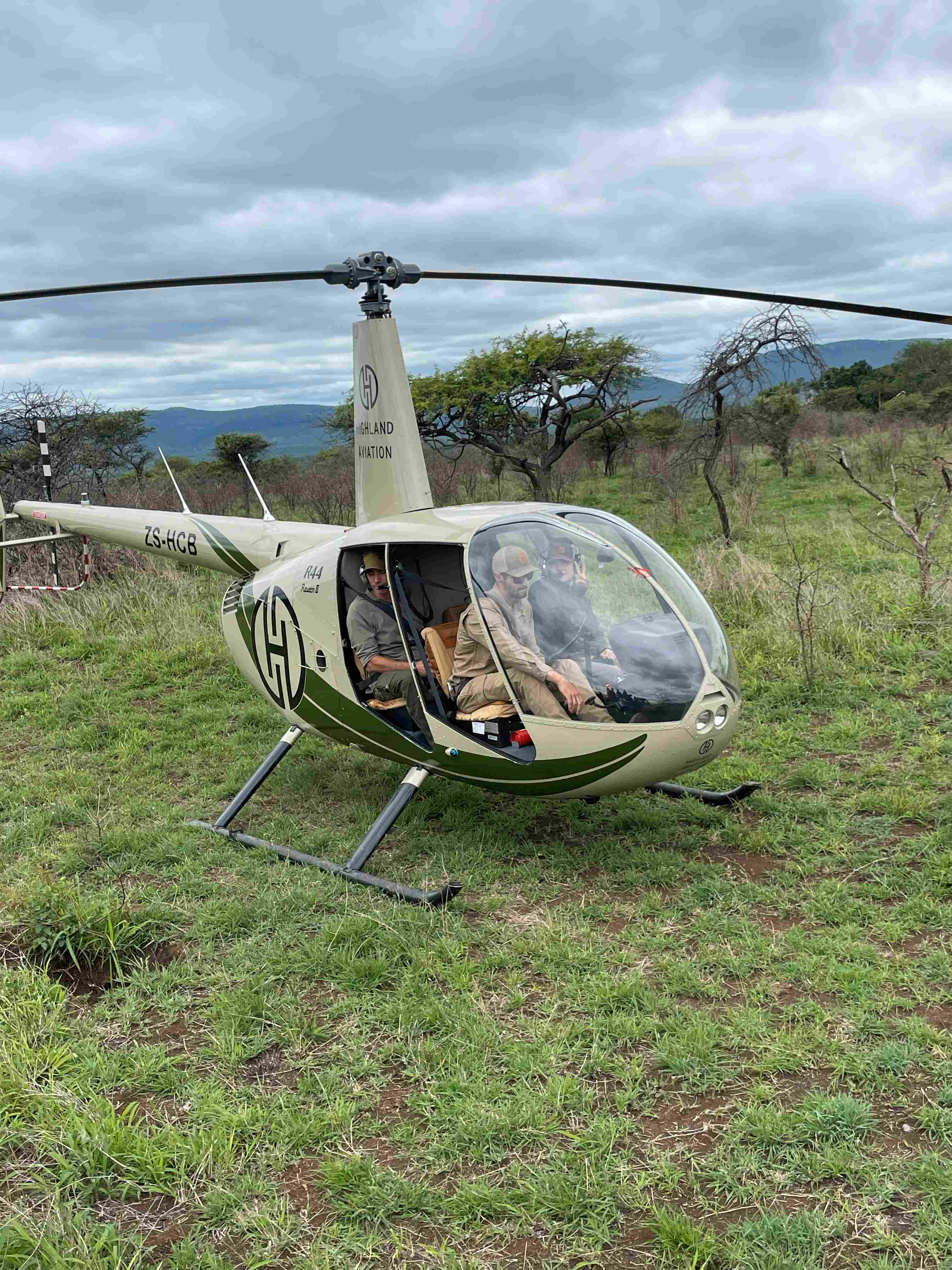
After being on the ground to witness this operation first hand, we were surprised to see how efficient the procedure is from beginning to end. All members of the operation from the helicopter pilot, drone operator, vet, conservation and reserve management teams all jump in and handle various tasks to get the job done. On average, a rhino is sedated for approximately 15 minutes, incredibly quick! Once a rhino has been located and darted with sedative from the air, so much happens simultaneously from brush clearance, proper positioning of the tank sized animal, sample collection, measurements, ear notching, microchipping, and the trimming of the rhino’s horns. The team is quick and operation seamless. As observers, it was clear that you jump in and help, or get out of the way. There is no time to waste, the job has to be done quickly in the interest of getting the rhino back on its feet and on with its day.
As outsiders seeing this type of operation for the first time, it is clear that once the rhino is up from the sedative reversal, it immediately shakes off the nap and saunters along as if nothing happened. In an ideal world, there would be NO poaching or horn trimming. However, the reality is horn trimming has significantly reduced poaching incidents on reserves where it is used. The amount of funding and resources required to execute the quick procedure are high. But the stakes are higher to save rhinos from extinction. Watching the chubby bum of a trimmed rhino trot back into the bush far outweighs the risk of it losing its life to poaching.
- Written by guest Julie Schall, on safari with Wild Wonderful World in November 2025
.webp)







.webp)